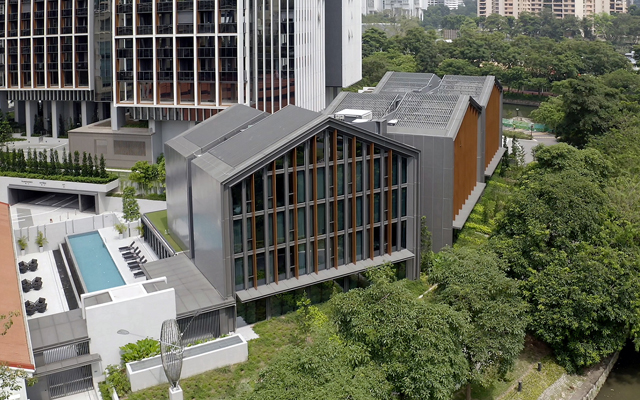
John Drummond has been promoted to general manager of InterContinental Grand Stanford Hong Kong.
He was previously the hotel’s resident manager, a post he has been in since 2010. Drummond first joined InterContinental Grand Stanford Hong Kong in 2004 as executive chef and was promoted to director of F&B in 2006.
The Scot’s hospitality experience spans 20 years across three continents – Asia, Australia and the Middle East. During this career, Drummond has been the executive chef and developed F&B concepts for hotels such as Shangri-La Taipei, Hayman Island Resort Australia, and InterContinental Bahrain.
A whisky aficionado, Drummond is also the whisky ambassador of the hotel. He is the founder of the first-ever Hong Kong Whisky Festival, which is famed as the largest whisky event in Hong Kong. The event, celebrating its fifth edition, features over 1,100 different whisky expressions from around the globe, alongside an array of over 30 masterclasses.
Simon Akeroyd, Vice President, Corporate Strategy and Business Development, Amadeus Asia Pacific
Originally designed solely to make calls, mobile phones have since come a long way –a touchscreen, camera, location services and access to the internet are standard features on most smartphones. However, we shouldn’t blindly accept the smartphone, as it is today, as the perfect device.
There have been countless instances where a longstanding, universally accepted way of doing things becomes rapidly upended by innovation and disruptions. Think of bank cheques, and how they have become almost obsolete.
Today it is an accepted norm to wake up with our phones, check them throughout the day and then plug them at night so that we can repeat the process the next day. While this is considered normal today, new technologies could easily usurp the smartphone within the next five years.
Phones are losing their touch
Technologies, such as smart speakers or virtual assistants like Siri, are supported by AI and are constantly improving their accuracy and capability to serve personalized predictions based on the user.
Gestures are also becoming a part of the mobile phone experience. Google’s latest handset, the Pixel 4, is the first time a mobile has included Improvements in voice and artificial intelligence (AI) are moving us forward at a dramatic pace. Voice a radar to power motion sensors that recognize human gestures. This means users have the ability to change songs, accept calls and swipe away alarm notifications without having to touch the device.
Essentially, the combination of hands-free devices, improved voice control technology and gestures will make our consumption of music, phone calls and messages a touchless experience. If we have voice enabled WiFi ear pods, why would we need to hold a phone?
Is the phone the best prism to view the Mixed Reality world?
Mixed Reality (MR) is a technology that combines the real world and virtual world. Where Augmented Reality (AR) simply overlays virtual objects onto the real-world, MR merges virtual objects onto the real-world environment.
As MR innovation improves, we will be provided real-time additional information about our surrounding reality. Today this mostly implies holding up your phone to see the augmented reality information layered on top of the world viewed through your phone camera lens.
Wearable technology, such as smart glasses, can be combined with virtual assistants to give the user the power to reply to interact with MR, read messages, see directions, change songs, take a photo and filter emails without having to pull out a separate physical device. The initial experiments in glasses had mixed results, but as the information gets richer and the glasses get better (even shrunk to lens size) would we still want to hold up our phones to see the MR world?
Experts are suggesting the innovation in MR, voice driven virtual assistants, and anticipatory AI will drive the development of a new mobile computing platform, taking much of the mobile experience away our personal screens and becoming integrated into the world around us[1].
Ultimately, just like the bank cheque, the smartphone will be disrupted. We accept the current state of smartphones as the norm, but in as little as the next few years, we could see the introduction of technology that will unbundle the smartphone and fundamentally change the way humans organize their lives, stay in touch, entertain themselves and communicate with the world.
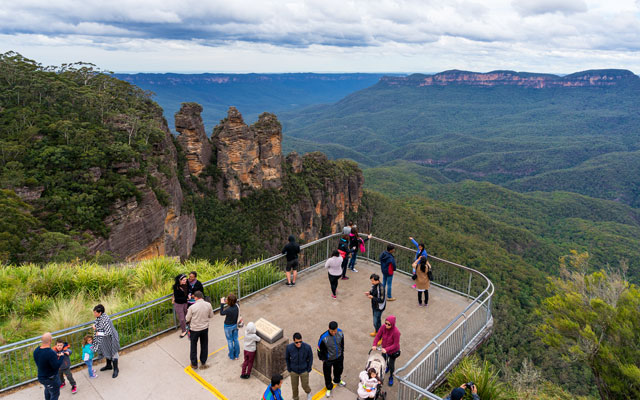
Unaffected destinations such as the Blue Mountains (Three Sisters rock formation pictured) have registered a 60 per cent decrease in visitors
Misrepresentation of the bushfire crisis by international media has hurt Australian tourism
Many popular tourist destinations unaffected, visitors encouraged to stick to travel plans upon doing due diligence
Economic impact drastic in destinations across the country
Unaffected destinations such as the Blue Mountains (Three Sisters rock formation pictured) have registered a 60 per cent decrease in visitors
Australian tour operators are fighting the perception that the country is unsafe for visitors and that much of its naturally beautiful environment has been destroyed.
Tourism Australia’s office and industry commentators have been inundated with calls from all over the world, fielding questions about the extent of the damage caused by one of the worst bushfires the country has seen and its impact on tourism.
“I was interviewed by (an international broadcast network), who seemed to be under the impression that Australia was burnt to a cinder, and that we wouldn’t bounce back for 30 years,” said David Beirman, senior lecturer in tourism at University of Technology Sydney.
“I’m glad I was able to correct some of those ridiculous assumptions… but that’s the kind of negative stuff that’s coming out from some of the less informed sections of the international media.”
Australia’s tourism bodies insist many popular tourist destinations are unaffected and remain open to visitors, urging that it’s now more important than ever to stick to travel plans and support the industry, worth A$143 billion (US$98.8 billion).
“We are still gathering feedback from the industry and monitoring impacts on future bookings closely as the situation unfolds,” said Tourism Australia’s managing director Phillipa Harrison.
“As we have seen from past severe weather events and natural disasters, tourism is an extremely resilient sector. When affected communities are ready to once again welcome visitors, tourism will continue to play an important role in supporting their recovery,” she continued.
Tourism Australia says at present, Brisbane, Cairns and the Great Barrier Reef in Queensland, much of Western Australia, Tasmania and the Northern Territory are considered safe to visit. All international airports have also remained open, including those in Sydney, Melbourne and Adelaide, despite many eastern cities experiencing smokey and sometimes apocalyptically red skies.
Business tourism impact
So far, business events tourism appears largely unaffected. An anecdotal poll revealed while there have been a good number of concerned enquiries, actual cancellations have been few.
Melbourne Convention and Exhibition Centre, which turned into a transition and relief centre for more than 200 bushfire victims, reported no impact on business. So has Melbourne Convention Bureau and Business Events Sydney, noting that the summer holidays are usually quieter periods for global meetings anyway.
In fact, there’s been some show of support. “With those enquiries, we have been heartened at the genuine warmth towards Australia and concern for our welfare,” said BESydney CEO’s Lyn Lewis-Smith.
“Some – like the International Society for Magnetic Resonance in Medicine who are bringing their 28th Annual Meeting & Exhibition here in April – are leading on the front, providing advice to delegates on how they can best demonstrate their support,” she said.
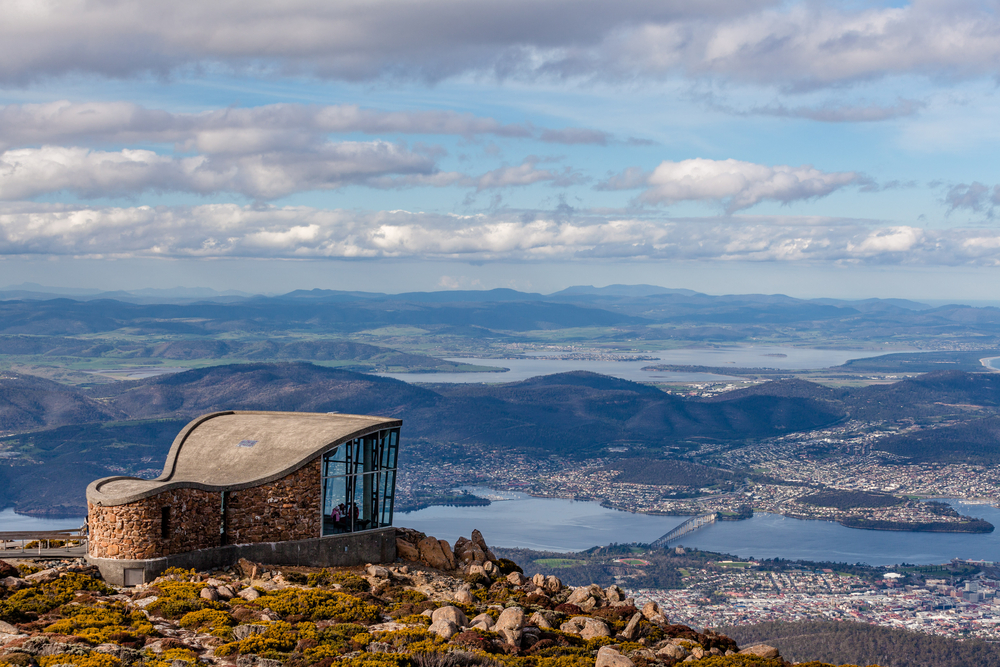
Tasmania is another Australian destination that is safe; Mount Wellington Lookout structure overlooking the city of Hobart pictured
Damage control
However, there’s no denying some incredible damage has been done. More than 10 million hectares of land have been burnt, including almost half of South Australia’s Kangaroo Island where about 25,000 koalas didn’t survive. Some areas in New South Wales’ Blue Mountains are being described as a ghost town, with up to 60 per cent loss in visitors while some tourism operators in Victoria’s Gippsland are seeing a 90 per cent business decrease, despite most tourism areas being untouched by the fires.
“These fires have come at the peak of our season, particularly for the domestic market,” said Terry Robinson, CEO of Destination Gippsland, who estimates economic damage in Gippsland to be in the “tens of millions of dollars”.
“There’s no doubt the media coverage and the genuine safety warnings and emergency messages have had an impact and rightly so. (But) it probably couldn’t have come at a worse time in terms of the travel season. So we’re working hard to look at how we can restore visitation as soon as it’s safe and possible to do so,” he said.
Global considerations
The international media coverage threatens to undo years of careful investment Tourism Australia has poured into promoting Australia’s attributes overseas as it tackles the crisis running on its feet. In Britain, Tourism Australia was forced to suspend its new three-minute commercial where the advertising of summer beach holidays fronted by Kylie Minogue was criticised for poor timing against rolling news images of burnt forests, exhausted firefighters and terrified animals.
Beirman believes Australia will also experience a temporary decline in Chinese visitation during the Lunar New Year although numbers may be tempered by the many visitors who travel to see relatives studying and living in Australia.
“But a very critical question is that with the new Tourism Australia ‘Philausophy’ campaign, which had a lot of focus on our clear skies, unpolluted environment, clean and green image… Well, everything that’s been happening over the last few months has actually contradicted that image. So I guess if you’re from Shanghai and want to escape the pollution there, you’re not going to be doing it by coming to Sydney or Melbourne, at least not right at this point in time,” he opined.
International visitors who are seeking regularly updated information on top destinations detailing impacted areas, as well as visitor safety information, click here.
Following the spewing of toxic ashes during an eruption of the Taal Volcano in the Batangas province south of Manila since yesterday afternoon, all flights in the Ninoy Aquino International Airport (NAIA) are put on hold temporarily, and work in government offices in Metro Manila and nearby regions have been suspended.
Authorities have also advised the private sector to suspend work for the safety of their employees.
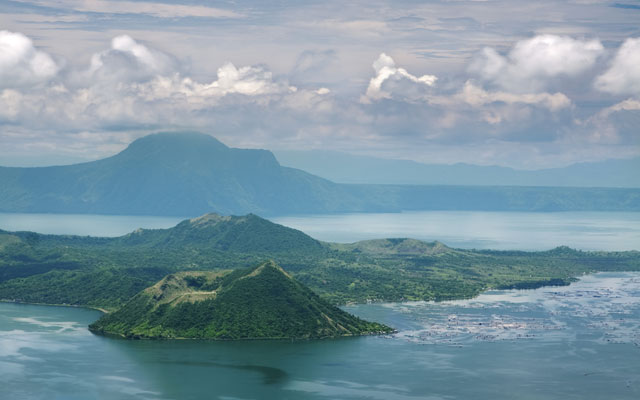
Taal volcano and Taal Lake in Tagaytay City
Taal Volcano, the world’s smallest active volcano, had blasted steam, ash and pebbles up to 10 to 15 km into the sky, according to media reports.
The volcano within a lake, which is a popular tourist spot for trekking and sightseeing for its picturesque view from upland Tagaytay a few hours from Manila, had its alert level raised to four out of five, signalling that a hazardous eruption is possible anytime.
A number of restaurants, malls and tourist attractions in Tagaytay are expected not to open today as ashfall mixed with rain pours down, reaching areas including metro Manila and Calabarzon (Cavite, Laguna, Batangas, Rizal and Quezon) and northern Luzon.
In a press release, Philippine Department of Tourism’s secretary Bernadette Romulo-Puyat said that while initial reports from the field indicated that there were no more tourists in the affected areas, “we continue to monitor the situation and are checking with hotels and other accommodation establishments in the area to ensure the safety of their guests”.
Earthquakes have been reported in areas surrounding Taal Volcano island, where thousands of residents have been evacuated. There were also reports of power outage and poor visibility owing to the volcanic ash. Authorities have advised the public to stay indoors and to wear face masks when heading outdoors.
Clark International Airport, where some flights from NAIA were diverted yesterday, announced the cancellation of seven regional flights today due to volcanic ash emissions.
Philippine Airlines and Cebu Pacific advised passengers to go to their websites and social media accounts for updates on their flight status.
To read about Taal’s impact on business events in Manila, click here.
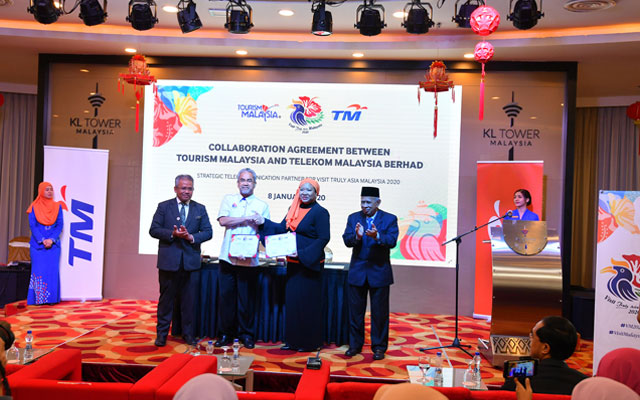
Photo Caption: From left: Ministry of Tourism, Arts & Culture's Dr Noor Zari Hamat; Tourism Malaysia's Musa Yusof, TM's Izlyn Ramli and Rosli Man at the signing ceremony
Telekom Malaysia (TM) has launched the unifi Travel Pass, a tourist SIM in Malaysia, in partnership with Tourism Malaysia for the Visit Truly Asia Malaysia 2020 campaign.
The unifi Travel Pass offers the freedom to be connected via unlimited high-speed data plan, access to unlimited wifi at more than 8,000 wifi@unifi hotspots nationwide; and unlimited entertainment via playtv@unifi app.
Photo Caption: From left: Ministry of Tourism, Arts & Culture’s Dr Noor Zari Hamat; Tourism Malaysia’s Musa Yusof, TM’s Izlyn Ramli and Rosli Man at the signing ceremony
In a joint news release, Tourism Malaysia and TM said: “This collaboration marks an unwavering effort by both parties to optimise the use of latest technology, leverage on digital marketing and maximise integrated marketing campaign to boost Malaysia’s tourism industry. The collaboration will focus on three main pillars, namely, broadband connectivity for tourists; promotion of the campaign via TM’s digital assets; and campaign promotion via global and domestic assets.”
The signing ceremony on January 9 was graced by Noor Zari Hamat, secretary-general, Ministry of Tourism, Arts and Culture; Haji Rosli Man, chairman of TM; Izlyn Ramli, vice president, group brand and communication, TM; and Musa Yusof, director general, Tourism Malaysia.
Tourists can choose either the 7 Days Pass for RM30 (US$7.34) or the 15 Days Pass for RM60, both offering high speed 4G/3G data. It also comes with preloaded airtime credit for them to make outgoing calls at RM0.20 per minute and send SMS at RM0.10 per SMS.
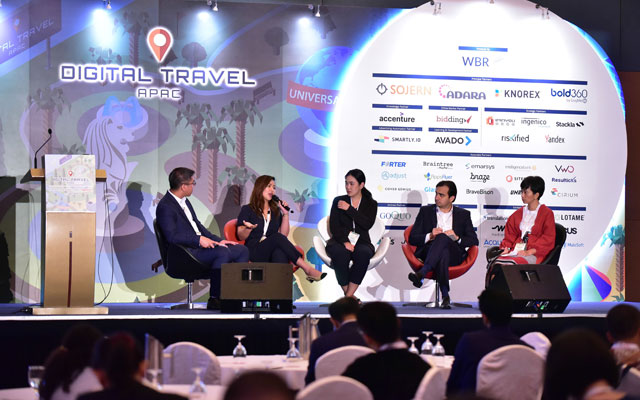
The fifth Digital Travel APAC, which returns to Singapore April 20-22 and held at Resorts World Sentosa, will see top travel professionals across various verticals in Asia discuss the latest considerations in achieving high-level personalisation, as the subject increasingly becomes the key to travel business success in the new decade.
With Perfecting Travel Personalisation as the event theme, Digital Travel APAC will dedicate day one’s conference agenda to achieving personalisation at scale, followed by the future of CX (Customer Experience) on day two.
This year’s edition will revolve around the topic of personalisation
As with previous years, a technology evaluation pre-day will be held for travel brands to benchmark their technologies against their peers, and to meet next-generation travel technologies and their providers.
This year’s Digital Travel APAC speaker line-up includes Singapore Airlines, Shangri-La, and Grab. 2020 will also see new sub-categories added to the speaker panel, including the introduction of a panel focusing on Tourism Boards from Spain, Japan, and New Zealand – all of which are speaking at the event for the first time.
As well, to cater to delegates looking for focused discussions on a specific area of interest, two-track sessions have been added to the conference agenda. Country clinic sessions dedicate themselves to increasingly lucrative markets such as India and Indonesia, whereas “How to” roundtable sessions see attendees forming small groups to engage in discussions on a set of hot travel challenges.
Gladys Caligagan, conference director of Digital Travel APAC said: “The travel industry has gone through a paradigm shift – travellers are much more tech-savvy than ever. They expect digital experiences to be incorporated into their travel experiences, so digital personalisation is more important now than ever. I think the new formats we are introducing will help travel businesses of all sectors to find the solutions they are looking for”.
A turnout of over 700 travel professionals is expected for the event this year.
Insight Vacations has launched the Silver Level of The Travel Corporation’s Agent Academy e-learning programme, offering travel advisors a deeper understanding of what Insight Vacations stands for, and equipping them with the tools and knowledge to better sell its premium guided vacations.
The new course, which follows the introduction of the Bronze level in the fall, aims to benefit advisors with “increased sales, rewards and elated clients”, according to Anthony Lim, Insight Vacations, managing director, Asia.
A screenshot from the TTC Agent Academy website
Furthermore, Insight Vacations is offering Early Payment Discount, with savings of 10 per cent when clients book and pay in full by February 28, 2020.
Travel advisors who complete the Silver Level, which comprises six short courses, will be rewarded with eligibility for fam trips and Advisor discounts on their trips.
The Insight Specialist Gold Level will be available at a later date and will provide in-depth information on Insight’s brochure and the destinations offered on its journeys as well as tools for selling.
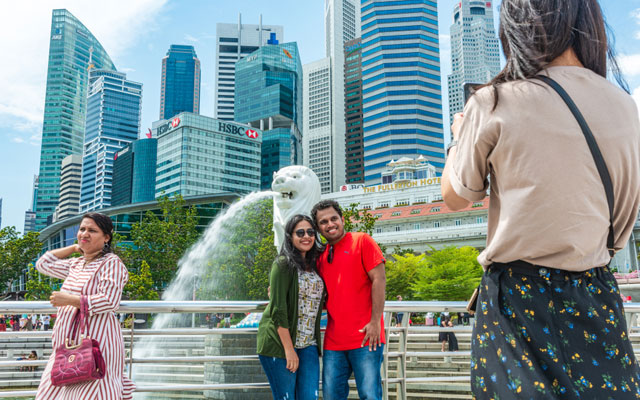
Indian tourists taking a photo against the Merlion
New schemes to support MICE and cruise groups from India, upcoming attractions and intentions to court the niche segments of Indian weddings and school groups formed the bulk of the messaging conveyed by the Singapore Tourism Board (STB) at its participating in SATTE Delhi 2020, as it sought to keep up its travel trade outreach in the marketplace.
During the tradeshow, STB had set up a Singapore: Passion Made Possible pavilion where it presented on its schemes for MICE and Cruise to partner with the tourism sector in harnessing growth opportunities, as well as latest and upcoming developments in Singapore’s tourism landscape such as expansion plans for Marina Bay Sands and Resorts World, redevelopment of Sentosa together with Pulau Brani as part of a landmark Master Plan, and the Mandai eco-tourism hub.
Indian tourists taking a photo against the Singapore skyline
The theme Growing Connections, Achieving Together was adopted to emphasise the tourism bureau’s commitment to deepening the existing partnerships with Indian tourism stakeholders and fostering new ones.
Two new focus areas for the India market in 2020 were also revealed – positioning Singapore as an international wedding destination and re-establishing the destination’s attractiveness for Overseas School Trips.
The delegation was led by G B Srithar, STB’s regional director, India, Middle East & South Asia; Raymond Lim, area director, India & South Asia – New Delhi; and Lim Si Ting, area director, India & South Asia – Mumbai.
While speaking about the STB’s efforts to showcase Singapore as a destination of choice among Indian travellers, Srithar said: “India is the third most important visitor arrival source market for Singapore, and we have been steadfastly engaging travellers through the travel trade, media partnerships and various marketing initiatives.
“Through our recently-held roadshow in Chennai and participation at SATTE Delhi 2020, we seek to renew our ties with the travel trade, entrench existing partnerships and forge new ones through creative promotions, and in the process, ensuring meaningful results for both our Singapore stakeholders and the local travel trade.”
Singapore welcomed 1.44 million visitors from India in 2018, making it the third-largest visitor arrivals source market for Singapore. As of end-October 2019, Singapore has received 1.19 million visitors from India.
India also continues to be Sentosa’s top inbound market, according to Mira Bharin, director (brand, marketing and communications), Sentosa Development Corporation (SDC), who was present at the tradeshow.
Among various new offerings in Sentosa’s pipeline are free interactive night attractions, Magical Shores, which will make its home on Siloso Beach from January 23, 2020; as well as Stacks at Siloso, a mixed-use container development at Siloso Beach, which will launch by mid-2020.
These offerings are part of SDC’s broader push to strengthen Sentosa’s position as a night destination, and come just months after SDC unveiled plans to redevelop Sentosa and the adjacent Pulau Brani into a “game-changing leisure and tourism destination” as part of a landmark Master Plan.
In 2019, STB undertook intensive travel trade outreach efforts across more than 30 cities in India to connect with travel intermediaries promoting Singapore as both a business and leisure destination.
International air passenger markets are still increasing in demand
Preliminary traffic figures for the month of November 2019 released by the Association of Asia Pacific Airlines (AAPA) showed international air passenger markets recorded a further increase in demand, stimulated by the availability of affordable airfares and improvements to connectivity.
In aggregate, the region’s airlines flew 30.3 million international passengers in November, a 3.4 per cent increase compared to the same month last year. The moderate growth reflects the general slowdown in global economic activity.
International air passenger markets are still growing at a constant clip
International passenger load factor averaged 80.1 per cent for the month, after accounting for a 3.6 per cent increase in demand as measured in revenue passenger kilometres (RPK) and a 2.6 per cent growth in available seat capacity.
Commenting on the results, Andrew Herdman, AAPA director general, said: “Asian airlines carried a combined 342 million international passengers during the first eleven months of the year, achieving 4.2 per cent growth despite falling business confidence levels and corresponding moderation in economic activity across regions. Tourism activity continued to lend support to leisure travel, with growth within the region boosted by the availability of affordable air fares.”
Looking ahead, Herdman said: “The outlook for air passenger markets is still reasonably positive, with expectations of continued moderate expansion in the global economy. Meanwhile, the region’s carriers remain vigilant in monitoring and responding to changes in market conditions, while seeking new growth opportunities.”
Guests will get to meet Disney characters dressed in their Spring Festival costumes
To usher in the Year of the Mouse, Shanghai Disney Resort will be holding resort-wide celebrations and special activities from now until February 9, 2020.
Guests will get to meet and take photos with Disney characters dressed in their Spring Festival costumes, including “God of Fortune” Goofy, against various New Year-inspired photo backdrops around Mickey Avenue.
Guests will get to meet Disney characters dressed in their Spring Festival costumes
The incredible Spring Festival 2020 Firework Celebration: Our Families, a new vibrant fireworks show, will also take place daily throughout the Spring Festival period, with projections on the castle featuring families from beloved classic Disney movies, and traditional Chinese elements.
As well, Shanghai Disneyland Hotel is offering an exclusive Spring Festival Banquet on January 23 and 24, 2020 at the hotel’s Cinderella Ballroom. Featuring a range of classic traditional dishes, the banquet will also serve up fun activities like paper cutting, pumpkin carving, and dumpling making.
Guests looking to extend the magic with an overnight stay at either the Shanghai Disneyland Hotel or Toy Story Hotel will find themselves immersed in a festive environment, complete with beautiful decorations, and workshops in lantern-making, Chinese calligraphy, paper-cutting and dragon mask-colouring. In the lobby, traditional stories, solving riddles and festive face painting activities will be conducted.