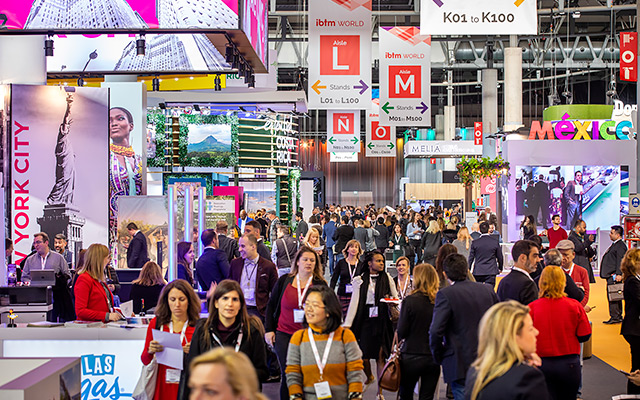
IBTM Asia Pacific provides a gateway to the APAC meetings, incentives, conferences and events market.
Meet with a curated mix of industry suppliers and pre-qualified hosted buyers and be inspired by content that will elevate your events.
Knowledge Programme
Gain insights and inspiration for your next event from our leading sector experts who will be delivering the latest industry updates.
The renowned Singapore MICE Forum (SMF) comes to IBTM Asia Pacific this April. This will include a combination of dynamic talks, campfire sessions and case studies from event experts across the world.
The Forum will be structured around five key themes; Innovation, technology design, sustainability and event trends
Don’t miss the latest updates in your own language, with the introduction of Interprefy, a real-time interpreting service.
Industry Suppliers
Discover the latest and greatest products and services in events all under one roof.
Meet with leading event suppliers such as: New Zealand, Australia, Malaysia, South Korea, Japan, Dubai, Cuba, Netherlands, Portugal and many more.
Supplier Types:
Airlines & Cruise Line
Hotels, Resorts & Spas
Attractions & Entertainment
Conference & Meeting Venues
Convention & Visitor Bureau
Destination Management Services
Event Support Services
National Tourist Organisations
Technology Providers
Networking Events
Join a number of exclusive networking events around your business appointments, where you will have the opportunity to engage with new prospects and catch up with industry peers.
Monday 6th of April 2020
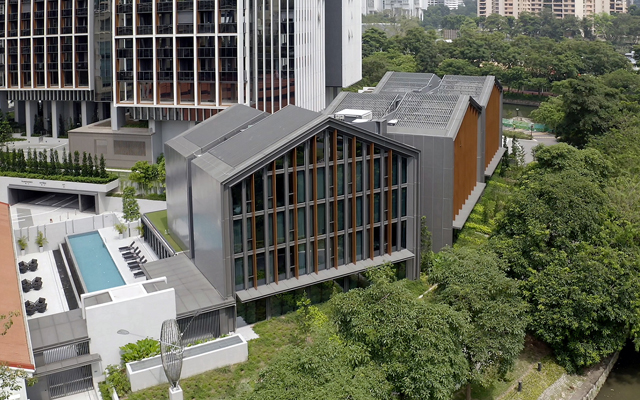
To celebrate the launch of IBTM APAC we invite you to a party at the Mandarin Oriental pool with stunning 360 degree views of the iconic Marina Bay.
Wednesday 8th of April 2020
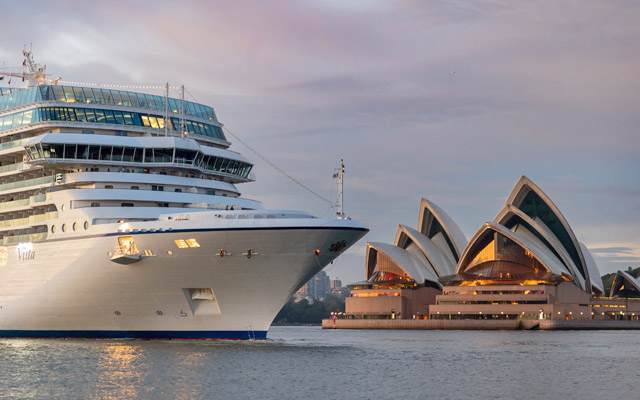
To end the party in style we invite you onto the Genting Cruise Ship, Dream. Taking place at the Zouk Beach Club
Create, Connect and Inspire at IBTM Asia Pacific.
Click here to register now Click here to find out more about our Hosted Buyer programme
Malaysian inbound tourism specialists are putting on their creative hats to whip up programmes that will appeal to the growing number of young FITs – under the age of 30 – from the region, with solutions including volunteer opportunities, sustainable adventure tours and community interactions.
Uzaidi Udanis, general manager of Eyes Holidays, told TTG Asia that the growing presence of millennial travellers has become increasingly noticeable over the last three years.
A group of Asian millennials on the road
He said: “They are made up of young working adults, usually friends travelling together. The growing network of low-cost carriers has made travel very affordable. Five years ago, Asians aged 40 and above used to form the majority of our business at Eyes Holidays and they liked to go on group tours and see places.
“These days, it is those aged 22 to 30 years old who form the bulk of our business and they are activity driven. They like to meet with locals who share similar interests as well as to leave a positive impact on the places they visit.”
Responding to this change in customer profile, Eyes Holidays has developed “feel good” itineraries that provide community interaction.
“In 2019, we organised open sea swimming events in the Straits of Melaka for Chinese millennials who participated with the locals. We are planning to hold similar events in June and July, and are in talks with a few state governments to collaborate with us on them,” Udanis said.
Raaj Navaratnaa, general manager at New Asia Holiday Tours & Travel, said that young Asian millennials are increasingly environmentally conscious and looking for opportunities to contribute to the community. As such, the company has developed tour packages that promote sustainable nature and adventure tours, using local aboriginal guides in nature parks.
Asian millennials also have a deep sense of wanting to improve the living conditions and education of the local communities in the places they visit, Raaj noted.
He said: “Tourists from Singapore and India were keen to teach English to rural communities in Johor whereas those from Indonesia wanted to empower locals by sharing their handicraft skills and (teaching them) how to set up a small business and market their products. We organise day classes where tourists can empower the local communities and this has proven very successful, especially in Johor and Sarawak.”
The rise in Asian millennial arrivals has led Ramada Plaza by Wyndham Melaka to see brisk business for its connecting rooms, revealed Jason R Bak, resident manager.
The hotel is doing its part to sweeten the destination experience for this segment of travellers too, by roping in local trishaw riders to provide shuttle rides to nearby UNESCO Heritage attractions and emphasising the property’s sustainable practices to appeal to eco-conscious individuals, which many millennials are.
Tourists visiting the Tegenungan Waterfall in Ubud, Bali
Indonesian tour operators are upbeat about the growth of arrivals from Vietnam on the back of improved access from Ho Chi Minh City and Hanoi.
Bali, in particular, has seen healthy growth in traffic from Vietnam, notably since Vietjet started a five-times-weekly service from Ho Chi Minh City last May, after which Vietnam Airlines started to fly the same route in October.
Improved air connections have seen Vietnamese travellers heading to Bali, but not vice versa; Tegenungan Waterfall in Ubud, Bali pictured
As well, Jakarta enjoys direct connections with Ho Chi Minh City with the help of Vietnam Airlines.
Arrivals between January and November 2019 grew by 26 per cent over the same period in 2018, while arrivals into Bali was up 40 per cent, according to data from the Ministry of Tourism and Creative Economy (MTCE).
Further growth is expected this year as Vietjet commences its daily service between Hanoi and Bali from January 26.
Irwan Raman, executive director of OneAsia Indonesia, said: “Through our representative in Vietnam, we already have 13 leisure and incentive groups to Bali and two to Yogyakarta. We are optimistic that the market will continue to grow, thanks to the direct flights.
“I hope that the MTCE will strengthen its marketing activities here. In fact, they should start expanding their reach to the neighbouring cities.”
Jonathan Tran, executive director of Ho Chi Minh City-based Lac Hong Voyages, said: “Vietnamese travellers like Bali, particularly for its culture, food and weather. Now, every week, we have groups going to Bali and we have started to see some groups going to Yogyakarta, too.
“Last year, we did a presentation to introduce Indonesia (to clients) in Hanoi, and the feedback was good.”
Meanwhile, Adjie Wahjono, operations manager of Aneka Kartika Tours, sees the opportunity to maximise capacity by tapping the longhaul markets, especially with Vietnam Airlines, which also has flights to Europe.
He said: “Philippine Airlines’ Manila-Bali route, for example, does not only carry Filipinos but also Chinese and Japanese markets. So there is an opportunity for European tour operators to work with Vietnam Airlines to bring tourists to Indonesia through Ho Chi Minh City.”
In fact, Tran said the DMC had been selling combined packages to leverage Vietnam Airlines’ Paris, London and Frankfurt services to Ho Chi Minh City.
Conversely, Vietnam has yet to benefit significantly from the improved air connectivity with Indonesia.
Ha Van Siew, vice chairman of Vietnam National Administration of Tourism, Ministry of Culture, Sports and Tourism, explained: “(Most of) these flights are to Bali, while the (key outbound) market is Jakarta. What we need is a good link (with Jakarta).”
On this, Tran said: “We are waiting for Garuda to begin flights to Vietnam.”
He added that Vietnam needs to compete with popular destinations like Thailand, Japan and South Korea, and to improve on its halal offerings in order to attract Indonesian travellers.
Irwan opined that Vietnamese airlines could still capture the Indonesian market by capitalising on the airlines’ longhaul and regional network.
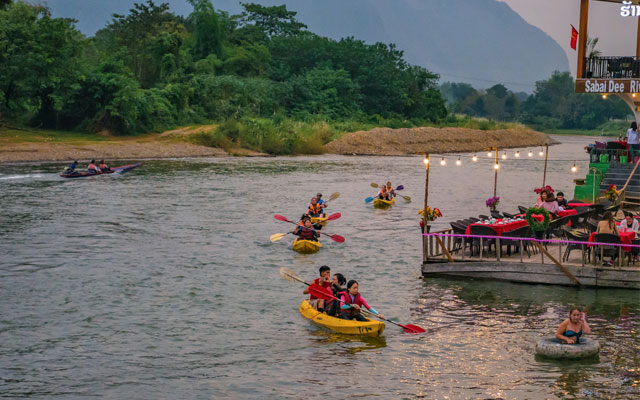
Chinese tourists kayaking down the Nam Song River in Vang Vieng
Trip.com Group CEO Jane Sun and the Lao minister of information, culture, and tourism Kikeo Khaykhamphithoune convened in December to discuss cooperation possibilities in tourism, including the streamlining of visa applications and cultural exchange projects, to drive tourism traffic between the two lands.
Commenting on the meeting, Kikeo said: “Culture and tourism are some of the best (ways) to promote people-to-people exchanges, as well as cooperation between countries. The Chinese market is crucial to Lao tourism, and we welcome Trip.com Group to grow its presence in our local tourism industry.”
Chinese tourists kayaking down the Nam Song River in Vang Vieng
Cooperation between the two is not new. Trip.com Group global visa service centre recently forged an exclusive strategic cooperation with Laos to create a visa “green channel”, allowing Chinese tourists to enjoy a streamlined visa application process.
Statistics indicate that orders for visa applications to Laos via Trip.com Group platforms have surged 80 per cent compared to 2018, up twice that of 2017.
Sun anticipates an enhanced exchange of resources and information between Laos and China, with an emphasis on biological protection and sustainable tourism. “We hope to strengthen cooperation with Laos, both in the development of new products and promotion of bilateral tourism on our platforms, helping the local industry to thrive,” she said.
Some 7.2 billion passengers will travel in 2035, a near doubling of the 3.8 billion air travellers in 2016, according to the latest edition of the 20-Year Air Passenger Forecast by the International Air Transport Association (IATA).
Asia-Pacific is set to be the biggest driver of that demand, as it is expected to account for more than half of the new passengers over the next two decades. China will displace the US as the world’s largest aviation market around 2024, while India will displace the UK for third place in 2025. Indonesia and Japan will be ranked 5th and 7th, respectively.
Wen: embracing technology and innovation is the way forward for the aviation industry
Growth will also be increasingly driven within developing markets. Over the past decade, the developing world’s share of total passenger traffic has risen from 24 per cent to nearly 40 per cent, and this trend is set to continue.
Efficiencies and innovation as the new normal towards scale As air travel continues to grow, existing infrastructures and processes are being put to the test. This shift in growths also means that Asia-Pacific needs increased capabilities to not only support but ride its aviation boom.
Maintenance, Repair and Overhaul (MRO) services play a fundamental role in sustaining airline fleets, with an increased emphasis on efficiencies and innovation, to manage record volumes of MRO demand from the region. Increasingly connected aircraft have the capability to share extensive informatics in operations to enhance performance, safety functions, and improve in-flight services.
Additionally, route optimisation and passenger processing demand intelligence to respond to the high frequency of travel. Innovative use of biometrics is already streamlining and speeding up passenger processing. Beyond the end-user convenience, software-driven and scalable solutions are enabling airports and airlines to implement and grow their biometric capabilities at various touchpoints, to consistently build efficiencies into the boarding process to sustain passenger satisfaction.
The promise of digital transformation in the face of a rapidly-changing landscape What the aviation industry really needs is the agility to manage growing and rapidly changing demands in the long run. And that calls for an industry-wide transformation.
Digital transformation is already fostering innovative business models and challenging legacy businesses across different industries. At the same time, it is revolutionising operations, enabling opportunities and new revenue streams for industry players that are willing to adapt and rise to the change.
In the aviation industry, we are witnessing the growing potential for intelligent technologies to enhance safety, generate insights, and foster breakthroughs in efficiencies and innovation to create immense value and improve overall passenger experiences. Intelligent systems and autonomous advances have been introduced into the commercial aviation sector, with systems delivering solutions that reduce pilot workload, enhance situational awareness and assist with smarter, timelier decision-making.
But this transformation is not without challenge. The aviation industry is one of the most complex ecosystems to navigate, given the broad range of entities and expertise, from the Original Equipment Manufacturers (OEM) that design and produce aircraft, to small software vendors with the analytical know-how to aid discovery of new operational insights.
A collective effort in transforming processes in aviation Such complexity calls for a collective effort towards embracing a new model of relationships in the industry, defined by ecosystem-wide innovation driven by connectivity, shared data, intelligent systems, and end-to-end process transformation.
But industry players are often hardwired in systems and technology investments of the past, due to reasons not limiting to the inability to transition in the face of pressing daily demand, investment and cost hurdles, and risk-adversity. Over-reliance on legacy systems remains one of the biggest challenges in the digital transformation journey to date.
For the aviation industry to truly transform, it needs industry leadership in converging capabilities, while seeding new paths for technology and solutions to add more value.
Planning for a sustainable future As the world shifts towards being increasingly environmentally conscious with governments and corporates outlining strong sustainability goals, it is also imperative that the aviation industry aligns its efficiencies and growth with the global movement.
Investments in next-generation electric and hybrid-electric systems for use on current and emerging commercial and military platforms is a critical first step in sustainably growing the industry, against a backdrop of a more electric world.
Revolutionising the aviation industry As we look at the route ahead, there are clearly challenges in transforming the aviation industry.
The industry calls for a connected commercial aviation ecosystem that links partners and touchpoints with powerful data for unprecedented insights. And more electric innovations that will significantly increase power system density, laying the groundwork to fly a hybrid-electric regional passenger aircraft by 2020.
Through advanced flight control, data link and guidance technologies, there is an opportunity to enhance the integration and safety of manned and unmanned flight, and make technologies safer, more secure and more informed – an intelligent approach to redefining aerospace.
And embracing technology and innovation, and collaboration at this juncture is critical to powering the future of aviation for Asia-Pacific and the world.
Indian full-service airline Vistara has appointed APG as its representation company in France.
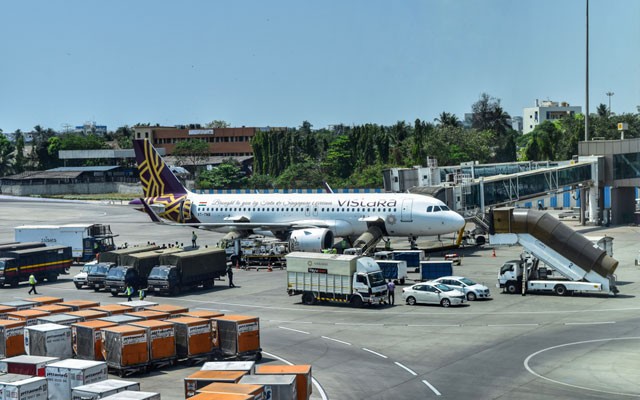
Vistara Airlines at Mumbai International Airport
Under the partnership, APG will lead Vistata’s sales and servicing activities in France, which the airline’s CCO Vinod Kannan said was “an important travel source market for India”. He added that with Vistata’s sales presence now in France, more travellers will enjoy “seamless connectivity” on the carrier.
Today, Vistara connects 34 cities, operates more than 200 flights daily, and has flown over 20 million passengers.
Singapore Airlines (SIA) and Lufthansa Group (LHG) have partnered exclusively with The Travel Corporation (TTC) to launch special business and economy class airfares giving travellers greater flexibility with the option to change their flight dates, subject to availability, for a nominal fee of S$30 (US$22) for their first date change.
The change will be subject to the availability of the same booking class that was originally purchased.
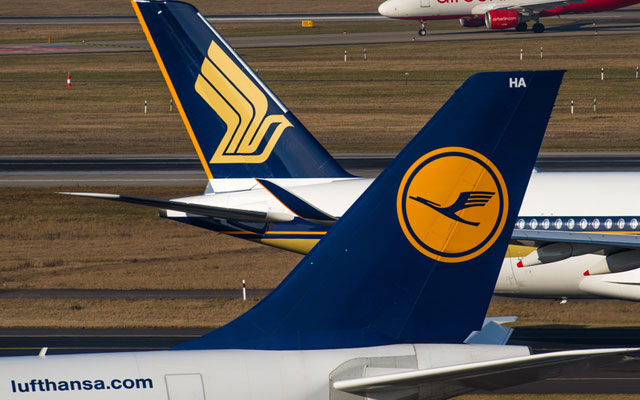
SIA and Lufthansa have partnered exclusively with TTC to launch one-of-a-kind business and economy class airfares
In comparison, the change fees for SIA starts from S$270, and S$300 for LHG, according to Nicholas Lim, managing director, TTC, Asia.
Available to Singapore-based travel partners selling TTC products, this airfare offer can be booked across the airlines’ joint venture network, from Singapore to Austria, Belgium, Germany and Switzerland, covering a total of 30 cities including Berlin, Munich, Frankfurt, Nuremberg, Geneva, Vienna, Salzburg, Basel, Zurich and Brussels.
This airfare deal, which starts from S$988 for economy and S$4,764 for business (minimum two-to-go) is part of TTC’s centenary celebrations, and is offered to customers who have purchased European guided holidays or river cruise trips under TTC’s brands of products: Trafalgar, Costsaver, Insight Vacations, Luxury Gold, U River Cruises, Uniworld and Contiki.
The sales period is up to June 16, 2020, covering travel period ex-SIN through September 30, 2020.
The Malaysian Association of Tour and Travel Agents (MATTA) has inked a Memorandum of Understanding (MoU) with three national travel associations from India to boost traveller traffic between Malaysia and India, in conjunction with Visit Malaysia 2020.
The associations are Travel Agents Association of India (TAAI), Travel Agents Federation of India (TAFI) and Outbound Tour Operators Association of India (OTOAI).
MATTA’s president Tan Kok Liang said in a statement that MATTA will be “introducing fresh itineraries and attractive tour packages to encourage more tourists from India to visit Malaysia”.
Work with airlines to expand routes and flight frequencies will continue so as to build India into a “stronger tourist source market”.
John Drummond has been promoted to general manager of InterContinental Grand Stanford Hong Kong.
He was previously the hotel’s resident manager, a post he has been in since 2010. Drummond first joined InterContinental Grand Stanford Hong Kong in 2004 as executive chef and was promoted to director of F&B in 2006.
The Scot’s hospitality experience spans 20 years across three continents – Asia, Australia and the Middle East. During this career, Drummond has been the executive chef and developed F&B concepts for hotels such as Shangri-La Taipei, Hayman Island Resort Australia, and InterContinental Bahrain.
A whisky aficionado, Drummond is also the whisky ambassador of the hotel. He is the founder of the first-ever Hong Kong Whisky Festival, which is famed as the largest whisky event in Hong Kong. The event, celebrating its fifth edition, features over 1,100 different whisky expressions from around the globe, alongside an array of over 30 masterclasses.
Simon Akeroyd, Vice President, Corporate Strategy and Business Development, Amadeus Asia Pacific
Originally designed solely to make calls, mobile phones have since come a long way –a touchscreen, camera, location services and access to the internet are standard features on most smartphones. However, we shouldn’t blindly accept the smartphone, as it is today, as the perfect device.
There have been countless instances where a longstanding, universally accepted way of doing things becomes rapidly upended by innovation and disruptions. Think of bank cheques, and how they have become almost obsolete.
Today it is an accepted norm to wake up with our phones, check them throughout the day and then plug them at night so that we can repeat the process the next day. While this is considered normal today, new technologies could easily usurp the smartphone within the next five years.
Phones are losing their touch
Technologies, such as smart speakers or virtual assistants like Siri, are supported by AI and are constantly improving their accuracy and capability to serve personalized predictions based on the user.
Gestures are also becoming a part of the mobile phone experience. Google’s latest handset, the Pixel 4, is the first time a mobile has included Improvements in voice and artificial intelligence (AI) are moving us forward at a dramatic pace. Voice a radar to power motion sensors that recognize human gestures. This means users have the ability to change songs, accept calls and swipe away alarm notifications without having to touch the device.
Essentially, the combination of hands-free devices, improved voice control technology and gestures will make our consumption of music, phone calls and messages a touchless experience. If we have voice enabled WiFi ear pods, why would we need to hold a phone?
Is the phone the best prism to view the Mixed Reality world?
Mixed Reality (MR) is a technology that combines the real world and virtual world. Where Augmented Reality (AR) simply overlays virtual objects onto the real-world, MR merges virtual objects onto the real-world environment.
As MR innovation improves, we will be provided real-time additional information about our surrounding reality. Today this mostly implies holding up your phone to see the augmented reality information layered on top of the world viewed through your phone camera lens.
Wearable technology, such as smart glasses, can be combined with virtual assistants to give the user the power to reply to interact with MR, read messages, see directions, change songs, take a photo and filter emails without having to pull out a separate physical device. The initial experiments in glasses had mixed results, but as the information gets richer and the glasses get better (even shrunk to lens size) would we still want to hold up our phones to see the MR world?
Experts are suggesting the innovation in MR, voice driven virtual assistants, and anticipatory AI will drive the development of a new mobile computing platform, taking much of the mobile experience away our personal screens and becoming integrated into the world around us[1].
Ultimately, just like the bank cheque, the smartphone will be disrupted. We accept the current state of smartphones as the norm, but in as little as the next few years, we could see the introduction of technology that will unbundle the smartphone and fundamentally change the way humans organize their lives, stay in touch, entertain themselves and communicate with the world.