TTG Asia
Asia/Singapore Monday, 29th December 2025
Page 116

Minor Hotels strengthens presence in China with Anantara Clear Water Bay Sanya Resort

0

Minor Hotels has inked an agreement with its Chinese joint venture, Funyard Minor, and Chongqing Yuanchu Luquan Cultural Tourism Group to develop the Anantara Clear Water Bay Sanya Resort. Set to open in October 2027, the 90-room property will be located along Clear Water Bay’s 12km sandy beach, one of the world’s three ‘Singing Beaches’.

Currently, Minor Hotels operates four properties in China, including two Anantara resorts in Guiyang and Xishuangbanna, along with Oaks and Tivoli properties in Chengdu. The opening of Anantara Clear Water Bay Sanya Resort follows other recent announcements, such as Anantara Xiling Snow Mountain Chengdu Resort and Anantara Thousand Island Lake Resort, as part of Minor Hotels’ plan to expand its portfolio in China to 15 properties within the next three years.

Anantara Clear Water Bay Sanya Resort, opening in October 2027, will feature 90 rooms and beachfront amenities

The resort will be located in Lingshui Li Autonomous County, Hainan, 35km from Sanya city centre. The region is known for its natural beauty and tropical climate, offering sunny beaches, clear seas, and vibrant local culture. Nearby attractions include Fenjiezhou Island, Qingshui Bay, Nanwan Monkey Island, and R&F Ocean World. Guests will also be able to experience the region’s unique crafts, music, and festivals.

Anantara Clear Water Bay Sanya Resort will offer 90 rooms and suites, with facilities such as specialty restaurants, an all-day dining venue, an Anantara Spa, wellness centre, outdoor swimming pool, and entertainment centre. For events, the resort will feature a 400m² banquet hall and a 350m² outdoor lawn.

Eddy Tiftik, vice president of development for Greater China at Minor Hotels and board member of Funyard Minor, remarked: “This project represents a significant expansion for our Anantara brand and our commitment to promoting sustainable tourism development in Hainan and supporting Lingshui’s ‘2+7+3+N’ coordinated development plan. We look forward to deepening the influence of the Anantara brand in China through this new project, creating a luxury leisure destination with deep reverence for its natural surroundings and cultural heritage.”

“The Clear Water Bay offers travellers luxurious facilities that seamlessly blend nature and culture, including an international standard golf course, luxury yacht marinas, fishing villages and tropical botanical gardens. We look forward to welcoming guests to explore the region with Anantara in the coming years,” said Liu Yuanchu, chairman of Chongqing Yuanchu Luquan Cultural Tourism Development Group.

Philippines and Emirates collaborate to boost visitor arrivals

0

The Philippine Department of Tourism (DoT) and Emirates have joined forces to promote the Philippines as a tourist destination.

The agreement was signed at the Arabian Travel Market (ATM) in Dubai on April 28 with the aim of increasing the number of visitors to the Philippines.

A new partnership between the DoT and Emirates aims to increase tourism arrivals to the Philippines from the Middle East and Europe

Tourism secretary Christina Garcia Frasco, who witnessed the signing, highlighted the importance of the collaboration for attracting travellers from the Middle East and Europe. She added that it would provide additional air options for the Filipino diaspora who wish to visit the Philippines.

Under the memorandum of understanding (MoU), the DoT and Emirates will develop plans to promote the Philippines in the Middle East, Mediterranean, and European markets. The two organisations will also collaborate on media platforms to increase reach and engagement, with Emirates promoting the Philippines across its network.

The partnership will also explore joint activities to develop tourism in the Philippines, expand flight routes and frequencies, and coordinate with government agencies and relevant sectors.

Frasco stated that the partnership aims to increase visitor traffic by leveraging Emirates’ global network. “This collaboration between the DoT and Emirates not only strengthens our tourism sector but also fosters deeper cultural ties between our regions,” she added.

Orhan Abbas, senior vice president, commercial operations, Far East, Emirates said the partnership reflects the Philippines’ growing appeal to travellers worldwide. He noted that Emirates has been serving the Philippines for nearly 35 years, making it one of the longest-served destinations in the airline’s global network. He also highlighted the popularity of the Philippines as a destination for both leisure and business travellers.

Emirates, based in Dubai, operates the world’s largest international airline network, with 140 destinations across six continents. The airline offers 28 weekly flights to Manila, Cebu, and Clark, providing 22,700 weekly seats to and from Dubai.

In November 2024, Emirates launched its Emirates World retail store in Manila, offering an immersive experience for Filipino customers.

As of April 28, the Philippines had welcomed 21,576 travellers from the UAE, according to DoT data. The country has seen steady growth in tourist arrivals since reopening its borders in 2022. From February to December 2022, the Philippines received 2,084 visitors from the UAE. This figure rose to 43,962 in 2023 and 69,995 in 2024.

Tourism revenues from UAE travellers also grew, with the Philippines earning an estimated US$11.81 million in 2022, US$45.77 million in 2023, and US$69.59 million in 2024. The tourism sector saw a 536.6 per cent increase in revenues from UAE visitors in 2024.

Club Med unveils first family oasis in Asia-Pacific

0

Club Med has launched its first dedicated family space in Asia-Pacific with the opening of the Lai Thai Family Oasis at Club Med Phuket. The new space offers a setting for parents and children to foster connections and share experiences, creating quality, happy memories.

At the centre of the Family Oasis is a Splash Park with slides, water cannons, spray features, and large splash buckets. Lounge chairs and a poolside snack bar provide places for rest and refreshments.

Families can make a splash together at the new Splash Park in Club Med Phuket’s Family Oasis

The Lai Thai Family Oasis includes 24 Family Superior rooms and eight Family Themed rooms across two floors, including options with mobility access. Rooms accommodate up to two adults, two children under 11, and one baby. Ground-floor rooms offer terraces that connect to the Splash Park, while upper-floor rooms have balconies.

Family Themed rooms include amenities for young children such as baby gear, children’s toiletries, robes, and activity kits.

The resort is located near Kata Beach and includes three zones: the Family Oasis, a Zen Area with an adults-only pool and bar, and the Heart of the Resort, home to dining, entertainment, and communal facilities. Children from four months to 17 years can join age-based programmes at the Kids Club, run by trained staff.

For more information, visit Club Med.

Thailand faces safety concerns from Chinese travellers despite positive trends

0

Safety perceptions among Chinese travellers are improving, but concerns about South-east Asia persist. Thailand, a popular destination, is seen as “safe” by 19 per cent of respondents in a Dragon Trail International (DTI) poll from April 2025, with 30 per cent still “unsure”.

During the recent DTI webinar, Sienna Parulis-Cook, marketing and communications director, noted that “first-time travellers and those travelling with families go to Singapore instead”.

Despite improvements, Chinese travellers see Thailand as “unsafe,” with Singapore preferred for families; Wat Paknam Phasi Charoen in Bangkok, pictured

Singapore’s safety perception stands at 79 per cent, down from 81 per cent in September 2024, ranking behind Hong Kong (92 per cent) and ahead of Switzerland (67 per cent). The three South-east Asian countries perceived as least safe are Cambodia (15 per cent), Thailand (19 per cent), and Vietnam (22 per cent).

Key factors influencing safety perceptions include Chinese authorities’ travel safety assessments (54 per cent), local safety initiatives (51 per cent), and good medical services (28 per cent).

DTI’s survey of 1,022 respondents also found that information from travel agents was the least influential, with just eight per cent citing it. Information from friends or family was more influential at 15 per cent.

Parulis-Cook highlighted that no “big incidents” have occurred since the January kidnapping of a Chinese actor in Bangkok, though she acknowledged that Thailand and its neighbours are addressing safety concerns.

DTI’s Chinese Travel Sentiment & Plans for 2025 report coincided with the five-day May Day holiday. Parulis-Cook said those who took leave on April 25 enjoyed an extended holiday and potentially travelled longhaul.

OTA findings shared during the webinar show the top 10 outbound destinations, as of April 15, are Seoul, Osaka, Tokyo, Singapore, Bangkok, Kuala Lumpur, Hong Kong, Jeju, Ho Chi Minh City, and Hanoi. Tuniu reported outbound trips accounted for 28 per cent of May holiday bookings, with 60 per cent booking group travel.

Apart from Hong Kong and Macau, popular outbound destinations include Japan, the Maldives, Indonesia, Thailand, Malaysia, Singapore, South Korea, Sri Lanka, Russia, and New Zealand.

Airbnb reported searches for the Labour Day period are twice as high as last year. Popular destinations include Japan, Italy, France, New Zealand, Spain, South Korea, Thailand, the US, the UK, and Indonesia. The accommodation platform added that cultural events in Japan and outdoor activities in Europe are particularly popular.

Tourism Australia targets growth in Asia amid rising arrivals

0

Australia is shifting its tourism strategy towards the growing Asian travel market, responding to changing visitor trends and expanding aviation links.

The updated approach – balancing growth in Asia with continued engagement in Western markets – was outlined on April 28 at the Australian Tourism Exchange (ATE25) in Brisbane, a four-day event featuring a record 1,600 sellers and 726 global buyers, aimed at driving international visitation in both the short and long term.

Phillipa Harrison addresses international media at the opening on ATE25 at the BCEC; photo by Adelaine Ng

Tourism Australia managing director Phillipa Harrison presented the plan, noting that arrivals from Asian markets doubled between 2010 and 2019, with a further 50 per cent increase projected by 2035.

“We’re casting our minds now to 2035 and thinking about the sustainable growth of the tourism industry,” Harrison told 68 international media representatives from 17 countries.

“The Asian century continues. Our Western markets are still going to be incredibly important to us going forward, but they’re just growing at a slower rate. That is something that we’re mindful of,” she added.

Australia recorded 8.3 million international arrivals in the past year, up nine per cent year-on-year and 82 per cent compared to two years ago. Growth has been driven by visitors from India, Japan, and South Korea, supported by new direct flights to Broome, Darwin, and Cairns.

While Australia’s 15 core source markets, including New Zealand, China, the UK, and the US, remain strong, Harrison confirmed Vietnam will be added as the 16th core market this year. “We’re going into Vietnam for the first time in a long time and starting to build our connections with that incredible country,” she said.

Holiday visitation grew by 14 per cent over the past year, making it the fastest-growing segment, as confidence in longhaul travel to Australia returns.

Tourism Australia’s future focus areas will also include agritourism, attracting high-yield travellers, and harnessing social commerce, supported by 364 new experiences and infrastructure projects currently in development.

Betting big on India

0

What are the focus areas for Radisson Hotel Group (RHG) in India? Which brands are you prioritising in the Indian market?
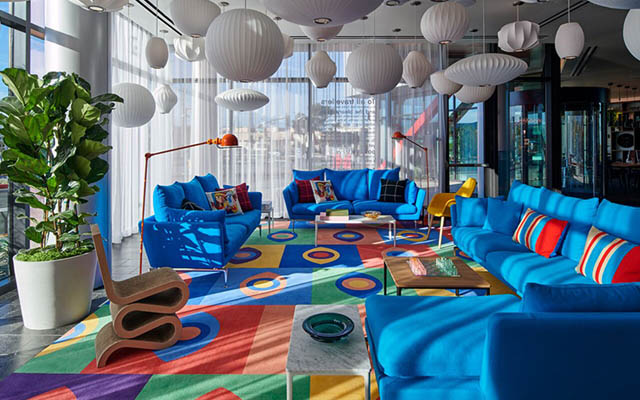
With approximately 130 operational hotels in India and 20 more openings planned, I believe the country is poised for significant growth in the mid-scale, upscale and upper-upscale segments. Radisson Hotel Group is well-positioned to capture this opportunity. Last year, we launched a new mid-scale brand specifically designed for India: Park Inn & Suites. In the upscale and upper-upscale segments, we continue to expand with brands such as Radisson, Radisson Blu, Park Plaza, and Park Inn. We also introduced our luxury brand, the Radisson Collection, with our first property in Srinagar.

Going forward, our primary focus will be on scaling our presence in the mid-scale, upscale, and upper-upscale categories from a volume perspective. However, we will also continue to invest in the luxury segment. We are planning at least two more Radisson Collection properties in Jaipur and Udaipur and are exploring opportunities to expand the Collection brand across India.

Which markets are you targeting for expansion?
We currently operate in around 75 locations and aim to expand to 114 across India within the next 36 to 48 months. Our strategy involves strengthening our footprint across tier-I to tier-III cities, including destinations that are relatively unknown today. Radisson has often been the first international brand to establish a presence in emerging locations, helping to put them on the hospitality map. For instance, we have opened hotels in Saputara and Karjat in Maharashtra and Thrissur in Kerala. Most recently, we opened a property in Jawai, Rajasthan, becoming the first international brand in that region. We are also focusing on tapping into the growing spiritual tourism sector. Our presence in key spiritual destinations such as Katra, Varanasi and Ayodhya (where we were the first branded hotel to open) reflects this commitment. Lastly, maintaining a strong presence in the metros and the top 40 cities in India remains a critical pillar of our strategy.

How do you view the increasing competition with Asian-grown brands entering the Indian market and existing ones expanding their presence in the country?
I believe the more, the merrier. India remains a hugely under-supplied hospitality market, and even over the next five to seven years, demand will outstrip supply. Currently, as per industry estimates, India has around 185,000 classified hotel rooms. In my opinion, we could reach one million operating rooms within the next seven years. However, even a million rooms would be insufficient for a population of 1.4 billion. Hospitality is integral to the government’s Developed India vision – not just for tourism but also as a significant employment generator. It is the second-largest employment sector after agriculture and this trend will continue. Therefore, industry-wide participation in skilling initiatives is crucial and I commend the government’s efforts. We too are committed to collaborating with the government to ensure that hotel-related skills training reaches even the most remote parts of India.

What are your expansion plans in other South Asian markets?
While we are certainly interested in expanding in South Asian markets like Sri Lanka and Nepal, India remains at the centre of our South Asia growth strategy. States like Gujarat and Maharashtra alone have the potential to house more hotels than the total hotel inventory in some neighbouring countries. The opportunities in India are immense. Can we eventually match the number of rooms found in China? It is hard to say, but the growth potential here is undoubtedly significant.

You have been rebranding properties in India, such as The Manu Maharani (now Namah Nainital, a member of Radisson Individuals Retreats). Is this a segment you are focusing on?
Absolutely. Globally, conversions are a major opportunity and we fully embrace them. Through soft branding and conversions, we help standalone hotels achieve international quality standards, elevate service levels and benefit from the system contributions that an established brand like ours can offer. This will continue to be a key focus for us. Some of our recent successful conversions include St Marks Hotel (a member of Radisson Individuals) in Bangalore’s CBD and Temple Tree Hotel (a member of Radisson Individuals) in Shirdi.

Post-lockdown, the inbound tourism market has been slower to recover compared to domestic tourism. How do you view this scenario for hospitality players?
Every hospitality brand would welcome an increase in inbound tourism. However, India is not a cheap destination compared to South-east Asian countries. Travel costs are relatively high here for a variety of reasons. I believe that as more mid-scale, upscale and upper-upscale hotels open across the country, inbound tourism will grow. Additionally, initiatives like Swachh Bharat (Clean India) will be crucial. For foreign tourists, hygiene and sanitation are non-negotiable and while progress has been made, we need to do much more at the city level. It’s not just about gated communities or residential complexes; urban hygiene standards across cities must improve.

How are weddings and MICE segments performing for you in India?
Weddings will continue to be a major driver of occupancy and revenue for us. Approximately 50 per cent of our revenues come from F&B, with around 80 per cent of that linked to MICE events. We recently launched The Art of Weddings, an end-to-end solution that caters to the diverse needs of wedding celebrations, whether timeless traditional weddings, bespoke personalised events, or couples seeking Instagram-worthy moments. The Art of Weddings is designed to meet the evolving expectations of today’s wedding clientele.

Marriott International to acquire citizenM brand

0

Marriott International will acquire the lifestyle brand citizenM, enhancing its portfolio of select-service and lifestyle hotels. This acquisition is expected to support Marriott’s global expansion in these segments, aligning with the company’s strategy to broaden its offerings for guests and Marriott Bonvoy members.

The brand citizenM currently operates 36 hotels, with 8,544 rooms, across more than 20 cities in the US, Europe, and Asia-Pacific, including major cities such as New York, London, Paris, and Rome. The brand’s pipeline includes three hotels under construction, adding over 600 rooms, expected to open by mid-2026, with potential for significant growth across Marriott’s global regions in the next decade.

The acquisition supports Marriott’s growth in innovative lifestyle offerings; citizenM Menlo Park, pictured

Founded in 2008, citizenM is recognised for its efficient use of space, tech-driven in-hotel experience, and emphasis on art and design. The brand caters to value-conscious travellers, offering smart in-room features, collaborative workspaces, meeting rooms, grab-and-go food and beverage options, and common areas with artwork and local artefacts.

Upon closing, Marriott will pay US$355 million for the brand and its intellectual property. The citizenM portfolio will then operate under long-term franchise agreements with Marriott, with an estimated annual fee income of around US$30 million from the open and under-construction hotels. The seller may also receive additional earn-out payments of up to US$110 million, based on the brand’s future performance over a specified period, starting from the fourth year after closing. Morgan Stanley & Co. International plc and Eastdil Secured served as financial advisors to the seller.

The transaction is subject to customary conditions, including US regulatory approval. If completed in 2025, Marriott expects net rooms growth for the year to approach five per cent.

Anthony Capuano, president and CEO of Marriott International, commented: “We are thrilled to add citizenM as a unique, differentiated offering to our select-service brand portfolio as we continue to strengthen Marriott’s foothold in this valuable market segment around the world.”

“I envisage this relationship will greatly enhance citizenM’s global reach and brand impact. Marriott as an organisation shares our values and culture, and I am confident in their deep commitment in continuing our brand’s DNA into the future,” said Rattan Chadha, founder and chairman of citizenM.

Sojern partners with Ascott to boost direct bookings

0

Sojern has been appointed as a global marketing partner for The Ascott. Through this partnership, Sojern will use its AI-based marketing platform to improve Ascott’s digital marketing operations, increase return on investment (ROI), and drive direct bookings.

Ascott operates more than 980 properties in over 230 cities across more than 40 countries. Its brands include Ascott, Citadines, lyf, Oakwood, Somerset, The Crest Collection, The Unlimited Collection, Fox, Harris, POP!, Preference, Quest, Vertu and Yello. The company has a presence in Asia-Pacific, Central Asia, Europe, the Middle East, Africa, and the US.

Sojern teams up with Ascott to boost digital marketing and drive direct bookings globally; lyf Georgetown Penang, pictured

The partnership follows a six-month request for proposal (RFP) process during which Ascott reviewed its marketing vendors and selected Sojern as one of five global partners. Ascott’s decision reflects its focus on a data-led approach to digital marketing aimed at improving investment outcomes and customer engagement.

Sojern’s marketing platform and multichannel capabilities will support Ascott in increasing direct bookings by using programmatic advertising and audience targeting to attract travellers to its website and app. It will also help improve customer engagement through real-time travel intent data that enables timely audience targeting.

In addition, Sojern will support Ascott’s global and regional teams by sharing marketing insights and expertise through knowledge-sharing initiatives, workshops, and industry events.

Lina Ang, managing director, international property sales, Sojern, said: “This (partnership) reflects our shared vision of driving meaningful traveller engagement through smarter, data-driven marketing, and we’re excited to continue driving impactful results together on a global scale.”

Plaza Premium Group unveils Saudia Airlines lounge at Heathrow

0

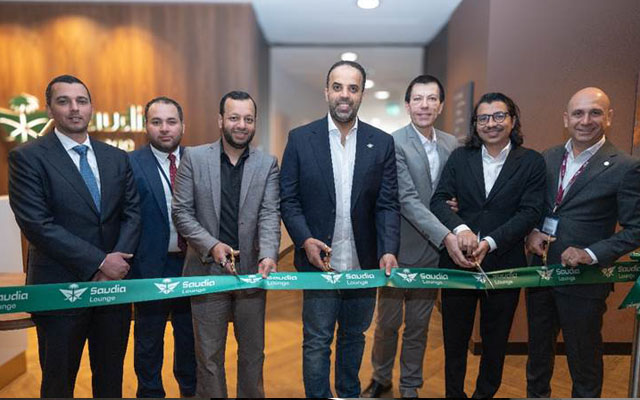
Plaza Premium Group (PPG) has opened a new airline lounge for Saudia Airlines at London Heathrow, Terminal 4, marking the first collaboration between the two companies.

The lounge, which serves First and Business Class passengers, offers a range of amenities, including runway views, a VIP zone, a buffet area, and dedicated workspaces. A new tea bar, in partnership with The London Tea Exchange, offers a selection of curated teas.

The Saudia Lounge at London Heathrow is the latest addition to the airline’s growing network of premium lounges

The Saudia Lounge is Plaza Premium Group’s seventh lounge in London and reflects the company’s expansion and commitment to enhancing passenger services at major airports. The lounge aims to improve the pre-flight experience for Saudia Airlines guests with tailored offerings and luxury service.

Song Hoi See, founder and chief executive, PPG said: “London remains one of the world’s most important aviation hubs, and our continued expansion here underscores our dedication to enhancing the travel experience for every guest. The launch of the Saudia Airlines Lounge allows guests to immerse themselves in the city’s rich heritage and culture through thoughtfully curated in-lounge experiences, further reflecting our commitment to delivering world-class, locally inspired hospitality at every touchpoint.”

Rossen Dimitrov, chief guest experience officer, Saudia added: “The launch of our new lounge at London Heathrow Terminal 4 is a testament to Saudia’s dedication to providing an exceptional travel experience that embodies the essence of Saudi hospitality. We are proud to offer our guests a premium space that combines comfort, luxury, and cultural richness, setting a new benchmark for international travel.”

Holistic luxury in the heart of Saigon

0
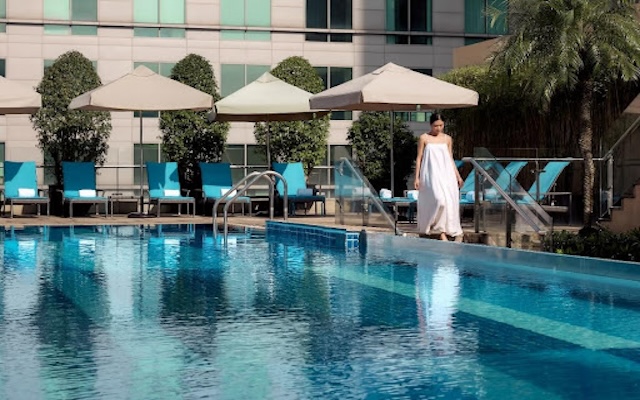
Take a refreshing dip in the hotel's inviting pool

Brought to you by JW Marriott Hotel & Suites Saigon 

Centrally located in Ho Chi Minh City’s District 1, JW Marriott Hotel & Suites Saigon offers a blend of style and sophistication in the bustling city

From new air routes to various hotel signings and launches, Vietnam’s dynamic Ho Chi Minh City continues to become more accessible and offer more room options for tourists. 

The constantly evolving city has set a tourism target to welcome 8.5 million international visitors this year. 

One hotel that is perfectly positioned to offer travellers an inviting stay is JW Marriott Hotel & Suites Saigon, the first from the JW Marriott brand in the city. 

Located at the intersection of Hai Ba Trung Street and Le Duan Boulevard in District 1, the hotel, JW Marriott Hotel & Suites Saigon is an ideal base for guests to discover Saigon’s cultural attractions and sites. 

Staying at the 305-key hotel places guests within walking distance to Ho Chi Minh City’s most iconic landmarks, many of which are located in District 1. From French-colonial historical landmarks to modern attractions and buzzing street markets, the city retains a unique charm. 

Whether admiring the neo-Romanesque architecture of the Saigon Cathedral, Saigon Post Office and Independence Palace, or soaking up local life at Ben Thanh Market, travellers can conveniently experience many of the city’s local sights within the district. 

Culinary delights

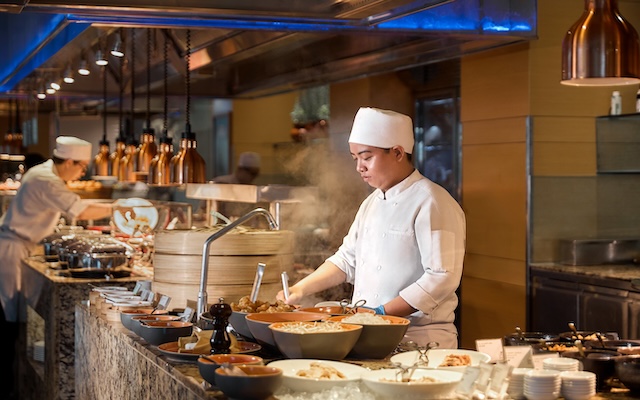
Enjoy a spread of international dishes from the hotel’s main restaurant, Market 39

Enjoy a variety of dining concepts at the hotel’s restaurants, from innovative Italian cuisine at Basilico to sumptuous international buffets at Market 39. 

The latter serves as the property’s main dining restaurant, offering a generous breakfast buffet featuring global selections and local specialties. A must-try is the pho station at breakfast, where the soup is meticulously prepared following traditional Vietnamese methods, with ingredients sourced from the hotel’s own garden, ensuring a fresh and authentic flavour.

Another is The Library, where guests can unwind at this refined lounge and try its signature dishes that include a different take on Hanoi dish bun cha elevated with Iberico pork, a unique take on pho, enhanced with lobster from Nha Trang, and banh mi prepared with a special sauce from the chef’s family recipe. 

Designed for wellness

Take a refreshing dip in the hotel’s inviting pool

For some indulgence, a must is the Spa by JW. The JW Marriott philosophy, The Whole You, encapsulates a holistic approach to wellness and balance that involves the mind, body and spirit. 

At the Spa by JW, treatments rooted in authentic Asian traditions offer a calming retreat from the city’s lively pace. A unique feature at this spa is the option to book an outdoor treatment package that includes a luxurious foot massage as the sun sets, overlooking the city skyline. 

Meanwhile, the hotel’s outdoor pool and fitness centre provide additional opportunities for workouts that get you that endorphin rush. 

A new addition to the facilities will be a pool bar that will provide a new chic venue to enjoy sunset cocktails. 

JW Marriott Hotel & Suites is currently offering a Stay, Savour and Unwind package that includes breakfast for two, 500,000 dong (approx US$19) worth of F&B credit, and late check out till 4pm.