Taiwan to inject US$1.9 billion into economy amid Covid-19 outbreak
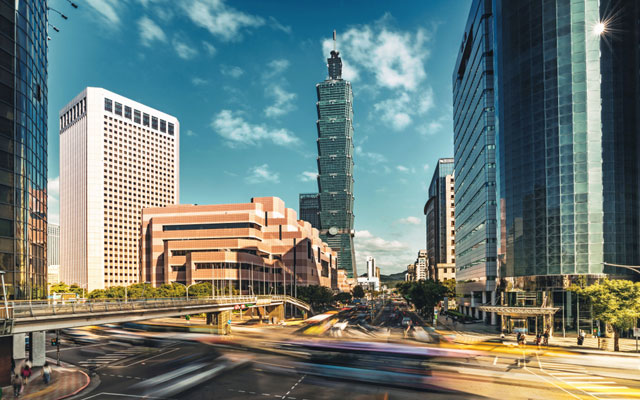
Taiwan will be rolling out a NT$40 billion (US$1.3 billion) stimulus package to help businesses hardest hit by the coronavirus pandemic.
The package was approved on March 24 by premier Su Tseng-chang.
Taiwan to inject more into economy amid Covid-19 outbreak
Drafted by the Ministries of Economic Affairs, Finance, Health and Welfare, Transportation and Communications, and Financial Supervisory Commission, the bill is the second of its kind for the country, following an NT$60 billion stimulus package rolled out in February.
Both packages are aimed at propping up Taiwan’s export-driven economy, since the outbreak of the coronavirus earlier in the year.
As part of the second relief package, SMEs in hard-hit sectors like aviation and tourism will be eligible for subsidies, tax reductions, preferential and special loans, as well as discounted utilities, according to the Ministry of Foreign Affairs’ news website Taiwan Today.
As of March 25, there are 235 confirmed Covid-19 cases in Taiwan, with two deaths. Since March 18, Taiwan has indefinitely banned the entry of all foreign visitors, excluding foreign resident permit holders and diplomats.
Maldives tightens coronavirus preventive measures by banning all tourists
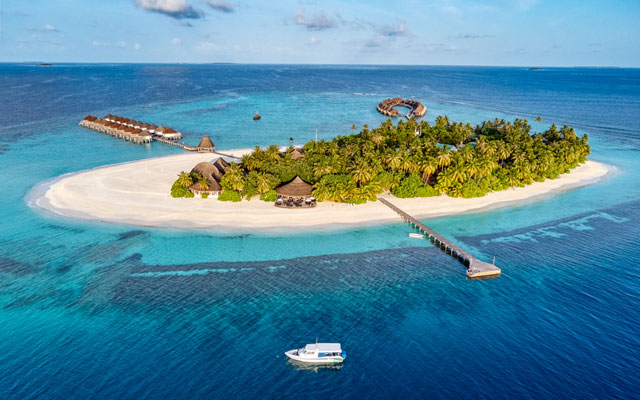
The Maldives will be banning all tourist arrivals from midnight on Friday, March 27.
An announcement from the president’s office said that on-arrival visas would be suspended from midnight of March 27 but exceptions would be made for individuals with special permission like diplomats, government officials, and contract workers.
Maldives tightens coronavirus preventive measures by banning all tourists
“We are aware of the impact of our measure; the tourism industry will come to a halt. But this is something we need to do considering the circumstances,” Maldives’ president Ibrahim Mohamed Solih told reporters.
Howard Brohier, general manager of Diethelm Travel Maldives, said this decision was inevitable, due to the 13 infected foreigner cases – of which eight have recovered – in the island nation.
“My understanding is that the ban might be in force for one or two weeks, till the situation is clearer and is brought under control,” he said. As of March 13, Diethelm had 6,000 guests in the Maldives, which has now been reduced to 86.
Over 50 resorts have either closed their doors or are about to. For example, the country’s largest resort owner with eight properties, Crown & Champa Resorts, has indicated they will be shutting from April, with a reopening date set for end-June. The group earlier announced plans to open its ninth resort, Kagi Maldives Spa Island, later this year.
“Steps are being taken to ensure our teams will be there to welcome you back… when the time is right. Until then, stay home, stay safe and we will be ready when you are to visit the Maldives again,” said a statement issued by Crown & Champa Resorts.
Brohier believes that recovery will come in July or August, with the Chinese – the Maldives’ largest tourism source market – likely to be among the first to resume overseas travel.
Thoyyib Mohamed, managing director of Maldives Marketing and Public Relations Corporation, said that until now the country has been receiving a small number of tourists from Russia, the CIS, parts of Germany, Ukraine and Australia.
Restrictions were placed earlier on travellers from China, Iran, parts of South Korea, Italy, Bangladesh, parts of Germany, Spain, parts of France, Malaysia, the UK, the US and Sri Lanka.
World Tourism Organization (UNWTO) is collaborating with World Health Organization (WHO) in launching “Healing Solutions for Tourism”, an innovation challenge to help the tourism sector recover from Covid-19, where millions of jobs are at risk as the pandemic hits hard.
This is a global call for entrepreneurs and innovators to submit ideas that can be implemented immediately in destinations, businesses and public health efforts to help the tourism sector mitigate the impact of the pandemic and kickstart recovery efforts.
UNWTO and WHO want ideas that will help communities recover from this crisis, economically and socially, as well as ideas that can contribute to the public health response
Participants should be able to demonstrate how their ideas can help tourism in its response to COVID-19. Ideas must also have been piloted and be ready to scale-up, with a business plan in place and the potential to be implemented in several countries.
UNWTO secretary general Zurab Pololikashvili explains the call to embrace innovation and need for international solidarity: “Tourism is the sector that has been hit the hardest by COVID-19. I call on all entrepreneurs and innovators with ideas that are developed and ready to be put into action to share them with us. In particular, we want to hear ideas that will help communities recover from this crisis, economically and socially, as well as ideas that can contribute to the public health response.”
The competition is now live and applications close on April 10, 2020. Winners will be invited to pitch their ideas to representatives of more than 150 governments and enjoy access to the UNWTO Innovation Network, which includes hundreds of start-ups and leading businesses from across the tourism sector.
Vietnam’s real estate developer Sun Group has temporarily closed some of its amusement parks and entertainment facilities in the country, choosing to use the lull period to ready new products and services that will be rolled out when the pandemic is over.
Meanwhile, all hotels operating under Sun Hospitality Group system (under Sun Group) and each of the Sun World complexes have partnered Vietnam Airlines to create a host of competitively-priced packages aimed for post-Covid-19 promotion.
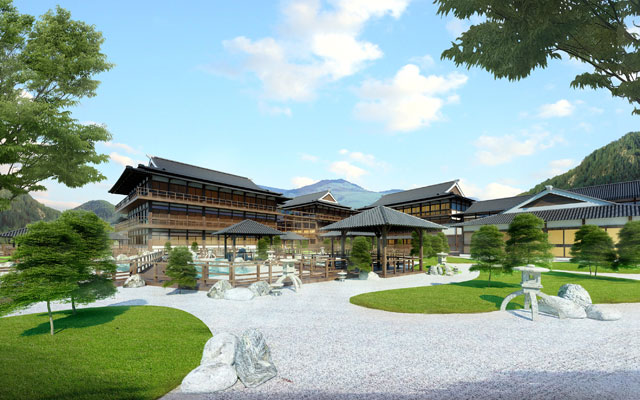
Phase one of Yoko Onsen in Quang Hanh of Quang Ninh province will open by the end of this year
Sun Group will also launch a number of tourism projects and products from now until end-2020. Specifically, phase one of the luxurious Yoko Onsen, a hot spring resort in Quang Hanh, Cam Pha, Quang Ninh, will officially come into operation.
Before the end of the year, Premier Village Halong Bay Resort, located right at the heart of Ha Long city, will officially open after a soft launch.
Over in Hai Phong, a three-wire cable car route on Cat Hai Island is slated for operations in the second quarter.
Meanwhile, in Danang, Sun World Danang Wonders is being transformed into a nightlife destination, while Sun World Ba Na Hills will see the opening of a new cable car route, alongside the Ravenstone Castle, where ancient European fairs and festivals will be recreated.
It is expected that in July and August this year, Sun World Fansipan Legend in Sapa will bring the show Dancing on the Clouds back due to popular demand.
Sun Group chairman Dang Minh Truong said: “With all of the aforementioned plans in the pipeline for our enterprise, and together with the timely and practical support policies of the Vietnamese government and ministries, we believe that Sun Group will soon overcome this difficult period and make a significant contribution to tourism in Vietnam and help our country revive and grow in the post-Covid-19 period.”
LCC’s Indonesian affiliate plans to base to A320 in Lombok and increase frequency to Malaysia and Australia
AirAsia Group will temporarily ‘hibernate’ most of its 255-strong fleet across the network in the wake of the ongoing Covid-19 pandemic.
The decision also applies to its longhaul arm, AirAsia X and affected guests have been notified by email and SMS.
AirAsia temporarily ‘hibernates’ most of its 255-strong fleet across the network
For AirAsia Malaysia, the temporary suspension of all international and domestic flights are from March 28 to April 21.
For AirAsia Philippines and AirAsia Thailand, the affected period will be from March 20 to April 14 and March 22 to April 25 respectively.
AirAsia India is freezing all flights from March 25 for 21 days in adherance to the government’s suspension of all domestic flights.
There will also be a significant reduction in international flight frequencies for AirAsia Indonesia while domestic operations continue at reduced frequencies.
Affected passengers have the option of converting their flight booking into a credit account that is valid for future redemption within 365 days or moving their flights for an unlimited number of times without any charges to another date prior to October 31, 2020.
AirAsia said in a statement: “We believe this temporary fleet hibernation is the right thing to do to ensure the well-being of our guests and employees, which will remain as the top priority of our business during this challenging time.”
Texas-headquartered Oyo Hotels and Homes has volunteered three of its Malaysian partner properties to house healthcare practitioners for free, from March 25 to April 14, 2020.
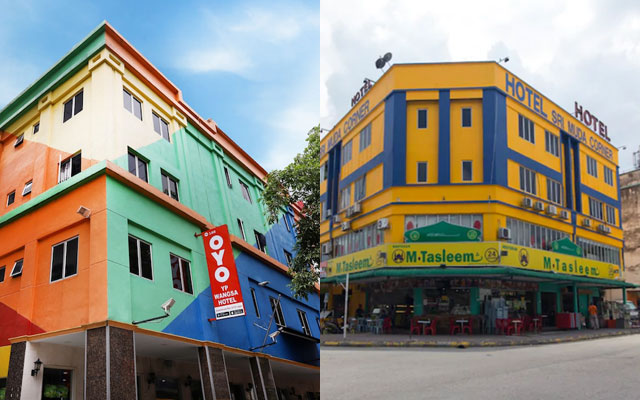
The three hotels – Oyo 188 YP Wangsa Hotel in Kuala Lumpur, Oyo 882 Hotel Sri Muda Corner in Shah Alam, Selangor, as well as Oyo 89676 Hotel 22 in Seremban – are located within 5km of three hospitals that are battling against Covid-19.
(From left) Oyo 188 YP Wangsa Hotel in Kuala Lumpur and Oyo 882 Hotel Sri Muda Corner in Shah Alam, Selangor are offered as free stays for healthcare workers
Hospital Kuala Lumpur, Hospital Shah Alam and Hospital Tuanku Jaafar have come to the attention of Oyo due to the “large number of cases being treated” there, said the accommodation group.
Tan Ming Luk, country head-Singapore and Malaysia, Oyo Hotels and Homes, hope Oyo’s contribution will help “alleviate some of (the healthcare workers’) burden and ensure that they have ready access to clean and affordable living spaces” for rest.
Oyo believes that the proximity of their partner properties to the hospitals will save the healthcare workers from a long commute back home.
Meanwhile, Oyo will continue to take in bookings and check-ins from foreign guests, government employees and anyone employed in essential services as mandated by the Movement Control Order.
Ahead of the federal government’s announcement of a comprehensive economic stimulus package on March 27, the Malaysian Association of Tour and Travel Agents (MATTA) has called on the government to allow the private sector to stop mandatory payments to government agencies and support the wage burden for the next six months to help businesses struggling for survival.
The mandatory payments include contributions to the Employees Provident Fund (EPF), the Human Resources Development Fund (HRDF) and other levies such as Social Security Organization (SOCSO), Employment Insurance System (EIS) as well as corporate and individual taxes for 2019 assessment.
MATTA expects two in five people or 40 per cent of Malaysia’s tourism workforce to lose their job without substantial government support
In terms of wage support, MATTA has asked for assistance on 60 per cent of employee wages up to a maximum of RM4,000 (US$923) per employee for the next six months from April, which would help companies avoid having to layoff staff.
MATTA president, Tan Kok Liang, said in a press statement: “If such assistance and stimulus are not forthcoming very soon, liquidity issues will force many existing small and mid-sized tourism companies and facilities to cease operations, resulting in a large number of workers losing their jobs.
“The tourism industry in Malaysia employs more than 3.5 million people, or 23.5 per cent of our nation’s total employment, representing nearly a quarter of all jobs in Malaysia. It is expected that two in five people or 40 per cent of the people would lose jobs. Consequently, this will create a ripple effect to other sectors.”
He said EPF contributions by both employers and employees should be suspended from March until end of this year to allow employers to better manage their cash flow and for workers have more cash for living expenses.
For the month of March, MATTA estimated a 90 per cent drop in revenue and expected revenue in April and May to be almost non-existent.
Tan cited countries such as the UK and Denmark that have already started implementing employee retention initiatives and offering to pay up to 80 per cent of wages.
He said: “Other countries such as South Korea, Ireland and Singapore have also implemented similar strategies.”
He stressed: “The key point is to protect jobs! Businesses cannot be expected to keep paying employees when there is little or no income – it’s either close shop or lose jobs. Neither is desirable and a win-win solution would be for the government to help both employer and employee by sharing the burden of paying wages.”
He also called on financial institutions to play their part by expediting special loans while welcoming the move by the Federal Bank to provide a moratorium for the next six months.
He stressed that banks should also allow a waiver to be made on the interest that is accrued and compounded on conventional loans during the moratorium period.
He said: “How can SMEs survive with the accumulated interest due and compounded and payable upon the expiry of the moratorium period? Compounding overdue interest is a double whammy for suffering businesses during this period.”
Meanwhile, the Malaysian Association of Convention & Exhibition Organisers & Suppliers (MACEOS) said their wish list that had recently been presented to the Finance Ministry and the Ministry of Tourism, Arts and Culture included extending the six per cent services tax exemption to the convention and exhibition centres, and waiving company and personal income tax for a period of six months in light of the challenging period.
MACEOS would also like cash flow support for PEOs in the form of venue subsidies and incentives to small and medium-sized enterprises to bid for more international business events to be held in Malaysia.
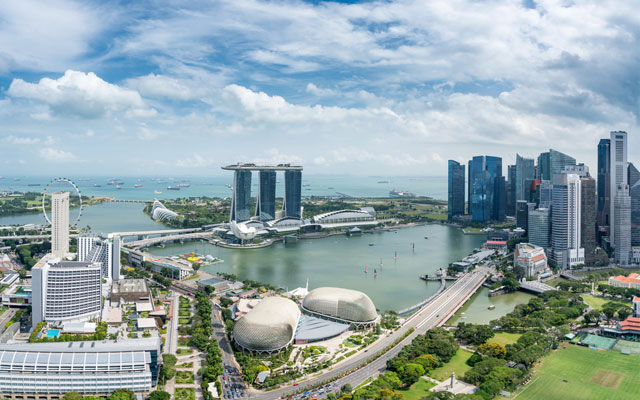
The Singapore government will set aside a total of S$440 million (US$305 million) to lift the tourism industry which has been the hardest-hit by the coronavirus pandemic, as part of a larger S$48 billion Resilience Budget to help mitigate the virus’ impact on businesses and individuals.
The stimulus package was announced by deputy prime minister and minister for finance, Heng Swee Keat, this afternoon in Parliament, amid what he terms as “likely the worst economic contraction since independence”.
The government has set aside S$440 million (US$305 million) to help the tourism industry weather the storm
The Parliament session was live-streamed on Channel NewsAsia.
Part of the sum will go towards a S$350 million Enhanced Aviation Support Package, which will provide rebates for airline parking and landing charges, as well as rental relief for cargo agents, ground handlers and airlines.
The government is also prepared to separately provide more “direct support” to Singapore Airlines Group, which Heng said contributes to more than 50 per cent of passenger traffic and cargo tonnage through Changi Airport in 2019.
The remaining S$90 million will be parked to assist in the tourism sector’s rebound at a suitable time in the future, said Heng.
Besides the S$440 million targeted specifically at providing relief for the tourism sector, the industry will also benefit from other measures, such as property tax waivers as well as an Enhanced Jobs Support Scheme.
On the property tax front, hotels, serviced residences, restaurants, shops and attractions will receive full property tax waiver for the rest of 2020. This means more enhanced relief for industry players, compared to the earlier announced 15 to 30 per cent property tax rebates.
Additionally, the government will co-fund 75 per cent of wages for firms in the aviation and tourism sector and 50 per cent of wages for firms in the F&B sector, while other industries will receive 25 per cent co-funding. All this marks a significant increase from the earlier eight per cent co-funding.
Heng shared that the monthly qualifying wage ceiling will also be raised from S$3,600 to S$4,600, which means the government will co-fund a percentage of up to the first S$4,600 of each employee’s salary.
Initially planned for just one quarter, the Enhanced Jobs Support Scheme will now be extended to end-2020. Employers are set to receive payouts in May, July and October.
For the corporate industry, Heng expressed that the government recognises that it is not “right” for business event organisers to have to forfeit their venue deposits due to this black swan event. He shared that the Ministry of Law will announce initiatives to assist such companies at the next Parliament.
Alongside the S$6.4 billion Unity Budget announced last month, the Singapore government has set aside a total of S$55 billion to help local businesses and individuals tide through the pandemic.
Heng explained the government’s focus on the tourism sector: a compromise in the industry will have a ripple effect on other sectors that depend upon it.
“The sharp drop in international visitors has impacted the whole tourism eco-sector, from our airports and airlines to the hotels and attractions and their tenants to travel agents and bus companies,” he said.
Heng cautions of “a broader range of safe distancing measures” ahead.
Domestic business has become the bearer of hope for three tourism companies in Asia, with corporate group stays and staycations being the biggest drivers of re-emerging demand.
Speaking at an edition of WiT Virtual webinar series today, which tackled the topic of possible recovery in North Asia, Jennifer Cronin, president of Wharf Hotels, Hong Kong said her sales offices in Beijing and Shanghai were starting to receive business event enquiries for April to June while various hotels across China were beginning to see a pick up in business.
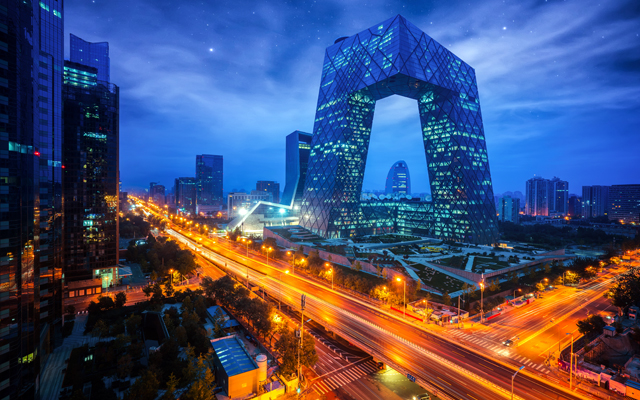
Beijing hotels are starting to get some business event enquiries
While Cronin said the occupancy rate is nowhere near what it should be at this time of the year, she acknowledged that a 20 per cent occupancy “is certainly a lot better than” a single-digit performance.
“We are definitely seeing those green shoots starting to appear in China,” she remarked.
Cronin is keeping her eye on China’s domestic travel performance this May Day holiday, and shared that at present travel vouchers for 2H2020 “are appearing to be very popular”.
Beyond China, recovery sightings are still vague.
Over in South Korea, where the government has suspended all festivals and discouraged outdoor gatherings, Min Yoon, CEO of Tidesquare travel services specialist, said most of the domestic hotel bookings he gets now are for after May.
KK Day Taiwan, co-founder & COO, Weichun Liu, opined that the signs may only be clearer in two months’ time.
“Despite this, we are seeing domestic travel demand from almost all our markets except those under lockdown,” said Liu.
The online tour and activity platform has seen an increase in bookings for outdoor activities such as water sports in Taiwan and Japan, while camping is hotting up in Singapore and Taiwan.
“All camping sites are fully booked up until June in Taiwan,” Liu revealed.
He observed that demand patterns in Taiwan are typically mirrored in Hong Kong, so “whatever we are developing to meet demands in Taiwan right now can sell into Hong Kong later on”.
Liu reasoned that the domestic market is helping to drive recovery because with borders still closed in many overseas destinations, entertainment can only be found on home ground.
“Clients are getting bored at home, and are starting to search what they are going to do. It’s a very good time for marketing campaigns, and we are diversifying our products and services to offer such things as food delivery promotions done in partnership with a couple of delivery firms,” he added.
Rebound in Hong Kong is expected to be slow, as her borders remain closed and compulsory quarantines are ordered for arriving travellers. However, Cronin said Wharf Hotels is picking up staycation demand from people hungry for a weekend treat amid the gloom and from families wanting to stay away from other members returning from overseas.
She shared that her Hong Kong hotel performance is also “not completely single-digit”.
Meanwhile, the three speakers agree that rebound for Asia-Pacific will come after China is free from outbreaks.
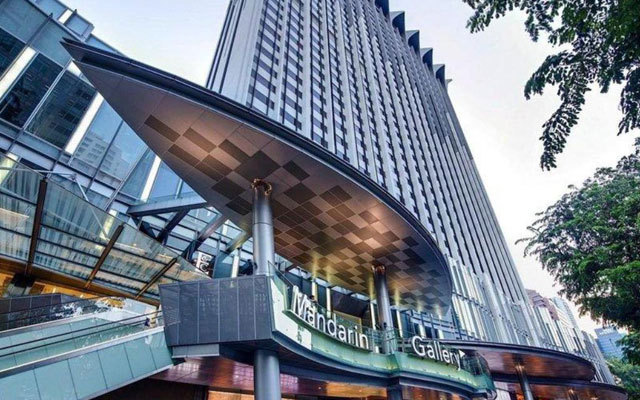
Property group OUE and OUE Commercial REIT (OUE C-Reit) will spend S$90 million (US$62 million) to rebrand Mandarin Orchard Singapore to Hilton Singapore Orchard, following an agreement with Conrad International Management Services (Singapore), said OUE in a press release.
The revamped property will be Hilton’s flagship hotel in Singapore, and its largest in Asia-Pacific.
Mandarin Orchard Singapore will be rebranded into Hilton Singapore Orchard
The hotel’s rebranding will see the addition of new meeting facilities and F&B offerings to cater to the growing demand for regional and global corporate events.
The planned refurbishment will be conducted in phases and will commence in 2Q2020 to capitalise on the current challenges facing the hospitality industry due to Covid-19. It is scheduled for completion by end-2021.
Until then, Mandarin Orchard Singapore will continue to operate under the management of Meritus Hotels & Resorts, the hotel management company under the hospitality division of OUE.
Upon its relaunch in 2022, the hotel will feature 1,080 rooms, five F&B venues including an all-day dining restaurant, as well as meeting and function spaces spanning a total of 3,765m2, including three ballrooms.
Tan Shu Lin, CEO of OUE C-Reit’s manager, said that the current challenges faced by the Singapore hospitality sector due to the global coronavirus pandemic “present a timely opportunity for us to carry out the extensive renovations, with the rebranded hotel expected to be ready in time to take advantage of the sector’s anticipated recovery”.
Mandarin Orchard Singapore is part of OUE C-Reit’s portfolio, under OUE Hospitality Sub-Trust. OUE is the master lessee of the property.