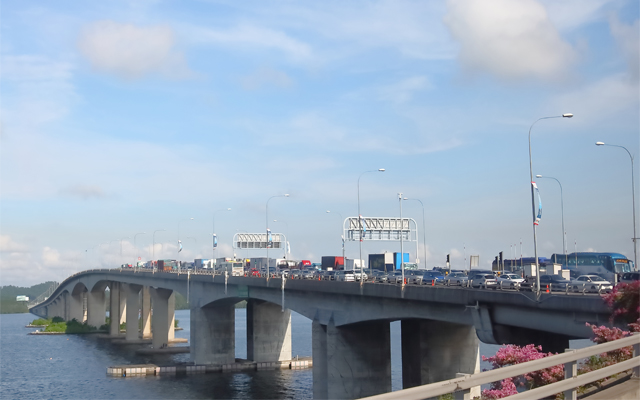
Malaysia has extended its conditional movement control order (CMCO) for another four weeks until June 9, announced prime minister Muhyiddin Yassin in a live broadcast on Sunday (May 10).
This marks the fifth time that the government has extended the country’s lockdown, which kicked in on March 18.
Malaysia is currently in its fifth phase of the conditional MCO; health workers donning protective suits on the streets of Kuala Lumpur pictured
The prime minister said that the extension was based on overall public sentiment wanting the government to continue taking measures to curb the pandemic.
He also announced a ban on interstate travel, noting that several major festivals fall during the CMCO period, including the Kaamatan and Hari Gawai, which are harvest festivals celebrated in Sabah and Sarawak, respectively.
However, friends and relatives living within the same state will be allowed to visit each other’s homes for the Eid festivities, as long as such gatherings are limited to 20 people at a time, he said.
Schools, worship venues and cinemas will remain closed under the new extension, while mass public gatherings outdoors are still banned.
Malaysian health authorities on Sunday (May 10) reported 67 new Covid-19 cases, bringing the country’s total to 6,656, with a death toll of 108.
The Covid-19 pandemic has caused a 22 per cent fall in international tourist arrivals in 1Q2020, and could result in an annual decline of between 60 per cent and 80 per cent year-on-year, according to the latest data from the UNWTO.
The UN body said that the dip in arrival numbers places millions of livelihoods at risk and threatens to roll back progress made in advancing the Sustainable Development Goals.
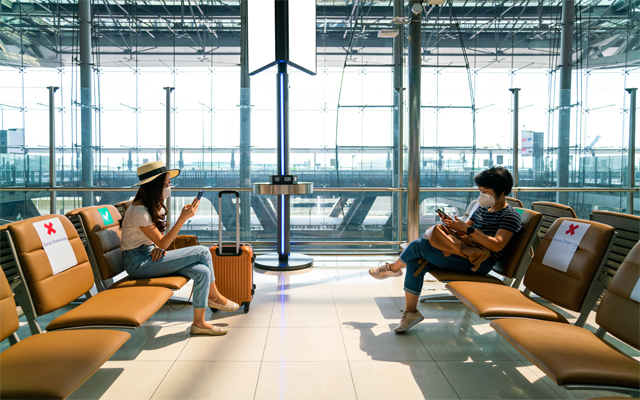
International tourist arrivals in 1Q2020 fell by 22 per cent due to the global pandemic; departure board displaying cancelled flights due to Covid-19 at an empty airport in Bangkok last month
UNWTO secretary-general Zurab Pololikashvili said: “The world is facing an unprecedented health and economic crisis. Tourism has been hit hard, with millions of jobs at risk in one of the most labour-intensive sectors of the economy.”
Available data reported by destinations point to a 22 per cent decline in arrivals in the first three months of the year, according to the latest UNWTO World Tourism Barometer. Arrivals in March dropped sharply by 57 per cent, as many countries went int lockdown, and unprecedented travel restrictions and worldwide border closures came into place. This translates into a loss of 67 million international arrivals and about US$80 billion in tourism receipts (exports), said UNWTO.
Although Asia and the Pacific shows the highest impact in relative and absolute terms (-33 million arrivals), the impact in Europe, though lower in percentage, is quite high in volume (-22 million).
Prospects for the year have been downgraded several times since the outbreak and uncertainty continues to dominate. Current scenarios point to possible declines in arrivals of 58 per cent to 78 per cent for the year. These depend on the speed of containment and the duration of travel restrictions and shutdown of borders.
Depending on when lockdowns and travel restrictions are lifted, UNWTO has outlined three possible scenarios for 2020, alongside the ensuing impact of the loss of demand in international travel:
Scenario 1 (-58 per cent), based on the gradual opening of international borders and easing of travel restrictions in early July, could see a loss of 850 million to 1.1 billion international tourists
Scenario 2 (-70 per cent), based on the gradual opening of international borders and easing of travel restrictions in early September, could see a loss of US$910 billion to US$1.2 trillion in export revenues from tourism
Scenario 3 (-78 per cent), based on the gradual opening of international borders and easing of travel restrictions only in early December, could put 100 to 120 million direct tourism jobs at risk
Calling this the worst crisis that international tourism has faced since records began in the year 1950, UNWTO said that the impact will be felt to varying degrees in the different global regions and at overlapping times, with Asia and the Pacific expected to rebound first.
Domestic demand is expected to recover faster than international demand, according to the UNWTO Panel of Experts survey. The majority expects to see signs of recovery by 4Q2020 but mostly in 2021. Based on previous crises, leisure travel is expected to recover quicker, particularly travel for visiting friends and relatives, than business travel.
The estimates regarding the recovery of international travel is more positive in Africa and the Middle East, with most experts foreseeing recovery still in 2020. Experts in the Americas are the least optimistic and least likely to believe in recovery in 2020; while in Europe and Asia, the outlook is mixed, with half of the experts expecting to see recovery within this year.
Guests at Ovolo Nishi can now social distance in style with the launch of the hotel group’s new Restaurant in Room package, offering catered meals from a local restaurant in the comfort of a serviced apartment.
Initially offered at Canberra’s Monster Kitchen & Bar at Ovolo Nishi from April 30, guests at Nishi Apartments Eco-Living by Ovolo in Canberra, Australia can book Restaurant in Room on Thursday, Friday and Saturday nights for private dining only, or with the addition of an overnight stay.
Ovolo Nishi’s new Restaurant in Room package offers a private dining experience in one of its rooms
Guests can choose from a three- or five-course menu, which costs A$229 (US$148) and A$289, respectively, for up to two guests. An option of additional beverages is also available for A$279 and A$349, respectively.
Guests who pick the three-course menu can also top up an additional A$90 for an overnight stay, while guests on the five-course menu pay A$70. Overnight stays will come with the usual complimentary amenities available to the serviced residence’s guests, such as Wi-Fi, in-room mini bar, and breakfast for two.
Ovolo said that as various states start to relax social distancing restrictions, it plans to launch Restaurant in Room across its other venues in Australia, including plant-based dining venue Alibi Bar & Kitchen in Sydney, and Middle-Eastern restaurant-bar ZA ZA TA in Brisbane.
While the global aviation sector is engulfed in a perfect storm, with the past few months marked by flight cancellations and a lack of new bookings, flight search data by ForwardKeys in March showed consumers still aspire to travel.
An analysis of flight searches done in South Korea, Japan, France, Italy and Spain during March, reveals that consumers in these nations are still researching foreign travel and that they have a disproportionate interest in long-haul travel in the third and fourth quarters of the year.
Flight search data released by ForwardKeys shows spirit of travel still alive despite dive in bookings
In particular, for Italy, flight searches for departures in 2H2020 tracked during March 2020 surpassed that of the same month in 2019, showing potential latent demand.
The data is a stark contrast to the sobering picture painted by the decline in flight arrivals, aviation seat capacity and new bookings between January 6 and April 19.
Air travel fell by half (50%) compared to the same period last year, bringing home the degree of impact that the Covid-19 crisis has had on the aviation sector.
In Asia, flight arrivals fell by 56.1% year-on-year, making it the worst-hit region; followed by Europe (down 50.2%), the Africa and Middle East (MENA) (down 42.6%), and the Americas (down 39.8%).
The correlation between air travel and seat capacity was also made clear. Flight capacity worldwide tracked over the same period fell by more than 90% year-on-year, from 40 million seats to less than 4 million. As most flights remain grounded, ForwardKeys expects the year-to-year data for flight arrivals to continue to show downward trends in the near future.
Flight bookings across the same period decreased by 86.8% worldwide, found ForwardKeys. Since March 9, flight cancellations have surpassed the number of new bookings across the globe.
Looking at the overall impact of the crisis between January 6 and April 19, Asia was found to be the worst hit across the whole period, with a 100.5% year-on-year decline in flight bookings; followed by Europe (down 84.7%), the Americas (down 75.9%), and MENA (down 71.4%).
Nevertheless, an encouraging turn of events could be seen in the week of March 16, where cancellations peaked across the board.
Olivier Ponti, vice president insights, ForwardKeys, said: “Whilst we are currently looking at a catastrophic contraction of the aviation market, with a tiny proportion of flights still in the air, carrying cargo, repatriations and essential travel, there are some noteworthy patterns in the data to bear in mind.
“First, the peak for summer holiday bookings is in May, so if the lockdown can end soon, there may yet be a chance to rescue the summer season, at least partially. Second, flight search data strongly suggests that consumers aspire to travel; so, once the restrictions are lifted, the market will eventually come back.”
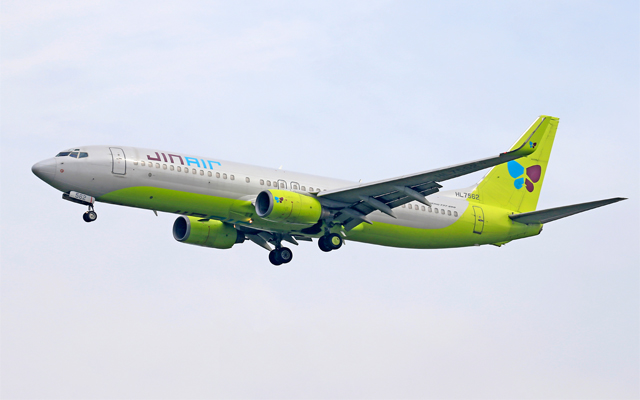
Hanjin Group, the parent company of Korean Air, is considering to sell all three of the airline’s core businesses – its inflight meal service, mileage programme and aircraft maintenance division, to raise roughly US$2.4 billion in funds as part of its self-rescue plan amid a liquidity crisis.
South Korea’s flag carrier, also the country’s largest airline, has been making painstaking self-rescue efforts to tackle the fallout from the coronavirus, since Korea Development Bank (KDB) and Export-Import Bank of Korea said they will inject roughly US$978.8 million into the flagging airline.
Cash-strapped Korean Air considers selling its core business units to tide through the coronavirus
On April 26, Hanjin Group said it had launched a full-fledged internal review on how to sell its key business units. Korean Air had recently announced that it would sell its land in Songhyeon-dong, Seoul, but creditors rejected the proposal saying that it is meaningless to sell the land that had been out on the market since last year and that the assets need to be “sellable”.
“We will procure a lot of funds through the sale of Korean Air’s business units,” Dae-hyun Choi, vice president of KDB, said, adding that the company will announce detailed measures soon.
Choi: Sale of Korean Air’s three business divisions will raise “a lot of funds” for the carrier
The carrier’s inflight meal business is expected to steadily generate cash once operations have normalised, and compared to the other two business units, is relatively easy to sell in instalments.
The mileage division has a market valuation worth millions, as the mileages can be sold to credit card companies for cash. Korean Air’s maintenance and repair division is also considered a valuable business that can steadily generate cash as long as inspections and repair of domestic planes are maintained at a constant level.
Market watchers say Korean Air will raise billions of dollars in funds if it successfully sells all three of its key business units. However, it is unclear whether the carrier will be able to carry out the entire deal smoothly.
A trio of hotels in Siem Reap have teamed up with a private museum on a meal scheme to provide more than 400 meals a day to individuals most affected by Cambodia’s lockdown due to the coronavirus.
Since April 20, Treeline Urban Resort, Mulberry Boutique Hotel, Jaya House Hotels and The Cambodia Landmine Museum have been doing the rounds on a daily basis, with the help of over 75 volunteers.
Mulberry Boutique Hotel among hotels in Siem Reap feeding the needy during the pandemic
The quartet started this initiative as unlike other countries, there are no social safety nets nor social support services in Cambodia to alleviate the effects of the virus crisis on the poor and vulnerable.
Under the food programme, all meals are nutritious, locally sourced and served in biodegradable packaging. They are also cooked locally, thus, generating income for local villagers and restaurants.
The quartet now hopes to raise over US$30,000 to keep this initiative going on for longer, and is calling on the public to join in their efforts to help feed the needy within the community during this crisis.
This initiative is entirely based on donations, and 100 per cent of the funds raised will go towards meal preparation and distribution. More information can be found on hotelsjoininghands.com.
Thien Kwee Eng, executive vice president of the Economic Development Board (EDB), will take over Quek Swee Kuan as CEO of Sentosa Development Corporation (SDC) on June 1, 2020.
Quek will be retiring from the public service on May 31 to pursue his personal interests, said the Ministry of Trade and Industry (MTI) in a press release on Wednesday (May 6).
Thien Kwee Eng will take over Quek Swee Kuan as CEO of Sentosa from June 1
Thien will also be appointed as a member of the SDC and Singapore Tourism Board (STB) boards, from June 1, while Quek will step down as a board member from both boards on May 31.
In her current role, Thien is overseeing EDB’s global customer experience, marketing and public affairs and investment facilitation activities. She was responsible for pioneering a new operating model that expanded EDB’s reach and engagement of companies, and laying the foundation for the board’s new marketing infrastructure.
During her time in EDB, Thien has also held leadership roles in investment promotion and industry development across various sectors, including consumer and lifestyle businesses, health and wellness, as well as infocomm and media.
Thien also serves on the board of the Singapore Food Agency, DesignSingapore Council, and Women’s Forum Asia. In 2017, she was conferred the Public Administration Medal (Silver).
Quek was appointed as the CEO of SDC on October 1, 2015. He has also served in EDB and STB in his 26-year career in the public sector.
Under his tenure, SDC underwent a comprehensive reorganisation and developed a strategic business framework to strengthen Sentosa’s value proposition and grow local and foreign visitor numbers.
He also spearheaded the development of the Sentosa-Brani Masterplan and other key initiatives, including a year-round calendar of offerings to transform Sentosa into a “day-to-night” destination.
Princess Cruises is extending its pause on global ship operations through the end of the 2020 summer season, due to reduced air flight availability, the closure of cruise ports in regions around the world and other factors caused by the Covid-19 outbreak.
This includes the following cruises and associated cruise tours: all remaining Alaska cruises on Emerald Princess and Ruby Princess; all remaining Europe and Transatlantic cruises on Enchanted Princess, Regal Princess, Sky Princess, Crown Princess and Island Princess; Summer Caribbean cruises and all Canada & New England cruises on Caribbean Princess and Sky Princess; Summer to Fall cruises departing from Japan on Diamond Princess; Australia-based cruises on Sapphire Princess and Sea Princess through end-August; July cruises sailing from Taiwan on Majestic Princess; as well as Fall cruises sailing to Hawaii and French Polynesia on Pacific Princess through November.
Princess Cruises extends pause on sailings for rest of 2020 summer season
“While prioritising health and safety, it is with much disappointment that we announce an extension of our pause of global operations due to the Covid-19 outbreak,” said Jan Swartz, president of Princess Cruises.
“Among other disruptions, airlines have limited their flight availability and many popular cruise ports are closed. It saddens us to think about the impact on the livelihood of our teammates, business partners and the communities we visit.”
Guests currently booked on these cancelled voyages, who have paid in full, will receive a future cruise credit (FCC) equivalent to 100 per cent of the cruise fare paid, plus an additional bonus FCC equal to 25 per cent of the cruise fare.
For guests who have not paid in full, Princess will double the deposit, providing a refundable FCC for the money currently on deposit, plus a matching bonus FCC that can be used on any voyage through May 1, 2022. The matching bonus FCC will not exceed the base cruise fare amount of the current cruise booked, and will have a minimum value of US$100 per person.
Alternatively, guests can request a full refund for all monies paid on their booking on the company’s website. Requests must be received by June 15, 2020, or they will receive the refundable FCC option.
Princess said in a statement that it will protect travel advisor commissions on bookings for cancelled cruises that were paid in full, in recognition of “the critical role they play in the cruise line’s business and success”.
A surge in domestic travel demand for Jeju island has encouraged local low-cost carriers (LCCs) to respond with increased flights.
From just two to three flights on the weekends between Gimpo and Jeju in March, Air Seoul has expanded operations to 32 a week since April 6 after seeing a 91 per cent surge in seat occupancy.
Domestic arrivals to Jeju at the start of the golden week holiday, on April 29, far exceeded the estimate of 24,600
An Air Seoul official commented that domestic flights were leading business recovery as “overseas travel is becoming difficult”, and added that seat occupancy was likely to be more than 85 per cent in April.
T’way Airlines also added a new domestic route between Cheongju and Jeju on April 25. T’way Airlines, which already flies out from Gimpo, Daegu, and Gwangju, will operate a total of four domestic routes through the launch of this new Cheongju-Jeju service.
A T’way Airlines official said the company will be expanding routes from various regions in South Korea.
As domestic travel picks up, the popular resort island of Jeju welcomed more than 35,000 Korean tourists on April 29 alone – the start of the country’s six-day golden week holiday, exceeding an initial estimate of 24,600.
The figure represents nearly 80 per cent of the total arrivals to Jeju in the same period last year.
In response, the Ministry of Health and Welfare and the Jeju Special Self-Governing Province are working together to step up measures to ensure visitors’ safety amid the pandemic.
As the number of new infections hovers at just around 10 a day, the government is relaxing social distancing measures and allowing some facilities, such as schools, parks, museums and libraries, to reopen in phases. – Reporting by Juyoung Lee
Stirrings of domestic travel in China have inspired some outbound agencies in Malaysia and Singapore to anticipate a return in travel demand for the Middle Kingdom soon.
Rejecting claims that the Covid-19 pandemic, which had originated in Wuhan city, has cast the destination in a poor light, travel agents told TTG Asia that the Chinese government’s tough actions to curb the spread of the outbreak have in fact resulted in positive impacts.
Travel agents intend to promote destinations in China that were less impacted by the coronavirus, such as Kunming, pictured here
Mint Leong, managing director of Sunflower Holidays in Malaysia, believes that travel demand remains for China and travellers’ perception of China has not been negatively impacted by the outbreak.
She explained: “China stands out because she was the first country to recover from the pandemic, and had sent her doctors and medical equipment to help many other countries, including Malaysia. This has (positively influenced) people’s perception and confidence in the destination.”
Shannon Hee, director of Singapore’s ASA Holidays, agrees. “China has received positive media coverage for the way she handled the pandemic and that has boosted her destination branding and travel confidence,” remarked Hee.
And with China just a short flight from Malaysia, Leong said travellers would continue to consider the destination for holidays.
Demonstrating confidence in China as a tourism destination, Joyee Lau, general manager (Mainland China), ICE Holidays, told TTG Asia that China packages have been created and priced attractively to get customers onboard.
Lau commented that China is a huge country, and there are opportunities for travellers to explore places other than Wuhan city and Hubei province should they still be concerned about the virus.
Also building up for a return in travel demand for China in 2021 is Kathryn Lee, managing director, De Kim Tour & Travel. While she expects travel in general to only return to normal after a vaccine is developed, Lee remains hopeful of organising group departures next year.
“We are looking at promoting the historical sites in Xi’an as well as scenic places in Harbin and Zhangjiajie,” Lee said.
ASA Holidays’ Hee said China, which was already popular with Singaporeans pre-pandemic, would attract “ardent travellers seeking value” as travel possibilities resume.
Fellow Singapore agent, Cathy Loh, director of Aveson Travel, added that China’s many “up and coming exotic locations” were bound to appeal to leisure travellers “who are deemed to be more spirited with their travel planning”.
On marketing China post-recovery, both agents said there was a need to proceed sensitively, by promoting the lesser-hit areas first.
Hee said: “To reassure our customers that China is a safe tourism destination, we will start with marketing places that have a low count of confirmed cases, such as Yunnan, Hainan Island, Xinjiang, Ningxia and Tibet.”
Added Loh: “Moving forward, we will re-introduce China starting with Kunming and Xinjiang in our series of mini fairs, dinner talks and online co-promotional activities with our Chinese tourism partners.”
While Sunflower Holidays’ Leong expects business travel to China for tradeshows to return strongly, fuelled by business opportunities in the vast country, she doubts corporate meetings will rebound as swiftly.
She explained that companies have become used to virtual meetings during the lockdown, and will likely approve trips for face-to-face meetings that are “absolutely necessary”.
James Chua, general manager, Global Travel Singapore, also noted that corporate travellers bound for China would have to contend with quarantine measures upon entering China and returning to Singapore.
He said: “Unless Covid-19 is completely eradicated – which the economy cannot hold out for until it does – inbound travellers to Singapore and a number of major cities in China will have to be quarantined. Even in recovery, it is uncertain how these (quarantine) measures will be adjusted and the norm for meetings to be taken online today has served as deterrence to business travel.
“The restoration of travel confidence to China will involve a concerted effort on transparency and vigilance between authorities and travel suppliers in moderating existing apprehension,” he added. – Additional reporting by Therese Tan