TTG Asia
Asia/Singapore Thursday, 15th January 2026
Page 1005

A great place to stay

0

The Muslim travel market is growing, with CrescentRating – the world’s leading source of intelligence on Muslim travel – projecting 158 million Muslim travellers by this year, up from 25 million in 2000; and US$300 billion in travel spend by 2026.

And serviced residences in Asia are eager to get a slice of that pie. Some of the savvier chains, having foreseen the potential of this market, had taken steps years ago to improve their product offerings to address the accommodation needs of Muslim travellers.

Guus Bakker

According to CrescentRating’s Muslim Traveller Faith-based Service Needs 2.0 model, must-haves for Muslim travellers include halal food, prayer facilities, water-friendly washrooms and the absence of Islamophobia.

In CrescentRating’s research in 2019, Muslim survey participants said accommodation operators and airports must provide these essential faith-based services.

Far East Hospitality (FEH), which has a portfolio of nine serviced residences in Asia-Pacific – eight in Singapore and one in Kuala Lumpur, has implemented changes to better cater to Muslim travellers. Its efforts, according to CEO Arthur Kiong, included installing bidets in guestrooms, providing halal breakfast options, and training staff to be familiar with the selection of halal restaurants and mosques in the area around the property as well as important information Muslim guests would seek during the fasting month.

Said Kiong: “We also have team members on duty who are fluent in Bahasa Melayu, and depending on the demand for it, we are open to sending our employees for language courses in Arabic as well.”

FEH’s efforts are paying off, with an overall 12 per cent year-on-year incremental growth in room nights from the Muslim travel markets.

“While the majority of our Muslim guests are from neighbouring countries like Malaysia and Indonesia, we are noticing more check-ins from countries in South Asia and the Middle East,” shared Kiong.

Oakwood Asia Pacific, which recorded a “healthy growth” of 13.4 per cent in Muslim guests at its properties in Malaysia, Indonesia, Thailand and Japan between 2018 and 2019, had also geared up early to court the promising market.

Dean Schreiber, interim CEO, Oakwood and managing director, Oakwood Asia Pacific, shared that property enhancements have included Muslim-friendly facilities such as washlet toilet seats in public and guestroom toilets, and individual prayer rooms for male and female conference guests with attached ablution facilities.

“We provide halal menu options in our restaurants, and some of our properties, such as Oakwood Hotel & Residence Sri Racha (in Thailand), are halal certified,” he added.

Guus Bakker, CEO EMEA of Frasers Hospitality, takes pride in his properties being Muslim-ready. “At our properties, we ensure staff are able to advise on our halal certifications as well as halal menu offerings. Additionally, properties that see a higher number of Muslim guests have bilingual staff who are able to attend to guests both in English and their native language,” he explained.

Attention is paid to feeding Muslim guests well, something that Frasers properties achieve by “making significant adjustments in our breakfast offerings, restaurant and in-room dining menus to meet the changing preferences of our regional guests”.

In love with space and accessibility
Presently, regional serviced residences are welcoming mostly holidaying families with a preference for larger spaces, young couples on their honeymoon, and corporate travellers desiring a home away from home.

Bakker said easy access to halal food, affordable luxury goods shopping and entertainment options for families and kids alike ranks high among his Muslim guests. As such, Frasers properties in Asia-Pacific, which are conveniently placed near halal restaurants as well as grocery shops, have been winners in the books of these travellers.

For FEH properties that are located close to hospitals and medical facilities, a market niche has emerged – Muslim medical tourists.

In these properties, such as Orchard Scotts Residences, Orchard Parksuites and Regency House – all in Singapore, facilities such as accessible rooms and wheelchairs are available for loan.

“As the recovery and rehabilitation process differs between individuals, our serviced residences offer the flexibility for guests to extend their stay on a weekly basis,” said Kiong.

Changing profiles
Schreiber observed that his Muslim guests are getting younger and new travel patterns have emerged.

“Instead of travelling with their family or a small group, we are seeing more Muslim millennials travelling with friends as well as solo travellers for leisure and business purposes,” he said.

“The shift in travel patterns may be caused by a change in objectives of travel experiences. More Muslim guests are willing to explore non-Muslim countries such as South Korea, Thailand and Japan due to the influence of pop culture, for example, to catch a K-pop concert or visit attractions and restaurants featured in a popular drama or movie,” he added.

Schreiber also expects to welcome more young female Muslim travellers over the next few years, a projection that Bakker shares.

Bakker also foresees that the Muslim family travel market will continue to expand and drive demand for larger residences to accommodate all members.

Meanwhile, Kiong believes that Singapore Tourism Board’s new efforts to appeal to Muslim travellers through a partnership with Have Halal Will Travel booking platform, as well as the production of educational travel guides and materials targeting Muslim travellers around Asia in collaboration with CrescentRating, will result in more leisure travellers, especially millennials and families, over the next few years.

“With Singapore’s strengthened economic relations with the Middle East, we also foresee a possible increase in business travellers staying with us when they are here on business trips or for conventions,” Kiong added.

Mark these properties

From left: Fraser Residence Orchard, Singapore; Oakwood Hotel & Residence Sri Racha; Orchard Scotts Residences

Fraser Residence Orchard, Singapore offers fully-furnished and luxurious units that are equipped with high-end appliances and modern conveniences. With the world’s top brands and an array of halal eateries at the doorstep, long-stay guests with young children can be reassured of the convenience and accessibility the property has to offer. Chefs can also prepare meals upon request, perfect for residents with dietary requirements.

Oakwood Hotel & Residence Sri Racha in Thailand boasts magnificent panoramic views of the Gulf of Siam. It offers 458 rooms and apartments with modern hotel amenities that are perfect for leisure and corporate travellers. An array of services, from personalised check-ins to private dining, as well as facilities such as children’s play area, karaoke room, golf driving practice room and library will appeal to families as well. In addition to TrEat Restaurant, a halal-certified restaurant, there are also six function rooms for business meetings and social gatherings.

Orchard Scotts Residences is an award-winning property that is situated in Singapore’s famed Orchard belt, placing guests in easy reach of the finest shopping, halal dining and entertainment options. The nearest mosque is located 10 minutes away on foot. Despite being at the doorstep of the city centre, the property is a sanctuary with 2.5 hectares of sculpted gardens. Guests can choose from one-bedroom apartments to a plush four-bedroom penthouse.

PATA’s revises forecast to a 32% decline in visitor numbers in 2020

0

Newly updated forecasts from (PATA) has painted a likely 32% reduction in international visitor arrivals into and across Asia-Pacific this year, which brings visitor volume back to levels last seen in 2012.

Taking into account the impacts of the Covid-19 pandemic, the volume of arrivals is now expected to be under 500 million this year

PATA’s latest forecast expects arrivals into and across Asia-Pacific to fall by 16% in the best scenario and 44% in the worst

At this stage, PATA expects growth to resume in 2021, returning to forecast levels by 2023. However, this depends on how quickly and completely the pandemic is contained and controlled.

A more optimistic scenario suggests arrivals in 2020 will fall just 16% year-on-year while a pessimistic narrative predicts a reduction of approximately 44%.

The impacts are expected to be most severe in Asia, especially North-east Asia, which is now predicted to lose almost 51% of its visitor volume between 2019 and 2020 (most likely scenario), followed by South Asia with a reduction of 31%, and then South-east Asia with a 22% drop in visitor arrivals.

West Asia is projected to lose almost 6% in visitor arrivals, followed by the Pacific with a projected contraction of 18%, and the Americas with a loss of a little under 12%.

Recovery rates relative to 2019 are expected to occur in most destination regions/sub-regions in 2020, however, North-east Asia is likely to take a little longer and exceed the 2019 volume of arrivals in 2022.

The same is essentially true for visitor receipts as well as they are expected to drop by 27% between 2019 and 2020 under the most likely scenario, reducing to US$594 billion, significantly below the original 2020 forecast of US$811 billion.

Asia is expected to lose more than US$170 billion (-36%), with North-east Asia predicted to lose more than US$123 billion (-48%) under this most likely scenario, followed by South Asia with a US$13.3 billion loss (-33%) and South-east Asia with a US$34.6 billion shortfall (-20%). The Americas is projected to lose more than US$35 billion (-13%) and the Pacific US$18 billion (-18%).

Recovery at the annual level is expected to return more quickly across most regions/sub-regions, with perhaps the Pacific taking a little longer to return to 2019 levels.

Hardy: if arrivals returned only slowly, travellers should be incentivised to remain in the destination longer and see more of what it has to offer

PATA CEO Mario Hardy said: “While there are obvious reductions in arrivals, there still remains a significant volume of visitors expected into Asia-Pacific through 2020, with just under half-a-billion such travellers still generating almost US$600 billion, with each visitor still requiring and expecting the attention and service that this region has become famous for delivering.”

He added: “Nevertheless, perceptions are difficult to change so recovery might take longer in the minds of many potential travellers. This however gives us time to reconsider the position we had created up to 2019; if numbers return only slowly, the obvious imperative will be to offer travellers such incentives that they remain in the destination longer and see more of what it has to offer. The metric should therefore shift from the numbers of arrivals, to time spent in any one destination and the dispersion across it. Receipts will then follow.”

The full PATA Asia Pacific Visitor Forecasts 2020-2024 report is available on the PATA Store.

Booking.com unveils positive trends in sustainable travel among Indians

0

A study on sustainable travel conducted among Indian travellers by Booking.com in March 2020 has revealed positive trends.

A vast majority (96%) of Indian travellers said sustainable travel was important to them, while nearly seven in 10 (76%) said they were more determined to make sustainable choices when looking to travel again in the future.

Indian travellers are more determined to make sustainable choices when looking to travel again in the future

Witnessing the impact tourism had on the environment while on vacation has also motivated 73% of travellers to make more eco-friendly choices in their everyday life.

However, while many of the findings are promising, there are still obstacles to overcome. 39% of Indian travellers do not know how or where to find sustainable travel options and more than half (54%) think there are insufficient travel options available. As such, there remains an opportunity to educate travellers on available sustainable travel options.

To make it easier for travellers to find and make sustainable travel choices, the Travalyst coalition – a global partnership founded by The Duke of Sussex together with Booking.com and other travel companies – recently announced the development of new frameworks that will help sift out more sustainable accommodation, aviation and experience options across the industry.

Sustainable accommodation choices
Some 97% of Indian travellers said they planned to stay in eco-friendly accommodation in 2020, while out of the 74% of travellers who have previously stayed in eco-friendly accommodation, nearly half (46%) did so to help to reduce their impact on the environment.

To help convince the 3% of travellers who did not express interest in staying at an eco-friendly accommodation, a universal eco-labelling system could be put in place. 77% of travellers surveyed expressed that they would feel reassured about staying in an accommodation if it has an eco-label.

Booking.com is making headway for clearer labeling and exploring new ways to highlight sustainable practices at accommodation of all kinds across the globe. These first steps to highlight sustainability practices at a property — which can also be verified by customers — are part of the company’s ongoing work with Travalyst to develop an industry-wide sustainability label.

The considerate traveller
Some 44% Indian travellers admitted they would be more encouraged to make sustainable travel decisions if travel companies proposed alternative destinations to reduce overcrowding.

Travellers were also considering alternative modes of transport to reach their destination, with 47% having opted to travel by train instead of car for longer distances to reduce their carbon footprint.

These findings suggest that when travelling is back on the agenda, travellers will likely want to continue making considerate choices by heading to less-visited destinations and selecting alternative modes of transport to get there.

The research, commissioned by Booking.com and conducted by an independent party, are sought to understand 21 other markets, including Brazil, Mexico, the US, Canada and Australia.

Bureau Veritas, Accor launch health and safety standards label

0

Global hospitality group Accor and certification services provider Bureau Veritas are launching a health and safety standards label to help hospitality businesses in Europe reopen safely.

Hospitality establishments can be certified under the label when they are found to have met its stipulated cleaning protocols and appropriate safety standards. The label will cover both accommodation and catering services, and will lay out sanitary standards for Accor’s hotels, other chains and independent hotels.

The health and safety standards label will encourage travellers’ confidence in Accor hotels in Europe

Bureau Veritas will kick this off with Accor in France before extending it to the rest of Europe, shared Jacques Pommeraud, CEO, Bureau Veritas Africa & France.

Initiated in conjunction with doctors and epidemiologists, the label was developed through partnership with trade associations, such as the Union des Métiers etdes Industries de l’Hôtellerie (UMIH) and Groupement National des Chaînes Hôtelières (GNC).

The project is set to be presented next week to relevant French government ministries and Alliance France Tourisme — a group of companies looking to spur tourism development in France — in hopes that the label will receive the involvement of and be validated by these parties.

Accor and Bureau Veritas will also submit a concrete proposal to governments in France and in Europe to call for the loosening of lockdown measures in light of the label.

Eventually, both parties are slated to release an operational guide for all hospitality industry stakeholders. The guide would allow stakeholders to effectively apply the health and safety recommendations set by authorities such as the World Health Organsation (WHO).

To make the project useful for the end-user, Accor and Bureau Veritas also intend to set up a dedicated Bureau Veritas website for European travellers and customers to search for certified hotels and dining establishments.

Marriott sets up Global Cleanliness Council

0

Marriott International has established the Marriott Global Cleanliness Council to advance the company and its properties’ health and safety standards amid the Covid-19 pandemic.

Chaired by Ray Bennett, chief global officer-global operations, Marriott International, the Council will develop a new level of international hospitality cleanliness standards and norms designed to promote the safety of consumers and Marriott employees.

Marriott Global Cleanliness Council’s work will be back by scientific advice and expert guidance

Bennett emphasised that the Council’s efforts will be backed by scientific advice, and would involve a holistic response framework beyond just disinfecting hotels.

The Council will receive inputs from company leaders with expertise in housekeeping, food safety, occupational health and staff well-being.

Additionally, external experts such as Micheal Sauri, infectious disease specialist, Adventist Healthcare, and Ruth Petran, senior corporate scientist-food safety and public health, EcoLab, will advise the Council.

Over the next few months, Marriott will also employ enhanced technology to prevent the spread of the virus at its properties.

Electrostatic spraying will be used to rapidly clean hotel areas such as guest rooms, gyms and public areas. The technology is said to use the highest tier of disinfectants advised by the World Health Organisation (WHO) in dealing with known pathogens.

The group is also testing out the use of ultraviolet light technology to sanitise guest keys and devices carried by employees.

IT&CM China and CTW China go virtual for 2020

0

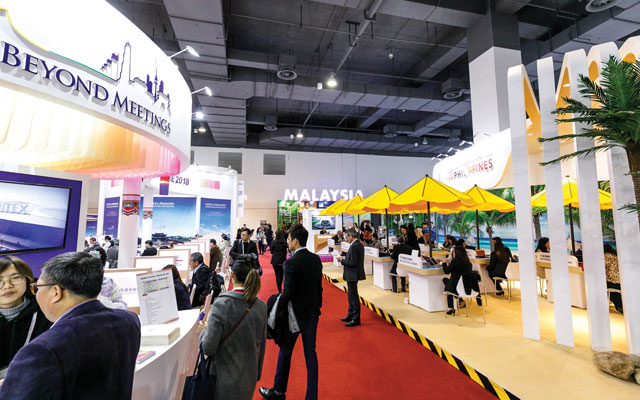
In light of the unprecedented global pandemic, TTG Asia Media will move its IT&CM China and CTW China tradeshow and exhibition online.

International and Chinese professionals in the business travel, and corporate and associations events industries will meet online this August

The dates remain the same for this year, August 3-5, and will stay true to its value proposition of delivering business, learning and networking opportunities between international and Chinese suppliers, buyers and professionals in the business travel, and corporate and associations events industries, albeit online.

Meetings, peer-sharing, and collaboration are more vital than ever before in leading this industry on its road to recovery.

Details on the virtual event will be released by June. Organisers will be in touch with confirmed and interested participants to support their transition to this year’s virtual show format, as well as the 2021 event.

Next year’s physical event is scheduled to take place from March 23 to 25, at the Shanghai World Expo Exhibition and Convention Center.

The IT&CM China and CTW China events are part of the larger IT&CM and CTW series delivered by the TTG Events business unit of TTG Asia Media.

New World Millennium Hong Kong Hotel rolls out Stay & Savour room package

0

New World Millennium Hong Kong Hotel has launched a Stay & Savour room package, priced from HK$1,600 (US$210), which includes a stay in a Deluxe City View or higher category room as well as food and beverage credits.

New World Millennium Hong Kong Hotel’s Stay & Savour package comes with F&B credits

Food and beverage credits valued at HK$1,000 nett per room per night are cumulative throughout the stay and can be used at any of the hotel’s seven dining outlets, including Chinese restaurant Tao Li; Japanese restaurants Sagano and Ranzan; and all-day dining venue Café East.

Guests also enjoy an additional 20 per cent food and beverage discount and complimentary Wi-Fi throughout their stay.

To protect the health and well-being of all guests, the hotel is enforcing strict precautionary measures, including a body temperature check for all guests at the hotel entrance, health and travel history declaration for all in-house guests upon arrival, as well as frequent disinfection and hand sanitisers available in the public areas of the hotel.

Stay & Savour is available until May 31, 2020.

Anaruk Community Lodge draws guest support in forest regeneration project

0

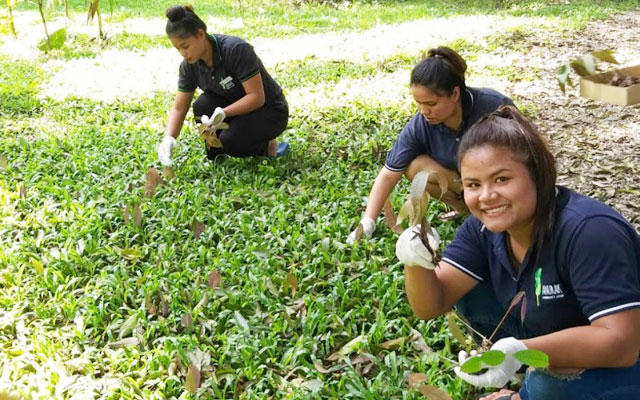
Anaruk Community Lodge at Khao Sok National Park in southern Thailand has initiated a Rainforest Rising tree planting project that ropes in guests as active supporters.

For a small fee of 300 baht (US$10), guests will get to plant a sapling tree as part of the lodge’s forest regeneration project, and opt to stay updated on the progress of their tree and the project via email, besides taking home a Rainforest Rising t-shirt as a souvenir.

Guests of Thailand’s Anaruk Community Lodge will get to be part of an ambitious forest regenerating project

The Rainforest Rising tree planting project extends to a new information centre that educates guests on the importance of biodiversity and practical considerations when regenerating forest cover.

“By planting trees, absorbing all the information, talking to our gardeners and joining our ecotourism activities, guests get a very rewarding and insightful back to nature experience,” said George Newling-Ward, manager of the lodge.

“They also contribute to the long-term ecological well being of the area.”

Anaruk Community Lodge has set a target of transforming 0.8 acres of nearby land into indigenous lowland evergreen forest by 2023. Its eventual aim is to regenerate another four acres of land in its proximity, and have the two plots be on par with the nearby national park in terms of biodiversity.

To ensure that the replanting process takes the conditions of the plot’s location into account, the lodge is partnering with the Forest Restoration and Research Unit (FORRU) at Chiang Mai University to execute the project.

Saplings planted by guests will be given a location according to the plan outlined by FORRU.

The two plots of land that the project attempts to regenerate were cleared of forest more than 50 years ago. They were last planted with oil palm trees in 2007.

According to the lodge, the palm oil plantations were unsuitable habitats for indigenous wildlife such as the Javan mongoose, pangolins, tapirs and loris.

Newling-Ward reckons that the project would attract school and college groups post Covid-19.

Echo Resorts uses lockdown to engage staff, support local community

0

With the temporary closure of Gayana Marine Resort, Bunga Raya Island Resort and Borneo Eagle Resort due to Malaysia’s Movement Control Order (MCO), Sabah-based Echo Resorts has directed 50 of its hotel staff to render support to other parts of its business, specifically Green-Os (an organic vegetable farm), Borneo Eco Fish Farm by Bayu Aquaculture and Alu Alu Kitchen.

The move is believe to provide staff an opportunity to gain deeper insight into the group’s holistic approach, said the company in a press statement.

Resort staff at affected Echo Resorts’ properties in Malaysia are moved to support other business units such as Green Os organic vegetable farm

Emphasising that “employee welfare and well-being remain the very core of our business” and that nobody has been made redundant, Gillian Tan, Echo Resorts’ owner representative, also revealed that the company is also making available training opportunities for all employees, including arranging for department heads to take Cornell Online Education Programs.

“We understand it may take time for travel to return to a semi-normal state and have decided that this is the perfect time to go back to basics and reinvest in education and training,” commented Tan.

Community support has also become a key focus during the MCO downtime, with staff volunteering their time to produce 800 reusable masks for colleagues in the company and packing 2,000 meals for affected families in Pulau Gaya, the island on which Gayana Marine Resorts sits.

The company has also chosen to take the opportunity to direct its attention to its sustainable project, Marine Ecology Research Centre at the Gayana Marine Resort, which works on reef generation, giant clam propagation and renewing seahorse populations.

Labour crunch threatens Indonesia’s tourism recovery, says trade

0

As Indonesia moves to restart its tourism engine, industry stakeholders worry that talent shortage may pose a key threat to the country’s tourism recovery, as the pandemic has left massive furloughs and layoffs in its wake.

Those concerns come in response to the Indonesian government’s recent call for travel trade players to start laying the groundwork for their recovery now, as it anticipates a tourism boom once the pandemic blows over.

Udhi is concerned that the loss of tourism workers during the pandemic will hamper recovery efforts

Speaking on a virtual forum, Udhi Sudiyanto, chairman of the Association of Indonesian Tours and Travel Agencies (ASITA) Yogyakarta chapter, said that many tourism workers had gone without pay or had their salaries cut, and many were forced to look for alternative jobs.

“Some of them have begun to work independently (in non-tourism-related industries). This will pose a problem when the industry rebounds,” said Udhi.

Fellow forum speaker, Diena Mutiara Lemy, dean of Faculty of Tourism, Pelita Harapan University, voiced her concerns about losing the younger generation interested in continuing their education in tourism or making a career in the industry.

“Companies which used to take in students for internship cannot (commit to hiring) an intern this year. Enthusiasm of new students to join this industry will decline (as a result). Our alumni has told us that it will be impossible to nail a job in the tourism industry this year. Meanwhile, to set up a new business independently in this industry is also unlikely,” she said.

Ary Suhandi, founder of the Indonesian Ecotourism Network (INDECON), said that while tourism will bounce back after the pandemic, the speed of its growth depends on how soon a vaccine is found.

Other challenges remain for tourism businesses during the rebound. Udhi warned that with a decline in the public’s purchasing power, travel agents will have to adjust to clients’ limited budget by shortening itineraries and offering affordable destinations nearby.

“(Travel agents) will likely also scrap longhaul destinations due to weak purchasing power (of Indonesian travellers). (Agents) will also be keener on South-east Asian countries (owing to their geographic proximity),” he added.

The pandemic may also trigger a change in the psychology of Indonesian travellers to be more watchful than before, according to Wiwik Mahdayani, founder of Desma Center, a research centre specialising in tourism.

She projected that Indonesian travellers would favour solo travel or small group tours as they would be deemed safer, and have a greater awareness of sanitary conditions in their surroundings as they would be accustomed to observing their personal hygiene during the outbreak.

Meanwhile Wishnutama Kusubandio, minister of tourism and creative economy, has urged travel agencies across the archipelago to start sprucing up tourist sites in a sustainable and responsible way.

Noting that offering unique local experiences would no longer be adequate in the post-Covid-19 era, Wishnutama said destination marketers must ensure that tourist sites are kept clean and enforce a good visitor management system to prevent overcrowding.

He has been coordinating with tourism stakeholders, such as Garuda Indonesia, to craft appealing packages for domestic and international promotions once the pandemic ends.