PATA has partnered with BBC World News to launch the PATA Destination Insight Series, a webinar series examining how various destinations around the Asia-Pacific region and beyond is dealing with the impact of Covid-19 and their preparations towards recovery.
The webinar will consist of a high-level fireside chat with a BBC presenter, followed by a panel discussion offering a comprehensive, local perspective of each destination’s on-ground activities and preparations, from operations and logistics to marketing and communications.
PATA CEO Mario Hardy said: “As the travel and tourism industry looks to navigate the challenges of the current Covid-19 pandemic towards recovery, the PATA Destination Insight Series allows us to gain a better and more comprehensive understanding of various destinations and how we can work together towards this goal.”
The first episode of the series, which will take place on August 19 at 16.00 ICT, will focus on Azerbaijan, a country with rich culture, ancient heritage, amazing nature and warm hospitality. Azerbaijan Tourism Board (ATB) CEO, Florian Sengstschmid, will sit down with Rajan Datar, The Travel Show presenter, for a one-on-one interview to discuss the current status of travel and tourism in Azerbaijan and their plans for recovery.
As well, Datar will examine the current state of tourism in Azerbaijan from a local stakeholder perspective in a session joined by ATB deputy CEO Bahruz Asgarov, Azerbaijan Hotel Association general secretary Gunay Saglam, Pasha Travel COO Chingiz Mursalov, as well as Azerbaijan Airlines passenger airline’s director Jamil Manizade.
Future episodes of the PATA Destination Insight Series will be organised on the second Thursday of every month, with the next one scheduled for September 10.
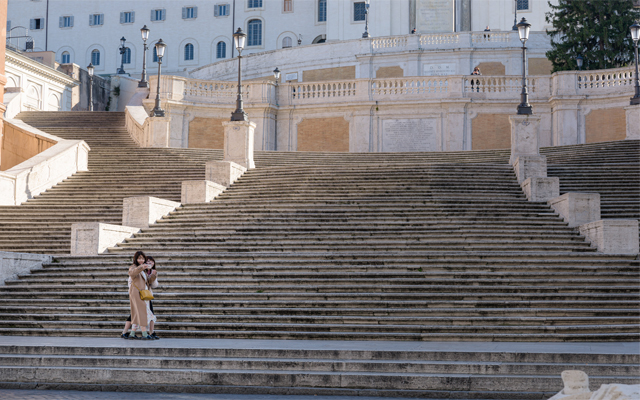
Two female tourists take a selfie in front of the empty Spanish Steps, Rome, Italy. Tourism has collapsed as a result of the covid-19 epidemic.
WTTC has made an urgent call to the heads of state of the G7 countries, plus Australia, South Korea and Spain, for strong leadership and international collaboration to save the travel and tourism sector.
In an unprecedented move, 120 of the world’s major travel and global business leaders have signed a letter backing the call by WTTC.
More than 100 CEOs in the travel and tourism industry has signed a letter addressed to the G7 and three other countries calling for strong international coordination to save tourism; two female tourists taking a selfie on the unusually empty Spanish Steps in Rome, Italy, amid the Covid-19 pandemic pictured
Signatories include representatives from PATA; major airlines such as British Airways, Emirates, Etihad, Jet2, WestJet and Virgin Atlantic; top international hotel groups, such as Accor, Best Western, Hilton, Hyatt, InterContinental, Mandarin Oriental, Marriott, Meliá Hotels and Radisson; and major tour operators and travel companies, such as Abercrombie & Kent, American Express, Carlson Wagonlit, Expedia, Travelport, TUI and Uber.
WTTC said that despite travel and tourism’s crucial importance to the local and global economies, “there is no clear or internationally coordinated effort to protect this uniquely exposed sector”.
Gloria Guevara, WTTC president and CEO, said: “We have reached a stage where critical action is urgently needed. Any measures taken in silos moving forward will only worsen the plight of millions of ordinary people. We need to transcend politics and put the millions of livelihoods, which have been affected by Covid-19, front and centre.
“This is not a binary solution or a choice between health on the one hand, and jobs, the economy and travel on the other. We can make strong progress on all these fronts if we follow the expert advice from science and learn from the past and positive experiences of others.
“WTTC and the other signatories of the letter, sent to the leaders of the world, are committed to working together to help resolve the worst crisis of our generation, and bring back the millions of jobs impacted. However, the private sector cannot do this alone. It is vital that the leaders of these countries come together and prioritise rescuing the world from this unprecedented crisis, by acting in an effective and coordinated way to bring back more than 120 million jobs and livelihoods affected.”
In the letter, WTTC identified four measures which need concerted international framework and leadership to combat the coronavirus:
Wearing a mask: This should be mandatory on all modes of transport throughout the entire traveller journey, as well as when visiting any interior venue and in locations where there is restricted movement which results in close personal contact and required physical distancing cannot be maintained. According to medical evidence, such measures can reduce the risk of the spread by up to 92 per cent.
Testing and contact tracing: We need governments to invest and agree on extensive, rapid, and reliable testing, ideally with results available in as quick as 90 minutes, and at a low cost, before departure and/or after arrival (symptomatic and asymptomatic would-be travellers), supported by effective and agreed contact tracing tools. The application of one or multiple tests, with the second after five days, will help to isolate infected people.
Quarantine for positive tests only: Quarantine for healthy travellers, which only serves to damage the economy, should not be necessary if testing is in place before departure and/or on arrival, and effective containment measures are taken five days later. This can replace blanket quarantine in a more targeted and effective way, significantly reducing the negative impact on jobs and the economy.
Reinforcing global protocols and standardise measures: The adoption of global health and safety protocols will help rebuild traveller confidence and ensure a consistent, coordinated and aligned approach of the travel experience in addition to significantly reducing the risk of infection. We also support the Public Health Corridor Concept which promotes a clean and safe end-to-end journey.
WTTC stressed that its research has shown that even a modest resumption of travelling can have massive economic benefits and bring thousands of desperately needed jobs back; providing a critical boost for the travel and tourism sector and generating GDP for economies left floundering after being struck by the pandemic.
When tourism activities in Malaysia came to a standstill during the almost-three-month-long movement control order period from March 18, imposed to stem the spread of Covid-19 in the country, tour and event specialist Laili Basir found his business rudely terminated.
Laili, who has been running traditional tours since 2010 and is the founder of Laili Basir Event Adventure, made the decision to use his expertise in a different way.
When the pandemic took away people’s ability to go on a live tour, Malaysian travel agent Basir dived into the virtual world with in-depth destination showcases
He moved online to sell virtual tours to anyone who is keen to experience destinations and attractions through their screen.
He told TTG Asia: “Selling virtual tours allowed me to build my customer base. I am certain that people would want to physically travel and visit those destinations at a later period, at their convenience. When they do, they can contact me for my tour services.”
While he started the initiative off with Whatsapp videos, he soon moved to the Malaysia Virtual Experience platform developed by Tourism Productivity Nexus as well as Zoom. These platforms allowed him to conduct pre-recorded virtual tours that showcase off-the-beaten-track destinations such as Semporna, Taman Negara National Park, Merapoh Caves and Ulu Baram in Sarawak, as well as extreme activities such as paragliding, free diving and rope swing, to a wider audience.
He said: “My intention is to offer the audience insider information that they will never find on Google or from travel agents.
“For instance, I provide live commentary during the viewing of my pre-recorded videos (and invite) participants to ask questions as they would on an live tour.”
While domestic travel is now possible and encouraged in Malaysia, Laili continues to conduct his virtual excursions as they provide his clients with an opportunity to learn about destinations before they commit to a paid physical tour sold by him.
Next on his cards is to offer virtual tours of Malaysia to foreign visitors keen on the country, through international travel platforms such as Airbnb Online Experiences.
“I am identifying unique experiences and destinations to offer which are currently unavailable on the platform,” he said.
The Indonesian government is still considering whether to give Bali the green light to reopen to international visitors in September.
The travel ban on foreigners that the central government has set since April to curb the spread of coronavirus is likely not to be revoked by then, although the Bali administration has made known that the island is ready to receive international tourists from September 11.
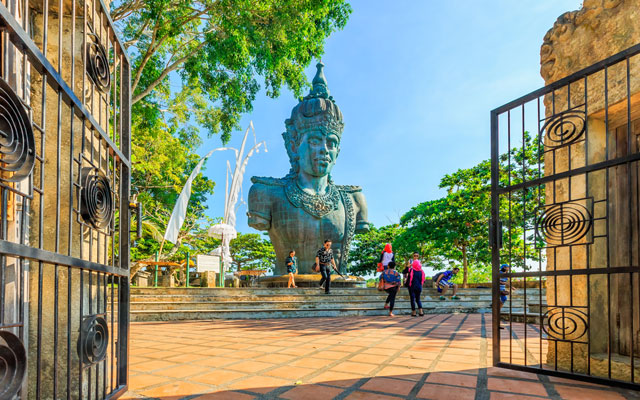
Bali’s planned September reopening may be pushed back, amid fears of new virus outbreaks; Tourists visiting the Lord Vishnu statue at the Garuda Wisnu Kencana Cultural Park in Uluwatu, Bali, Indonesia pictured
Reopening the country to international tourists is a “very positive” move, but the government is seeking the right timing to do that, said state-owned enterprises minister Erick Thohir, who is also chairman of the national economic and Covid-19 recovery committee, during a web press conference on August 15.
He said that although Indonesia really needs foreign tourists, the government doesn’t want new Covid-19 clusters to emerge again.
According to a recent meeting among related ministers, including foreign affairs minister Retno Marsudi and coordinating minister of maritime affairs and investment Luhut Binsar Pandjaitan, safety remained the highest priority. Although the country was striving to get its economy back on track, the government did not want to go back to square one after its painstaking efforts to stem the Covid-19 spread, shared Erick.
“The reopening of destinations to foreign tourists is still under review. The vaccine may be available early next year,” Erick said.
Meanwhile, the country’s plan to establish travel bubbles hasn’t been burst. But the government is now exploring the possibility to include only Bali – or the island along with tourist destinations in other provinces – for the travel bubble scheme aimed at reviving its tourism industry.
The decision not to open the country as a whole is still under review, according to Hari Sungkari, deputy of infrastructure and destination development at the Ministry of Tourism and Creative Economy.
“It could be that the travel bubble will not involve a foreign country and the whole of Indonesia. It could be country A with Bali only, or country A with Bali and another region,” he said in a web press conference. “Or the bubble could be even smaller, that is, a point-to-point (travel bubble), in which (a destination) in a foreign country is (paired) with a destination in Indonesia.”
With talks for the project still underway, Hari expects that Indonesia will reach travel bubble agreements with partner countries only by year-end.
As travel bubbles will also require travellers to adhere to health and safety protocols, Indonesia Tourism Development Corporation will give them a fast track to enter its property, The Nusa Dua in Bali, said its director of business and development, Edwin Darmasetiawan.
Besides Bali, other tourist destinations that the government will propose for the travel bubble scheme were not disclosed by Hari. Ng Sebastian, owner of Incito Vacations, expressed hopes that the government would choose smaller islands, such as Lombok in West Nusa Tenggara, Belitung in Bangka Belitung Islands, and Bintan in Riau Islands.
The Covid-19 crisis has made the government’s target of attracting 18 million foreign tourists this year an impossible goal, said Hari. According to the government’s forecast, the number of foreign tourists in Indonesia will drop to around 2.8 to four million this year, from 16.1 million visitors in 2019.
Hari projects that the country would only realise its 18 million foreign tourist arrival target in 2024 or 2025, and that domestic tourism would recover to pre-pandemic levels only in 2023.
To jumpstart its tourism sector, the Singapore government will set aside S$320 million (US$233m) in credits to encourage its citizens to participate in the SingapoRediscovers domestic tourism campaign, said deputy prime minister Heng Swee Keat on Monday.
The credits, dubbed SingapoRediscovers Vouchers, support the nine-month, S$45 million campaign launched last month by Singapore Tourism Board, Enterprise Singapore and Sentosa Development Corporation to drive local spend on tourism and lifestyle offerings.
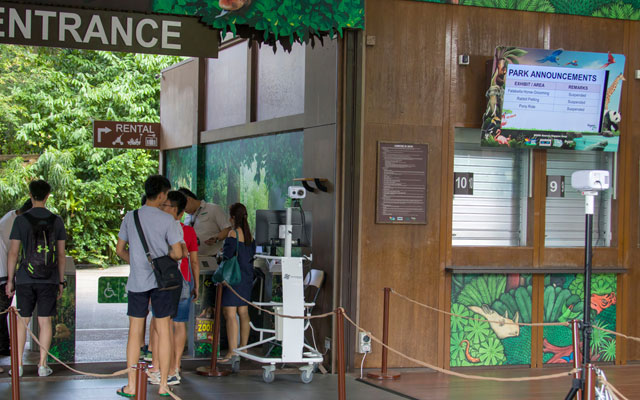
Singapore to issue US$233m in tourism credits to spur local spending; tourists queuing up to enter Singapore Zoo
During his ministerial statement, Heng said: “Our foreign visitor arrivals have dried up because of the travel restrictions, but we are determined to support our tourism sector by encouraging local tourism. Local consumption will not fully make up for (international) tourist spending, but I hope Singaporeans will take the opportunity to explore our local culture and heritage, nature, art and architecture.”
He added that the Ministry of Trade and Industry will provide more details in September.
The SingapoRediscovers campaign will focus on partnering local communities to help citizens discover hidden gems; curating precinct-based tour itineraries; as well as collaborating with hotels, tour operators, attractions and precincts to develop new experiences and promotions.
In addition, Heng also announced a slate of new measures worth S$8 billion to support businesses that have been impacted by the Covid-19 pandemic. These include extending wage support by seven months up to March 2021, from the current August 2020.
Businesses in the aviation, aerospace and tourism sectors, which were the heaviest hit by the pandemic, can receive the maximum wage support of 50 per cent.
Oakwood has joined forces with Country Garden Commercial and Culture Tourism Group to co-develop a new serviced apartment brand, Oakwood Beluxs.
The duo targets to open 100 Oakwood Beluxs branded properties across 50 cities in China by 2030.
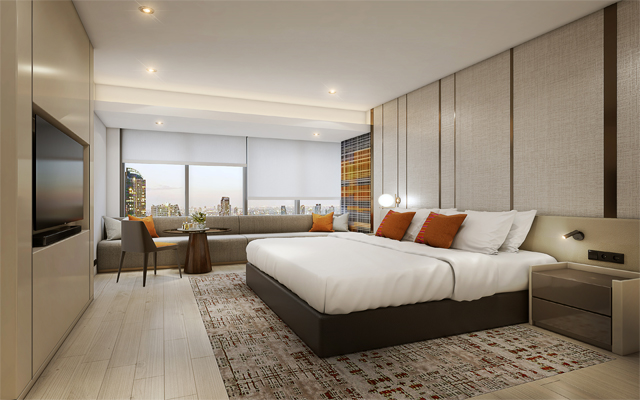
Oakwood, Country Garden plan to open 100 Oakwood Beluxs properties in China by 2030; artist’s impression of Oakwood Beluxs room pictured
Oakwood Beluxs has been created to appeal to “well-travelled citizens of the world” with “a desire for a sustainable, smart and personalised sanctuary”. Strategically located in upscale precincts, the hotel brand will exude artful sophistication rooted with a sense of culture.
The brand’s first properties will be set in Southern China, according to Oakwood CEO, Dean Schreiber.
Formerly established in 2005 as a business management team of Country Garden Holdings, Country Garden Commercial and Culture Tourism Group was integrated and officially incorporated in 2018 to manage Country Garden’s commercial and cultural tourism assets. Currently, the company’s portfolio spans across 1,156 cities in China, Malaysia, the UK, Australia, India and Thailand; and has built strategic alliances with over 1,000 brands.
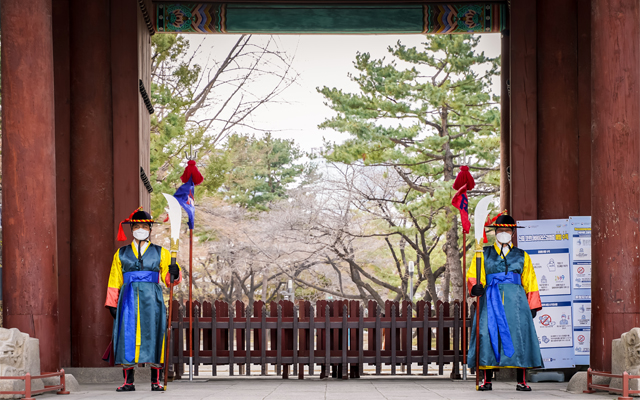
Armed guards with mask in traditional period costume standing at the entry gate of Deoksugung Palace, a tourist landmark
The Ministry of Culture, Sports and Tourism and the Korea Tourism Organization (KTO) have earmarked 29 billion won (US$24 million) for an accommodation-centric discount coupon programme, as part of efforts to boost the tourism industry reeling from the impact of Covid-19.
Under the scheme, one million discount coupons will be distributed to accommodations – including hotels, resorts, guest houses and motels – across the nation from August 14, reported The Korea Times.
A discount coupon programme rolled out by South Korea’s government aims to stimulate domestic tourism consumption; royal guards at the entrance of Deoksugung Palace in South Korea pictured
Of these, 200,000 coupons offer 30,000 won discounts for accommodations costing under 70,000 won, while the remaining 800,000 coupons offer 40,000 won discounts for those more than 70,000 won.
Citizens are entitled to one discount coupon each when they book accommodations via 27 online platforms, including Yanolja, Interpark, Gmarket, 11st and Myrealtrip, according to the report.
The coupons are valid for use during the off-peak travel season of September and October, it added.
However, the report cited officials from some travel agencies as lamenting that the programme is not effective in helping them to ride out the crisis.
An unnamed official from a Seoul-based OTA was quoted as saying that the company will suffer “a deficit” by joining the programme, as participating travel agencies have to shoulder 10,000 won per coupon.
In response, a culture ministry official told The Korea Times that four times as many discount coupons for accommodation costing more than 70,000 won have been issued, as compared to those under 70,000 won, adding that this will ease the burden on travel agencies.
The programme is expected to stimulate domestic consumption amounting to about 567 billion won, according to the official.
Night view of Supertree Grove at Gardens by the Bay on April 6, 2013 in Singapore. Spanning 101 hectares of reclaimed land in central Singapore, adjacent to the Marina Reservoir
The Singapore Tourism Board (STB) has partnered with India-based travel platform Tripoto to launch a microsite within Tripoto’s website, as part of efforts to keep Singapore top-of-mind among Indian travellers even as Covid-19 travel restrictions prevail.
Designed as a one-stop guide for Indian travellers, the microsite boasts content encouraging them to “Rediscover Singapore Now, Travel Later”. Besides being able to virtually experience Singapore’s attractions like Sentosa and Gardens By The Bay in the Singapore@Home section, users can also try their hand at whipping up Singapore delicacies like kueh dadar and chwee kueh with the stay-at-home recipes.
A microsite on Tripoto’s platform aims to encourage Indian travellers to rediscover Singapore’s attractions like Gardens by the Bay (above) for visit later when her international borders reopen
To appeal to kids, there is also a Fun@Home series of interactive games with Merli, a character illustration of Merlion, Singapore’s most famous icon. The microsite also links to STB’s website containing its latest Covid-19 travel advisory information for visitors and tourism businesses.
GB Srithar, regional director – India, Middle East & South Asia, STB, said: “Although travel restrictions are still in place, it is important for destination brands to continue with engaging consumers creatively and staying connected. Over the last few years, the STB has increasingly used digital marketing in our destination promotion efforts. We are happy to collaborate on this endeavour – a first-of-its-kind microsite by a National Tourism Organisation on the Tripoto’s platform.”
This marks the second collaboration between STB and Tripoto, following the travel web series Trails 2 Passion – Singapore Redefined in 2019, which showcased the experiential exploration of Singapore by actors Naveen Kasturia and Veer Rajwant Singh.
India was the third-largest visitor source market for Singapore in 2019, with 1.42 million visitors, after China and Indonesia. A recent global survey conducted by Blackbox Research, Dynata, and Language Connect showed that Singapore is the top outbound destination for Indians when it comes to post-pandemic travel.
TFE Hotels will be building a new Travelodge hotel that will form part of the multi-million-dollar West Grove development in Sydney’s western suburbs, under a partnership with Drill Management.
Slated to open in 2023, the 100-room hotel will sit at the gateway to Westmead’s Health Precinct – Australia’s largest health and biomedical research precinct – targeting both the hospital and medical industries as well as nearby corporates.
Travelodge Westmead is slated to open in Australia’s largest health precinct come 2023
The hotel’s proximity to the Westmead Hospital will also provide a midscale accommodation option for patients and their families.
Designed by Chada studio, the hotel will feature contemporary interiors throughout including the rooms, sixth level lobby, eatery and bar. Construction on the hotel is expected to start in 2021.
Central design features of the West Grove development include a lush landscaped courtyard space activated with restaurants, cafes and bars.
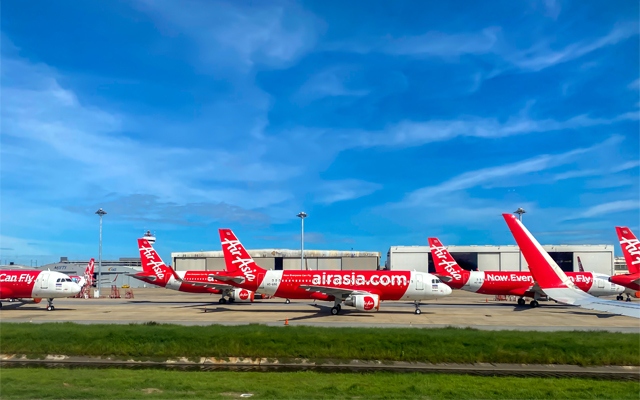
Airasia airplane parking at Don Muang international airport in coronavirus crisis
AirAsia is set to grow its medical tourism business by providing charter flight services from Indonesia, giving patients and medical tourists from Indonesia greater access to medical treatments and health services in Malaysia.
On August 14, AirAsia welcomed its first international medical charter flight from Medan into Penang International Airport. The next medical charter flight from Indonesia will be from Jakarta to Kuala Lumpur on August 24.
AirAsia set to grow medical tourism business with charter flight service from Indonesia
The medical charter service will be expanded to other cities in Indonesia and soon develop into an end-to-end service offering under the AirAsia.com platform.
AirAsia.com CEO Karen Chan said that the carrier is committed towards connecting people to their critical needs amid Covid-19 travel restrictions.
“These are stressful times for families with members suffering from chronic illnesses that require specialised medical treatments. AirAsia is working closely with medical institutions and government authorities to ensure inbound patients have a seamless travelling experience from Indonesia to Malaysia,” she said.
She added that the airline will continue to work with strategic partners like Island Hospital in Penang, and with the full support of Malaysia Healthcare Travel.
According to Chan, Indonesia as a country accounts for the highest inbound healthcare tourists arriving into Malaysia.
















The Indonesian government is still considering whether to give Bali the green light to reopen to international visitors in September.
The travel ban on foreigners that the central government has set since April to curb the spread of coronavirus is likely not to be revoked by then, although the Bali administration has made known that the island is ready to receive international tourists from September 11.
Reopening the country to international tourists is a “very positive” move, but the government is seeking the right timing to do that, said state-owned enterprises minister Erick Thohir, who is also chairman of the national economic and Covid-19 recovery committee, during a web press conference on August 15.
He said that although Indonesia really needs foreign tourists, the government doesn’t want new Covid-19 clusters to emerge again.
According to a recent meeting among related ministers, including foreign affairs minister Retno Marsudi and coordinating minister of maritime affairs and investment Luhut Binsar Pandjaitan, safety remained the highest priority. Although the country was striving to get its economy back on track, the government did not want to go back to square one after its painstaking efforts to stem the Covid-19 spread, shared Erick.
“The reopening of destinations to foreign tourists is still under review. The vaccine may be available early next year,” Erick said.
Meanwhile, the country’s plan to establish travel bubbles hasn’t been burst. But the government is now exploring the possibility to include only Bali – or the island along with tourist destinations in other provinces – for the travel bubble scheme aimed at reviving its tourism industry.
The decision not to open the country as a whole is still under review, according to Hari Sungkari, deputy of infrastructure and destination development at the Ministry of Tourism and Creative Economy.
“It could be that the travel bubble will not involve a foreign country and the whole of Indonesia. It could be country A with Bali only, or country A with Bali and another region,” he said in a web press conference. “Or the bubble could be even smaller, that is, a point-to-point (travel bubble), in which (a destination) in a foreign country is (paired) with a destination in Indonesia.”
With talks for the project still underway, Hari expects that Indonesia will reach travel bubble agreements with partner countries only by year-end.
As travel bubbles will also require travellers to adhere to health and safety protocols, Indonesia Tourism Development Corporation will give them a fast track to enter its property, The Nusa Dua in Bali, said its director of business and development, Edwin Darmasetiawan.
Besides Bali, other tourist destinations that the government will propose for the travel bubble scheme were not disclosed by Hari. Ng Sebastian, owner of Incito Vacations, expressed hopes that the government would choose smaller islands, such as Lombok in West Nusa Tenggara, Belitung in Bangka Belitung Islands, and Bintan in Riau Islands.
The Covid-19 crisis has made the government’s target of attracting 18 million foreign tourists this year an impossible goal, said Hari. According to the government’s forecast, the number of foreign tourists in Indonesia will drop to around 2.8 to four million this year, from 16.1 million visitors in 2019.
Hari projects that the country would only realise its 18 million foreign tourist arrival target in 2024 or 2025, and that domestic tourism would recover to pre-pandemic levels only in 2023.