Preferred Hotels & Resorts welcomed 21 new member properties to its global portfolio between October 1 and December 31, 2025, expanding its presence across Europe, Asia-Pacific, the Middle East, Africa and the Americas.
The new additions include a range of independent hotels and resorts across the brand’s LVX, Lifestyle, Legend and Preferred Residences collections. Among the new members are Samsara Ubud in Bali, a 17-villa property; Treasure Bay Fuxian Lake in Yunnan province, China, with 464 rooms; Admiral Hotel in Copenhagen, housed in a restored 18th-century waterfront warehouse; Horseshoe Bay Resort in Texas Hill Country, set across about 2,833 hectares along Lake Lyndon B Johnson; and Masseria San Domenico in Puglia, Italy, a restored 15th-century estate with 40 rooms and suites.
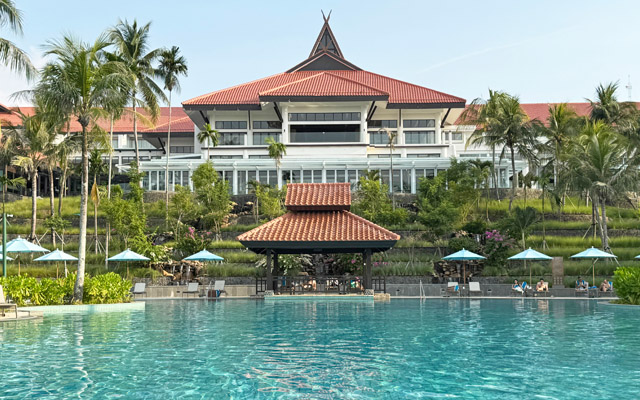
Preferred Hotels & Resorts expands its global portfolio with 21 new member properties, including Samsara Ubud in Bali, pictured
Other properties joining the portfolio during the period include hotels and residences in Italy, Spain, Denmark, Israel, Panama, South Africa, Egypt and the US. The Egypt additions include five Nile cruise vessels operating from Luxor.
Many of the new member properties participate in I Prefer Hotel Rewards, the group’s points-based loyalty programme, which has more than six million members globally. New and existing members can earn 2,500 bonus points on eligible stays at participating new member hotels for bookings made by March 31, 2026, for stays completed by June 30, 2026.
Lindsey Ueberroth, CEO of Preferred Hotels & Resorts, said: “These additions reflect our commitment to curating exceptional, experience-led travel around the world, including our exciting entry into Egypt’s luxury Nile cruise segment, with five exceptional Nile cruise experiences now part of our global portfolio.”
Preferred Hotels & Resorts now represents more than 650 independent hotels, resorts and residences worldwide.
Therme Group has appointed Tan Boon Khai as CEO of Therme Group Singapore. He will lead the development of Therme Singapore at Marina South as part of the group’s expansion in Asia.
Tan has more than 30 years of experience across the public and private sectors in Singapore. He was previously CEO of JTC Corporation.
The Declaration on the Implementation of the ASEAN Tourism Sectoral Plan 2026-2030 was unveiled on January 29, 2026 at the ASEAN Tourism Conference in Cebu, Philippines, marking a decisive move from post-lockdown recovery towards long-term transformation of the region’s tourism sector.
The declaration aligns with the ASEAN Vision 2045, the bloc’s long-term development blueprint endorsed by ASEAN leaders in May last year, which sets out a 20-year trajectory for the region’s economic, social, and institutional growth.
The declaration sets out five priorities to guide South-east Asia’s tourism development over the next five years
Under Vision 2045, tourism is positioned as a key driver of quality growth, resilience, and meaningful employment.
In 2024, tourism generated close to US$400 billion in 2024, accounting for almost 10 per cent of South-east Asia’s GDP and supporting about 42.5 million jobs, shared ASEAN deputy secretary-general, Satvinder Singh in his opening address.
In 2025, South-east Asia welcomed 144 million international visitors, a 13.4 per cent year-on-year increase, with nearly 48 million travellers coming from within the region.
He noted that South-east Asian tourism faces mounting pressures from climate change, digital disruption, geopolitical uncertainty, and intensifying global competition.
He shared that the ASEAN Tourism Sectoral Plan and the ASEAN Tourism Marketing Strategy for 2026-2030 is an opportunity for the region to move decisively from recovery to transformation.
The five-year sectoral plan is built around five interlinked priorities: resilient tourism, empowerment of the tourism workforce, accessible and seamless travel, digital tourism and product diversification, and sustainable tourism.
As host country and lead country coordinator for the ASEAN Tourism Sectoral Plan, the Philippines highlighted how national policies are already aligned with the plan’s five priorities.
Department of Tourism secretary, Christina Garcia Frasco said the Philippines’ experience, particularly in climate resilience, had helped to shape the plan’s direction.
She underscored the importance of resilience today, citing recent floods, earthquakes, and extreme weather events affecting Cebu and other destinations in the country.
She pointed to government initiatives that are currently underway, including large-scale skills training, emergency cash assistance for displaced tourism workers, visa liberalisation, as well as improved air connectivity.
Frasco shared that Cebu alone had gained 12 new international routes in 2025, thus strengthening its role as a regional gateway.
She also highlighted the Philippines’ digital nomad visa, expanded visa-free system for major markets, partnerships with global payment platforms, and the Philippine Experience Program, which is designed to promote culture, heritage, gastronomy and emerging destinations to ease pressure on overcrowded sites and raise visitor spending.
Asian Development Bank (ADB) vice-president for East and South-east Asia, and the Pacific, Scott Morris said South-east Asia’s tourism rebound has been driven by strong intra-regional travel and renewed long-haul demand.
“Countries are transitioning away from volume-led models towards higher-value and more diversified forms of tourism,” Morris said, adding that ADB has committed more than US$4 billion to tourism-related projects and has a US$3 billion investment pipeline through 2030.
An ASEAN Dialogue Partner, Igor Maksimov, deputy director general Department of Multilateral Economic Cooperation and Special Projects at the Ministry of Economic Development of the Russian Federation, said Russia is prepared to support ASEAN member states through technical cooperation and capacity building, including smart city management systems, large-scale tourism investment projects, and workforce training programmes.
Fresh off its historic accession as the 11th member of ASEAN, Timor-Leste has set an ambitious goal to welcome 200,000 international visitors annually by 2030.
As the first new nation to join the regional bloc in over 25 years, the country is leveraging its membership to open its doors to a new wave of international travellers, positioning itself as South-east Asia’s last frontier for authentic, sustainable adventure, stated Antonio da Silva, director general of tourism, Ministry of Tourism and Environment, Government of Timor-Leste.
Da Silva said ASEAN’s platform and support would help raise Timor-Leste’s profile and position it among recommended destinations in the global market
When asked if Timor-Leste would be ready to host the ASEAN Tourism Forum in 2029, da Silva said that they are “working towards what is expected of us in 2029”.
“At this point, the government is trying to catch up (to other ASEAN member states) in terms of facilities, human resources, and ground support. It’s not only infrastructure capacity that we need to address, but also the broader agenda of aligning our human resources and regulatory standards with the ASEAN framework,” he elaborated.
Timor-Leste is modernising its infrastructure to grow beyond an existing event capacity of 200 to 300 participants. The Dili International Conference Centre, which broke ground last year, is expected to meet ASEAN MICE Standards in time to host the 2029 ASEAN Summit. Accommodation is also expanding, with the recent opening of JL World Hotel and the nation’s first five-star property, Palm Springs Hotel Dili.
Simultaneously, a major upgrade of Presidente Nicolau Lobato International Airport is underway. The project includes a new terminal and a runway extension to 3,000m to accommodate larger aircraft, with a goal of handling up to one million passengers annually by 2028 – a significant jump from the current 250,000. Work will also soon begin on the Dili Waterfront Upgrade, a 2.7km redevelopment of Avenue de Portugal that will transform the coastline into a tourist hub with modernised walkways, retail, and dining.
In addition, new initiatives, such as the Tourism Service Ambassador Training Programme will be launched this year. The government is also reviewing and upgrading tourism curricula to align with the ASEAN Mutual Recognition Arrangement on Tourism Professionals and Core Competency Standards.
Da Silva also acknowledged that it is a challenge to promote Timor-Leste as a standalone destination, but joining ASEAN will help it to create multi-country travel packages.
“With all the support and the platform that ASEAN has, (it will) uplift our image to become one of the most recommended destinations within the global market,” he concluded.
A major multi-million dollar coastal project is slated to change the face of Kep in southern Cambodia, positioning the quaint coastal town as one of the region’s prime beach destinations.
Kep Exhibition Plaza (KEP), spearheaded by Kep West, will include event spaces, art installations, F&B outlets, a stretch of beach, the country’s first underwater museum showcasing marine conservation efforts in the area, and a beach club.
Kep West plans a multi-million dollar coastal development in Kep, featuring event spaces, a beach club and Cambodia’s first underwater museum
Jef Moons, owner of Kep West, said KEP will comprise The Lighthouse and The Beach Club, which will transform the area into a leading destination for culture, lifestyle and sustainable tourism.
“The Lighthouse and The Beach Club represent a new era for Kep. These projects are designed to honour Kep’s heritage while shaping a forward-looking coastal destination that blends architecture, community and culture,” Moons said.
The Lighthouse will be a “contemporary landmark overlooking the sea”, featuring a range of F&B outlets, flexible event and meeting spaces, concept stores, and a multifunctional ballroom for private events, weddings and conferences.
Next to it, The Beach Club will be a blend of an upmarket beachfront restaurant, bar, infinity pool and lounge areas. Moons said it will host lively beach parties. The space will also house the Royal Cambodia Yacht Club.
Development of The Lighthouse and The Beach Club is set to begin early 2026, with openings planned for the 2027-2028 season.
The project also includes the Art for Kep initiative that aims to position Kep as a creative hub by connecting local and international artists through residencies, exhibitions and collaborative projects.
This year’s residency will form the basis of the Ocean Museum and Underwater Gallery, which will feature 3D-printed sculptures designed to serve as both artworks and living coral reefs. A Mangrove Forest Project is also planned to present art and environmental education.
“Collectively, these initiatives will elevate Kep into one of South-east Asia’s new coastal destinations ready to be discovered. The city will stand out for its innovative architecture, diverse lifestyle options, rich cultural activities and real sense of authenticity,” Moons said.
Emirates and Marriott International have signed an agreement to develop Emirates Wolgan Valley, a Ritz-Carlton Lodge, a 40-key all-inclusive property to be located within a 2,833-hectare conservancy in Australia’s Greater Blue Mountains World Heritage area.
The project is expected to be the first Ritz-Carlton Lodge globally and is scheduled to open in mid-2026. The lodge will be developed on the site of the former Emirates Wolgan Valley Resort in New South Wales and will operate within a conservation reserve, with the built footprint occupying less than two per cent of the land.
The 40-key development will add to The Ritz-Carlton’s existing presence in Australia
Since 2006, Emirates has invested A$150 million (US$99 million) in the Wolgan Valley property, including restoration of heritage structures such as the original 1832 homestead and conservation programmes involving the planting of more than one million native trees. Emirates is investing an additional A$50 million in refurbishment works, in collaboration with Marriott International, to reposition the property under The Ritz-Carlton brand.
Following the closure of Wolgan Valley Road in 2023, Emirates maintained the site with a small team of locally employed staff while operations were suspended. The reopening of the lodge is expected to support up to 150 jobs and provide opportunities for local suppliers.
Access to the lodge will be via four-wheel drive along the Donkey Steps or by helicopter. The property is planned to include 40 lodges, each with a private pool, along with dining venues, wellness facilities, recreational amenities and guided outdoor experiences led by resident experts.
The development will add to The Ritz-Carlton’s existing presence in Australia, which includes properties in Perth and Melbourne.
As generative AI shifts from a search novelty to a functional booking engine, the hospitality industry is facing a critical pivot.
Sam Hon, CEO of CREX, an AI visibility scanner for hotels, stated that travel planning AI adoption rose globally from 22 per cent in 2023 to 48 per cent in 2025, with 78 per cent projected for 2026. Currently, 60 per cent of AI users are using the technology for travel bookings.
Hon emphasised that the goal is visibility during early planning to bypass intermediaries and drive direct bookings; photo by Anne Somanas
Hon said AI should be treated as an emerging distribution channel, comparable to an OTA or wholesaler.
Speed is becoming critical, as AI models refresh roughly every 10 days. Properties that require too much effort to be discovered are often bypassed in favour of more accessible data sets. Traditional SEO keyword matching is proving ineffective, as AI prioritises semantic meaning over keywords.
“SEO doesn’t work very well with AI, because AI looks into semantic meanings – meanings of words, paragraphs or even long conversations; it does not do keyword matching,” Hon noted.
Data consistency is another challenge. AI reasoning models cross-reference a hotel’s declared information against multiple digital touchpoints. Discrepancies between websites and social media profiles, or even images such as lobby posters, can result in lower discovery scores.
Hon also warned of “GEO poisoning”, where external bloggers or third parties shape a hotel’s brand identity if the property fails to manage its own narrative.
Looking ahead, AI wallets and hyper-personalisation will automate the conversion process. The goal is visibility during early planning to bypass intermediaries and drive direct bookings.
“AI wallets are coming soon, and the traveller will be comfortable doing everything within AI. The first step is you must be visible; you must be in the list. Only then does the commerce and the checkout process come in,” Hon said.
Universal Studios Japan and The Pokémon Company have outlined plans to develop new Pokémon-themed experiences, with the first phase set to begin at Universal Studios Japan. The project forms part of the park’s ongoing strategy to expand its range of character-based attractions.
The collaboration aims to introduce new immersive experiences based on the Pokémon franchise. Universal Studios Japan has previously presented Pokémon parades and shows since October 2021, and the new project will build on these earlier initiatives.
Universal Studios Japan and The Pokémon Company plan new Pokémon-themed experiences, with the first phase launching in Japan; photo by The Pokemon Company
Following its debut in Japan, Universal Destinations & Experiences plans to introduce Pokémon experiences at other Universal parks worldwide. Further details, including timelines and formats, will be announced at a later date.
The project is positioned as a long-term collaboration between Universal Studios Japan and The Pokémon Company, marking the next stage in a partnership first announced in 2021. The new development coincides with Pokémon’s 30th anniversary.
Universal Studios Japan said the initiative is intended to expand the park’s portfolio of large-scale themed entertainment, while also serving as a foundation for future international developments across Universal’s global network.
Mark Woodbury, chairman and CEO of Universal Destinations & Experiences, said: “Collaborating with imaginative and inventive storytellers fuels our ability to create and deliver mind-blowing attractions and experiences that shatter guest expectations.”
“As Pokémon celebrates its 30th anniversary this year, we are thrilled to launch this new project at such a significant milestone. Our mission is to enrich both the real and virtual worlds through Pokémon, and with this project, we aim to create theme park entertainment that surprises and delights fans around the globe,” added Tsunekazu Ishihara, president and CEO of The Pokémon Company.
Melbourne’s Pentridge Prison joins the global trend of unique restored stays
Flavourful stays Travellers are increasingly demanding that hotels are more than just a place to rest their heads.
Hotels.com’s contribution to Expedia Group’s Unpack ’26: The Trends in Travel report notes a rise in bookings for restored abbeys, schoolhouses and even prisons. Travellers in 2026 expect “culturally rich experiences by staying in places that tell a story through their architecture and past”.
Skyscanner’s Travel Trends 2026 report states that “hotels are the main event”, with immersive stays becoming more common among travellers who are choosing where to go based on where they want to stay.
Preferred Hotels & Resorts has also seen the rise of unique stays. The Luxury Travel Report, published in May 2025 by Preferred Hotels & Resorts in partnership with The Harris Poll, identifies travellers’ dislike for “sameness in design, service, and experience”.
Seventy per cent of surveyed luxury travellers find that modern luxury hotels have lost their soul to standardisation, and nearly three-quarters of them will not pay for luxury accommodation that feels generic.
Philipp Weghmann, chief development officer of Preferred Travel Group, said demand for independent hotels that offer creative guest experiences is, therefore, on the rise.
“Independent hotels have the flexibility to deliver unique experiences that are not tied to signature programming that comes with being part of a global hardware,” he said.
The power of unique hotels is also influencing travellers to book multiple hotels in one destination to allow them to explore different neighbourhoods, chase better deals, and keep things flexible, according to Hotels.com.
Capoeira showcases Brazil’s living culture as demand for local sporting experiences grows
Sporting magnets Major sporting events are big tourism drivers, but this trend will intensify this year. More travellers are seeking out local sport experiences – not just soccer, cricket, hockey or tennis, which are the world’s most popular sports with billions of fans – that offer a deeper connection to local culture, community, and tradition.
Expedia Group projects a surge in uniquely regional sporting experiences, with 57 per cent of respondents saying they are likely to attend one while on a trip. From capoeira in Brazil to sumo wrestling in Japan, travellers want front-row seats to the traditions, energy, and stories that make each place unique.
Fans of Thai kick-boxing, Muay Thai, can apply for a 90-day Muay Thai visa to stay and train in authentic Muay Thai camps across the country. The special visa was introduced in 2024, and a website, Now Muay Thai, was created to guide foreign fans to the best places in Thailand to train.
In Osaka, travellers sample local favourites from vending machines as part of supermarket safaris
Supermarket safaris Travellers are swapping restaurant reservations for supermarket safaris, claims Skyscanner’s travel outlook. In its study, 38 per cent of Asia-Pacific travellers say they plan to explore local supermarkets or grocery stores while on holiday. They also look forward to picking out local favourites from the snack aisle and vending machines.
Skyscanner notes that how people travel for food is now part cultural deep-dive, part budget hack.
Travellers are visiting Dublin’s Long Room Library as literary‑inspired journeys grow
Literature inspiration Respondents to studies conducted by Skyscanner and Vrbo holiday rentals have expressed a desire to go on a trip that is inspired by literature as well as to slow down and include time to read while travelling.
Skyscanner’s trend report finds that people are choosing travel and literature to escape, reconnect and restore, whether by tracing the footsteps of fictional heroes, planning a slow holiday around a reading retreat or chasing the world’s most beautiful bookshops and libraries.
Similarly, Vrbo reveals that 91 per cent of travellers are seeking getaways focused on reading, relaxation, and quality time with loved ones. The Booktok social media trend is fuelling interest in literary-themed travels, with reading-related terms in Vrbo’s guest reviews nearly tripling.
Family time Quality time with the family on trips has risen in importance post-lockdown, but Hilton’s 2026 Trends Report has identified an interesting development.
Skip-generation holidays are coming up strong, where grandparents and grandchildren are travelling together.
Six in 10 respondents across Asia-Pacific say they have taken or plan to take a skip-generation holiday. The trend is most pronounced in China (86 per cent) and India (79 per cent), where it has moved from novelty to mainstream. In China, more than three-quarters expect to book at least one to two skip-generation holidays in 2026, suggesting such trips may soon rival traditional family vacations.
Families are choosing experiences that encourage shared discovery. Culinary exploration (69 per cent) and visits to historical and cultural landmarks (63 per cent) are the top activities, particularly in destination Singapore, where more than eight in 10 families cite food-related exploration as their preferred activity.
Luxury river cruise specialist AmaWaterways has identified South-east Asian travellers as an ideal market for river cruises, according to Melvyn Yap, the company’s business development director for the region.
Yap, a familiar figure in both the cruise and luxury travel sectors, said South-east Asian travellers tend to be “globalised” in their travel appetite compared with other Asian source markets, and are more open to unfamiliar food, culture and experiences.
Yap: awareness of river cruise products remains limited among South-east Asian travellers
“Filipino and Indonesian travellers, for instance, are less likely to expect a tour guide who speaks in Tagalog or Bahasa Indonesian respectively, or to expect access to their native cuisine while holidaying in a foreign region,” he explained, adding that South-east Asian travellers’ “easy-going nature” and desire for unfamiliar sights and experiences make them ideal for river cruises that often weave into lesser-known, less-commercialised, and less-accessible destinations.
Since his appointment at AmaWaterways in late-2024, Yap has found the Philippines to be a top performing source market for his company while Indonesia offers the strongest growth potential.
“The Philippines is our second largest market in Asia and largest in South-east Asia. Travellers from the Philippines are mostly entry-level luxury travellers at this stage, but given time, they will mature to be very sophisticated travellers,” said Yap.
He noted that this is a natural progression, with most consumers starting their travels with basic products and itineraries that cover several cities and countries at once, before determining their preferences and developing a desire to explore a single destination more deeply.
At present, AmaWaterways river cruises that take guests through clusters of cities along well-known rivers such as the Rhine, the Rhône and the Danube are proving popular with South-east Asian travellers.
However, AmaWaterways faces two main challenges in its pursuit of growth in South-east Asia.
“Most South-east Asian travellers, with the exception of Singapore passport-holders, have to go through a visa application process to travel to Europe. Visa applications can only begin three or four months before departure date, which discourages South-east Asian travellers from booking their holidays well in advance. They also risk trip disruptions should visa applications be delayed,” shared Yap.
AmaWaterways recommends that guests purchase travel insurance always, and offers the AmaWaterways Travel Waiver Plus that provides protection from cancellation for any reason, up to 31 days prior to the start of their cruise. Cancellations within that time frame accords guests a Future Cruise Credit.
The other obstacle, according to Yap, is a lack of awareness of river cruise products among travellers in the region.
“It took a while for ocean cruise lines to build up awareness in this region, and now it is time for river cruise lines to do the same. Many South-east Asian travellers are not aware of river cruises and the advantages of going on one. Being smaller in size, river cruise ships can easily navigate rivers and bring guests to cities not accessible by hefty 45-seat coaches. Journeys down rivers also grant scenic views along the way. Furthermore, for travellers who want privacy on holiday, river cruises can be ideal, as there are fewer guests onboard at once,” he said.
In an earlier interview with TTG Asia, CEO Catherine Powell described AmaWaterways as being “all about small ships that are intimate and where you will experience a high-touch service”. She also noted that guests would enjoy a ship with thoughtful layout as well as immersive land experiences.
To improve understanding of river cruises among South-east Asian travel advisers, Yap is investing in tradeshow presence, allowing him to meet and speak with more trade buyers.
He also expressed interest in hosting Asian corporate incentive events onboard and will be participating in regional tradeshows such as IT&CMA in Bangkok and Indonesia Business Event Mart in Jakarta this year.