

Brought to you by Capri by Fraser
Thailand’s first Tonino Lamborghini branded hotel to open in Phuket
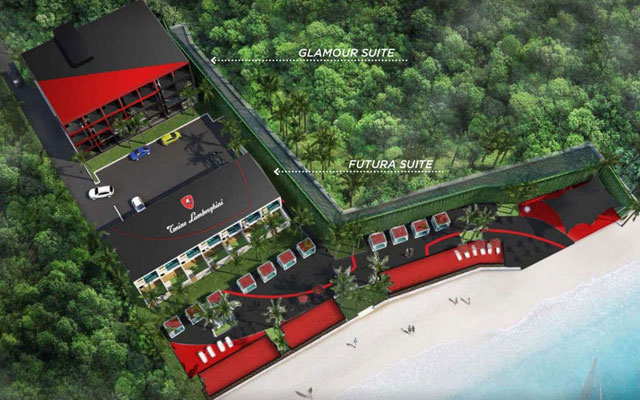
Italian luxury lifestyle brand Tonino Lamborghini has unveiled plans to launch its inaugural hotel project on the idyllic Thai island of Phuket, as part of a collaboration with developer Utopia Corporation.
Scheduled to open in 2023, Tonino Lamborghini Boutique Hotel Phuket will be a luxury resort nestled directly on the beachfront at Chalong Bay, on Phuket’s secluded southeast coast.
Designed by architect Alexander Wong, the hotel will feature a Glamour Lobby fitted with slatted rosewood LED screens, alongside a collection of 39 suites and seven villas, all of which are adorned with designer furnishings and abstract artworks.
Tonino Lamborghini Boutique Hotel Phuket will start construction in August 2021, with completion expected by July 2023. The hotel is expected to celebrate its grand opening in November 2023.
SIA raises US$631m via convertible bonds
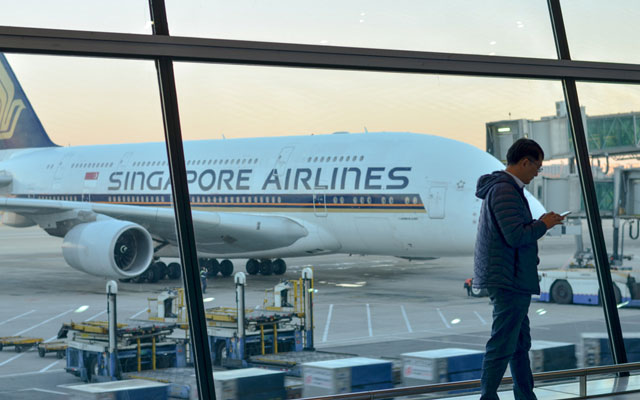
Singapore Airlines (SIA) has raised S$850 million (US$631 million) through a convertible bond issue, exceeding its original target of S$750 million owing to “strong investor interest”.
The five-year bonds will carry a coupon of 1.625 per cent, and can be converted into ordinary shares at a price of S$5.743. This represents a premium of 45.8 per cent over the closing price of S$3.94 last Thursday.
The Hong Kong and Shanghai Banking Corporation is the sole bookrunner and lead manager of the issue.
SIA said in a statement that this issuance further strengthens its liquidity position, and bolsters its ability to navigate the challenges posed by the impact of the Covid-19 pandemic on the business.
Proceeds from the bonds will be used to fund operating and capital expenditure, and debt servicing, it added.
SIA CEO Goh Choon Phong said in the statement: “The placement was successfully executed with a highly competitive coupon and substantial conversion premium. Such attractive terms for the company underscore the strong confidence that investors have in Singapore Airlines, as well as our ability to successfully overcome the near-term challenges and emerge as a leader in the airline industry.”
The national airline said that positive discussions have also taken place on aircraft sale-and-leaseback transactions, and that it will continue to explore other means to further strengthen its liquidity as necessary.
Since the start of its 2020/2021 financial year, including Friday’s issuance, SIA has raised approximately S$12.2 billion. Including the new lines of credit, the carrier will continue to have access to more than S$2.1 billion in committed credit lines.
According to the airline, for the period up to July 2021, it retains the option to raise up to S$6.2 billion in additional mandatory convertible bonds that would provide further liquidity if necessary.
Advancing towards smart tourism
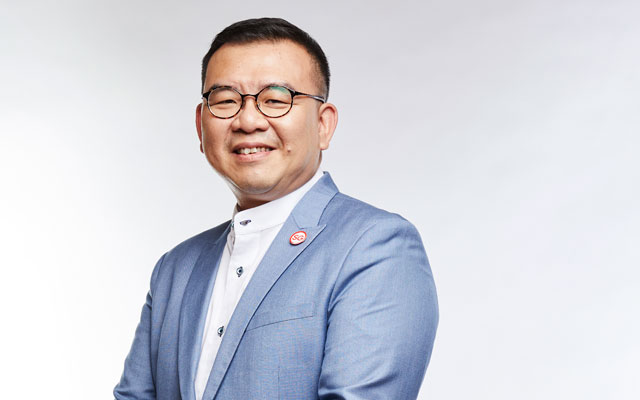
How does STB envisage the industry taking up more AR technology? What innovative ideas have you seen working well for Singapore?
We are already beginning to see the adoption of AR technology within the tourism sector. For example, the National Heritage Board (NHB) is partnering with SmartGuide to design digital trail guides using audio, geolocation and AR for three NHB heritage trails at Orchard Road, Little India and Balestier.
This project aims to encourage locals to discover our national heritage with entertaining multimedia content. The mobile app will also collect and evaluate data from the trail routes to provide a better understanding of visitor behaviour.
To showcase the potential uses of the AR content, STB’s in-house development team is developing a variety of prototypes to help visualise the possibilities of using AR, such as enhancing customer engagement at places of interest, augmenting tour experiences, gamifying exploration, and creating focal points for repeat visitorship and social media engagement.
What are some of the potential barriers to adoption of AR solutions among local players, and how is STB working to address such barriers?
One of the key hurdles that businesses face in creating this type of digital content is that it can be costly to develop and maintain. Our aim is to create 1,000 pieces of high-quality AR content, such as Singapore icons, cultural and heritage items, and make them available to industry partners over the next few years. The 3D models – with or without animation – will be developed and uploaded to the Tourism Information and Services Hub (TIH) for tourism stakeholders to access for free.
These assets can be used to create AR experiences within their digital channels such as apps and websites for customers, (and will be) released for use starting from next year. We look forward to industry partners also contributing to this pool of AR content.
Will there be any standardisation or regulation surrounding the production and use of AR assets?
For content creators who would like to leverage on TIH, our AR team will establish a set of standards for both technical format and quality. The intent of these standards is to enhance the reusability of AR content across the industry, and reduce friction in integrating different types of AR content.
For example, stakeholders will be able to download 3D models from TIH (with) assurance that the models conform to a set of standards, thus, reducing the time and cost of development.
With the necessity of contactless transactions and virtual engagement now, how can tourism businesses navigate the sentiment that technology cannot replace the human touch?
We are not against the adage. The key point of leveraging technology is to let it take over mundane and repetitive tasks, so that our precious manpower can be devoted to delivering impactful customer service.
Given the pandemic, we do not foresee mass leisure travel to resume soon. This is a good opportunity for our tourism and lifestyle businesses to explore new ways to allow consumers to experience Singapore from afar, stay top-of-mind, and build demand as the market recovers. AR technology allows our tourism stakeholders to add an extra dimension of interactivity.
Do you envisage some types of hybrid tourism products arising from this?
When recovery happens, AR can be used to bridge the online-to-offline divide as part of STB’s vision to create the end-to-end “One Singapore Experience” and deliver a seamless and memorable experience. Tourism businesses with strong AR capabilities will then be able to deeply engage customers from pre-arrival to post-arrival, delivering richer, more memorable experiences at our places of interest.
Earlier this year, STB launched a pilot of the Tourism Transformation Index (TXI) that allows businesses to self-assess their state of transformation.
How has the TXI aided the recovery of participating stakeholders thus far?
Several tourism businesses, such as Amara Hotels & Resorts and Park Hotel Group, have undergone the TXI assessment as part of our Lighthouse Account programme. Their TXI score will help us co-develop a digital transformation strategy to identify new opportunity areas and improve their business outcomes as they plan for recovery. The digital transformation strategy will be accompanied by a roadmap that guides the stakeholders on their next steps.
These key industry stakeholders will be examples for the rest of the industry to showcase the importance of transforming their businesses, especially considering the current challenges. We will be releasing the full-scale version of the TXI on our Singapore Tourism Analytics Network by the end of the year.
With international travel largely off the cards for now, how can local tourism players better tap into domestic demand?
It is in my view that our Singapore residents are very discerning, and our attraction operators will have to innovate either through technology or bundling with other experiences to surprise our domestic crowd. We hope that the SingapoRediscover Vouchers will give our industry an opportunity to do so, and maybe through this, develop new experiences and content that will place them in a better position when travel resumes.
TTG Conversations: Five questions with Ivan Breiter, Switzerland Tourism
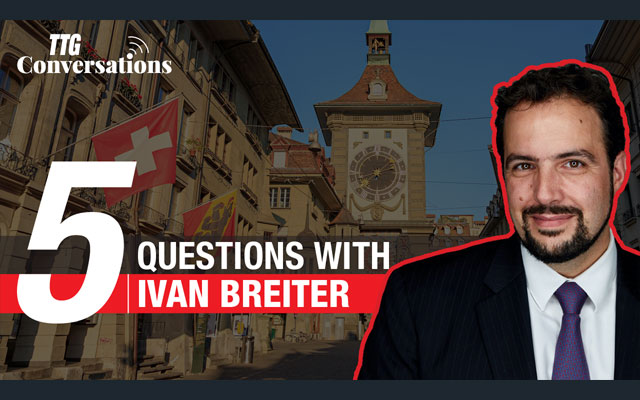
Despite ongoing travel restrictions, particularly on longhaul travel, Switzerland Tourism has not ceased its marketing and trade outreach efforts in Asia, pushing on with several activities to keep trade partners informed and ready for when travel is possible again.
In this new episode of TTG Conversations: Five questions video series, Ivan Breiter, director of South East Asia with Switzerland Tourism, the National Tourism Board of Switzerland, details how the organisation has approached destination marketing activities and messaging during a time of suppressed travel freedom, reflects on challenges Swiss travel and tourism suppliers face as traffic returns, and what Switzerland is doing to rejuvenate its offerings.
Getting back on track

Thailand’s luxury hospitality sector is gearing up post-lockdown to attract domestic travellers who now seek exclusive escapades with a component of seclusion, valued-adds and heightened wellness experiences.
The pandemic has only served to enhance the existing demand for personalisation and bespoke experiences across the board — now with an added element of safety and seclusion that Thailand’s luxury hotels are going the extra mile to satiate.
According to Bruno Huber, general manager at Mövenpick BDMS Wellness Resort, Thailand’s domestic destinations will need to reinvent themselves to stay attractive to the high-income group. “It will require a level of creativity from us in the hospitality industry to create new, aesthetically pleasing and authentic experiences that are engaging to combat the market’s short attention span,” he said.
This heightened expectation for creative offerings among high-end travellers is also echoed by Nick Downing, general manager at The Siam Hotel, who observed guests “more often than not requesting bespoke itineraries or ideas”.
Downing noted that balancing the expected personal touch and connection in luxury hospitality with safety protocols has become a fine juggling act – to that end, the hotel now reaches out to its guests pre-stay to find out their concerns relating to the coronavirus and how they wish for the hotel to address their unease.
With the halt on international tourism necessitating Thailand’s shift to rely on its own vast domestic market, hoteliers have had to evolve their strategies.
Vitanart Vathanakul, CEO of Royal Cliff Hotels Group, said differentiating between domestic and international market expectations is paramount.
“Everyone views luxury travel differently, so what Thais are looking for will be different from what the international clientele is expecting,” he told TTG Asia Luxury, adding that hotels with “strong preventative programmes combined with a high level of hygiene” will win customers’ trust.
The tussle for the local tourist dollar has also prompted some Thai luxury hoteliers to veer towards value-added packages that draw marketing buzz.
The key to unlocking opportunities in this climate lies in creating attractive staycation deals that “spread via word-of-mouth and are supplemented by targeted promotional campaigns,” opined Huber.
He cited the examples of “value-added service and food and beverage-driven experiences”.
For Rosewood Bangkok, the hotel is baiting consumers with a host of bundle deals, such as teaming up with sister property, Rosewood Phuket, to create a “dual destination” package, shared Thomas Harlander, its managing director.
“(It’s a challenge to create) products and services that exceed expectations in a highly competitive and saturated market such as Bangkok, (but) the response has been tremendous,” he shared. “We have also noticed that guests are putting a premium on their health and are willing to spend more on trusted brands and wellness services… I see real growth in the area of results-driven, luxury wellness retreats with a medical and holistic component.”
Among the biggest developments on this front in Thailand include the December 2020 launch of RAKxa by Minor Hotels, in collaboration with M.K. Real Estate Development and VitalLife Scientific Wellness Centre. Situated in Bangkok’s Green Lung, RAKxa has been billed as Thailand’s first fully integrated wellness and medical retreat.
The September launch of Anya Meditec by event and marketing services firm Index Creative Village also aims to bring hospitals to hotels, latching onto the healthcare trend in premium markets which allows travellers to receive medical services, such as sleep tests, without going to the hospital.
“It’s more than wellness – we have a complete team of doctors, nurses and medical technicians,” said Kreingkrai Kanjanapokin, founder and group CEO of Index Creative Village, on forming the “medical agency” spinoff.
Paul Hawco, corporate director of wellness at Dusit Hotels and Resorts, who is working towards the launch of an integrated wellness centre at mixed-use project Dusit Central Park in 2023, also pointed to the brand’s infusing of “micro-moments of well-being” into the stay experience – such as a mini massage upon arrival – as indication of how luxury wellness would evolve.
Karina Stewart, co-founder and chief wellness director at Kamalaya wellness sanctuary and holistic spa resort in Koh Samui, which offers personal coaching sessions with experts from a range of backgrounds, including former monks, onsite and via Zoom, said the resort has seen a rise in demand for pandemic anxiety treatments. She foresees a spike in wellness travellers, their stays lengthening, and wellness destinations driving demand post-lockdown.
Specially Curated Staycation Deals at Capri by Fraser, Changi City / Singapore
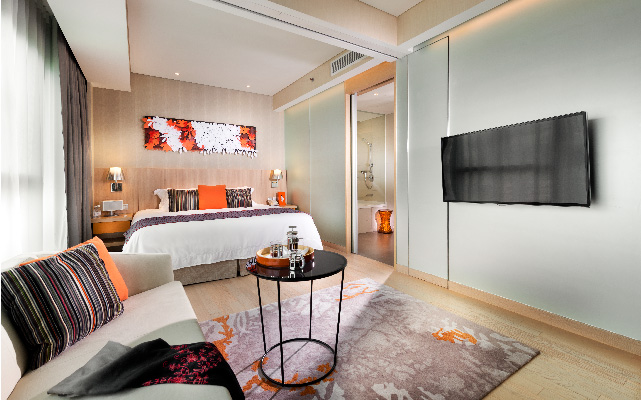
The best kept secrets are mostly found in the East. With the latest addition of exciting attractions such as the Jurassic Mile and Jewel Changi Airport, Capri By Fraser, Changi City / Singapore has launched 3 different staycation packages that is perfect for anyone looking for a unique experience. Whether you are the romantic, adventurous, or looking for a fun-filled family getaway with the kids, we have the staycation just for you!

Capri by Fraser, Changi City / Singapore is a design-led business hotel designed to meet the evolving needs of today’s E-generation traveller. Easily accessible via Expo MRT Station, it is a 2-min walking distance away. Right next to Changi City Point, guests can enjoy a wide array of shopping and dining options. It is also one MRT station away from Changi Airport and its newest development – Jewel Changi Airport – world-class shopping destination with a unique integration of lush greenery.

Generously appointed for comfort, all studio rooms have been specially designed to feature well-defined living spaces. Fully-furnished kitchenettes completed with cooker hood and hob, microwave ovens, fridge and sink, selected rooms also feature Nespresso machines, providing the added convenience of being able to cook in.
An inimitable sense of spontaneous fun and functionality come together at Spin & Play where doing laundry becomes less of a chore, and more of an experience. Located on every floor, these integrated themed laundrettes feature a range of interactive games, such as Xbox One Kinect and PlayStation 4.


Enjoy the flexibility of resting, relaxing and recharging with a range of de-stress zones on level 2 of the hotel residence. Wind down and rejuvenate with the steam and sauna rooms, while active guests can enjoy a good workout session anytime of the day at the fully-equipped 24/7 gym. Dip into the outdoor pool with jacuzzi and children’s pool, or simply lay back, stretch out and relax to the rocking motions of EZ Hammocks by the poolside. Trek bicycles, DVDs and board games are also available for loan at our Concierge – complimentary for all in-house guests!
Capri Master Chef Staycation (Suitable for families and couples)
Master your culinary skills and dish out an impressive meal for your family or surprise that loved one during your staycation at Capri by Fraser with a guided 3-course recipe by Chef Jeffrey of Caprilicious. A nourishing experience where you get a chance to whip up a special feast at our fully-equipped kitchenette in our studio rooms, with the ingredients prepared and ready for your convenience!
Capri Master Chef JUNIOR Staycation (Suitable for families with young children)
“Start them young” and let the little ones take control of their appetite. Choose from an easy to follow pancake recipe starter kit or let the little chefs run free with their creativity with our specially curated fruit decoration activity at our fully-equipped kitchenette.
Capri Great Escapade (Suitable for all)
Feeling like it’s time to rekindle that special connection with your partner or friends? Or how about treating yourself to some quality “me-time” at a long-awaited staycation? The Great Escapade is the perfect getaway, allowing you privacy as you escape to a space of meaningful conversations, deeper connections or simply spending a little quiet time with yourself!
Capri by Fraser, Changi City / Singapore is an SG Clean Certified establishment, officially inspected and certified clean for our guests and employees. For more information, please visit SGClean website.
Holiday Inn Express Singapore Clarke Quay
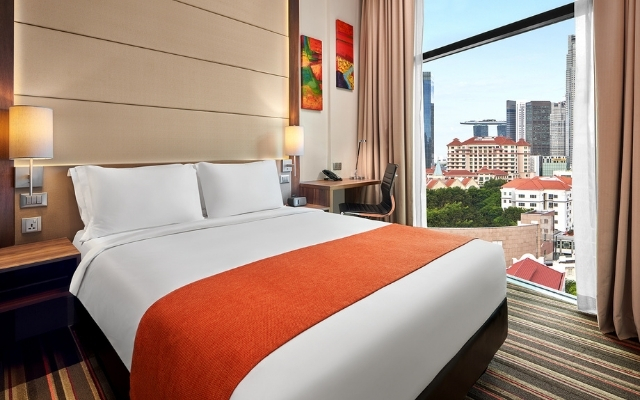
Brought to you by Holiday Inn Express Singapore Clarke Quay
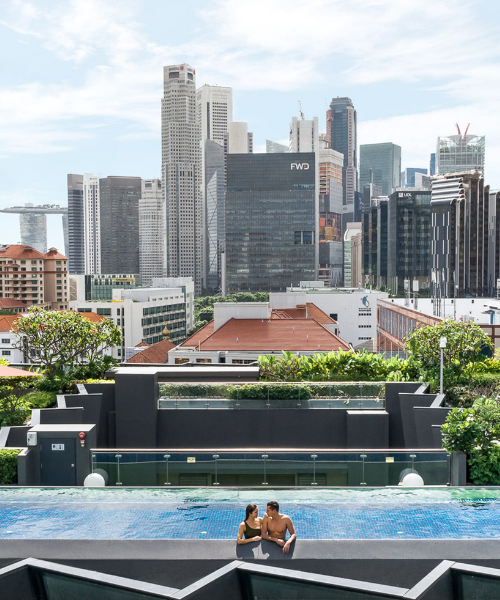
From 135++ per night, stay assured and experience Singapore with Holiday Inn Express Singapore Clarke Quay. Located in the central dining and entertainment hub, travel with accessibility to all Singapore’s major attractions and multiple train stations such as Clarke Quay, Chinatown, and Fort Canning.
Focusing on things that matter to you, we stand by our IHG Clean Promise Commitment by partnering with industry-leading experts such as Diversey and Ecolab to redefine cleanliness to support your well-being. With comprehensive health and safety measures (SG Clean) certified by the National Environment Agency, be rest assured with frequent deep cleaning using hospitality-grade disinfections, incorporation of contactless technology and more.
Enjoy a spectacular city view in our widely raved 40m rooftop swimming pool, completed with Jacuzzis. Stay in comfort in our 442 contemporary designed modern rooms with floor to ceiling windows. Start your day right with our Express Start Breakfast or Grab & Go option and stay connected with Wi-Fi access in the hotel. Recharge throughout the day with refreshing drinks at the 24-hour Great Room Bar. Get the most out of your stay with our 24-hour fitness centre, self-service laundry facility, and a natural daylight meeting room venue.
BOOK NOW, BOOK DIRECT to take advantage of the following perks:
- FREE Express Start Breakfast and Wi-Fi for up to 2 person
- 15% off total bill at Great Room Bar
- Access to book hotel facilities (up to 3 days prior to arrival date)
- Exclusive package discounts and promotional offers
- Earn IHG Rewards Club Points for each qualified stay
Book now; we promise to make things right with our IHG Clean Promise commitment.
First person: Cruising in a Covid era
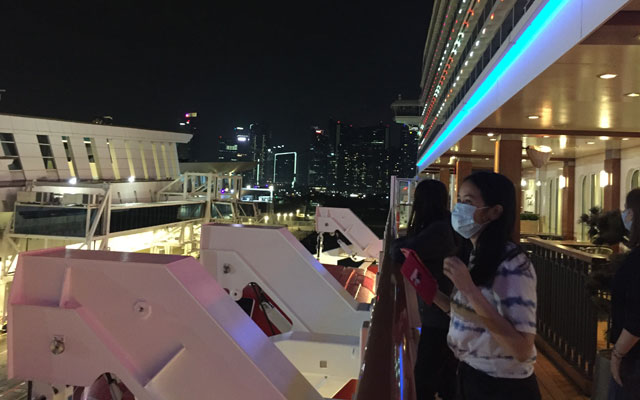
Swedish ship captain Robert Bodin is speaking to cruise passengers over the public address system. However, it’s neither to invite us to the time-honoured captain’s toast, nor to give us evacuation details in case of emergency. Rather, he is dispensing instructions on what to do if we cough or sneeze, encouraging regular hand washing, and detailing steps on how to go about washing our hands.
Welcome to cruising in the Covid era, where hygiene reigns supreme, where self-serve buffets have gone the way of the dodo, and where the biggest safety or threat at hand is neither fire nor collision, but an invisible enemy that has 2020 in its firm grip.
We are on board Genting Cruise Lines’ (GCL) three-day Super Seacation sailing on its 18-deck megaship World Dream, which is the brand’s second outing from Singapore, following its inaugural cruise to nowhere on November 6. World Dream is the first cruise ship to restart operations in Singapore in the wake of the pandemic.
The pilot sailings are operated in compliance with Singapore Tourism Board’s mandatory CruiseSafe certification programme, jointly developed with quality assurance and risk management company DNV GL, which sets out stringent hygiene and safety measures throughout the passenger journey.
Sailing is at a reduced capacity of up to 50 per cent, and only open to Singapore residents.
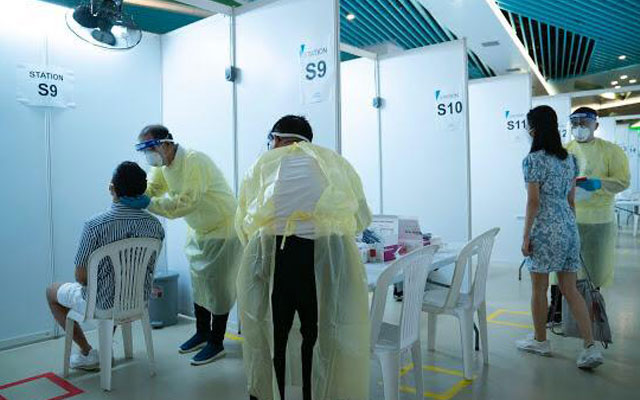
Our journey started off on Sunday at 11.15 – our appointed Covid-19 test time indicated in the cruise confirmation slip, as part of crowd control measures. After dropping off our luggage in front of the Marina Bay Cruise Centre Singapore, we headed to the car park-turned-test facility to take our antigen rapid test.
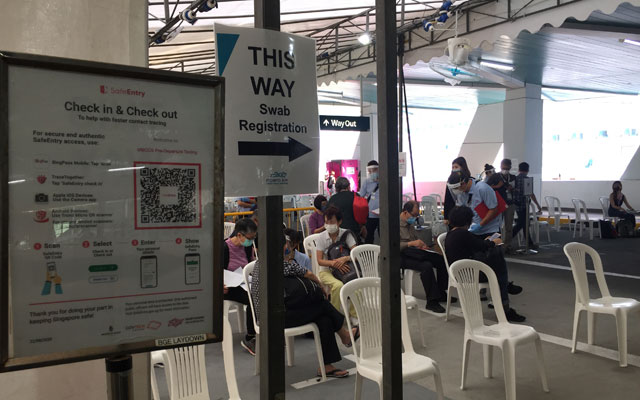
To ensure safe distancing among today’s crowd, mostly made up of families with kids, along with some couples and friend groups, the facility has been divided into different zones, based on test timings. After checking in via SafeEntry, getting a temperature check, and filling in a health questionnaire – which can be completed either in physical or electronic form – we wait for our turn to join the queue.
After the test, we proceeded to the holding area, divided into colour zones, to await our results. The whole process lasted 90 minutes.
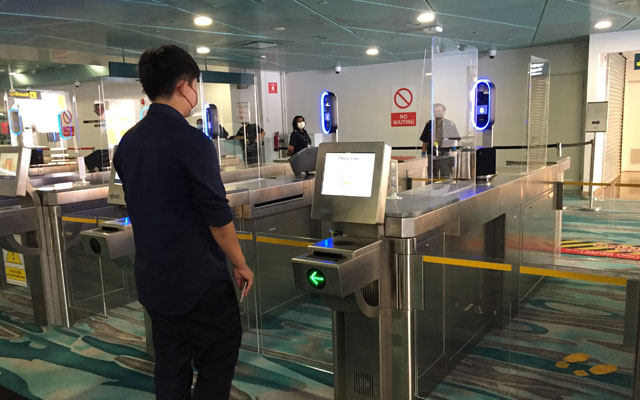
At the immigration checkpoint at the cruise centre, we underwent iris and facial biometrics replacing fingerprint scans for border identification checks, as part of Singapore’s move towards a touchless visitor experience. We were then given a pink-hued MICE pod for contact tracing – similar to the Singapore government-issued TraceTogether token, but for cruises – which we had to carry along with us at all times onboard the ship.
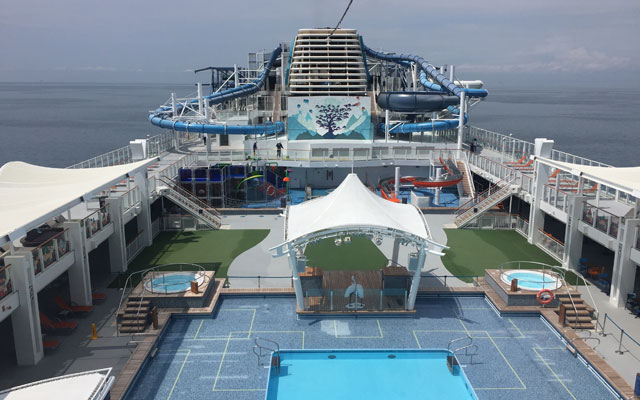
The moment we set foot into World Dream, we were whisked into a private lift by a crew member into our Palace Suite (S$1,199/US$887 per pax for a three-day/two-night sailing), where we were greeted by our personal butler, who assisted us with Wi-Fi connections and dinner reservations. We could also access exclusive upper-level facilities via the private lift.
When it came to the safety drill, as compared to pre-Covid, where cruisers had to gather at their assigned muster stations, the safety briefing was carried out wherever we were due to safe distancing rules. We were midway through dinner at the Seafood Grill by Mark Best when a safety announcement was made 45 minutes before departure, while a staff did a live demo on how to put on a life jacket.
These demos are conducted at 36 venues across the ship, while guests who are in their staterooms are able to watch the safety video on their televisions. In a way, this allowed us to still receive the safety instructions, sans the hassle of traditional assemblies.
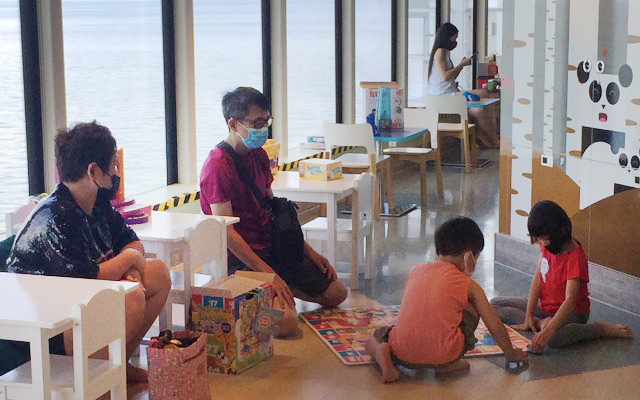
Holidaymakers who appreciate space and exclusivity will relish the heightened sense of privacy that the new normal of cruising offers. In keeping with Covid-safe rules, cloth signages mark off seats at dining venues to maintain social distancing. Guests sit at alternate tables, with no more than five people per table. Visits to the swimming pools are by pre-booked hourly timeslots, with a 26-person cap in the main pool, and 16 in the private pool, while two people are allowed in each of the Jacuzzis at any one time.
On the final night, we even had the entire private pool deck to ourselves as we soaked in one of the four outdoor hot tubs.
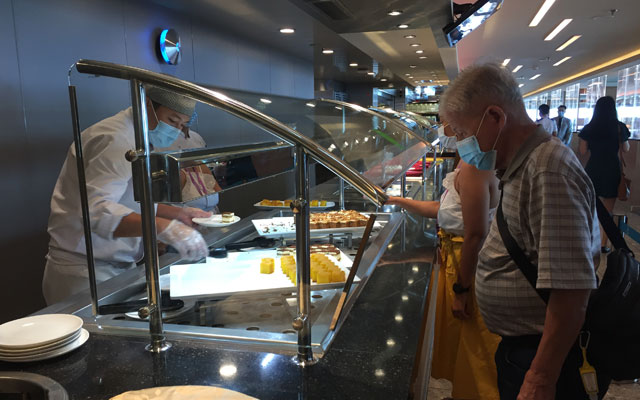
Crew onboard the ship were vigilant and proactive about reminding guests to adhere to safety protocols, such as maintaining a 1m distance from others. While lunching at the Palace Restaurant, when my companion reached out to scoop a serving of char kway teow off my plate, we were stopped by a staff member, who handed us an extra plate for sharing purposes. Once, we were also told to pull our mask up when it slid down our nose, and another time, to keep our face mask on when ambling around the all-day diner The Lido, where à la carte meals replace self-serve buffets.
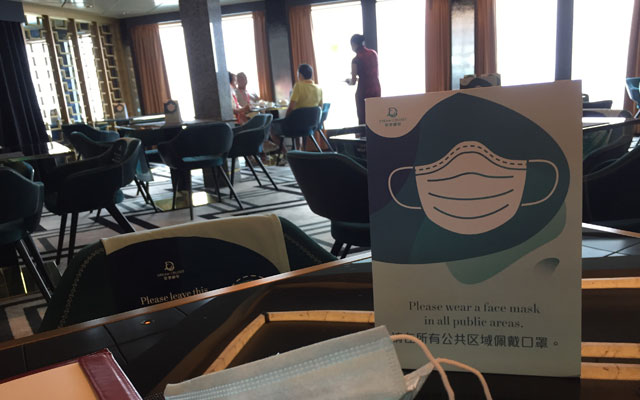
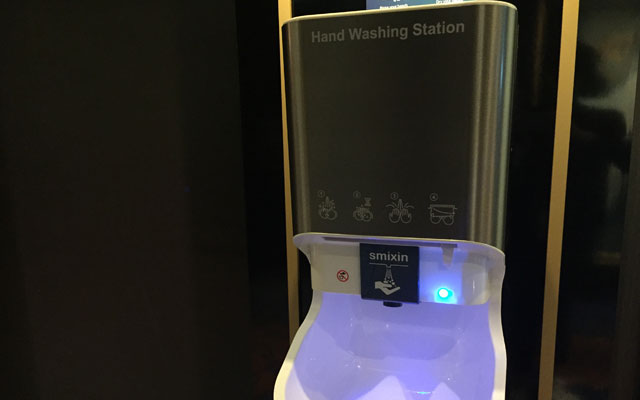
Temperature screening and scanning of ID card for entry into onboard facilities come as second nature to us. The ubiquity of hand sanitiser dispensers throughout the ship was a welcome convenience, as were handwashing stations at F&B spots. All around the ship were social distancing and one-way system floor decals designed to prevent cross-contamination. Some 40 cruise ambassadors also help to ensure safe distancing onboard.
Generally, we found that the new safety protocols including capacity limits did not put a damper on the cruising experience on this particular sailing, which hosted 1,400 guests onboard the 3,376-pax cruise ship, including 200 media personnel and travel agents.
The only time the capacity limits posed a slight inconvenience was when we were making reservations through our affable butler for the hugely-popular Teppanyaki restaurant – it was fully booked on many timeslots over the three days. The upside? My companion and I had the table all to ourselves, and could enjoy a private tête-à-tête dinner, away from prying ears.
There was also a short wait at the rock climbing station, as only two people were allowed to scale the wall at any one time.
All the rules on land translate to onboard. Although current Covid rules dictate that we couldn’t enjoy a cabaret act at the Chinese restaurant Silk Road, croon to Jacky Cheung’s ditties at the KTV lounge, or admire an aerial acrobatics performance at the three-storey Bar 360, there were enough activities onboard to keep us occupied over three days.
We went rock climbing, teed off at the mini golf-course, had an invigorating foot rub at the spa, shot skeletons at the VR game zone Esc Experience Lab, and rode a waterslide where water kept shooting up our nose.
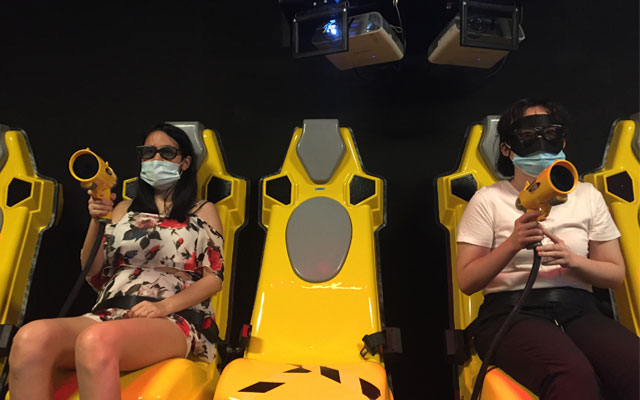
Social distancing also means up-close interaction between the actors and the audience during live performances at the Zodiac Theatre are off the cards. Back-of-house tours also belong in the past. To wit, during the Verry Christmas signature show, a male performer in drag began flirting with a male audience member, teasing about planting a kiss on him, before turning on his heels and going, “Cannot lah! Coronavirus!”
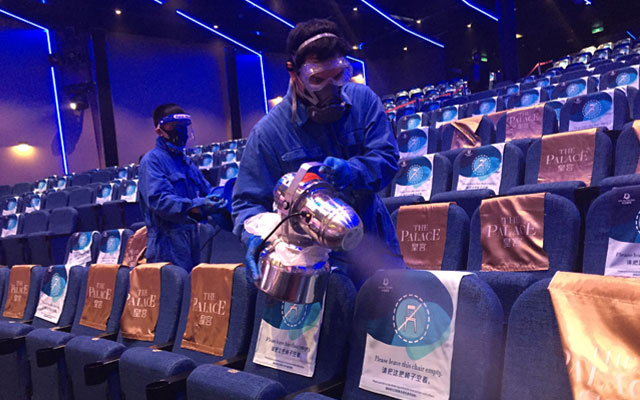
With a 250-person cap limit, more showtimes have to be run at the 999-capacity Zodiac Theatre. For the Verry Christmas show, guests were allocated to show timeslots based on deck levels. The premises is also disinfected using fogging machines after every show. Sanitation is done twice a day at all staterooms and suites, every four hours at public areas, and on a two-hourly basis at high touchpoints such as lift buttons and door knobs.
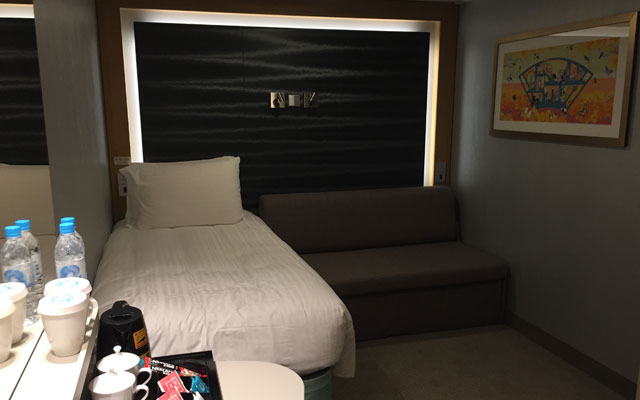
At the 24/7 medical centre, walk-ins are banned, with all consultations to be pre-accessed via phone. Two doctors are onboard each sailing, with one doubling up as infection control officer. Seven staterooms have been converted into isolation cabins to house suspected and positive cases, with 34 quarantine rooms reserved for close contacts.
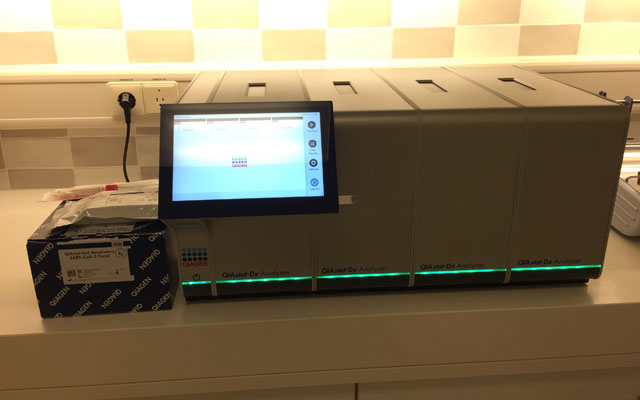
In the laboratory sits a US$109,000-priced Covid-19 polymerase chain reaction (PCR) testing machine, which can spit out results within an hour, and not only detect Covid-19, but also 22 other respiratory diseases and bacteria like influenza.
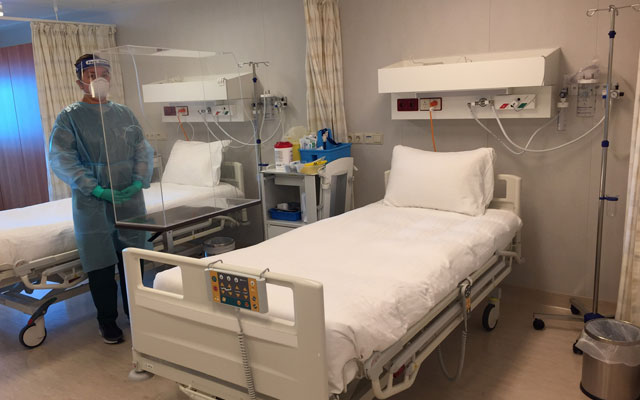
If there is a suspected case, a nurse wearing full PPE will go to the patient’s room and bring him or her to the ward for further assessment. While waiting for the results, the patient will be put in the isolation cabin, which once activated, will be in negative pressure to prevent air leakage out of the room. Meanwhile, contact tracing will be carried out in case of a need to bring close contact cases into quarantine rooms. If the guest tests positive for Covid-19, all activities will seize and all guests asked to return to their cabins, while the ship will return to Singapore shores in less than six hours.
All 187 crew members onboard are also subjected to stringent measures, including completing a 14-day quarantine on the cruise ship prior to Dream World’s arrival in Singapore end-October. They also have to undergo a further series of mandatory Covid-19 testing and must test negative before signing up for active duty.
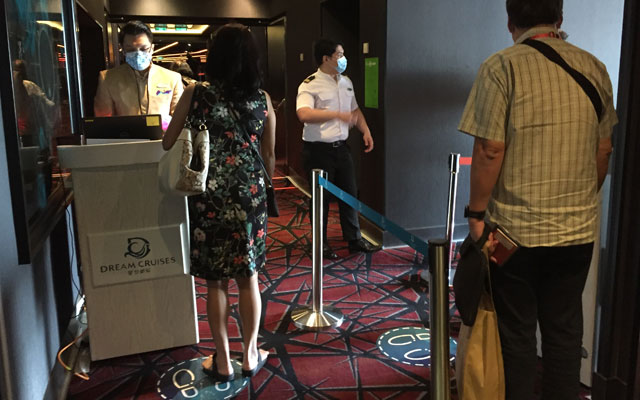
Disembarkation was a breeze. From leaving our suite to arriving at the taxi stand, the whole process took a mere 19 minutes. Disembarkation was conducted in sequential order by deck, each assigned to different timeslots.
World Dream’s two- and three-night Super Seacation cruises start from S$259 per pax, for bookings before November 30. For more information, visit www.dreamcruiseline.com.
Photos: Cheryl Ong
Discova unveils destination guides for agents
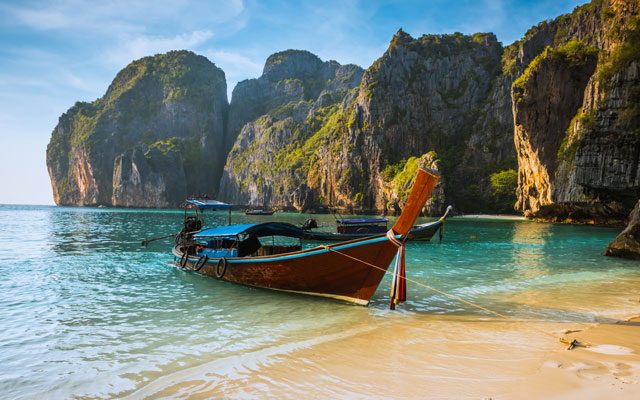
Discova has launched its 2020-2021 destination guides, designed to showcase its upcoming programmes and responsible travel offering alongside useful destination information to trade partners.
Destination guides are available for Thailand, Vietnam, Indonesia, Singapore, Cambodia, Japan, Myanmar, and Costa Rica.
The launch comes as more countries in Asia and Latin America take cautious steps towards reopening their borders to international travellers.
Discova’s 2020-2021 guides aim to provide partners with the destination information they need to advise their customers and offer trips and experiences that are tailored to their needs.
Itineraries range from a beach escape in the Andaman sea to a trek in the biodiverse rainforest of Costa Rica and a community project in the mountains of Thailand.
Andrew Turner, global sales director for Discova, said: “Our partners are telling us that travellers are increasingly looking for single destination experiences rather than multi-country itineraries. Our country specific guides which are a concentrate of our offerings and expertise in responsible and sustainable tourism for each destination will help our partners and their customers achieve their travel ambitions.”







South-east Asian leaders have agreed to take steps towards the establishment of an ASEAN travel corridor arrangement framework to facilitate essential business travel within the region.
Such an arrangement would necessitate the development of a common set of safety measures to safeguard public health in the face of Covid-19, noted the leaders in a joint statement issued at the 37th ASEAN Summit, which took place on November 12 and was hosted virtually by Vietnam.
Travellers will also be required to strictly abide by the prevailing public health regulations stipulated by the authorities of the receiving countries.
The ASEAN Coordinating Council, supported by the ASEAN Coordinating Council Working Group on Public Health Emergencies, has been tasked to coordinate and oversee the development of an ASEAN travel corridor arrangement framework.
This plan will build upon existing bilateral travel corridors set up between individual ASEAN member states, as well as those established with partners outside the region, said the regional grouping in a statement. For instance, Singapore has already established green lanes with ten countries, including ASEAN members Malaysia, Indonesia, Brunei and Vietnam.
The leaders further added that they do not preclude the application of the framework to other categories of travel in the future.
Indonesian president Joko Widodo is pushing for the regional travel bubble to come into effect by early 2021, according to Bloomberg. Earlier in June, Indonesia had proposed the move, which was backed by Thailand and Malaysia, but other countries have not signalled their support for the arrangement, said the report.
Indonesia is battling the largest coronavirus outbreak in South-east Asia, having recorded 463,007 infections and 15,148 deaths as of Saturday. This month, the country entered its first recession since the 1998 Asian financial crisis, after two successive quarters of economic shrinkage.