


Philippine hospitality, including hotels, are turning out to be one of the biggest casualties of the tourism lockdown the past nine months and counting. Banks have cut their credit lines. Loan default and restructuring aren’t unexpected. Financial and stimulus assistance being sought from government aren’t forthcoming.
To add to their laundry list of woes, a government agency has been making local news headlines for its delayed payments to hotels that are being used as quarantine facilities for returning overseas Filipino workers (OFWs).
To date, the Overseas Workers Welfare Administration (OWWA) has chalked up a debt of roughly $5 million owed to members of the Hotel Sales and Marketing Association (HSMA), some incurred as early as July. It is safe to assume that there are non-HSMA quarantine hotels caught in the same situation. That’s tantamount to borrowing from an industry that has wound up in a catatonic state from zero business. The government should never have allowed it to happen in the first place. As of press time, OWWA should have paid off its debt in full to HSMA hotels as promised.
The least the government can do when it cannot lend ailing hotels a financial hand is to avoid adding to the hotels’ burden. OWWA should hasten to pay back the full amount, not by instalments, to hotels. It should also take measures to ensure that, henceforth, hotels are all paid on time as more OFWs continue returning to the Philippines.
Truth is, without the cooperation of quarantine hotels, it would be tough for the government to troubleshoot the accommodation needs of hundreds of thousands of returning OFWs.
Running a hotel during the pandemic is costlier due to the enforcement of stringent health protocols such as frequent disinfection of premises and wearing of masks and PPEs, while having to observe limited occupancy and limited services.
Quarantine hotels, most of which offer affordable negotiated rates, need income on time lest employees’ salaries are affected. Staff working in quarantine hotels should be considered health frontliners as they take high risk in attending to Filipinos returning from all parts of the world as they wait for swab test results.
Surely, there is a better way to treat one’s partners even, or especially, in times of crisis.
Rosa Ocampo is correspondent, Philippines for TTG Asia Media. She reports for the company’s stable of travel trade titles, including TTG Asia and TTGmice.
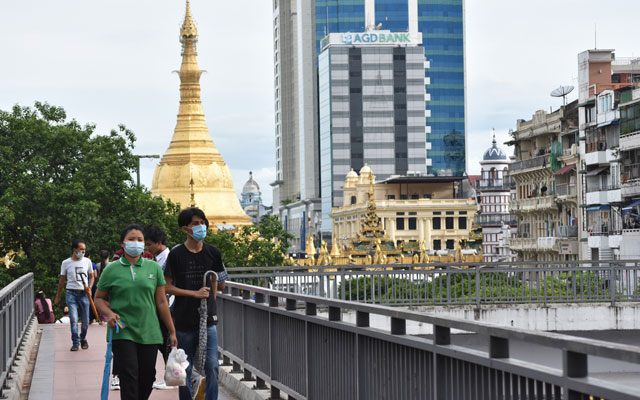



















The number of destinations closed to international tourism has continued to fall, with 70 per cent of all global destinations having eased restrictions on travel introduced in response to the Covid-19 pandemic, according to the eighth edition of the UNWTO Travel Restrictions Report.
In comparison, just one in four destinations continue to keep their borders completely closed to international tourists.
The report, which tracks measures implemented in 217 destinations worldwide, shows that, as of November 1, a total of 152 destinations have eased restrictions on international tourism, up from the 115 recorded on September 1. At the same time, 59 destinations have kept their borders closed to tourists, a decrease of 34 over the same two-month period.
UNWTO secretary-general Zurab Pololikashvili said: “The lifting of travel restrictions is essential to drive our wider recovery from the social and economic impacts of the pandemic. Governments have an important part to play in giving data-led and responsible travel advice and in working together to lift restrictions as soon as it is safe to do so.”
Looking further into current Covid-19-related travel restrictions, the report sheds new light on the factors connecting those destinations which have eased restrictions and those where borders remain closed. The study found that destinations with higher scores in health and hygiene indicators as well as on the environmental performance index are among those which have eased restrictions faster. Moreover, these destinations are increasingly applying differentiated, risk-based approaches to implementing travel restrictions.
In comparison, destinations choosing to keep their borders closed tend to be within emerging economies with relatively low scores in health and hygiene indicators and environmental performance index. The majority of these destinations are in Asia and the Pacific, with many belonging to the SIDS (small island developing states), LDCs (least developed countries) or LLDCs (landlocked developing countries).
Breaking the destination analysis down by regions, Europe continues to lead the way in lifting or easing travel restrictions, followed by the Americas, Africa and then the Middle East. Meanwhile, Asia and the Pacific continues to be the region with the fewest travel restrictions eased and more complete border closures in place for international tourism.
Looking ahead, the report highlights the important role governments can play in restarting tourism. Out of the ten biggest tourism source markets, four (representing 19 per cent of all outbound trips in 2018) have issued guidance advising against all non-essential international travel. The other six (representing 30 per cent of all outbound trips in 2018), however, have issued more nuanced travel advisories, basing their guidance on evidence-based risk assessments.