

Since the start of the Covid outbreak in 2019, the travel landscape has changed dramatically with people taking trips near home. One key question on everyone’s mind remains: when can we travel freely again?
While a zero-Covid-19 world seems almost impossible, there are promising developments that are taking shape that will lift recovery and as more countries adopt an endemic approach towards travel.
The resumption of large international events such as the Tokyo Olympics exemplifies the confidence in Asia-Pacific’s recovery in the second half of 2021. All eyes are now on us to see how we navigate the next chapter.
The vaccine rollout: Changing the face of travel
The rollout of the Covid-19 vaccine is poised to stimulate the travel and hospitality industry’s long-term revival across the region. Improved accuracy in rapid testing and contact tracing will also help to facilitate cross-border travel and enable the recovery of the sector.
In Singapore, the city-state has been ramping up its vaccination drive to inoculate 80 per cent of its population by September. In parallel, it is looking to allow quarantine-free travel for those who are fully vaccinated, and establish travel corridors with countries or regions where Covid-19 is under control.
Phuket Sandbox is also an encouraging sign of rebound. Paving the way for Thailand’s reopening to international travellers who are fully vaccinated, Phuket’s hotels have seen a significant uplift in occupancy compared to other resort leisure destinations, according to recent STR reports.
The Phuket Sandbox is an important initiative for the travel industry as it offers a framework and model that enables travel into these “green” zones. This can potentially lead to a series of similar rollouts in other destinations.
On the other hand, while China may be experiencing a resurgence of Covid-19 cases, it is demonstrating a swift and firmer approach in managing the situation. Today, China is leading the world in domestic vaccination and will continue to spearhead its aggressive vaccination drive.
With restrictions easing in due time, domestic tourism will regain traction, as exemplified by the surge in Labour Day weekend travel. It also attests to a pent-up demand for travel that will fuel a travel boom for a time to come.
A recent survey found that around three-quarters of business travellers expect to travel the same amount or even more after the pandemic. This denotes a resurgence of business activities and pent-up demand after teleconferencing for months. We believe that business travel is set to become one of the first frontiers to boost the hospitality industry post-Covid.
Paving the way to recovery in a post-vaccine world
As destinations around the world gradually open up their borders to vaccinated travellers, hotel owners and operators will need to adapt and evolve in tandem with the shift in traveller’s preferences. While people are eager to travel for leisure or business, health and hygiene will be paramount as travellers seek a sense of safety.
Innovation and digitisation will be at the fore with a focus on providing guests with seamless experiences that limit contact with others. Adopting a multi-pronged approach will ensure travel remains possible for all, which will mutually benefit individual businesses, the economy, and the livelihoods of many. For Wyndham, through our health and safety initiative Count on Us, our hotels are equipped with a full suite of hygiene protocols to provide our guests with continued reassurance while they stay with us.
In 2020, we opened more than 125 hotels and made 140 signings across Asia-Pacific. Continuing on that momentum this year, as of June 30, 2021, we have signed over 70 hotels and opened 30 directly franchised and managed hotels across China, Malaysia, New Zealand and Vietnam. It is a testament of a shared vision with hotel owners to herald a brighter future in the post-vaccine world.
We will face setbacks and challenges ahead but the hospitality industry is a resilient one. We have bounced back in the past and we can do it again. We will need to adapt and pivot to the changing shape of travel, but those that embrace it will be poised for success.
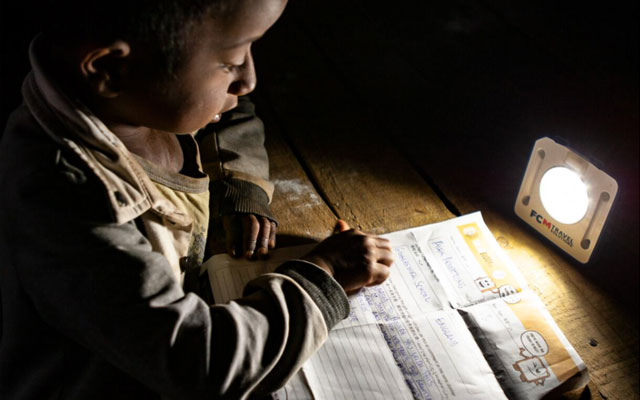









Capella Hotels and Resorts has donated 200 solar lamps to youths facing extreme energy poverty in provinces across Indonesia, Thailand and Vietnam, in commemoration of International Youth Day.
The first initiative in a long-term partnership with SolarBuddy, a global community dedicated to alleviating energy poverty for children, Capella pledges to help youths study after dusk and improve their educational outcomes through the gift of clean, sustainable light.
“At Capella Hotels and Resorts, we believe that each and every child has the right to develop to their full potential,” said Nicholas Clayton, CEO of Capella Hotel Group. “Our collaboration with SolarBuddy was an opportunity that enabled us to amplify our Capella Youth initiative, ensuring every child receives proper education. This is strongly aligned with our philosophy of empowering youth to build a sustainable future for themselves.”
Around the world, 789 million people live in darkness and have minimal access to light when the sun sets. To enable visibility at night, energy-poverty communities depend on rural forms of energy such as using fuel-based kerosene lamps. These energy sources not only emit high carbon dioxide but harm the health and wellbeing of people using them.
Through SolarBuddy’s renewable solar-powered lights, children will benefit from a productive study environment after dusk. The sustainable solar invention also eliminates families’ kerosene expenditure per annum, leading to overall economic development and improvement in quality of life.
One of the beneficiaries include students from Mbinudita, Indonesia, where education remains a challenge with over 50 per cent of the children having no access to electricity back home.
Contributions to Capella’s fundraiser can be made at www.capella.life/solarbuddy. All donations will go directly towards purchasing SolarBuddy’s sustainable solar lights for the beneficiary communities.