TTG Asia
Asia/Singapore Monday, 6th April 2026
Page 689

Event planners across Asia are actively sourcing for in-person events

0
More than half of the Asian event planners surveyed indicated hybrid events as their preferred format
More than half of the event planners surveyed across Asia indicated hybrid events as their preferred format in 2022

Brought to you by Cvent

Hoteliers in Asia should prepare now for the return of in-person MICE (Meetings, Incentives, Conferences and Exhibitions) business and aim to enhance their hybrid offerings to attract more business to their properties.

The June 2022 issue of Cvent Planner Sourcing Report – Asia Edition revealed that event planners in the region are currently actively sourcing and booking in-person events.

They are also opting for hybrid formats to stay flexible, spending more on such corporate offerings and have listed tech expertise and support high on their list of sourcing requirements.

Sandeep Nagpal, vice president of marketing, Cvent, said: “As MICE and corporate travel continue to rebound, now is the time for hotels and destinations to get in front of planners at the outset in order to attract them to their locales. In addition, the results of this study show that planners’ expectations have changed.

“While health and safety remain top of mind, hybrid support onsite and technology expertise are now critical components of the sourcing process and hospitality professionals who adapt to these changes will be better positioned to increase their MICE business.”

For its bi-annual pulse check on meeting and event planners’ sourcing plans and priorities, Cvent commissioned Censuswide, an independent research company, to survey event planners in Asia.

The survey was conducted from March 30, 2022 to April 12, 2022. The report drew key findings from responses garnered from hundreds of event planners, managers, coordinators and directors across China, Singapore, Thailand and India.

Respondents came from a broad range of industry sectors such as finance, healthcare, travel, transport, education, arts & culture, IT, telecommunications, retail and leisure.

Key findings
Overall, 92 per cent of planners across Asia are currently sourcing for in-person events. This increased to 98 per cent of those based in Thailand, compared to 86 per cent in Singapore.

More than half of the planners indicated hybrid events as the format they are most likely to choose in 2022. Adopting a cautious stance in these uncertain times, they believe this option buffers them from last-minute disruptions.

In addition, the data also suggested that budgets for in-person and hybrid events are also on the rise.

65 per cent of planners informed that their budgets for both in-person and hybrid events are bigger than pre-pandemic. In addition, the portion of those budgets that are allocated to venues, event technology and A/V production have all increased.

Hotels and venues with a track record of hosting successful hybrid events – or that are able to offer clients a switch to this option at short notice – will likely be better positioned to secure more MICE business in the future.

Key to determining their choice of venue are technology expertise and support, planners in the region pointed out.

To have a competitive edge early in the sourcing process, hotels and venues should leverage collaborative, immersive 3D online software which allows for venue comparisons, virtual tours, as well as real-time room configuration. These experiences help planners visualise their events without needing an in-person site visit.

To find out how best to attract, engage and support planners in Asia in their sourcing requirements, download the full report for free here.
Dubai taps new segments to achieve pre-pandemic Indian tourist arrival levels

0

Dubai’s Department of Economy and Tourism (DET) is looking to promote the destination beyond its current popularity as a family and shopping getaway in the Indian market.

Some of the new segments that the tourism board is looking to focus on in the upcoming months include luxury, golf, adventure, culture and wedding. DET is expecting to achieve its 2019 tourist arrivals from India this year after the pandemic-infused slowdown.

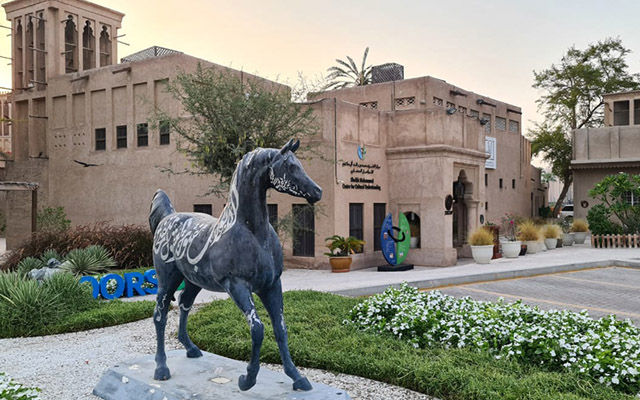
Dubai’s DET hopes to promote the country’s culture to Indian travellers with places such as the Sheikh Mohammed bin Rashid Al Maktoum Centre for Cultural Understanding (Photo: SMCCU)

Speaking to TTG Asia on the side lines of the New Delhi leg of a three-city roadshow in India, Bader Ali Habib, head of region – South Asia, international operations, DET, said: “We have already championed the Indian family segment which we know will continue to visit Dubai. Our focus now is to promote new experiences and tap new segments. We are going to focus on the luxury travel segment in India, exposing them to bespoke experiences that we offer, be it for gastronomy, wellness or nightlife. We have 12 golf courses in Dubai and we want to promote Dubai as a golfing destination in India as well.”

Bader shared that while exploring Dubai’s culture has not been top of the mind for Indian travellers in the past, such preferences are changing.

“We are seeing many Indians spending time in Old Dubai now. We want to open the eyes of Indian travellers to the unique culture of Dubai by promoting places like the Sheikh Mohammed bin Rashid Al Maktoum Centre for Cultural Understanding (SMCCU).”

DET is presently also working on a global strategy to promote Dubai as a wedding destination and India will be at the centre of the approach. For Indian adventure seekers, DET will be spotlighting locations like Hatta and products like Deep Dive Dubai.

According to DET’s statistics, Dubai welcomed 5.1 million overnight visitors from January to April 2022. Indian arrivals in the same period were 550,000, a growth of 41 per cent over the previous year.

Almost two million Indian tourists visited Dubai in 2019, making it Dubai’s top source market.

Bader added: “(The) Indian market at present is the number two source market for us and we expect India to regain its number one position by the end of the year. India, along with other big markets like Saudi Arabia, the UK and the US, is going to play a key role in our target of welcoming 25 million international tourist arrivals by 2025.”

NCL’s 2021 ESG Report highlights key advancements & impactful initiatives

0

Norwegian Cruise Line (NCL) Holdings published its 2021 Environmental, Social and Governance (ESG) Report and Sustainability Accounting Standards Board (SASB) index on June 9, 2022, as part of the company’s global sustainability programme, Sail & Sustain.

“We are more focused now than ever on our commitment to drive a positive impact on society and the environment through our global sustainability programme, Sail & Sustain. The success of our business and our ability to deliver long-term value to our stakeholders is undeniably linked to the health of our planet, our people and the communities we visit worldwide,” said Frank Del Rio, president and CEO of NCL.

NCL 2021 highlights its key advancements and impactful initiatives underway across the five pillars of its Sail & Sustain programme

The report spotlights NCL’s key advancements and impactful initiatives underway across the five pillars of its Sail & Sustain programme.

NCL targeted to reduce environmental impact by pursuing net zero greenhouse gas emissions by 2050; assessing the feasibility of retrofitting existing engines to operate with dual fuels – diesel and methanol – with the goal to test the use of methanol by 2025; bridging the gap in its decarbonisation efforts by exploring alternative fuels; and self-producing about 80 per cent of water used onboard in 2021.

The company also enhanced its commitment to health and safety in response to Covid-19 with its comprehensive SailSAFE programme, as well as established the SailSAFE Global Health and Wellness Council.

Community efforts made included providing about US$12 million in cash, cruise and other in-kind donations in 2021 to various important causes and activation of company’s Crew Relief Fund which offered ongoing communications, logistical support and counselling to Ukrainian and other team members impacted by the Russia-Ukraine conflict in 2022.

Reopenings: Seletar Airport & Changi Airport’s Terminal 4, Terminal 2 (Departure Hall – South)

0

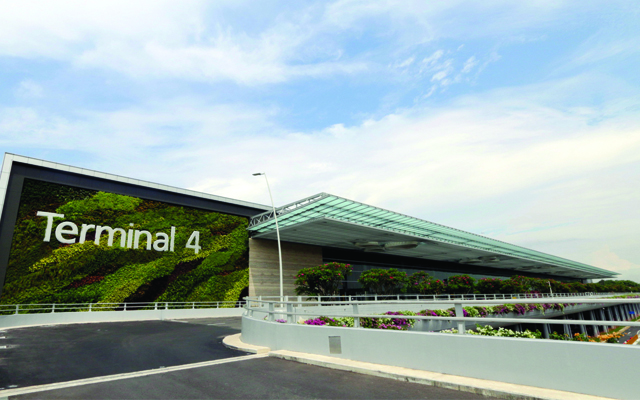
Post-lockdown, the first commercial flights have landed at and departed Seletar Airport which is managed by Changi Airport Group (CAG) on June 13. CAG will also be reopening Terminal 4 (T4) and commencing departure operations in the southern wing of Terminal 2 (T2) in September and October respectively this year.

Flight FY3124 by Malaysian airline, Firefly, departed from Subang, Malaysia, and arrived at Seletar Airport in the morning of June 13. The same plane later took off for Subang.

CAG will reopen Terminal 4 in September this year

Subang-Singapore is Firefly’s first international route to resume since the pandemic.

To prepare for the resumption, CAG conducted “multiple operational trials and systems tests” with Seletar’s airport partners, according to CAG and Firefly in a joint press release.

Airport staff were involved in refresher training sessions and CAG also engaged taxi companies to raise awareness.

Firefly will now operate two return flights a day between Sultan Abdul Aziz Shah Airport in Subang and Seletar Airport.

Additionally, the upcoming reopening of T2 and T4 will add to Changi Airport’s operating capacity and enable it to meet the full recovery of pre-Covid-19 passenger traffic in the Northern Winter Season (NW22/23) beginning October 30.

Since travel protocols were relaxed on April 1 this year, passenger traffic at Changi Airport has recovered strongly, reaching 48 per cent of pre-Covid levels for the first week of June 2022.

In response to this pick-up in air travel, airlines have requested to launch more flights for NW22/23.

T4’s reopening will handle both departure and arrival flights, and CAG has begun engaging with airlines, airport partners and potential tenants for preparation.

Airlines previously operating at T4 will return to the terminal upon its reopening – CAG will work with them on the relocation details.

Departure operations in the southern wing of T2 will resume in October, while expansion and upgrading works in the northern wing are ongoing. Passengers arriving at T2 can look forward to brand new stores by The Shilla Duty Free and Lotte Duty Free in August and September respectively, as well as up to four F&B concepts in October.

Lee Seow Hiang, CEO of CAG, said: “The fast rebound in travel demand has given us great encouragement to prepare Changi Airport for the full recovery of passenger volume back to pre-Covid-19 levels. The additional capacity offered by T4 and T2 will put Changi Airport in a good position to capture this recovery and support the business and operational needs of airlines.

“To support the travel recovery, our airport partners have been actively recruiting more manpower to fill various positions in the airport, from frontline staff to airside workers. At the same time, we are accelerating efforts to secure more tenants for the two terminals, to better serve our passengers.”

Vietnam-Cambodia waterway connection draws mixed response

0

A water link connecting Vietnam’s Phu Quoc island with the Cambodian coast may be a hit with regional tourists but may prove to be a damp squib with Western markets, industry experts predict.

In a bid to boost tourism throughout Cambodia’s Kep province – home to the seaside resort of Kep and riverine Kampot town – officials are preparing to connect the two destinations by speed boat.

To boost tourism in Cambodia’s Kep province, Phu Quoc and Kep will be connected via speed boat; Kampot town pictured

Jacques Guichandut, managing director, All Dreams Cambodia, said while the move will stimulate demand for the two countries, especially among regional travellers, it holds limited appeal to his mainly European and American clientele.

He noted: “This is a combination we won’t put forward. Phu Quoc’s main attraction is its beach resorts, but in Cambodia, we also have a choice of beach resorts on the islands of Koh Rong and Koh Rong Samloem.”

Sinan Thourn, chairman of PATA Cambodia and B2B Travel, agreed, saying Phu Quoc is “not an option for combination tours” with his clients. Instead, they prefer to connect with Vietnamese destinations such as Ho Chi Minh City, Hanoi, or the Mekong Delta area.

Alexander Leven, general manager of Asian Trails Vietnam, said mini excursions to Kep have potential with longhaul holidaymakers to Phu Quoc, where activities are predominantly limited to the beach and water.

Leven added: “The natural and cultural excursions are limited and Kep would definitely fill a gap. I can imagine European travellers loving to make a day trip to Cambodia during their two-week beach stay to get some stimulus other than relaxing.”

However, visa requirements for both countries hamper possibilities.

Currently, a 30-day tourist visa for Cambodia costs US$25. Vietnam offers visa-free entry for several European countries. But holders cannot re-enter on the same visa.

Leven stated: “Visa regulations will come into play and I’m afraid it will fail because of that. If they come up with a system where they make this visa-free, I will definitely consider offering this option.”

Pham Ha, founder of Lux Travel DMC, added the offering will appeal to Vietnamese and other ASEAN holidaymakers who can travel visa-free.

“It’s a good move as it connects Phu Quoc with lesser-known areas in Cambodia and offers Vietnamese travellers the chance to visit places like Sihanoukville and Rabbit Island with ease,” he said.

Singapore’s nightlife establishments remove capacity limits and Covid tests

0

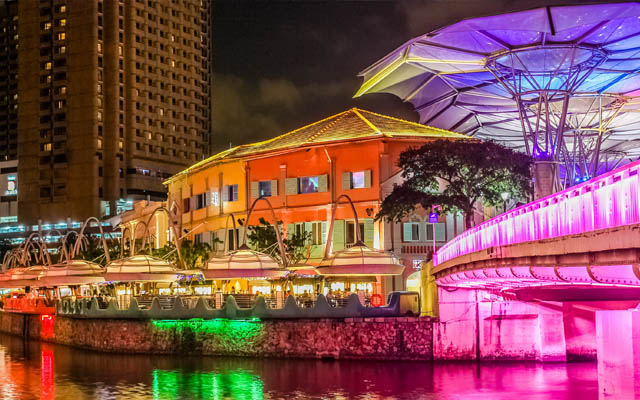
From June 14, 2022, nightlife establishments in Singapore, where there is dancing among patrons, will no longer have a capacity limit. Patrons also do not need to obtain a negative antigen rapid test (ART) result to enter the venue as long as they are fully vaccinated.

This move by the Ministry of Health (MOH) will “rationalise the rules” for nightspots with other social settings.

Nightlife establishments in Singapore now has no more capacity limits

However, operators are still required to conduct checks on safe management measures to ensure that only fully-vaccinated people enter their premises – enforcement officers may carry out random checks to ensure that operators comply.

All businesses were given the go-ahead to fully reopen from April 19 after more than two years of restrictions. However, nightlife businesses still had group size limits as dancing among patrons was considered a higher-risk activity.

MOH said that indoor mask-wearing will continue to be required as a “key line of defence” against community transmission, despite the removal of most Covid-19 safe management measures.

New Eastern wellness programmes at RAKxa

0

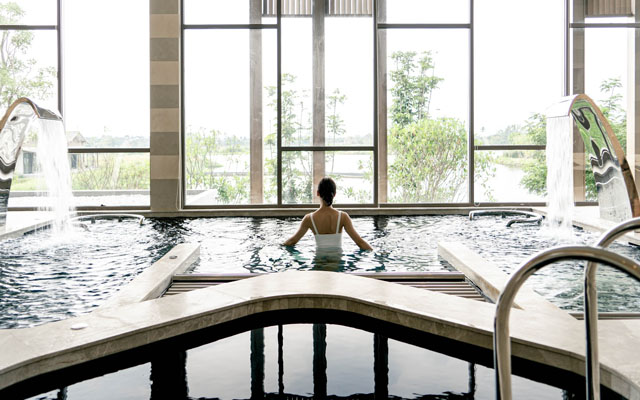
RAKxa, the integrative wellness and medical retreat in Bangkok has launched a series of new Authentic Eastern Programmes where tradition, technology and nature intertwine.

The three holistic wellness programmes – Sense of RAKxa; Rest & Reset; Cleanse & Purify – each focus on different goals and ensure that guests’ physical and mental health are taken care of to reach optimal well-being.

RAKxa has launched a series of new Authentic Eastern Programmes

Each itinerary is specially catered for and integrate eastern remedies, therapeutic massages and physiotherapy.

Treatments range from massages, tai chi, cupping, facials to medical treatments and more.

All programmes include doctor’s consultation, accommodation based on selection, round-trip airport transfer, daily wellness cuisine meals or detox meals per person, healthy drinks and seasonal fruits, general physical examination, and complimentary use of the hydrotherapy area.

Rates start from US$1,270 per person for the Rest & Reset Package with a minimum of a five-night stay. Additional treatments will come at an extra cost.

For more information, visit RAKxa.

Taiwan cuts quarantine for arrivals to three days

0

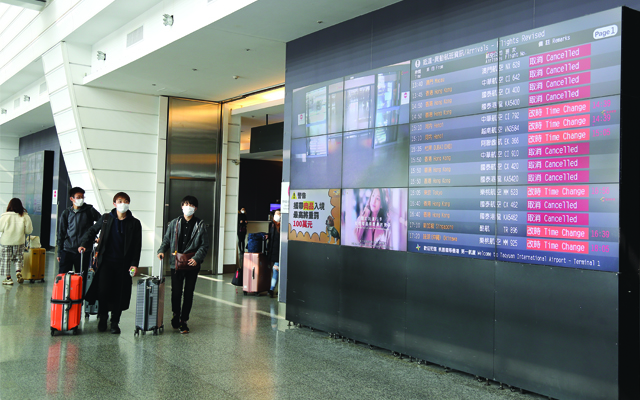
Taiwan will be reducing mandatory quarantine for all arrivals from seven to three days starting from June 15, in the destination’s latest easing of Covid-related rules.

Upon completion of their quarantine, individuals need to continue to monitor their health for another four days, and have been advised against going out where possible.

Quarantine for all arrivals in Taiwan has been reduced from seven to three days starting from June 15; Taoyuan International Airport pictured

Previously in May, Taiwan reduced the number of days spent in isolation for arrivals from 10 to seven.

As Taiwan has yet to fully reopen its borders, other Covid-19 restrictions – such as all arrivals are required to produce pre-departure negative PCR tests – remain in place.

TTG Conversations: Five Questions with Ravi Chandran, Banyan Tree Holdings

0

Laguna Resorts & Hotels has quickly reactivated sporting events at its South-east Asian integrated resorts as travel ease returns this year, a move that will help to revive tourism for the destinations, shares Ravi Chandran, executive vice president of Banyan Tree Holdings and CEO of Laguna Resorts & Hotels.

In this episode, Chandran talks about the range of sporting events that are coming back, particularly to Laguna Phuket, travellers’ take on attending mass sporting events amid a pandemic, and the impact such events have on Laguna, the tourism industry and the local community.

HIG consolidates, creates new branding for Indonesian hotels by state-owned companies

0

Indonesia state-owned hotel management company Hotel Indonesia Group (HIG) is in the process of consolidating more than 150 hotels belonging to state-owned companies, as part of governmental efforts to help state-owned companies focus on their core businesses instead.

Currently, 29 hotels – out of some 150 properties – which were formerly a part of, or a subsidiary of, Hotel Indonesia Natour, Garuda Indonesia Group, Wika Realty, pawnshop company Pegadaian, and Angkasa Pura, have been brought under the HIG umbrella.

Inaya Putri Bali has been rebranded as Merusaka under HIG

To differentiate the hotels in its portfolio, HIG has also introduced three brands – Meru, Truntum and Khas – to better categorise the five-, four- and three-star rated properties respectively in its portfolio.

The rebranding process is currently ongoing with 14 hotels, such as Inaya Putri Bali, now Merusaka; Kila Senggigi, now Merumatta; Grand Inna Padang, now Truntum Padang; and Pesonna Malioboro, now Khas Malioboro.

HIG has developed three different brandings revolving around an individual’s five senses of sight, sound, smell, taste and touch.

Eva Tobing, vice president, marketing and brand development, HIG, elaborated: “For example, for the sight element, guests will be able to identify the hotel brand based on the (style and embellishments on the) staff uniform, the genre of music played (in the hotels) for sound, and identify the signature cuisine (taste) served in the restaurants.”

This approach was taken to help speed up the branding process and for easier implementation across the various properties, instead of having to make major changes to meet requirements.

Jean-Charles Le Coz, chief operating officer at HIG said: “Some hotels do need to be renovated to fit into the brand identity, or to be scaled up from a three-star to a Truntum four-star brand, for example. It depends on the owners’ budgets too.”

Two properties which will undergo major renovations this year are Grand Inna Malioboro and Grand Inna Bali Beach, with the completion and implementation of the Meru branding expected to complete in 2023.

As to how HIG hotels will be marketed, Le Coz said: “We will promote our hotels in trade events in collaboration with InJourney group (HIG’s holding company) and through partnerships with InJourney members such as Sarinah Department Store and (Borobudur and Prambanan Temple Park) through social media, and other online channels.”

Collaborations, for instance, will include an entry ticket to a temple complex with a hotel stay.

HIG currently operates 4,123 rooms across its 29 hotels, and aims to incorporate another 120 properties by 2023. – Additional reporting by Dhini Oktavianti