


The Philippines’ new tourism secretary, Christina Garcia Frasco, said collaboration between the national government, local government units (LGUs) and all tourism stakeholders from the private and public sectors is the best way forward to revitalise tourism.
“It is this inclusive, sustainable, innovative, and collaborative tourism governance that I intend to bring to the Department of Tourism,” Frasco, told the media and the Department of Tourism (DoT) officers and employees.
Frasco’s perspective is honed by her local government experience as two-term mayor of Liloan in the province of Cebu. Her third term was cut short by her appointment to the DoT.
A lawyer by training and profession, she believes “that national and local government cooperation is imperative for our tourism plans and programmes to succeed”.
“If we uplift the status of one LGU, and translate that to the over 1,400 plus municipalities, 81 provinces, hundreds of cities across the country, uplifting each of their economies will uplift the economy of our nation as a whole,” she said.
“What I intend to bring to the Department of Tourism, is the perspective of valuing the input of LGUs in the crafting of national policy, considering that the policies that are crafted nationally will be implemented by the LGUs on the ground. And so it is imperative that in crafting national policy, we must seek the practical knowledge of those that are in the front lines,” she added.
Frasco also noted the importance of spreading tourism development to the countryside by giving “equal opportunity for promotion and product development” to the countryside and lesser-known tourist destinations, “the idea being that we improve the overall tourist experience, not only to bring back the tourism numbers that have been lost, but also to harness potential markets to further increase the number of tourists that will come into the country.”
She plans to take a “multidimensional approach to tourism”, where the focus is not only on natural resources but also on developing and promoting people and products.
Seeing how domestic tourism was a lifesaver for the industry when international travel was absent, Frasco will develop this sector to drive vast opportunities to small businesses and improve livelihood.




 The French national brings to the role more than 30 years of experience leading hotels for the Accor group across Turkey, China, and South-east Asia. Before moving to Dusit, Cretallaz served as senior vice president operations – South-east Asia where he headed Accor’s Bangkok Office and oversaw the operations of 150 hotels.







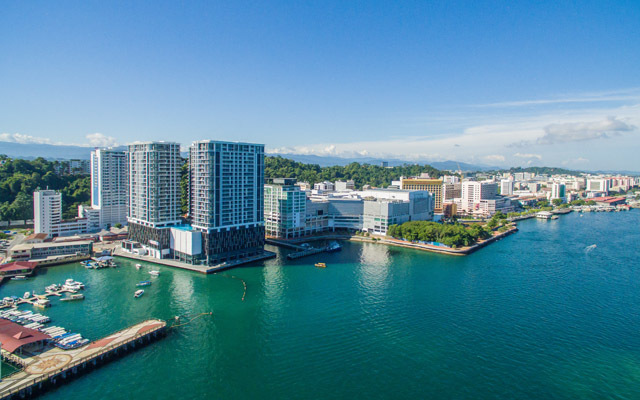
Five foreign carriers have returned to Sabah, with the most recent being Jeju Air which restarted operations on June 29 between Incheon and Kota Kinabalu.
Other international carriers that have resumed their direct flight operations to Kota Kinabalu include Scoot, Royal Brunei Airlines, Jin Air and Air Busan, while local LCC Air Asia now flies direct from Singapore and Manila to Kota Kinabalu.
According to the Sabah Tourism Board, improvements in air connectivity are helping the Malaysian state to “become a well-connected South-east Asian destination”.
In line with re-established accessibility, the Sabah Tourism Board has conducted destination promotional trips to a number of countries, while continuing to maintain engagement with airline and tour operators partners and its presence at tourism exposition events.