

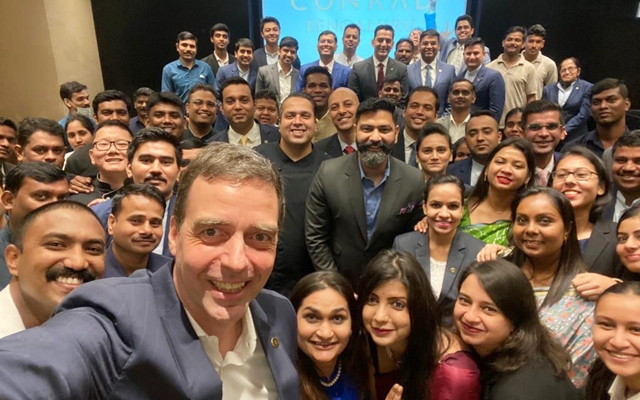
Hilton’s collection of luxury hotels and resorts across Asia-Pacific has resumed 100 per cent of operations, a progress facilitated by a strong headcount of talents across roles and ranks.
Nils-Arne Schroeder, vice president luxury and lifestyle, Asia-Pacific, who spearheads Hilton’s top-end brands, including Waldorf Astoria Hotels & Resorts, LXR Hotels & Resorts and Conrad Hotels & Resorts, said the group has been successful in retaining talents throughout the pandemic and in building back the necessary manpower to support the “swift return” in travel.
“The hospitality industry was hit very hard during Covid but a lot of our team members actually chose to stay on and continue to work for our luxury properties even in the toughest times. Just as heartening, during my recent travels across Asia-Pacific, I see that a majority of our team members have returned to our luxury hotels after taking a break or leaving to work somewhere else during the business disruption,” shared Schroeder.
Schroeder believes that Hilton’s nurturing corporate culture has a big part to play in the company’s ability to rebuild its manpower quickly.
“Recently Hilton was voted again as one of the best places in hospitality to work. Clearly, that has helped us to attract and retain great talents,” he said, adding that he is himself a loyal Hilton team member for over 20 years.
Hilton was named the top hospitality company to work for in Great Place to Work’s Best Workplaces in Asia for the sixth year running – and third in the top 100 companies across all industries in the multinational category.
The win comes off the back of a number of individual country accolades awarded by Great Place to Work this year, including rankings among the Best Workplaces in Australia, Greater China, the Philippines, and Sri Lanka as well as certifications as a Great Place to Work in six countries including Fiji, Malaysia, the Maldives, New Zealand, Papua New Guinea, and Thailand. In March this year, Hilton was also named the Best Workplace for Women in Greater China for the third consecutive year.
When asked what was the secret sauce for a great corporate culture, Schroeder pointed to an environment that facilitates career growth for team members, “as that encourages young talents to join and stay on”.
He said people desire respect on the job, learning opportunities, and the ability to see the purpose and value of the organisation they are working for, which can be conveyed through the organisation’s support for the community and environment.
He put particular emphasis on training, saying that it is “very important in retaining and motivating staff”.
He elaborated: “Throughout the pandemic we continued to bring in trainers specialising in guest experience and service to conduct courses online for our team members. Doing so also made sure our team members are able to service excellently as soon as travel returns. And now, as you can see, travel has returned so swiftly, beyond most expectations. And we are all ready to serve that wave of returning guests.”
Having team members who are ready to deliver top service as soon as business resumes is especially critical for luxury properties.
“There is no compromise for service experience and quality here. If we do not have enough team members, we will not run on full capacity. Fortunately, this is not the case now, and we are fully back in operation in Asia-Pacific,” he said, adding that should casual workers be needed to supplement manpower, the group would recruit those with luxury hospitality experience, to ensure they are able to consistently deliver best-in-class service for their guests.
Editor’s note: The earlier version carries a comment that casual workers are not a solution for Hilton’s luxury portfolio. That statement has been corrected.
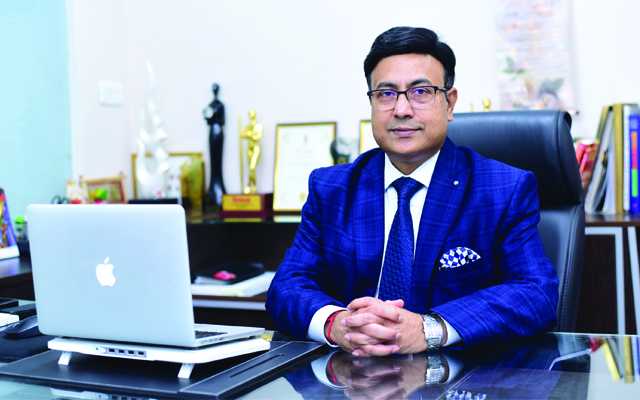
 HVS Anarock India Hospitality Review 2018 noted that Cygnett Hotels and Resorts recorded the highest number of hotel signings in India that year. It was an achievement for a relatively new hospitality chain. Following the pandemic disruption, where are you now with your expansion plans?



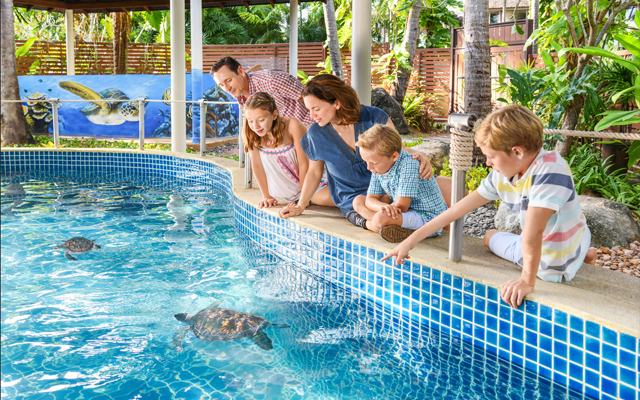







With family groups making up a sizeable portion of guests leading the travel recovery, top-end hotels are directing their creative juices towards programmes that all ages can enjoy together.
Ramesh Daryanani, vice president, global sales, Asia Pacific, Marriott International, told TTG Asia at ILTM Asia Pacific on Wednesday that families reuniting on a post-lockdown holiday are “looking for programmes to keep everyone entertained and engaged”.
“Crafting programmes for families is a priority now for our hotels and Marriott as a company. Everyone is looking for the next new experience on their trip, and wanting to share their stories when they go back. It is our job to give them the experience that they can talk about,” remarked Daryanani.
He pointed to various programmes offered in the Good Travel with Marriott Bonvoy collection that welcome all ages, such as activities at JW Marriott Phuket Resort & Spa’s Turtle Shelter; nature trail and sapling plantation initiatives at Le Méridien Mahabaleshwar Resort & Spa; Blue Swimming Crab rehabilitation at Sheraton Samui Resort; and volunteerism with the St. John’s Gold Coast Crisis Centre, coordinated by JW Marriott Gold Coast Resort & Spa.
JW Gardens installed in JW Marriott properties around the world offer families a chance to see how herbs and vegetables are grown and used by the hotel.
The Ritz-Carlton collection of properties across Asia-Pacific will roll out Ritz Kids 3.0 later this year, a new programme built around Leo the Lion who will take young guests on a journey to spark their curiosity, instill a sense of responsibility and bring them closer to nature and the local culture in whatever destination they visit.
These programmes are not only fun, but they also expose children to sustainable and regenerative tourism concepts, opined Daryanani.
Minor Hotels, which has also witnessed an energetic pickup in family travel demand, has properties all ready to engage the young and the old.
Anantara Kihavah Maldives Villas offers a kids club that comes with a trampoline park, a splash park and slides as well as a full line-up of activities from 10.00 to 18.00 daily, giving children little reason to stay indoors.
Paul Counihan, director of sales and marketing for the property, said there are a number of “very creative” activities that are a big hit with the little ones. One of which is a marine biology class conducted within the SEA underwater restaurant, while another whisks little pirates off on a sailboat to ‘conquer’ a sandbar.
Guests looking to bond can sign up for a story-telling date with grandpa and enjoy free cookies and milk. Families can also stargaze at the resort’s over-water observatory and interact with a Maldivian astrologist.
Andy Nightingale, cluster director of sales and marketing for Anantara Dhigu, Veli & Naladhu Private Island, Maldives, said properties offer a mix of programmes unique to children and for everyone in the family because “while families are eager to go on a holiday together post-lockdown, parents are also going crazy after 24 hours with their kids”.
“They need a break, and we are happy to help,” he said.
Properties under his care offer complimentary kids programmes, like movie nights, so that the grown-ups can enjoy a tranquil drink or meal for a couple of hours.
Illustrating the hearty appetite of travelling families, Marion Walsh-Hédouin, vice president public relations & communications, Minor Hotels, said the 15 residences within Anantara Layan Phuket Resort in Thailand are sold out even during the low season. These units offer five to eight bedrooms each.
Anantara Kihavah Maldives Villas’ five residences with between two and four villas are also popular with family groups.
“We are creating more facilities that cater to multi-generational groups,” shared Walsh-Hédouin, adding that “there is a greater focus on tailoring experiences that are good for both kids only and for the whole family”.
“Pre-Covid, couples often travelled without the kids. But when the pandemic kept families apart, they missed each other and learnt to appreciate time together,” she said.
Walsh-Hédouin also found that families are now travelling for a longer duration – up to seven nights per destination – and staying in fewer places at one go. Instead of packing Bangkok, Siem Reap, Luang Prabang and Phuket into a single trip to Asia, for instance, they are choosing to do just two.
“They are also preferring to stay with the same hotel company in the various destinations they visit for seamless travel. For example, families would stay at Anantara Hoi An for a couple of days, then get on The Vietage (train) to Anantara Quy Nhon for another few days. The train is a seamless travel option, and guests can enjoy the views along the way,” she said.