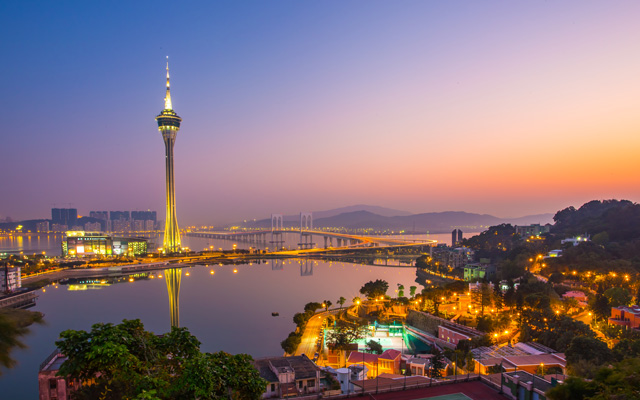
China may soon resume e-visas to allow individual Chinese residents to visit Macau and permit the sale of package tours to Macau, announced Macau’s chief executive, Ho Iat Seng, on September 24.
Ho told reporters that preparation would take at least a month, so the resumption of e-visas and package tours could be expected in late October or early November.
China will resume e-visas and packaged tours for Chinese residents to Macau
For a start, the package tours would be accessible to residents from Guangdong, Zhejiang, Jiangsu and Fujian provinces, and Shanghai. These markets represented almost 60 per cent of mainland visits to Macau in 2019.
The reopening scheme is expected to bring some 40,000 daily visitors to Macau on average.
Currently, Chinese tourists to Macau have to complete a week-long approval process.
Travellers from Hong Kong and overseas will continue to face a seven-day quarantine at a designated hotel, plus an additional three days of health monitoring.
Responsible travellers in Indonesia – defined as those who are wellness-focused, culturally-minded and care about environmental impact – want most to travel to Japan, according to YouGov’s latest report for the travel and tourism sector.
YouGov Travel Rankings 2022: Travel brands through the eyes of Responsible Travellers aims to understand how travel brands differentiate in the eyes of responsible travellers, and the brands and destinations that score higher in terms of consideration among this audience group.
Responsible travellers in Indonesia rank Japan as their favourite destination; Arashiyama pictured
YouGov Destination Index measures the public’s perception of destinations on a daily basis across a range of measures, and compiled using Consideration scores from July 2021 to June 2022.
Japan topped the list with a Consideration score of 31.2 per cent, followed by Singapore at 23 per cent and South Korea at 21.3 per cent.
Middle Eastern destinations Dubai and Saudi Arabia were the next highest ranked, with Consideration scores of 16.9 per cent and 16.8 per cent respectively. This was followed by Switzerland, the first European destination on the ranking at 12.5 per cent.
Australia (11.4 per cent) and Malaysia (9.6 per cent) were ranked seventh and eighth respectively, followed by the Netherlands (9.4 per cent) and New Zealand (9.4 per cent), which rounded off the top ten.
Tourism Malaysia’s arts and culture ambassador and renowned chef Ismail Ahmad is leading a series of culinary presentations through Europe as part of the country’s To Know Malaysia is To Love Malaysia campaign.
It is in line with the Ministry of Tourism, Arts and Culture and its agency, Tourism Malaysia’s efforts to promote Malaysia via its diverse gastronomy.
The campaign touched down on Serbia from September 18 to 25, sharing Malaysia’s arts, culture and culinary with the public. It will continue to Bulgaria and Germany.
The presentations showcase authentic favourites such as sate, nasi lemak, nasi ayam, mee goreng and teh tarik.
The Philippine Department of Tourism, Department of Labor and Employment (DOLE), the private sector and tourism stakeholders have successfully concluded their first Trabaho, Turismo, Asenso Philippine Tourism Job Fair over the weekend.
The first national tourism job fair kicked off on September 22 in Manila, Cebu, and Davao, putting 8,295 jobs up for grabs.
The Trabaho, Turismo, Asenso Philippine Tourism Job Fair offered more than 8,000 vacancies
Some 5,174 applicants turned up on the launch day. As of 15.00, over 80 applicants were hired on the spot.
Tourism secretary Christina Garcia Frasco said the job fair was part of the Department of Tourism’s effort to “serve the goal of ensuring that we put our tourism stakeholders front and center of our agenda”.
She highlighted the importance of the country’s tourism industry workforce, stating that it is the tourism workers and stakeholders who “are the best representation of the Filipino brand, with your hard work, your industry, your resilience, and your graciousness, you have made known the Filipino brand of hospitality all over the world”.
How is your CEO style different from John Brown’s?
John (former CEO, now chairman of Agoda) is super smart and ‘presidential’ – he’s inclusive, approachable, the perfect CEO for Covid time as he has all the leadership qualities we needed in the crisis. I’m trying to be that, but I don’t think I’ll ever be as good as John.
Ah, but you have your own strengths. What’s the biggest?
I’ve been an entrepreneur and I grew up in tech – it’s all over me. I can talk to an engineer in a way that John probably can’t, just because I understand exactly what the engineer is saying. Not that John didn’t, but I can take it to the next level of pushing for innovation and making a difference.
What I am hearing from Booking Holdings (Agoda’s parent) is that they selected me (as CEO) because they like Agoda’s tech approach. We have a fundamental belief that we win with technology. There are lots of things to do (to succeed in the business) but in the Internet space, ultimately the winners are the ones who understand the users fastest and experiment/develop the tech fastest. That is what I stand for and one of the things I have brought to Agoda.
Tech is going to be what we live and die on in my period.
What is the one tech innovation you wish to crack?
The one that I really want to do is what I call ‘persistent’ booking.
Fundamentally, few people sit down and book their entire trip – flights, hotels, attractions, transfers, etc – at once. They may book the flight but don’t know yet where to stay, or know the hotel but can’t confirm travel dates. They may also want to book experiences later in-destination.
Where we, as an industry, have failed is to build a good enough tech to enable people to package persistently, i.e., book and build their itinerary through a period of time, in one platform that supports their travel planning and booking and, over time, gain savings because they are booking a package.
AirAsia has just launched Air Asia Holidays – flights + hotels + activities in one booking at one price – though only in Malaysia and the Philippines currently.
Yes, you can buy packages, even on Agoda, but it’s still only a minority of people in Asia that do, compared with in the US.
If you want to bring it to the masses, you need to crack the time component, make the itinerary as something that survives over time and, as time passes, people can keep adding what they need and see the savings in buying a package than individual components. We haven’t cracked this and I can tell you we will give it everything we’ve got. You’ll see a lot of movement on this from us in 2023.
We’ve just introduced a shopping cart to our platform. But that’s just the ability to add, like in an e-commerce website. That’s our first step in building a user experience where your itinerary persists through time and keeps getting package discounts.
If I can crack this, I can retire.
Why is it so difficult?
It’s a question of both tech and user experience. You can get into all sorts of problems. For instance, I book a flight and now I want to add the hotel but the booking failed. I can’t cancel the flight because it’s non-refundable.
So, we got to be smart to understand the order of how people book travel and develop interfaces such as allowing them to cancel or make amendments. Or notify a customer that they need to decide. It’s a massive technology change.
Then there are other areas such as customer support training.
The hardest thing is changing the customer behaviour. If you make it too complicated, it won’t work. It’s got to be intuitive.
But for me, this is the billion-dollar question on what separates a travel platform from a super app. Everyone wants to be a super app providing all services – kind of a WeChat. But I don’t necessarily see travel platforms becoming super apps. If anything, some super apps have become travel platforms, like Meituan, but outside China I don’t see (the concept) as being successful.
I don’t want people to buy groceries or a massage from me, unless it’s part of an experience or attraction during their travel. And if they travel with me, I want to help them build all the components through time and enjoy the discounts aggregated in the itinerary.
I think that’s enough work to do but in case it’s not, what other innovations are you toying with?
We are experimenting with a lot of services that we will be releasing in 2023. I’m very excited.
For example, price freeze. If you are afraid the rate that you’re looking at will change, pay a bit more and Agoda will lock the rate for you. If it goes down, you’ll get the cheaper price. If it goes up, the price remains as it’s been locked.
Another is a kind of insurance for when you have to cancel a booking. You pay a bit more for, say, a non-refundable room booking, which is lower-priced because it’s non-refundable, and in return Agoda will carry the risk and refund you if you have to cancel. Flexibility and the ability to cancel are really important, as we have seen during Covid.
In the B2B space, white label is a lucrative space (to double down on). We already empower the online assets and the extranet of companies such as JTB.
More interesting is distribution tech. The big chains continue to have issues with wholesale discounted rates that reach online when they aren’t supposed to. We want to provide a platform for chains to distribute to wholesalers, but with us policing the distribution so chains don’t have to play whack a mole. Also important is giving chains the visibility on where the booking goes to, to whom and ask any question they have. That open platform doesn’t exist.
Was the CEO seat your dream when joining Agoda in 2014 after selling your start-up Qlika to Booking Holdings?
I don’t think anybody – well may be some, but not me – plans to be a CEO (laughs).
I remember before Booking acquired the Israeli company, they brought us to see Rob Rosenstein (who co-founded Agoda in 2005 and served as president and CEO for more than a decade). I remember stepping into his room. He had a lot of TV screens and tons of data and I thought “Oh, this person has a tough job!”.
Definitely it wasn’t planned.
A tech-driven CEO. Should competitors worry?
Not more than they were worried with John as CEO (laughs).
We have amazing competitors. One of the values we talk a lot about at Agoda is to be humble and to me that includes acknowledging that our competitors are smart people and have their strengths. I’m not embarrassed to say – quite often we learn from them.
Travel tourism is now back in full force. According to the Association of Asia Pacific Airlines, this pent-up travel demand is driving growth in passenger traffic in this region, with airlines seeing six times more passengers in June 2022, as compared to in June 2021.
Hotel investment volume in this region is also projected to reach US$1.5 billion in 2022, a 86 per cent increase as compared to the year before.
Furthermore, South-east Asia has received over 580,000 international visitors in the first two months of 2022 alone, highlighting the revival of travel tourism.
But a question remains – as travel tourism picks up, how can the aviation and tourism industries continue to uphold strong hygiene standards to ensure everyone is able to travel safely?
Hygiene: a critical aspect of travel
Given the ongoing threat of infectious diseases that are likely to arise from emerging and existing microorganisms, implementing targeted hygiene protocols in airports and airlines, and emphasising travellers’ personal hygiene are essential. This is so as viral diseases including Monkeypox and Hand, Foot, and Mouth disease (HFMD) continue to pose a threat to the health and well-being of people.
Countries in this region are also seeing thousands of Covid-19 cases every week, as new variants emerge.
While Asia-Pacific remains a highly attractive destination for travellers in the international arena, the health and hygiene infrastructure of certain areas remains underdeveloped.
The volatility of the world we live in now, and the presence of these hygiene gaps reinforce the continuing importance for key stakeholders in the travel and aviation industries to uphold best hygiene practices to ensure that everyone can live, work and travel safely. According to a 2021 survey by Dettol across a number of regions, 77 per cent of travellers were concerned about flying due to reservations around cleanliness, and 79 per cent expect strict hygiene protocols in airlines. In another study, 40 per cent of individuals ranked hygiene as an essential factor in deciding which airline to travel in after Covid-19.
Building a stronger and healthier world Facilitating stakeholder collaborations: As international borders open and people continue to make travelling a key priority, airports and airlines serve as critical touchpoints where viral diseases are contained and controlled. But this requires more than just a one-man effort. Multi-sectoral collaboration is paramount.
For example, during the height of Covid-19, Dettol Pro Solutions, which is popular for its science-backed hygiene solutions, partnered with prominent airlines and tourism leaders such as British Airways and Delta to boost hygiene and disinfection measures. These collaborations are crucial in boosting passengers’ confidence at a time of uncertainty, as 79 per cent of respondents cited that they are more likely to choose British Airways over other airlines after seeing this collaboration.
Such cross-sector collaborations are crucial in helping the travel industry to build customer trust quickly. Trust goes beyond just providing information. It takes a long time to develop, especially since consumer habits are always changing. It also requires consistent efforts from brands, but this can be strengthened and expedited by embarking on partnerships with stakeholders that consumers already trust.
While hygiene preparedness can be enhanced through improved coordination, communication and information-sharing between internal and external stakeholders, airports and airlines should also explore partnerships with solutions providers like technology and robotic companies to create autonomous commercial cleaning systems. In past years, digitalisation has undoubtedly transformed industries worldwide, and this includes the aviation and tourism industries. Adopting new technologies are beneficial, as it helps to replace manual tasks and circumvent the shortage of manpower by making cleaning more efficient and cost-effective.
Providing targeted hygiene as an efficient and sustainable option: Besides stakeholder collaboration, it is also important for airlines and airports to adopt a targeted hygiene approach to ensure the efficacy and sustainability of measures.
Known as a risk-based approach where hygiene interventions are put into place when and where they are most effective, targeted hygiene includes frequent sanitisation of high touchpoint surfaces, and ensuring that passengers are wearing face masks. Since it focuses on key areas to break the potential chain of infection, targeted hygiene avoids wastage of valuable resources and manpower.
For example, at COP26 last year, one such initiative based on the targeted hygiene approach was implemented to protect all attendees. These protocols helped to reduce the spread of illness-causing germs across 50,000 hotspots in the large conference space.
Towards a new era in travel and tourism
Today, the world is gradually (but surely) finding its footing back in a post-Covid era. People are venturing out to visit new places and travel tourism is back on track. To ensure that everyone is able to live, work and travel safely in this new normal, following proper hygiene methods and upholding personal cleanliness to reduce the spread of infections is paramount.
As international borders open and travel picks up in the region, it will take the continued efforts of key stakeholders to strengthen hygiene standards and ensure that the aviation and travel industries are ready to tackle any new challenges, so that passengers are always able to travel safely. Only by doing so can ASEAN become a desired tourist destination.
ASEAN has issued a statement ahead of World Tourism Day to emphasise the region’s tourism recovery, with hotel searches, occupancy rates and travel confidence rising.
According to ASEAN, tourism growth is already “on the incline” in 4Q2022. Quoting UNWTO’s Tourism Recovery Tracker, ASEAN also pointed to a 28 per cent year-to-date increase in South-east Asia hotel searches as well as a 57 per cent increase in occupancy rates.
The World’s 50 Most Beautiful Countries by Forbes finds Wayag Island, Raja Ampat in Indonesia the most beautiful place on earth
Overall travel sentiment has also risen by an impressive 40 per cent year-to-date, and it is expected to increase as more Covid-19 vaccines become available across the globe and variants of Covid-19 become milder. ASEAN noted that this progression has led to easing of the regions’ pandemic-related border restrictions.
ASEAN said “the pandemic should serve as an impetus and opportunity for the sector to…build forward better – by designing and building a more sustainable tourism sector that would underpin its resilience, which should no longer be taken for granted”.
“The vision is for tourism in ASEAN to emerge more sustainable and resilient following the crisis induced by Covid-19, with more focus on environmental conservation and climate friendly policies, as well as on the critical socio-cultural impacts of the tourism sector in the region,” noted ASEAN in its statement.
The association also spotlights the region’s tourism tagline, A Destination for Every Dream, as it recalls South-east Asia’s blend of “perfect experiences”.
It said: “No other tourism region offers a unified destination so close in the distance and rich in culture, historical sites, varying cuisines, natural landscapes, ecotourism, modern metropolises, and adventure activities.”
Five of the ASEAN member states were listed in Forbes’s recent article, The World’s 50 Most Beautiful Countries, based on their inherent natural beauty and the availability of nature-based activities for guests and natives.
The article listed Indonesia first out of 50 destinations, and Raja Ampat Island in particular as the most beautiful place on earth.
The Philippines ranked 17th on the list; Malaysia at 24th; Thailand at 38th; and Myanmar at 41st.
FIT travellers’ long wait to enter Japan is soon to end as the country prepares to allow visa-free, independent tourism and remove the country’s daily entry cap, currently set at 50,000, from October 11.
Prime minister Fumio Kishida made the announcement, which marks the end of more than two years of strict border measures, on Thursday at the UN General Assembly in New York.
Yoshie: demand will be massive because the Japanese yen is very cheap now
Under the new system, tourists will still need to show proof of triple-vaccination or a negative Covid-19 test before travel, but will no longer require visa sponsorship, a rule which has been in place since September 7.
Kishida said Japan’s opening up to visa-free, independent travel is intended to “support the travel, entertainment and other industries that have been struggling during the coronavirus pandemic”.
Japan’s tourism players have welcomed the news, saying it can provide a much-needed boost to the industry, which has seen slow inbound demand since steps began in June towards full reopening of the country.
“We’re very grateful to hear the news, which will be a big support to the tourism industry,” said Chihaya Suetake, a representative of All Nippon Travel Agents Association.
“It’s really going to help as many (inbound) tourists have not come back as they don’t like group tours,” Mike Holland, a representative of Okinawa Prefecture’s Chatan Town Tourism Association, told TTG Asia at Tourism Expo Japan.
Noémie Gaildrat, marketing assistant at Tokyo-based tourism marketing agency Makes Co. said overseas markets have been looking forward to a full reopening for a long time, adding that many of her contacts had already planned or booked Japan trips for the autumn before the announcement.
“Demand will be massive, especially so because the Japanese yen is very cheap now,” said Yoshie Kakimoto Mohanty, managing director of Kagoshima-based tour company and operator Tabitto.
In preparation of a faster tourism recovery from October, she is preparing FAM trips for agents in Europe to showcase what the prefecture has to offer now, more than two years since the country was fully open to tourists.
Okinawa’s Holland agrees that the return of independent, visa-free travel to Japan is the perfect opportunity to raise awareness among international markets of all the country’s regional tourism products and services.
Hyatt Hotels Corporation announced the joint venture of a Hyatt affiliate and Kiraku to launch a collection of modern-style hot spring ryokans (Japanese-style inn) in Japan targeting global travellers under the new hospitality brand, ATONA.
Hyatt and Kiraku will each own 50 per cent of ATONA and will leverage the expertise and strengths of both companies to develop this new offering. It will be managed independently by a team of experienced hospitality experts who have a deep understanding of both Japanese culture and international hotel standards.
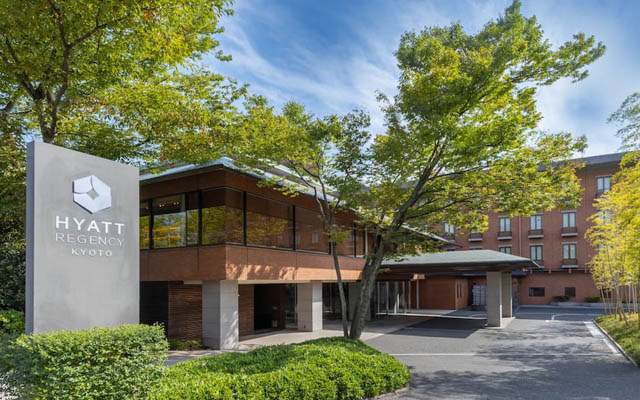
Hyatt and Kiraku have teamed up to launch ATONA, a collection of modern-style hot spring ryokans; Hyatt Regency Kyoto pictured
The ATONA brand will express the unique charm of each region’s architecture, design, cuisine, activities, and hospitality through the ryokan experience. Centred around the onsen (hot spring), a treasured part of Japanese culture, the ryokans will be modernised and set among breath-taking landscapes, offering new experiences and discoveries both within and beyond the ryokan that are special to its locale.
A combination of two old Japanese words that means “me and you”, ATONA is an expression of deep connection. The brand will offer bespoke experiences and Japanese hospitality, inspiring guests to embrace nature in a peaceful setting, and reconnect with oneself.
Kou Sundberg, founder and CEO of Kiraku said: “Through the building of hot spring ryokans under the ATONA brand across the country, we hope these ryokans will provide guests, both local and from abroad, a special place to experience the still unseen wonders of Japan, while also positively impacting local economies.”
Sam Sakamura, Hyatt’s vice president, Japan and Micronesia, added: “We believe that the five essential elements for inbound tourism are food, culture, history, safety, and transportation infrastructure, and as a highly sought-after tourist destination, Japan exceeds in each of these categories.
“Through our strong collaboration with Kiraku on the ATONA brand, the joint venture will build on the unique, personalised experience of traditional Japanese ryokans, which have been loved by locals for centuries, and make them accessible to inbound travellers, many of whom have never experienced staying in a ryokan before.”
Development plans are currently under way to unveil the collection of ATONA-branded ryokans beginning in 2025.
Japan’s beleaguered travel providers should expect a rebound in inbound arrivals this autumn, according to organisers of Tourism Expo Japan 2022, which opened yesterday.
The international event, to be held September 22-25, will focus on growth of the tourism industry in the wake of the Covid-19 pandemic, as Japan eyes further relaxation of its border rules in the coming weeks. Its theme “Restart: Taking on the Challenges of a New Era” reflects its goal of driving the return of travel demand and contributing to the wider economy, said organisers.
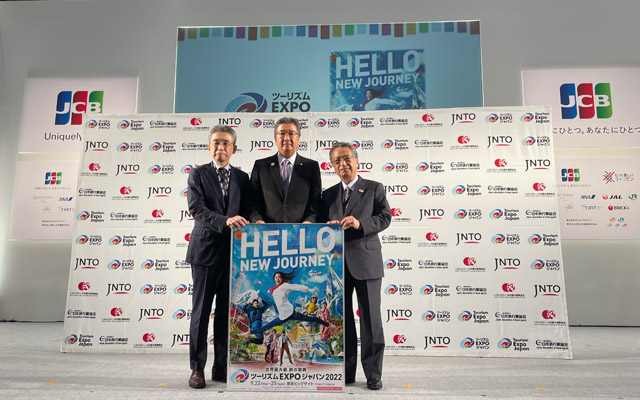
From left: Japan Travel and Tourism Association’s Minoru Kubota, Japan Association of Travel Agents’s Hiroyuki Takahashi, and Japan National Tourism Organization’s Satoshi Seino
Opening the expo, Kenichiro Yamanishi, chair of the Tourism Expo Japan Organizing Committee, said “arrangements are underway” to reinstate the country’s visa waiver for short-term visitors and the cap on daily arrivals lifted entirely, “as soon as possible after October”. A support programme for domestic tourism will also go into effect this autumn.
Yamanishi added that these developments “send a signal for reviving tourism demand” in Japan, while the expo can act as “a chance for the tourism industry to regain its vitality”.
Satoshi Seino, president of Japan National Tourism Organization (JNTO), told attendees that Tourism Expo Japan could be considered a step towards the start of a greater uptick in inbound tourist arrivals, and that the tourism sector wants them to return soon.
Organized by the Japan Travel and Tourism Association, Japan Association of Travel Agents and JNTO, with special cooperation from All Nippon Travel Agents Association, the expo is the tourism industry’s annual headline event.
This year marks its return after a pandemic-induced three-year hiatus, and the first time it is held in hybrid format.
Still, international participation is low, with 256 overseas-based participants representing 27 countries. Of those, 56 are attending in-person while 200 are joining the online programme.
The previous expo in Tokyo in 2018 attracted 1,441 companies and organisations from 136 countries and regions, a record high.




 Tourism Malaysia’s arts and culture ambassador and renowned chef Ismail Ahmad is leading a series of culinary presentations through Europe as part of the country’s To Know Malaysia is To Love Malaysia campaign.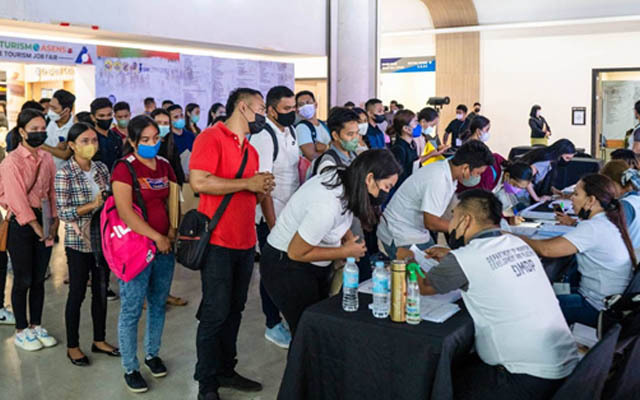

 How is your CEO style different from John Brown’s?
 Travel tourism is now back in full force. According to the Association of Asia Pacific Airlines, this pent-up travel demand is driving growth in passenger traffic in this region, with airlines seeing six times more passengers in June 2022, as compared to in June 2021.








Responsible travellers in Indonesia – defined as those who are wellness-focused, culturally-minded and care about environmental impact – want most to travel to Japan, according to YouGov’s latest report for the travel and tourism sector.
YouGov Travel Rankings 2022: Travel brands through the eyes of Responsible Travellers aims to understand how travel brands differentiate in the eyes of responsible travellers, and the brands and destinations that score higher in terms of consideration among this audience group.
YouGov Destination Index measures the public’s perception of destinations on a daily basis across a range of measures, and compiled using Consideration scores from July 2021 to June 2022.
Japan topped the list with a Consideration score of 31.2 per cent, followed by Singapore at 23 per cent and South Korea at 21.3 per cent.
Middle Eastern destinations Dubai and Saudi Arabia were the next highest ranked, with Consideration scores of 16.9 per cent and 16.8 per cent respectively. This was followed by Switzerland, the first European destination on the ranking at 12.5 per cent.
Australia (11.4 per cent) and Malaysia (9.6 per cent) were ranked seventh and eighth respectively, followed by the Netherlands (9.4 per cent) and New Zealand (9.4 per cent), which rounded off the top ten.
The full report can be found here.