


Alibaba Group Holding Limited has joined the World Business Council for Sustainable Development (WBCSD), a group of over 200 of the world’s leading sustainable businesses.
The initial focus of the collaboration between WBCSD and Alibaba will be on Climate Action, particularly in finding innovative ways to leverage Alibaba’s platforms for broad decarbonisation and work with WBCSD members on the Avoided Emissions framework and methodologies.
Alibaba Group is powered by a global workforce from over 60 countries and regions, and has pledged to achieve carbon neutrality in its own operations by 2030. It also introduced a Scope 3+ target which is based on the potential of leveraging its digital technology and platforms to enable and engage a wider group of stakeholders to promote low-carbon products, services and behaviours.
“(Alibaba Group’s) commitment to advancing sustainability and decarbonisation aligns with our vision for a better world where nine billion people live well, within planetary boundaries. Alibaba’s position as the largest e-commerce and digital technology company from Asia to join WBCSD will bring valuable platforms and technological capabilities to our collaborative efforts,” said Peter Bakker, president and CEO of WBCSD.
Alibaba Group’s chief financial officer and chair of the group’s Sustainability Steering Committee, Toby Xu, shared: “We strive to work with our partners across industries to create enduring, wide-ranging, and impactful value for our stakeholders. We are excited to collaborate with WBCSD on advancing our climate actions, along with other initiatives, that contribute to a net-zero and sustainable future.”








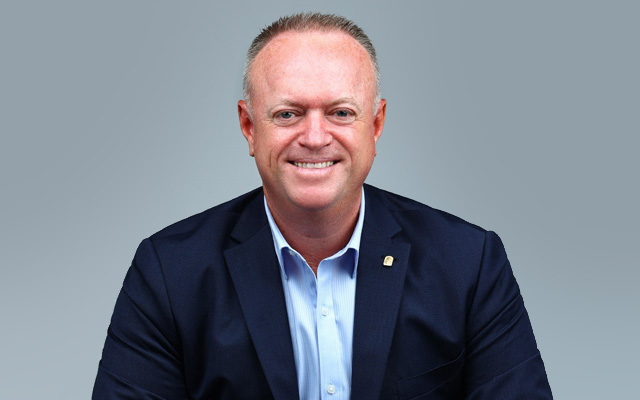
 He was most recently managing director of La Vie Hotels & Resorts.









Emirates has become the world’s first airline to operate an A380 demonstration flight using 100 per cent Sustainable Aviation Fuel (SAF). The flight took off from Dubai International Airport with one of four engines powered on 100 per cent SAF, helping to demonstrate its potential as a drop-in replacement that matches jet fuel’s technical and chemical requirements, while being a more sustainable alternative.
The A380 demonstration flight underlines the performance and compatibility of SAF, and contributes to the growing body of research carried out by the industry to evaluate the beneficial effects of 100 per cent SAF on aircraft performance. SAF is currently capped at a 50 per cent blend limit in engines for commercial flights.
The 100 per cent drop-in SAF used on the demonstration flight includes renewable aromatics and closely mimics the characteristics of conventional jet fuel. This is the first time that drop-in SAF has been used on an A380 aircraft, with the expectation of full compatibility across the aircraft’s existing systems.
Last week, robust engine testing for one A380 Engine Alliance GP7200 engine using 100 per cent SAF was carried out, with the objective of validating the engine’s capability to run on the specially blended 100 per cent drop-in SAF without affecting its performance or requiring any modifications. Ground engine testing took place at the Emirates Engineering Centre in Dubai.
Earlier this year, Emirates successfully completed the first 100 per cent SAF-powered demonstration flight in the region on a GE90-powered Boeing 777-300ER. Last month, the first Emirates flights operating with SAF provided by Shell Aviation took off from Dubai International Airport (DXB). Shell supplied 315,000 gallons of blended SAF for use at the airline’s hub in Dubai.
Adel Al Redha, chief operating officer, Emirates Airline, said: “The growing global demand for lower-emission jet fuel alternatives is there, and the work of producers and suppliers to commercialise SAF and make it available will be critical in the coming years to help Emirates and the wider industry advance our path to lower carbon emissions.”
“Seeing Emirates flying an A380, the world’s largest airliner, powered by an engine running on 100 per cent SAF is a symbolic moment. These fuels are the most effective way to address CO2 emissions in the aviation industry today and that they are supported increasingly by the world’s leading airlines. SAF is vital to meeting the sector’s target of net-zero emissions in 2050, but needs the backing of the whole industry,” commented Julie Kitcher, executive vice president communications and corporate affairs, Airbus.
The airline also recently expanded its partnership with Neste for the supply of over three million gallons of blended SAF in 2024 and 2025 for flights departing from Amsterdam Schiphol and Singapore Changi airports.
In addition, Emirates currently uplifts SAF in Norway and France and the airline continues to seek opportunities to use SAF at various airports as supply becomes available.