TTG Asia
Asia/Singapore Tuesday, 27th January 2026
Page 2417

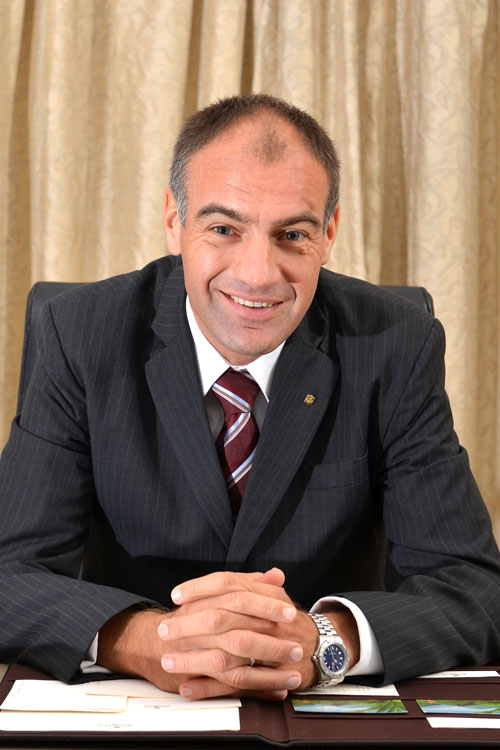
Peter Gautschi dies in car crash in Myanmar

0

HOTELIER and philantropist Peter Gautschi has passed away, the industry still in shock over his sudden, tragic death on June 6 in a car crash in Myanmar, where he was pursuing his passion to help the underprivileged.

A report said a Toyota Prado travelling on the Yangon-Naypyidaw expressway, carrying the 86-year-old Swiss and two other passengers, collided with a car ahead while its driver was trying to overtake. Gautschi and two women were killed on the spot while four others were injured.

The 86-year-old Swiss was much loved and hugely respected. An outpouring of sadness in email exchanges that are being circulated by friends and former associates described a great man who was “the Swiss hotel pioneer in all of Asia”, “the grand man of hospitality”, “the best boss ever with a very kind heart” and “a truly strong man (who put) smiles on children’s faces, providing an education which allows them to live a dignified life”.

Gautschi retired in 2001 after five decades in the hotel business, including almost 30 years with The Peninsula Group. He also founded Swiss-Belhotel International.

He created the Studer Trust (www.studertrust.org), named after his mother Margaretha’s maiden name, upon finding his US$40,000 sponsorship of a new school in Henan, China, through UNESCO, was misspent and wasted. In 2010 alone, Studer Trust completed more than 130 projects, mostly schools in China and Myanmar, at a cost of more than US$1.3 million, by avoiding bureaucracy. Gautschi collaborated with civilians instead of governments and personally covered the salaries of a few employees in the field.

Studer Trust now also extends its charity from building schools in China and Myanmar to assisting old-age homes. Gautschi worked with a small team of retirees as his support in Hong Kong; many of his friends became donors, including the Kadoorie family.

Peter Borer, COO, The Hongkong and Shanghai Hotels (HSH), said: “Peter Gautschi worked with The Peninsula Group for almost 30 years, starting as assistant to The Peninsula Hong Kong’s general manager Leo Gaddi and rising to president.  He was the inspiration in making our company what it is today, setting the foundations and high standards by which we still abide. Mentor for so many, from the highest to the lowest, he inspired many careers. He passed away doing what he loved best, helping the underprivileged and thus demonstrating what a fine human being he was. All of us at The Peninsula Hotels are grateful for his leadership and friendship, and will miss him greatly.”

Gautschi supervised the first major renovation of The Peninsula Hong Kong after World War II. Under his guidance, HSH began to expand overseas. Peninsula Overseas Management was set up to provide management services for overseas hotels. The company also opened The Peninsula Manila, built the Repulse Bay Apartments, acquired Tai Pan Laundry, set up the Clubs Division, acquired a stake in The Peninsula Bangkok and built St. John’s Building in Hong Kong.

Gautschi will be cremated in Myanmar on Monday, June 10, and his ashes will be brought to Hong Kong where arrangements will be made to scatter them at sea according to his wishes.

He also wished for no religious rites but had written instructions that he would like a memorial gathering for friends to enjoy some wine. His many friends will be contacted at a later date regarding a memorial gathering in Hong Kong.

Little Red Cube brand makes international debut

0

QUAY-SIDE retail lifestyle and family entertainment complex Little Red Cube became the flagbearer of Puteri Harbour in Nusajaya, and the pioneer property under the Little Red Cube brand when it launched on Wednesday.

Located strategically at the waterfront marina of Puteri Harbour, Little Red Cube is within walking distance to the new ferry terminal that opened in May, from where four ferry services traverse the one-and-a-half-hour distance to Batam daily. Ferry services linking Puteri Harbour and Singapore will commence in July.

Little Red Cube is also a 25-minute drive from Senai International Airport.

Destination Resorts and Hotels (DRH) COO, Eddy Leong, said the company expects to attract domestic and South-east Asian visitors, as more than 75 per cent of flights into Malaysia come from the region.

He added that the plan is also to build up awareness of the Little Red Cube brand among the urban population and then export it overseas. There is no time frame set for brand expansion at the moment.

Developed by DRH to the tune of RM500 million (US$161.9 million), Little Red Cube comprises two indoor theme parks, Hello Kitty Town and Little Big Club, Traders Hotel Puteri Harbour, and a host of retail and F&B outlets.

Luxury Tours Malaysia manager, Ganneesh Ramaa, said: “All the while, Nusajaya (has been) part of a day programme with a visit to the Puteri Harbour Family Theme Park. With the opening of Traders Hotel (TTG Asia e-Daily, May 31, 2013), we can now do overnight packages in Nusajaya and even combine Puteri Harbour with a day trip to Singapore and a stay at Traders Hotel Puteri Harbour.”

Similarly, Saini Vermeulen, head of international sales at Panorama Tours Malaysia, remarked: “The opening of Traders Hotel Puteri Harbour will further enhance our twin destination theme park packages combining Singapore and Johor, as we can now sell Puteri Harbour as an overnight destination.”

AirAsia announces first Bangkok-Naypyidaw link

0

AIRASIA is set to launch daily flights from Bangkok to the Myanmar capital of Naypyidaw this October, in anticipation of increased demand for flight options to the latter.

The LCC currently runs thrice-daily flights between Bangkok and Yangon, and a daily flight between Bangkok to Mandalay. It also operates a daily Kuala Lumpur-Yangon service.

“With the 27th SEA Games approaching in December 2013, Myanmar’s chairmanship of ASEAN in 2014, and the ASEAN Economic Community taking place in 2015, there will be tremendous demand to connect the capital city (of Myanmar) to the rest of the world, and Bangkok is the perfect place to start,” said Tony Fernandes, group CEO, AirAsia.

He remarked that Myanmar was also the gateway to India and China, as well as a regional investment hotspot following the country’s successful economic reforms.

“With its foreign direct investment growing five times from 2011 to 2012, there is no better time to offer the world more access to this hot destination,” he added.

SkyTeam gets second South-east Asia member in Garuda

0

GARUDA Indonesia will join SkyTeam in March 2014 as the airline alliance’s 20th international member and second South-east Asia member.

Garuda president and CEO, Emirsyah Satar, said: “Joining SkyTeam is a long-term development strategy for Garuda, and for years we have been upgrading our service and actively forging cooperation with SkyTeam member airlines with this objective in mind.

“As the first Indonesian airline to join this world-class alliance, our strategic target is to continuously strengthen profitability and boost international market competitiveness.”

SkyTeam managing director, Michael Wisbrun, commented: “Garuda Indonesia’s domestic and growing international network will give SkyTeam a footprint in Indonesia, as we strengthen our presence in the South-east Asia region.”

“Garuda has worked hard to meet the membership criteria required by SkyTeam, including implementing a new IT platform, and we look forward to welcoming the airline in March next year,” Wisbrun added.

Garuda already cooperates with SkyTeam airlines, such as Korean Air, Vietnam Airlines, China Southern Airlines and China Airlines.

North-east India sees stronger travel demand

0

INDIA’S travel operators are reporting stronger foreign interest in the north-eastern states of Manipur, Mizoram and Nagaland, and have cheered the Ministry of Home Affairs’ move in liberalising travel to the area.

Travellers were previously required to obtain permits for travel to the three states, but the mandate was lifted in 2010 and has been extended annually since.

“Lifting of the protected areas order, to some extent, has resulted in an increase in the number of foreign visitors to Manipur, Mizoram and in particular, Nagaland,” reported Ashish Phookan, managing director, Jungle Travels India, and chairman, north-east chapter, Indian Association of Tour Operators.

“Most visitors are from Europe, and UK remains the largest (source market). There is also a lot of interest among Israeli visitors in visiting Manipur and Mizoram.”

EB Blah, CEO of Clara Tours, also noted more enquiries from the South Asian Association for Regional Cooperation (SAARC) region. “There is good demand from Bangladesh. The relaxation (of travel) is helping to increase interest from the SAARC region in the three states.”

India’s north-east region includes the states of Arunachal Pradesh, Assam, Manipur, Meghalaya, Mizoram, Nagaland and Tripura. According to the Ministry of Tourism, about 58,000 tourists visited the north-east in 2012, an 18 per cent increase over 2011, but numbers to the three states remain dismal.

Sanjay Basu, managing director, Far Horizon Tours, said the government’s efforts to “open up” north-east India for tourism would pay off in the long run. “Apart from Assam and Arunachal Pradesh, Nagaland is also now growing as a tourist destination,” he said.

But PK Dong, chairman, Dong & Associates, and tourism consultant to Mizoram Tourism, said there was a “need to publicise this (liberalisation of travel) to the three states”.

Taking advantage of the spurt in awareness, Phookan said his agency was promoting tours through overseas tour operators and hopes to inform international visitors about the region’s offerings “be it in terms of wildlife, interactions with ancient tribal communities and trekking”.

He also said that the north-east still lacked basic infrastructure in terms of accommodation, good roads and wayside amenities.

“However, the situation presents us with the great opportunity to develop environmentally sensitive facilities that would attract discerning travellers from across the world and from within India. We think there is a need to develop facilities keeping in mind the traditional bond with the local communities have always had with nature, and that will become the main unique selling point in promoting north-east destinations,” Phookan commented.

Shun Tak secures stake in Jetstar Hong Kong

0

SHUN Tak Holdings has become the third equal-share investor in Hong Kong’s first and upcoming LCC, Jetstar Hong Kong.

The company joins existing partners Qantas Group and China Eastern Airlines.

Welcoming Shun Tak to the venture, Jetstar Hong Kong CEO, Edward Lau, said: “Shun Tak’s long history in tourism and transportation businesses will further deepen the experience behind Jetstar Hong Kong.”

Pansy Ho, managing director, Shun Tak Holdings, commented: “It has long been our vision to create an air-sea-land network that seamlessly connects the Pearl River Delta and facilitate its integration, under the spirit of Guangdong, Hong Kong and Macau development blueprint as part of the central government policy.

“We believe a low-cost airline will be most efficient in driving growth across the leisure sector, and bring benefits to the complete visitor economy for Hong Kong, as well as contribute to the sustainable development of Hong Kong as the top aviation hub.”

Shun Tak had earlier announced plans to establish its own hotel brand and management company, to appeal to outbound Chinese tourists worldwide (TTG Asia e-Daily, May 20, 2013).

Shangri-La pays homage to Confucius with new property

0

SHANGRI-LA Hotels and Resorts will open a new hotel on August 1 in Qufu, otherwise known as the birthplace of Chinese philosopher Confucius.

The 211-room Shangri-La Hotel, Qufu is located within Shandong Province, two hours from Beijing and three hours from Shanghai by high-speed rail. Guests will reside within walking distance of three UNESCO World Heritage Cultural sites – the Temple of Confucius, the Mansion of Confucius and the Cemetery of Confucius.

Chinese architecture and interior design principles guide the design of the hotel, whose façade is shaped to resemble a traditional Chinese pavilion, with roofs topped by grey tiers of flying eaves.

In the lobby, Chinese patterns repeat in its ceiling reliefs and marble floors, while the reception desk is offset by deep red lacquer panels and highlighted by a painting of Chinese plum blossoms.

The hotel offers free Wi-Fi throughout its premises, a 1,600m2 pillarless Qilu Grand Ballroom with an outdoor terrace connected to the ballroom foyer, six additional function rooms, a Bridal Room and the Hall of Wisdom VIP room.

Guests can also tuck into Cantonese, Shandong and re-imagined Kong family (Confucius’ descendants) cuisines at the hotel’s signature Shang Palace restaurant, international dishes at the all-day dining Café Kong, or sip tea from the extensive tea menu at the Lobby Lounge.

Longhaul markets to Thailand stay robust

0

THAILAND continues to reap strong interest as a longhaul holiday destination, said buyers at Thailand Travel Mart Plus 2013.

Viacheslav Akaevich, director of MICE and travel department, Samolet Russia, said: “Russian outbound to Thailand has grown an average of 20 per cent over the last few years. Bangkok, Phuket and Pattaya are the most popular destinations, although we’re now trying to promote multi-city programmes such as Bangkok-Kuala Lumpur tours too.”

Thailand remains the top South-east Asian destination for the Russian outbound market (TTG Asia e-Daily, September 27, 2012), as the country has greater “charm” than its neighbours, Akaevich opined.

Despite the lack of direct flights since Aerosvit Airlines’ Kiev-Bangkok service was plugged in January, Liliya Gongolevskaya, head of sales department of Vintage Creative Travel in Ukraine, said: “South-east Asia is becoming more and more popular as a holiday destination among Ukrainians. Krabi, Koh Samui and Phuket are popular among Ukrainians, while regional countries are viewed as an add-on to a Thailand itinerary.

She said the Kiev-based company had seen outbound business to Thailand grow between eight and 12 per cent annually, with FITs comprising 70 per cent. Groups, corporates and MICE make up the rest.

Similarly, Domenico Liantonio, marketing director of Bangkok-based Touring Asia Online, which specialises in the Italian outbound market to Thailand, said Italian FITs were still doing “well”, but not quite so for MICE.

Meanwhile, the Greek outbound market to Thailand is “picking up slowly”, according to Lai Wah Chow, executive director of IGI-MICE, European division of Best Travel Deals in Greece.

Away from Europe, Visanu Jaroensilp, director of the Americas market division, Tourism Authority of Thailand, reported: “Over 200,000 Canadians visited Thailand last year, marking an increase of 10 per cent from the year before. This is partly driven by the Chinese communities in Canada visiting Thailand too during their tours in Asia.”

Competition a boon for Asia’s attractions landscape: industry leaders

0

THE growing presence of new, world-class theme parks and attractions in Asia is a boon for the industry, as it helps to raise the standards of properties and create a greater interest among consumers in theme park-based holidays, opined industry leaders at the Asian Attractions Expo 2013.

Speaking at the expo at Marina Bay Sands Singapore, Paul Noland, president and CEO of the International Association of Amusement Parks and Attractions (IAAPA), said: “The presence of world-class attractions helps to expand the market, as they educate the market on what truly world-class attractions are.”

While acknowledging that competition between attractions exists, Nolan observed that the benefits were more prominent.

“When Disneyland first opened in southern California, just down the road from Knott’s Berry Farm (one of the earliest amusement parks), people said ‘Oh, Knott’s Berry Farm is going to close’. But attendance at Knott’s Berry Farm went up because more people now knew what a theme park is…and were coming to southern California just for a theme park-based vacation.”

“Similarly, when Hong Kong Disneyland opened, people said Ocean Park might as well close. But Ocean Park is doing better than ever before because it learned a few things, it changed, it expanded.”

Noland pointed out that theme park attendance in Asia had thus also “grown tremendously” in recent years.

According to US-based AECOM’s latest report on global amusement park and attraction attendance for 2012, Asian properties saw a 5.8 per increase in visitorship to 108.7 million. In comparison US attractions recorded a 3.6 per cent rise to 131.5 million visitors, while Europe registered a 0.3 per cent slide to 58 million attendees.

Will Morey, chairman of IAAPA, and president and CEO of Morey’s Piers in Wildwood, New Jersey, US, described the growth of Asia’s attractions industry as amazing, pointing to the number of major projects on the horizon such as Shanghai Disney Resort and Chimelong Ocean Kingdom in Zhuhai, China.

He said: “The enemy is not in the number of attractions. The enemy is in attractions (themselves) when they do not (differentiate). Designers and owners must focus on the authenticity of their attractions.”

Morey added that attractions must “innovate and be creative” when faced with challenges.

Edward S Marks, executive producer and co-CEO of US-based The Producers Group, an international attraction development and production company involved in several successful attractions such as Crane Dance at Resorts World Sentosa and Universal Studios Japan, said attractions should aim to “come up with something new every year” to stay competitive and fresh for repeat visitors.

Philippines’ Enchanted Kingdom plans massive transformation

0

FINAL touches are now being made to an expansion masterplan that will transform Enchanted Kingdom, said to be the Philippines’ first and only world-class theme park, into an integrated resort with new attractions, commercial space, hotels and a convention centre.

Explaining the purpose of the redevelopment, Mario Mamon, president of the attraction in Santa Rosa City, Laguna, told TTG Asia e-Daily: “We felt it is now time for us to realise our dream of turning our stand-alone theme park into an integrated resort concept – but without a gaming component. We like to follow the Disney model and have a product that offers wholesome family entertainment.

“We were able to acquire more land around the Enchanted Kingdom. It is now a 10-hectare park, but it will cover 35-40 hectares once the expansion is complete. I expect the first new attraction to open by end-2014 and the rest will open progressively.”

The future Enchanted Kingdom will feature a new attraction zone themed around the local culture, which will serve to “showcase (the Philippines) to the growing number of foreign inbound visitors and educate young Filipino children on their own culture”, revealed Mamon.

A new village showcasing Enchanted Kingdom’s mascot, Eldar the Wizard, and focused on imparting family values is also being planned, along with a water park, retail and F&B space, two or three hotels with a target inventory of 500 to 1,000 rooms, and a convention centre with a main hall of at least 10,000m2.

“This development will transform Enchanted Kingdom and encourage our visitors to stay over the weekend. Our visitors now spend an average of four to six hours, which is so because we have no hotels to offer them,” said Mamon, adding that the convention centre will allow the company to target business events and corporate groups.

“There isn’t a convention facility south of Metro Manila, and we will fill that gap,” he said.

The masterplan will be finalised in 3Q2013.