TTG Asia
Asia/Singapore Thursday, 5th February 2026
Page 2281

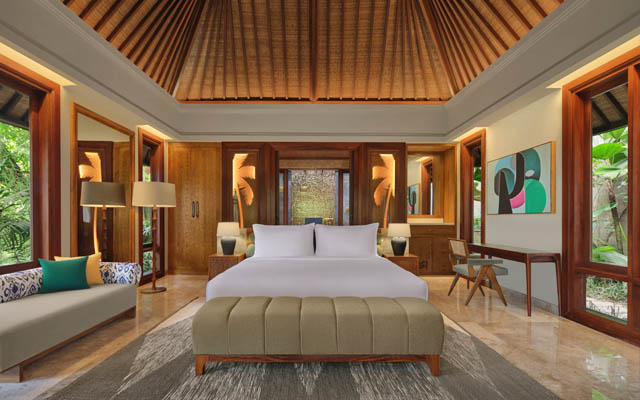
Sentosa Seminyak to carry Mantra Group’s Peppers brand

0

MANTRA Group today announced that Sentosa Seminyak in Bali will be rebranded as Peppers Sentosa Seminyak in March.

The rebranded property is Mantra’s second in Indonesia after the Mantra Nusa Dua, which debuted in late 2012.

Peppers Sentosa Seminyak comprises 39 three-, four- and five-bedroom luxury villas, each featuring a private pool, kitchen and living areas. Other facilities on-site include Luke Mangan’s signature Salt tapas and bar, and a spa.

Another two Peppers and Mantra properties in Indonesia are in the pipeline and will be announced in 1H2014.

Reopening of Solo airport postponed again

0

SOLO’S Adi Sumarmo International Airport has been denied clearance for take-off once again as volcanic ash from the Mount Kelud eruption continues to linger, forcing authorities to push its reopening to tomorrow.

Speaking at a media conference in Solo, Muhammad Alwi, head of airport authority area three, Ministry of Transportation, said the air around the Solo airport was not free of ash yet, which could affect aircraft engines.

This is the second time the Solo airport’s reopening has been postponed. It was originally scheduled to resume operations today, alongside Adisucipto International Airport in Jogjakarta (TTG Asia e-Daily, February 17, 2014), which opens at noon.

Separately, Garuda Indonesia has announced it will recommence services to and from the Jogjakarta airport today, with the first flight scheduled to depart at 12.05 for Jakarta.

From Jogjakarta, Garuda has 20 flights daily to Jakarta, six to Bali and two to Balikpapan, all roundtrip.

Accor takes Kakadu hotels under its wing

0

ACCOR will replace InterContinental Hotels Group in managing the reknowned Crocodile Hotel and Cooinda Lodge in Australia’s Kakadu National Park, Northern Territory and put greater emphasis on the indigenous tourism experience.

The hotel operator has signed an MoU with the owners of both properties to take over management duties effective from April 1 this year.

Both the 110-room Crocodile Hotel and 48-room Cooinda Lodge were the first major tourism properties developed by an indigenous organisation in Australia.

Rex Wild, chairman of Kakadu Tourism, commented in a press release: “What particularly attracted us to Accor is its championing of indigenous employment, which is a fundamental objective of the operation of the two properties.

“We already have extensive involvement of indigenous Australians in our tourism operations, but we believe we can increase the development of long-term, sustainable careers as a result of our association with Accor.”

Wild noted that the stronger Australian dollar and Asia’s rise in popularity for tourism have impacted traffic to Kakadu, but believes “Kakadu is one of the world’s most significant tourism destinations and there is vast potential to grow visitation from both overseas and locally”.

The current managers of the two hotels will continue under Accor management.

Sporting highlights to pump up Gold Coast branding internationally

0

TWO upcoming major sports events will give the Gold Coast a significant boost in its branding as a business events destination, said Gold Coast Tourism Corporation chief executive, Martin Winter.

The Australian city will host the 2014 Pan Pacific Swimming Championships in August and the 2018 Commonwealth Games in April.

“(These games) give us a big opportunity to attract a myriad of business events in allied activities, such as sports science and sports medicine meetings and conferences,” Winter said, adding that tourism and related businesses in the city and its surroundings will benefit from “big teams that come to the Gold Coast in the lead up to the games for training and acclimatisation”.

Although athletes participating in the Commonwealth Games will be housed in a Games Village equipped with some 8,000 dwellings, hotels in the destination will benefit from these advance teams, said Winter.

“There are approximately 65,000 beds in the Gold Coast – more than what’s available in most other capital cities – which will provide sufficient accommodation (for the advance teams),” he explained.

Although Winter acknowledged that the city will be packed out and accommodation capacity stretched during the games, he believes the impact on business events will be minimal as events unrelated to sports and the games will likely be held “at a different time”.

Winning the games’ hosting rights also presents the Gold Coast with new opportunities to market itself to international consumers.

“The Gold Coast is given an 11-minute opportunity during the Glasgow 2014 closing ceremony to promote the destination and the next Commonwealth Games. Besides that, we will have ground presence in central Glasgow where people can go and get information on the 2018 Commonwealth Games,” he said.

“A string of activities” will be rolled out to promote the destination and the 2018 Commonwealth Games, but details can only be revealed after the conclusion of the Glasgow edition, which will run from July 23 to August 3.

Value of international conferences, Asian participation up: latest Melbourne study

0

THE second Business Events Week opened yesterday with the Melbourne Convention Bureau (MCB) releasing results of new research, which finds that the value of international conferences to the local economy has significantly increased and Asians now form the largest proportion of international delegates.

The Melbourne Convention Delegate Study 2013, now in its fourth edition, was commissioned to examine the conference delegate’s experience in Melbourne and the economic value driven from their attendance to the state’s economy.

The study covers the period from May to December 2013 and contains data gathered from 3,846 surveys completed by delegates from 150 countries, attending five major conferences in Melbourne.

Sharing findings from the study at a press conference, Karen Bolinger, CEO of MCB, said: “Delegates are spending more than A$1,019 (US$920) a day on accommodation, dining out, domestic air travel and recreational activities in Melbourne, representing a 28 per cent increase from the 2010 study.”

“Much of this spend is going straight into Victoria’s small to medium businesses and delivering business into the tourism sector in traditionally off-peak periods,” Bolinger added, offering the World Diabetes Congress 2013 in December as an example.

“The event generated 50 per cent of occupancy for hotels and Melbourne Convention Exhibition Centre (in December), which would otherwise be quiet at that time of the year,” she explained.

The study also revealed that the majority of international delegates – 71 per cent – were new visitors to Australia and half would not have visited the country in the next three years had they not been attending a conference in Melbourne.

Asian delegates formed 49 per cent of total international attendance, while China and India were the largest source markets for Melbourne.

Bolinger also shared that 28 per cent of all international delegates were accompanied on their trip to Melbourne, with the average number of accompanying persons standing at 2.8 delegates, as well as that delegates and their companions had extended their trip beyond Melbourne city.

Thirty-eight per cent of respondents explored regional Victoria before or after the conference, and a close 36 per cent visited other parts of Australia. Sydney was most popular for extensions, garnering an 83 per cent vote.

Respondents also said that event content was most crucial in their decision to attend a conference in Melbourne.

Concluding the presentation, Bolinger said: “Major conferences may be overshadowed by sexier consumer events like the Australian Open (Tennis Championships), but their economic value is on par with consumer events and maybe even more.”


Myanmar seeks international help for community-based tourism

0

MYANMAR needs the experience and expertise of international organisations in order to develop community-based tourism systematically, said Myanmar’s minister of hotels and tourism, Htay Aung.

Speaking at the official opening of the second Myanmar Hospitality and Tourism Conference today at Traders Hotel in Yangon, Htay Aung said community-based tourism was a suitable way for locals to participate in the tourism economy in rural areas.

He cited hill tribes near Kyaing Tong in Shan state, the local villages of Kalaw, Aung Bann, Nyaung Shwe and Inle Lake as potential sites.

Myanmar has also developed a Policy on Community Involvement in Tourism which will ensure tourism stakeholders take active responsibility in addressing sustainable development.

“In this context, we need the experience and expertise from the international organisations,” said Htay Aung.

Phyoe Wai Yar Zar, chairman of Myanmar Tourism Marketing said Myanmar still faces challenges in infrastructure, tourism knowledge and awareness of the positive and negative impacts of tourism.

“Community-based tourism in Myanmar is still in an embryonic stage. We are still trying to break new ground. Local people in rural regions should be able to manage tourism activities, operate the business and share the benefits from those tourism activities equitably,” he said.

Czech Republic steps up presence in Asian markets

0

CZECHTOURISM is on a drive to attract more visitors from Asia-Pacific with workshops planned for the trade in Hong Kong, Taiwan and Australia; fam trips; tradeshow participation at ITE Hong Kong; and a roadshow in Australia.

Overseeing the markets of South China, Hong Kong, Taiwan and Singapore, Jan Urban, said: “Apart from traditional hotspots like Prague, Kutná Hora, etc, we will promote Valtice, a romantic garden area with vineyards, castles and wine cellars in caves. We will target FIT travellers in 2014 as it’s (an important) travel trend for the next three to five years.”

Asian traffic accounts for less than one per cent of total arrivals to the Czech Republic. Europe contributes the most visitors, with Germany at the top, averaging five million arrivals per year.

“But it’s risky to concentrate on only one area. That’s why our head office is eyeing the Far East,” added Urban.

China is the country’s largest source market from Asia. Taiwan sends about 70,000 visitors and Hong Kong, one-third of that.

CzechTourism opened an office in Shanghai in 2012 and Seoul in 2013.

Preferred Hotel Group gains foothold in 4 new markets

0

PREFERRED Hotel Group has struck out into Myanmar, Vietnam, Kunming and Bintan in a tie-up with Keppel Land Hospitality Management.

This grows the group’s Asian portfolio to 108 properties strong.

Through the collaboration, Preferred Hotel Group will take over representation of Sedona Suites Ho Chi Minh City, Sedona Hotel Mandalay, Ria Bintan Golf Club, Sedona Hotel Yangon and Spring City Golf & Lake Resort Kunming . The first three will be members of Sterling Hotels, while the last two, members of Summit Hotels & Resorts.

Josephine Lim, regional director, South-east Asia, Preferred Hotel Group, said: “This partnership with Keppel Land Hospitality Management is a pivotal turning point as we strive to achieve our goal of strategically expanding our brands in emerging markets across Asia-Pacific.”

“There has been increasing demand among both leisure and business travellers for new options in these destinations, in particular Vietnam and Myanmar, and we look forward to a long and mutually beneficial partnership supporting the growth of both companies across Indochina.”

No breather for the Maldives as bed tax returns

0

MALDIVIAN tour operators have expressed concern following the return of a bed tax that was meant to have been laid to rest in 2013.

The US$8 tax per bed per night, which was allowed to lapse in December, was restored last month and will be discontinued only in November 2014, when national GST rates rise from eight to 12 per cent (TTG Asia e-Daily, June 13, 2013).

Shafraz Fazley, managing director of Viluxor Holidays, said ad hoc tax changes cause a lot of operational issues, as brochures have been printed at considerable cost, particularly for UK and China clients.

Mohamed Ali, secretary general of the Maldives Association of Yacht Agents, said operators with two- or three-year contracts have been put in a spot, as they had planned rates sans bed tax.

But Maldives Association of Tourism Industry’s secretary general, Ahmed Nazeer, said hoteliers were in agreement with restoration of the taxes, pointing out that they were required to continue social welfare schemes in the Maldives.

David Kevan, of UK-based Chic Locations, noted that the four percentage point increase in GST in November will add about 125 pounds (US$210) to a seven-night holiday, which most clients will find easy to absorb, particularly in the winter season.

MAI sets up JV for Japanese inbound

0

MYANMAR Airways International (MAI) signed last Friday an MoU to set up Myanmar Airways International Japan with Hama Inc, a Japanese company that handles a range of businesses including tours and travel.

Aye Mra Tha, marketing and public relations manager for MAI, said the collaboration was mainly to attract the increasing number of Japanese travellers to Myanmar.

“Under this agreement, we will open an office in Osaka and another in Tokyo later. Those offices will offer different services (from MAI in Myanmar) such as charter flights to Myanmar and ticketing,” she elaborated.

Aye Mra Tha added: “We also expect to launch direct flights between Yangon and Tokyo by June this year. So this agreement would also be aiming to (support and encourage plans for more) daily scheduled Japan-Myanmar flights.”

MAI’s direct services to Siem Reap and Phnom Penh would make it convenient for Japanese travellers coming to Myanmar to also swing by Cambodia.

MAI currently operates only charter flights to Japan. Other destinations in its network include Bangkok, Singapore, Kuala Lumpur, Guangzhou, Gaya, Phnom Penh and Siem Reap.

Japanese visitors to Myanmar numbered 66,772 last year, making it the second largest Asian source market after Thailand (TTG Asia e-Daily, February 14, 2014).