TTG Asia
Asia/Singapore Monday, 27th April 2026
Page 2087

Full House

0

Having picked up from the twin disasters in 2011, Japan now faces another problem, albeit a more welcomed one – that of too many tourists, too little infrastructure.

17apr-kyoto-japan-36728274_xl_cmyk

Recovery was the name of the game for Japan after the twin earthquake and tsunami disasters of 2011, when the number of overseas visitors slumped to 6.2 million.

In a sharp reversal of fortunes, Japan has since received an all-time high of 13.4 million foreign travellers in 2014, an impressive three million increase from the previous year.

The upbeat figures have continued into 2015, with a record 1.2 million foreign arrivals in January alone, a 29 per cent hike from the same month in 2014.

Japan’s inbound tourism sector benefited from a combination of positive factors: easier visa requirements for visitors from South-east Asian nations, an increase in flights operated by LCCs and additional duty-free shopping opportunities.

The single largest reason for last year’s record-setting figures, however, was the dramatic weakening of the yen, which has made Japan an affordable destination for vast numbers of middle-class travellers from Asia and farther afield.

Research by the Japan National Tourism Organization (JNTO) shows a 40 per cent increase in arrivals from South Korea that was in part driven by an increase in LCCs serving Japanese destinations.

Top market Taiwan was also up 20 per cent in 2013 to hit 2.8 million, while Chinese arrivals surged 83 per cent to reach 2.4 million.

Mamoru Kobori, senior executive director, JNTO, told TTG Asia that longhaul arrivals are similarly faring well, with the added advantage that visitors from North America and Europe tend to stay twice or thrice the duration of Asian tourists.

Australians too appear to have fallen head over heels for Japan’s skiing opportunities, while 2014 also saw a 35 per cent spike in arrivals from Spain, though the reasons are unclear.

To meet “positive demand” from longhaul travellers, All Nippon Airways added services from London, Paris, Vancouver and Frankfurt last year, in addition to a new direct flight to Munich, said Ryosei Nomura, a spokesman for the airline.

“We will be launching services from Haneda International Airport to Houston and Kuala Lumpur in the first half of 2015,” said Nomura. “We are also trying to take advantage of Japan’s geographic position to become the key transit point for travellers going between destinations in Asia and North America.”

Hiroyuki Seishi, a spokesman for the Japan Association of Travel Agents, has noted the “positive effect” of a weak yen on domestic travel, as more Japanese now take vacations closer to home.

On the other hand, the upsurge in visitor numbers, both domestic and international, has revealed a number of areas in which the domestic travel industry needs to up its game, including the provision of additional accommodation facilities to meet demand, more professional guides and interpreters, and extra signage in more languages.

“Our occupancy rate is at 100 per cent for a good part of this season because of the popularity of the cherry blossom season with both domestic and international travellers,” said Junko Kajihara, a spokeswoman at the 57-room Four Seasons Hotel Tokyo.

“Tokyo definitely needs more rooms, especially as we run up to the Olympic Games in 2020,” she said. “And that’s not just in the luxury, high-end sector of the market. The city needs more budget accommodation and business-type properties as well.”

Recent additions to Tokyo’s hotel landscape include the Millennium Mitsui Garden Hotel and Hotel Unizo Ginza Ichome, while Aman Tokyo opened in late December last year.

Meanwhile, Hotel Gracery Shinjuku, Hotel Sunroute Ginza and Richmond Hotel Premier Tokyo Oshiage are due to open by this year-end.

The problem is often not just a shortage of rooms, James Mundy, head of marketing for UK-based InsideJapan Tours pointed out, but sometimes a lack of double beds – a particular problem for honeymooners.

“We have been taking groups to Japan for 15 years now, working with suppliers that range from the top international hotels to family-run ryokan, and we have seen a definite increase in the popularity of Japan as a destination,” he added.

“Right now, for example, it’s cherry blossom season in Japan and I have been trying to find a hotel room in Tokyo and it is proving impossible,” he said.

“That’s a testament to Japan’s popularity, but you would also think that there would be a hotel somewhere in a city the size of Tokyo.”

Another issue has been a lack of signage in foreign languages outside of major urban areas, although Mundy insists that travellers tend to see that as “all part of the experience.”

JNTO is aware of the issues that need to be addressed, said Kobori, and is trying hard to meet the government’s target of 20 million foreign visitors in 2020.

“We have so many visitors at present who now want to go to Tokyo, Kyoto and Osaka that the hotel room occupancy rate is running at 90 per cent at peak times of the year,” he said.

“What we want to do is to encourage more visitors to get away from that traditional route and go to less well-known parts of Japan,” he said.

“Japan has so many great and unique attractions that will appeal to foreign visitors and we feel it is just a case of letting them know about all the opportunities that are available.”

This article was first published in TTG Asia, April 10, 2015 issue, on page 4. To read more, please view our digital edition or click here to subscribe.

The leisure side of Guangzhou

0

The local trade wants to prove that Guangzhou is more than just a busy transport and commerce hub, with plenty of attractions that will be of interest to FITs.

17apr-guangzhou-33839543_xxl

Guangzhou is China’s third-largest city, an important centre of foreign commerce in Southern China and the cradle of Cantonese culture – all signs pointing to a strong tourism sector.

Three million international visitors came to Guangzhou last year, according to the Guangzhou Hotel Association, a 7.6 per cent increase over the 2.8 million in 2013.

The city is also the third most-visited destination on mainland China after Shanghai and Beijing, says the China National Tourism Administration, though the city’s image as a commercial and industrial centre has persisted.

Exo Travel China believes in the potential and “pulling power” of Guangzhou. Managing director Olivier Marchesin said: “People consider Guangzhou in general as a big industrialised place with possibilities for doing just a little more than half-day tours around the historic Shamian Island…but Guanghzou is much more than that.”

Marchesin pointed out that many of the city’s attractions are easily covered on walking tours, while heritage attractions including Hakka villages and the well-preserved Diaolou watchtowers at Kaiping city are accesible from Guangzhou.

“This place just needs (tour operators) to promote it better. But please, let’s keep Guangzhou a place for FITs but not mass tourism,” urged Marchesin.

Echoing this was Century Holiday International Travel Group’s Guangzhou branch office general manager, Creamy Chen, who remarked that Guangzhou is home to many historical relics, some dating back 5,000 years.

Wholesale markets are popular among South-east Asians who snap up leather, fabric and electronic products made locally; and the Guangzhou Tower, built for the 2010 Asian Games, is now another drawcard for tourists, she said.

“Guangzhou is the gateway city to the Pearl River Data and our rail network makes it easy for FITs to travel to all the main destinations,” Chen added. “Moreover, high-speed rail now connects Guangzhou to Zhangjiajie, Xiaoguan, Wuhan and Guizhou, which may draw additional overnight stays to the city.”

Further improvements in transportation are also underway. Guangdong China Travel Service’s chief inspector, Vico Wei, elaborated that a high-speed train from Guangzhou to Guizhou was launched in late 2014, China Southern Airlines added a San Francisco link in December, while Baiyun International Airport’s third runway was launched in February.

“In 2013, we became the third city in China to introduce 72-hour visa-free transits. That was a good start, but we’re finding it too short for longhaul visitors who must adjust to local time, so we hope it can be stretched to five days,” he said.

Aloft Guangzhou Hotel University Park, which opened last year, also has its sights set on FITs. Said hotel manager, Sophia Wong: “We have observed that increasing numbers of FIT travellers are coming to the city, especially families during long holidays. The tourist scene has transformed dramatically since the successful hosting of the Asian Games, with a slew of international hotel brands also helping to lift the city’s image.”

This article was first published in TTG Asia, April 10, 2015 issue, on page 18. To read more, please view our digital edition or click here to subscribe.

Water wonderful stay at Alba Spa Hotel

0

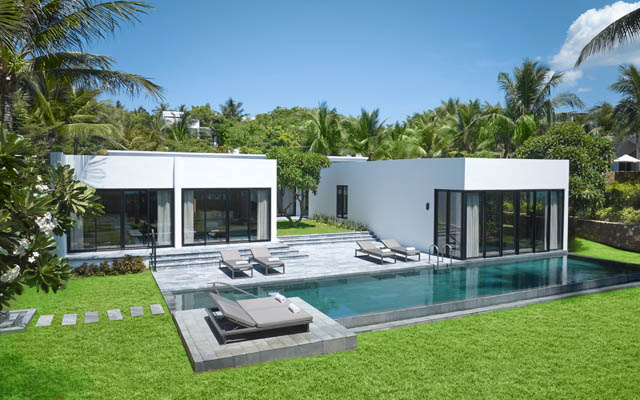
ALBA Spa Hotel is the new water-themed boutique hotel that opened in Vietnam’s imperial capital of Hue last month.

Owned and operated by Hong Kong-based Openasia Group, the 58-room downtown hotel features treatments and a mineral water Jacuzzi as a unique selling point.

Besides spa treatments designed in collaboration with spa guru Florence Jaffe, the hotel’s 16.5m2 Jacuzzi is partitioned into hot- and cold-water regions and filled with mineral water procured from a natural spring located 30km north of Hue.

Hijaaz Latheef, general manager of the Alba Spa Hotel, said in a release: “It’s not your everyday spa feature… It’s rare to find a hot water Jacuzzi and cold plunge pool set up like this.

“But it wasn’t built to make people say, ‘Wow, that’s interesting’. It was built for the same reason people have been going to hot springs for centuries – for the health benefits. Heat helps to our relax muscles and rid our bodies of toxins, while cold stimulates and invigorates. Our mission is to offer a wellness experience unlike any other, and having both (hot and cold) options underscores that.”

Water is also a key element in the hotel’s interior: the bubble-like décor in each room is inspired by water and Alba mineral water is used to water the plants used in the exotic spa treatments.

Standing at eight storeys, the hotel features a spacious meeting room and will eventually offer a rooftop bar with panoramic views of Hue.

Garuda boosts seat capacity between China and Indonesia

0

ANTICIPATING potential growth in traffic between Indonesia and China, Garuda Indonesia is adding some 150,000 seats on the route linking both destinations this year.

The addition in seat capacity will be deployed through scheduled charters, which will include destinations beyond the major gateways of Beijing, Shanghai and Guangzhou, where the airline has been operating regular services.

The plan is to connect Bali and Manado in Indonesia with cities like Chengdu, Chongqing, Ningbo, Kunming, Jinan, Harbin, Xi’an, Shenyang and Chengzhou.

Arief Wibowo, president and CEO, Garuda Indonesia, said: “Garuda, through its regular services, has provided some 950,000 seats on the Indonesia-China routes and with an additional 150,000 seats, we are deploying 1.1 million seats on this route this year.”

The move is part of the airline’s network-restructuring programme with route cuts or reduced frequencies to destinations such as Japan and Australia, and additional deployment to more promising destinations like China and the Middle East.

The first three months’ operation of the first scheduled charter – started in January between Bali and Beijing to capture the Lunar New Year holiday market – was considered successful.

“The contract (of chartered services) is for one year, but we are conducting quarterly reviews. The result (for Q1) was very good and we will continue with the other destinations in China, with a minimum twice-weekly frequency,” Arief added.

He expects the move will further expand the China market, in line with the Ministry of Tourism’s push for both leisure and MICE arrivals from China to reach a combined two million this year.

While MICE statistics were not yet available in Indonesia at press time, total arrivals from China last year had reached 959,231.

Welcoming Garuda’s additional seat capacity, Saraswati Subadia, director of sales for MICE at The Westin Resort Nusa Dua, Bali, said: “We saw the MICE market from China grow 15 to 10 per cent in 2014 compared to 2013, and looking at the forward bookings we have so far, we are expecting 20 to 30 per cent growth this year.

“The additional seat capacity is always welcome. What we need to do now is collaborate among the MICE stakeholders to grab the market.”

Read the full story in the TTG Official Show Daily ­– IT&CM China 2015

China, India drive SITE’s Asia reboot

0

SITE will be supporting Asian chapters with “a strong incentive travel training and certification curriculum to capitalise on fresh opportunities to build a strong Asian community”, according to Kevin Hinton, chief excellence officer.

With India hosting SITE’s Global Conference 2015 and Rajeev Kohli, joint managing director of India’s Creative Travel, assuming the 2016 SITE presidency, Hinton said the developments are providing the opportunity to further build a strong Asian community.

“We are very excited about his (Kohli’s) leadership,” Hinton added.

He also reported that SITE China Chapter is experiencing a strong resurgence with a new board of directors who are bringing a lot of new energy, ideas, members, and value to the incentive market in China.

“Our strategy is to support these local efforts with a strong incentive travel training and certification curriculum. We see a strong inbound and outbound market for China and are here to support the sustained growth of both,” he said.

“In the past, we have had a chapter in Singapore and we are keen to build a strong local community there as part of our regional Asian strategy, which will focus on education, certification events and tradeshows.”

Alicia Yao Hong, general manager, IME Consulting, is SITE China Chapter vice president and a SITE International board member.

Yao said the new board comprises MICE industry professionals who are young, international-minded, fully aware of SITE’s core, and devoted to the chapter’s development. The chapter’s objective in 2015 is to grow membership.

Yao pointed out: “It is important to educate the market that incentives deliver business results. It is not a luxury and it is not corruption. Incentive travel is a global modern enterprise management tool.”

Read more in the TTG Official Show Daily ­– IT&CM China 2015

Soft opening at the Lexis Hibiscus Port Dickson

0

LEXIS Hibiscus Port Dickson has soft opened on April 1 with 100 rooms, with more rooms opening progressively.

According to Steve Woon, vice president – sales & marketing, Lexis Hotels and Resorts, 50 more rooms are scheduled to open next month.

The property, situated along Port Dickson’s Pasir Panjang beach, is scheduled to fully open in 4Q2015 and will have 639 pool villas, with every unit equipped with its own dip pool.

The Hibiscus Grand Ballroom will have a seating capacity of up to 450 pax in banquet style and will be the only banquet hall in Port Dickson with a ceiling height of more than 7m. It can be partitioned into four separate rooms.

For meetings, the resort will have 10 functions rooms of varying sizes, a boardroom and a VIP holding room.

Saini Vermeulen, executive director of Malaysia-based Within Earth Holidays, said: “Lexis Hibiscus Port Dickson is a good product and for MICE groups, this can be combined with a city stay in Kuala Lumpur as Port Dickson is less than a two hours’ drive away. For local corporates, it makes a good weekend retreat.”

Minimal impact on MICE as Malaysia’s GST kicks in

0

THE devaluation of the Malaysian ringgit against major currencies is added value for Chinese MICE planners and organisers holding events in Malaysia.

At press time, the ringgit has depreciated 13.4 and 14.2 per cent against the US dollar and renminbi respectively compared with a year ago.

Ahead of IT&CM China 2015, Mint Leong, managing director of major Malaysian operator Sunflower Holidays, shared: “This is a good time to visit Malaysia because of the cost savings, despite the GST which came into force nationwide on April 1.

“A four-night programme in Malaysia with full-board, twin-share accommodation and one-day sightseeing tour in Kuala Lumpur offers savings of US$50 per person.

“When we visit corporate companies with our travel consultant counterparts in China, we pitch Malaysia as an affordable incentive destination where their top management can save money,” she noted.

Leong added the depreciation of the ringgit is partly the reason for the increased number of enquiries the company has received so far this year. The company has also intensified its promotional efforts and will host potential buyers on fam trips to Malaysia.

She said: “We see the ringgit depreciation as an opportunity to attract more MICE groups from China and we are going all out.”

Another inbound tour operator, Ping Anchorage Travel & Tours, is also taking advantage of the weakened ringgit, seeing it as a good opportunity to attract business from competing destinations like Thailand and Indonesia.

The company’s CEO, Alex Lee, said: “The impact of the GST is cushioned by the weakened ringgit and still translates to overall savings for MICE organisers.

“Thus, to draw them to Malaysia and for our company to stand out from the crowd, we have introduced creative itineraries in the East Coast for incentive travellers.

“The Chinese love the water so we offer snorkelling off Terengganu where the corals and marine life are great, followed by barbecues on quiet beaches and activities like tele-matches.

“A very small niche is interested in local culture, so we organise private viewings ofMakyung and Menora performances in Kelantan and Terengganu.

“Participants also get to interact with the artists. By being creative, we’ve seen some signs of recovery in the Chinese MICE market.”

Read the full story in the TTG Official Show Daily ­– IT&CM China 2015

Chinese tourists get 3-year visas to Australia

0

AUSTRALIA introduced three-year, multiple entry tourist visas for Chinese visitors to Australia in a move that’s been welcomed by the country’s tourism industry.

Last Friday’s announcement comes just a year after the same extension was granted to business visas for Chinese and three months on from a landmark air services agreement that will see air capacity to Australia triple over the next 18 months to 67,000 seats per week from China.

“With growing affluence and a rising middle class, China is a huge growth market for Sydney Airport, with Chinese passengers set to become our largest international visitor market by 2016,” said Kerrie Mather, managing director and CEO of Sydney Airport.

China is currently Australia’s second largest inbound visitor market. Close to 790,000 Chinese travellers visited Australia in the year to September 2014, with 47 per cent of arrivals being repeat visitors.

Andrew Robb, Australian federal minister for trade and investment, said the government is determined to help Australia capture more of the rapidly growing Chinese tourist market.

“Chinese tourists are increasingly more discerning and looking for an authentic Australian experience,” said Robb. “Repeat visitors are an increasingly important market sector as they tend to stay for longer periods and are higher yielding in terms of their spending.”

Managing director of Melbourne-based Australian Tours Management, Eng Waa Teh, said: “I believe it’s a great move by the Australian government to facilitate this visa assurance for the Chinese visitors. It will hopefully improve the numbers of Chinese visitors to Australia.”

FAA upgrades India’s rating following safety improvements

0

THE US Federal Aviation Authority (FAA) has restored India’s aviation safety rating to Category 1 one year after lowering it to Category 2, citing the lack of full-time flight operation inspectors as a key reasons.

India has taken corrective actions to address FAA’s concerns, said US Department of Transport secretary, Anthony Foxx, who made the announcement on his visit to New Delhi last week.

“(Return to Category 1 status) means our International Aviation Safety Assessment officials have determined that India complies with the safety standards set by ICAO,” Foxx said in a media statement.

India launched an aggressive overhaul of aviation safety standards after demotion to Category 2 last year, mandating a recertification of all local carriers and employing 35 full-time flight operation inspectors.

An FAA review took place in December 2014, followed by subsequent meetings with India’s Directorate General of Civil Aviation (DGCA) and a visit by FAA officials last month.

The new safety rating is expected to benefit Jet Airways and Air India, the two Indian carriers that currently fly to the US, as it permits carriers to add flights to the US and codeshare with US airlines.

However, according to the Centre for Asia Pacific Aviation (CAPA), the Indian government should be more proactive about aviation safety.

Associate manage of CAPA India, Vishal Bhadola, commented: “India’s safety oversight regime needs a fundamental restructuring as growth will bring more challenges, and our under-preparedness might become visible again if long-term strategic correction is not initiated.

“The first step is to have a technical professional head the DGCA. Without that, a real change will not be possible.”

The Siam, Dhara Dhevi Hotel partnership offers buy-2-get-1-free night deal

0

IN A new link-up between the two hotels, guests who book two consecutive nights at The Siam, Bangkok can stay one night for free at Chiang Mai’s Dhara Dhevi Hotel.

The offer runs from April 1 to September 30, 2015, with blackout dates from June 13 to June 15.

The complimentary night stay at Dhara Dhevi Hotel is only applicable for a Colonial or Villa Suite room and subject to availability.

For reservations, contact The Siam at reservations@thesiamhotel.com.