TTG Asia
Asia/Singapore Wednesday, 1st April 2026
Page 1707

Hard Rock picks ex-Sands boss to head new Japan unit

0

ed_tracy_headshot-36-3

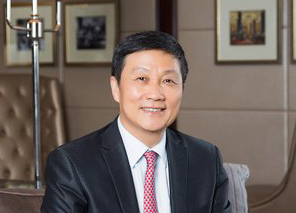
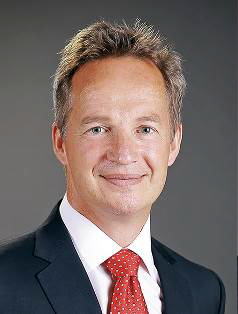
Hard Rock International will launch Hard Rock Japan with casino maestro Edward Tracy as CEO to support the new division and growth plans in Asia.

With the recent passing of Japan’s Integrated Resorts Promotion Bill, the company intends to apply its hospitality and entertainment expertise in the country and be recognised as a major contender among the bidders for resort licences.

Prior to Hard Rock, Tracy headed Sands China, a subsidiary of Las Vegas Sands, in July 2010 as its president and COO before becoming the company’s CEO in July 2011.

He had previously served as president and CEO of Capital Gaming, a multi-jurisdictional manager of regional casinos, and was also president and CEO of the Trump Organization.

Hard Rock has over 30 years of experience in the country, having opened its first Japanese cafe in Tokyo with long-time partner, WDI Group, in 1983. The company has 24 hotels and 11 casinos around the world.

Singapore to paint brighter picture of design festivals

0

mark-yong
Yong: Power of design tourism is something that we have to ride on

Singapore’s art and design festivals are gaining the support of Singapore Tourism Board (STB), which is hoping to position the city-state as Asia’s design capital given its location and accessibility in the region.

Joint efforts to promote key events during the Singapore Design Week (SDW), from March 3 to 12, to the global audience are underway between STB and organisers Design Singapore Council.

Andrew Phua, director of exhibitions and conferences with STB, said: “STB promotes the SDW through our regional offices, as well as our key partners which include design-related trade media, associations and travel agents, as part of our overseas marketing and promotional efforts to profile Singapore as a business events and leisure destination.”

At SingaPlural, SDW’s anchor event, tourists make up 15 to 20 per cent of the total 28,000 visitors.

The event’s chairman, Mark Yong, said that the “power of design tourism is something that we have to ride on, as design festivals are becoming important tourist events”, with more tourists in the recent years not only travelling to see the sights but for events and festivals as well.

Now in its sixth edition, SingaPlural has developed into a holistic festival with more global names like Uniqlo and Studio Architetto Egidio Panzera among its partners.

Yong believes the presence of internationally renowned partners will help to grow foreign attendance. “International partners have their own social media outreach programmes, their own ways of marketing (and) their own fans. With Uniqlo coming onboard this year, the (global reach) will be tremendous,” Yong said.

While Singapore has an array of year-round art and design events, and is a UNESCO Creative City of Design – a title earned in 2015 – few overseas travel specialists that TTG Asia spoke to are aware of these unique selling points.

Philippine-based Shroff Travel’s spokesperson, Kristine Shroff, opined that creating tour packages catered to design festivals or having conventions to educate and connect with travel agents could have a huge impact on drawing the design-savvy crowd from the region.

M Zaki, president of RZ Travels in California, who has not seen promotions of design festivals outside of Singapore, believes that event organisers and STB should invest more on above-the-line advertising.

Industry leaders oppose Trump’s travel ban, but no impacts on Asia tourism yet

0

trump_online

The 90-day ban on travellers from seven Muslim-majority countries entering the US has riled the global travel community, with many industry leaders calling for the move to be repealed.

Following Trump’s executive order on January 27, World Travel & Tourism Council president & CEO, David Scowsill, criticised the move as a violation “against the fundamental right of freedom to travel”. He elaborated: “WTTC believes that all people have the right to cross international borders safely and efficiently for business and tourism purposes.”

The “misguided” ban could tarnish the image of the US as a tourist destination and risk impacting its tourism arrivals, forewarned PATA CEO Mario Hardy. He further highlighted that “the majority of terrorist attacks in the recent past have been perpetrated by homegrown, radicalised nationals of the country involved”.

While Trump’s executive order has caused chaos across the airlines and travel world, agents in Asia-Pacific so far have not seen any fallout on their business.

Haydn Long, global media & investor relations manager for Flight Centre Travel Group, sees limited impact on the Australian trade. He said: “Some concerns have abated in recent days, given that it now appears that dual citizens (holding Australian passports) can still travel. The biggest issues seem to be confusion and misinformation.”

Nalin Kapadia, chairman, Incredible Vacations India, commented: “It is too premature to assess the impact of Trump’s travel ban. In the short run travel to US will be affected but the lure to visit US will push Muslims from other nations to try harder for visas. There certainly is an opportunity for other markets like Europe, China and Russia to attract Muslim travellers.”

Others shared that Muslim tourist traffic could be diverted to Asia from the US.

Nicholas Mulley, COO for Destination Asia, added: “We expect to see a rise in Muslim travellers to Asia due to (relative) safety and stability, combined with a tolerance towards different religions and extensive halal food options in Malaysia, Indonesia and across the larger cities in East/South-east Asia.”

Likewise in Japan, there are hopes that Muslim travellers may begin favouring Japan as a destination over the US, according to Tatsuki Miura of H.I.S.’ corporate planning department and Keisuke Nomura of Nippon Travel Agency.

Furthermore, the US remains an aspirational destination for many Asian travellers. Alicia Seah, director of PR and communications, Dynasty Travel, said: “With (the right) co-ordination and consistent operational information with regard to its travel ban and visa issues, the US will remain an attractive destination to visit with its world renowned theme parks, national parks and night entertainment in the West Coast.”

However, some agents are bracing for more stringent visa procedures to the US in the days ahead. A Philippine travel consultant, who requested anonymity, is expecting the US to restrict the number of approved visa applications for Filipinos to curb undocumented immigrants in the country.

– Reporting by Adelaine Ng, Xinyi Liang-Pholsena, Barathi Narayan, Rohit Kaul, Rosa Ocampo and Julian Ryall

amba Taipei Songshan

0

Unveiled in July 2016, the hotel did justice to amba’s homegrown, new-gen brand identity, with a great location and functionality to boot, finds Prudence Lui

Location 
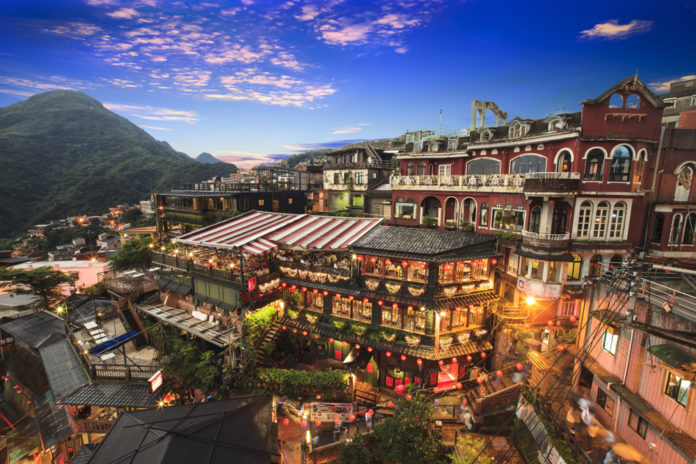
amba Taipei Songshan occupies the top floors – levels 17 to 21 – of the mixed-use Ruentex Songshan Station Complex, adjacent to Taipei Metro’s Songshan Station and connected to City Link Mall by a sheltered bridge on the third floor.

Moreover, the Songshan neighbourhood is within walking distance of icons like Rainbow Bridge, Ciyou Temple and the Raohe Night Market for tasty local snacks and crafts.

Located in eastern Taipei, the hotel is only a 15-minute drive from Songshan Airport and just 10 minutes to Taipei 101, Xinyi commercial district and Nangang business district by free shuttle service.

Corner Taipei 101 View Room | amba Taipei Songshan Hotel

Room 
I stayed in the special Corner Extra Large 101 View room, the third largest room category at 40m2.

Space is ample, and so is the daylight from the glass windows looking out to Taipei 101 and Keelung River and mountains.

It was a nice surprise that the bathroom also provides a view of the river from the semi-open air bathtub. But as I was here in winter, I was happy to stay indoors for a quick shower.

As a tech-savvy traveller, I found the Wi-Fi and super high-speed data transfer rates, six power outlets and three USB charging ports to be very useful.

The hotel’s sustainable and green efforts include the use of eco-wood flooring in the guestrooms, and phthalate-free and recycled woven vinyl carpet in the corridors.

What impressed me were the fun magnetic door signs in place of paper ones allowing guests to denote room status.

F&B 
The 150-seat Que restaurant on level 17 is the only outlet in the hotel for dining and drinking. Still, you get enjoy the dramatic Taipei skyline and wood-fired meats and seafood – all responsibly-sourced and hormone-free – from this modern chophouse.

Guests can watch chefs in action in the open kitchen set in the middle of the restaurant. And since there is no room service in hotel rooms, guest may order from Que and pick up the order by themselves.

Facilities 
With up to 928m2 of versatile event space, the hotel can be ideal for creative meetings and special events.

For instance, the Que restaurant is designed with built-in facilities like speakers and can accommodate a 150-seat meeting while The Studio on level 17 is suitable for an intimate gathering of up to 10 guests.

I appreciate the ‘thoughtful extras’ which include a self-service laundry room, ice & water machine and 24-hour fitness room on level 18, plus an array of entertainment and fitness equipment available for rent, such as weights, yoga mats, board games and an Xbox console.

Set to be completed in 2Q2017 is a a communal games room featuring a ping pong table and with room for up to 18 guests.

Verdict 
Not only is the hotel is super conveniently located, it also caters to a perfect mix of fun and business needs.

No. of rooms 189
Rates NT$5,400 (US$168.90) to NT$8,200, subject to 15.5 per cent service charge and tax
Contact details 
Tel (886) 2 2525 2828
Email reservations@amba-hotels.com
Website: https://amba-hotels.com/en/songshan

Thamm expands role to become CEO of Carnival Asia

0

Carnival Corporation has appointed CEO of Costa Group, Michael Thamm, as CEO of Carnival Asia to oversee operations in China and the region as part of his expanded role.

Thamm’s added responsibilities include promoting strategic cooperation with the Chinese government and local business partners, as well as building a long-term, sustainable Chinese cruise industry.

Michael_Thamm

With a career spanning over three decades in the cruise and shipping industry, Thamm has served as CEO of Costa Group since July 1, 2012.

Automation and the hospitality industry

0

Given the high costs and manpower shortages experienced in the Singapore hotel sector, automation and hospitality are two words rarely used in the same sentence. Other industries have embraced automation, manufacturing has massively increased its productivity thanks to machines, and Robotics Process Automation (RPA) led by companies such as UiPath promises to replace the repetitive, rules-based tasks present in many financial institutions, yet local hotels seem to be free of such technology, despite the presence of many repetitive, rules-based jobs.

This could be about to change at both the front and back-end of our hotels. On the back-end, hotels employ staff who do a lot of manual, non-routine jobs, such as cleaning tables, cleaning hotel rooms, folding towels and tidying equipment etc. While these tend to be low paid, they are harder to automate than say the routine jobs found on the factory floor or accounting departments.

hotel automation copy

A few years ago, researchers at the University of Berkeley introduced us to Brett, a robot that could pick up and fold towels, and lay them down neatly on top of each other, taking about 24.5 minutes to fold each towel. While this may seem slow, to the point of ridicule, the fact that a robot is able to detect, scan and manipulate a ‘soft’ object is impressive. Fast forward a few years, and the robot is now able to connect Lego pieces, hang shirts on a hanger and fix a toy.

Most robot testing and successes to date have occurred in highly controlled environments, where there is more predictability. A hotel room, though, is what researchers would call an ‘unstructured 3D environment’, that is traditionally very hard for robots to navigate. What the Berkeley team are doing is developing a robot that can operate in this unstructured, real-life setting, where the environment is constantly changing and the robot needs to perceive and adapt to its surroundings. If robots can learn to do this, then we are one step away from automated housekeeping.

Hotel accounts departments are also ripe for automation. Dozens of employees are hired to process the hundreds of invoices, claims and bills that run through the hotel on a daily basis. This often requires little more than checking the invoice, copy-pasting data, transferring information – rules based, repetitive tasks. Robotics Process Automation (RPA) is software that uses computer systems exactly as a human does – via the user interface (e.g. Windows). Highly accurate, and never making mistakes, RPA does the monotonous tasks that humans simply are not designed to do, and can significantly reduce cost and improve efficiency for (often cash-strapped) hotels.

A good example of this is Pilot Travel Centers LLC, a US-based firm that, back in 2010, employed 80 clerks and salespeople to track and pay for thousands of goods, spending a combined 3,200 hours a week. Today, software does much of the work, and they now employ 10 clerks working a weekly total of 400 hours to pay the same suppliers.

Technology can now detect physical items too. SAP software allows Airline-service crews to scan the number of paper cups they bring into an airplane. Hotels still employ people to conduct inventory checks on a daily basis for everything from the amount of shampoo and soap to cans of tomatoes and bottles of olive oil. Counting and recounting stock takes hours, and is the kind of mundane

Lastly, on the front-of-house end, mobile check in should make life quicker and easier for many a jet-lagged traveller. Some hotels have employed mobile check-in for many years (see France’s Formule 1 Hotels, for example), and larger chains are beginning to improve their mobile check-in infrastructure (such as Starwood Hotels’ SPG Keyless check in). The business and service case behind mobile check-in is a no-brainer. Many of the guests forced to queue up to check-in at the Front Desk would have conducted mobile/online check-in for the flights that they flew in on, and a speedy process from hotel entrance to room would surely result in happier guests. Furthermore, the automation of the check-in process may result in a rethink of the role of the Front Desk, and Front Office staff, with the opportunity for turning this area into revenue generating space.

Hotels have been battling costs – from food and beverage to manpower – for years, and have done an admirable job of keeping them low, maximising revenue while ensuring service levels remain high. However, there is still room for improvement (pun intended!), and technology such as RPA, robots and mobile check-in will continue to develop, opening up more automation opportunities for hotels. Guests may still prefer the human touch, but behind the scenes, there are many areas where robots can play a vital role.


Article written by David Topolewski, CEO of Qooco

Home is where the trip is

0

oct-07-raini-croppedA heartwarming trend this Chinese New Year (CNY) is a rise in family trips among mainland Chinese travellers, which augurs well for the industry.

According to ForwardKeys, the fastest-growing segment this CNY is family travel of up to four people, which has increased 18 per cent and accounts for more than half (51 per cent) of the overseas travel pie this CNY.

What caught my eye is that a new generation of Chinese professionals who are working in first-tier cities in China, such as Shanghai or Beijing, or in other countries outside China, are not returning home for the Spring Festival, which officially starts from January 27 to February 2 this year. Instead, according to search engine Wego, they are flying their parents and extended family to the city they work in. The family then either stays put in the city for a holiday or travel to another destination for a vacation.

Several factors are helping to drive this trend. Chinese families are getting smaller. With one or two children now, compared with seven or more before, it is more feasible to get together in a different country.

The airline industry plays a huge role. There are new routes and improved connectivity. Seat capacity rose 370 per cent in January from China to Czech Republic, Spain 178 per cent, the UK 9.3 per cent and Russia eight per cent, according to ForwardKeys, which also notes that Europe is back in favour after a 7.4 per cent dip in 2016 most likely due to the string of terrorist attacks in several European cities. There are also more direct flights from second-tier Chinese cities to Asia, along with cheaper airfares. For instance, Hainan Airlines launched a direct flight from Changsha to Sydney last July with a promotional airfare of less than US$100. SilkAir launched a direct flight from Fuzhou to Singapore.

Asia has been receiving the largest chunk of CNY travellers and this year is no different. Ctrip’s top 10 overseas destinations this CNY are, with the exception of the US, Asian countries (Thailand, Japan, the US, Singapore, Australia, Malaysia, South Korea, Indonesia, the Philippines and Vietnam).

Visa relaxation is also helping Asian countries to expand their share of the CNY travel pie. Among examples, a 10-year visa, effective last November, allows mainland Chinese travellers multiple entries to the country. Cambodia grants Chinese a three-year multiple-entry business and tourist visa from last September. Malaysia introduced e-visa services for them last March.

All the stars seem aligned for this trend to grow further and industry members should be well-equipped to handle more family travel. Take a leaf from the cruise industry. It is building new ships or reconfiguring existing ones to cater to multi-generational travel by mainland Chinese guests, for instance having more inter-connecting rooms.

My team and I wish all our Chinese readers family unity and togetherness in this Year of the Rooster.


This article was first published in TTG Asia February 2017 issue. To read more, please view our digital edition or click here to subscribe.

Rudi Koppen passes away

0

koppen
Rudiger Robert Köppen

One of Asia-Pacific’s most memorable hoteliers, Rudiger Robert Köppen, 80, passed away on Sunday (January 29) after a brief battle following oesophageal cancer surgery.

Köppen was the first general manager of Holiday Inn chain’s first hotel in Hong Kong, the Holiday Inn Golden Mile, which opened in 1974.

He brought a taste of Germany to Hong Kong with restaurants such as Vienna Cafe and Baron’s Table at the hotel.

At heart a traditional German gentleman, he is remembered by many for his bronzy looks, flamboyance, professionalism and creativity.

Recalled Patrick Fiat, general manager of Royal Plaza on Scotts Singapore: “Rudi Köppen hired me in 1984. He was a great mentor and coach for my next 15 years with Holiday Inn in Asia, giving me the opportunity to work in marketing for a few years and the last 18 years at Royal Plaza on Scotts. Everyone who worked for Rudi has special memories of working with him. He was demanding but very loyal to his people. A lot of hoteliers in Asia started their career with Rudi.”

Added Gerhard Kropp, who worked with InterContinental Hotels Group and is now SVP Pino Hotels & Resorts Philippines: “I am very saddened by the sudden passing of Rudi. I have known Rudi since our Hong Kong days in the early 80s and we have been close and in touch even in his retirement.

“Rudi was an exceptional hotelier with foresight and a keen mind that developed Holiday Inn into a formidable hotel company in Asia-Pacific.  He was a strong leader with an extremely big heart and very people-orientated. Rest In Peace dear Rudi.”

The funeral will take place in a few weeks’ time and will be a private family gathering.

TTG Asia offers our condolences to his family.

Los Angeles icon to rebirth as Fairmont Century Plaza

0

fairmont-century-plaza
Fairmont Century Plaza concept art

Century Plaza Hotel in Los Angeles is slated to reopen in 2018 as the massive mixed-use Fairmont Century Plaza, Los Angeles, after Fairmont Hotels & Resorts signed an agreement with Next Century Associates for the revitalisation and management of the historic property.

The approximately US$2.5 billion redevelopment project will bring about 394 guestrooms and 63 branded residences within the original iconic tower, along with two new 46-storey residential towers with 290 residences, plus approximately 9,290m2 of boutique high-street shopping and expanded parking facilities.

Built on the former backlot of 20th Century Fox Studios, the hotel faces the famous fountains at the intersection of Avenue of the Stars and Constellation Boulevard, and is surrounded by prime offices, residences, entertainment, dining and retail venues.

Said Kevin Frid, chief operating officer, North & Central America, AccorHotels: “The Fairmont brand was born in California in 1907 and now, after more than a century of building an international portfolio… we are thrilled to return to our roots and expand our presence in the Southern California region.”

Fairmont Century Plaza will join Fairmont’s US portfolio including the flagship Fairmont Miramar San Francisco; Fairmont Sonoma Mission Inn & Spa; Fairmont San Jose in Silicon Valley; Claremont Club & Spa, a Fairmont Hotel in Berkeley; and Fairmont Heritage Place Ghirardelli Square, San Francisco.

Fairmont continues to expand globally with recent openings including Fairmont Quasar Istanbul, Fairmont Chengdu and Fairmont Fujairah in the Middle East. New Fairmont hotels scheduled to open in 2017 in Amman, Jordan; Riyadh, Saudi Arabia; and Austin, Texas.

Hotel distribution player SHR seeks stronger Asian foothold

0

dave-chan

Hotel distribution and services provider SHR, which has established its foothold in America’s hospitality sector, has set its sights on expanding into Asia-Pacific with the launch of a new Singapore office in October last year.

The company currently holds a market share of “five to 10 per cent” in Asia-Pacific and aims to join the likes of Sabre to become a major player in the region’s distribution scene, said Dave Chan, vice president, finance and corporate development, Asia-Pacific.

However, Chan admitted that it is an especially tall order to convince hotels in Asia to adopt a new system, attributing this to “culture” and resistance from “old-timers” in certain markets.

He told TTG Asia: “Japan and South Korea are very unique because they are so nationalistic. If you don’t speak their language or have local support, they won’t sign up with you.”

Plans are already afoot to set up an office in Japan solely to take care of the market, hire more sales staff and expand in the region.

SHR offers hotels easy control of the back-end system as well as its own chain functionality feature, stressed Chan. “Hotel chains can control the rates, marketing (message) and policy from the corporate office and push this down to all their hotels,” he added.

“You don’t need one team in every hotel (to take care of this) – just one in the corporate office will do. It’s a way for hotels to cut costs and streamline operations.”

Chan indicated that the system still allows hotel chains “leeway to change certain things” at the property level to take into account market or regional specificities.

He said: “Take Millennium & Copthorne (one of SHR’s clients) for example. They have 120 hotels in four continents, and can send out different policies for Europe and Asia from their corporate offices in London and Singapore.”