TTG Asia
Asia/Singapore Saturday, 4th April 2026
Page 1667

Genting takes agents, media to sea

0

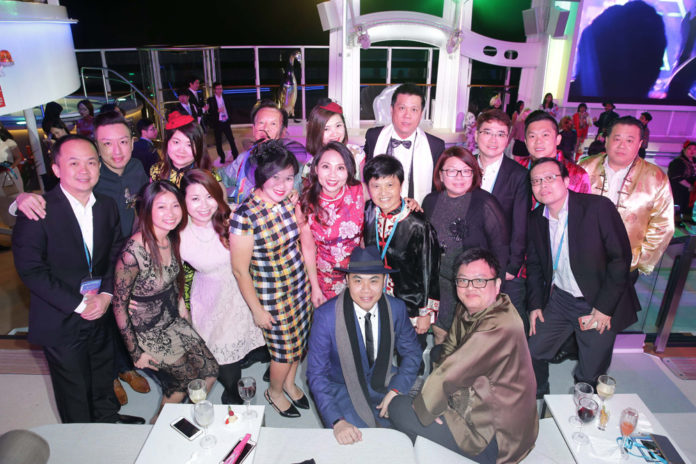
During its inaugural Agent and Media Partner Forum earlier this month, Genting Cruise Lines hosted over 350 senior executives, travel agents and media partners from across 11 Asia-Pacific countries onboard the Genting Dream.


At Zouk Beach Club

During the three-day event, guests were provided product updates such as SuperStar Virgo’s inaugural homeport deployment in Shanghai to Osaka, Tokyo, Mt Fuji and Kagoshima; SuperStar Gemini’s inaugural homeport deployment in Bangkok to Sihanoukville, Koh Kong Island and Ko Samui; and the Okinawa Festival taking place on Genting Dream throughout her summer sailings from dual homeports of Hong Kong and Nansha to Okinawa.

Guests also bonded over outdoor sports challenges and an outdoor cocktail reception at Zouk Beach Club, before finally basking in the atmosphere of the Golden Era at a Shanghai-themed gala dinner.

Macau steps up campaign to arrest Malaysian visitor decline

0

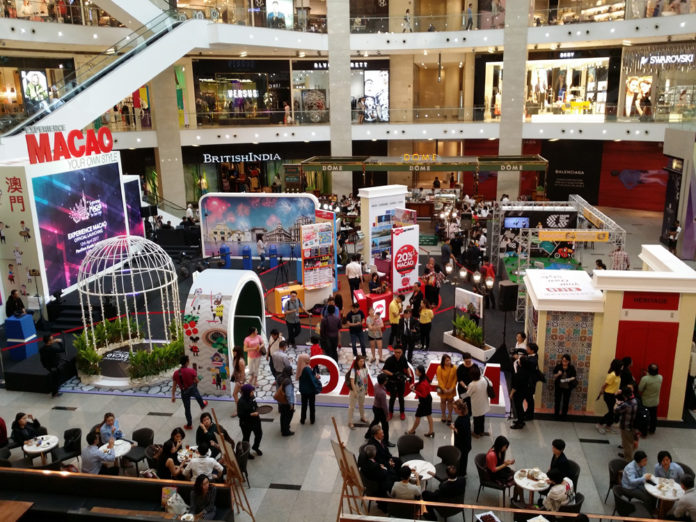
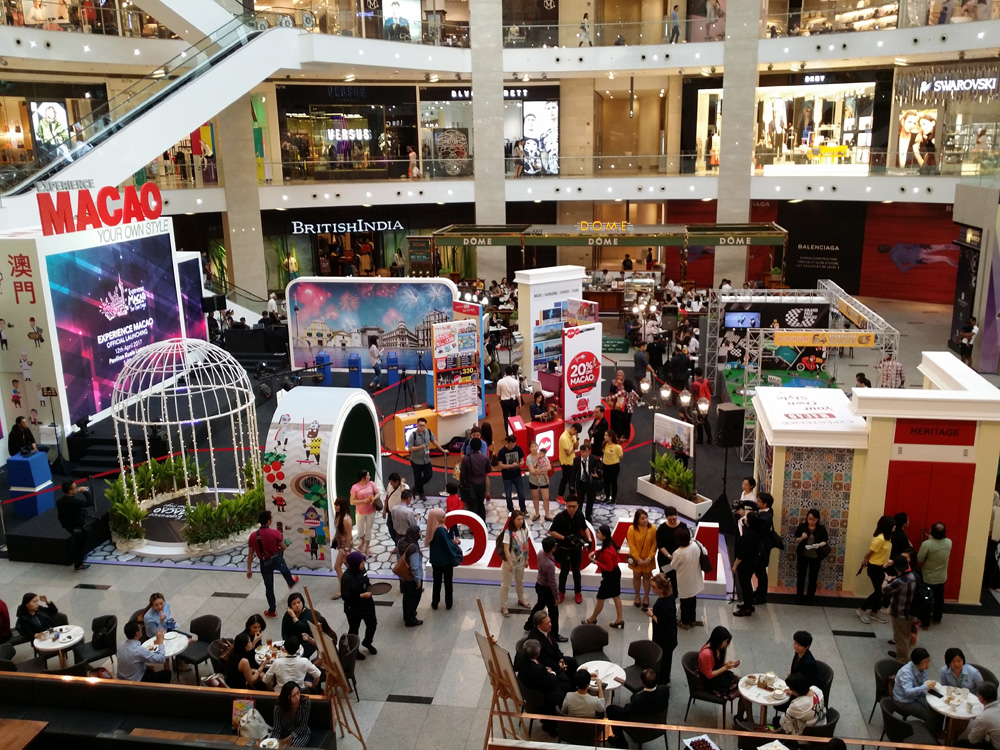
The Macao Government Tourist Office (MGTO) last week rolled out a major consumer campaign at Pavilion Kuala Lumpur to bolster interest in the destination, as Malaysia has posted a continuous year-on-year decline in arrivals since 2011.

Malaysia is among the top 10 source markets for Macau. However, arrivals from Malaysia declined 2.7 per cent from 2015 to 222,809 last year, a big drop from the 338,058 visitors in 2010. Maria Helena de Senna Fernandes, director of MGTO, said the decline was “partly related to economic reasons and we need to find new attractions and (tourism) products to attract repeat visitors.”


Campaign at Pavilion Kuala Lumpur

Tunku Iskandar Tunku Abdullah, MGTO representative in Malaysia, said Macau is now placing greater emphasis on Muslim-friendly tours as there are now seven halal-certified restaurants in the city.

To entice more potential visitors, the consumer exhibition broke away from traditional advertising and leveraged interactive technology like virtual reality and interactive light installations to allow visitors to “experience” Macau’s key festivals such as the Macao International Marathon and 64th Macau Grand Prix.

Emily Tan, manager at Prestige Vacation Network, received good response at the consumer fair and sold more than 300 packages, including mono Macau tours as well as five-day combination group tours to Zhuhai. Zhongshan and Shunde.

Another outbound agent, Esther Leong, ticketing and operations personnel at MJT World Vacations, said the agency’s Parents Day package combining Macau and Zhuhai was also fully booked.

A larger Marriott Asia-Pacific to meet for the first time

0

A larger Marriott Asia-Pacific will meet for the first time since Marriott International bought Starwood Hotels & Resorts, with CEO Arne Sorenson joining the gathering in Macau in April to chart ‘The Road Ahead’, theme of the meeting.

As to how much larger, the meeting will be attended by around 2,500 delegates, including Marriott general managers, HR and sales & marketing directors, along with its key corporate team members in the region. After the Starwood buy, Marriott Asia-Pacific consists of more than 550 hotels.


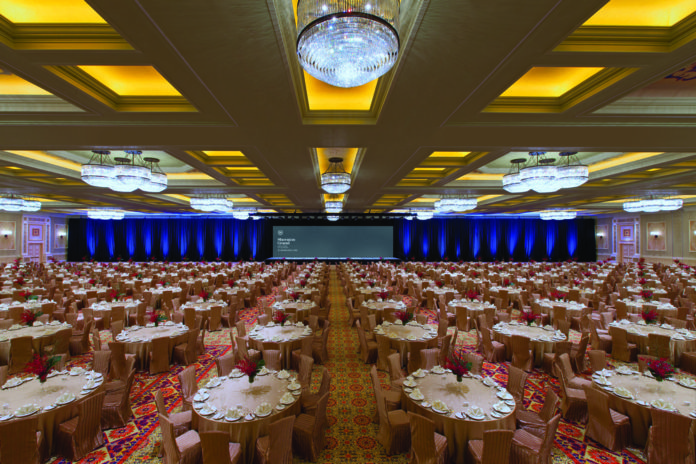
Kashgar Ballroom at Sheraton Grand Macao Hotel

The event will be held towards end-April at the largest Sheraton in the world, Sheraton Grand Macao Hotel, with the leadership accommodated at the St Regis, also the largest St Regis in the world and connected to to the Sheraton in Cotai Central. Between the two hotels, there is a combined meeting space of 15,500m2 and 4,400 rooms.

There is also a JW and a Ritz-Carlton in Cotai but “Sheraton is one of the few places where you can do large numbers”, said Janet McNab, managing director of the two hotels, when asked about details of the event.

She said the meeting’s structure is being driven by Marriott Asia-Pacific, which is putting “so much passion” into delivering a memorable event that also celebrates the merger.

“I sit on the weekly call and I think what they want to do is set the tone of what our new company is going to be like, take the best of one another’s culture. At the end of it, it’s also a getting to know you and the leadership better. And to do it so quickly after the close of the acquisition (is admirable),” said McNab, who rose through the ranks in a 25-year career with Starwood.

STB, SIA and Changi Airport in tripartite push for Singapore tourism

0

The Changi Airport Group (CAG), Singapore Airlines and Singapore Tourism Board (STB) will invest S$33.8 million (US$24.2 million) to renew a three-year partnership to promote Singapore as an inbound travel destination.

The joint effort will focus on marketing Singapore as a stopover and twinning destination to travellers globally, augmenting the previous approach of targeting travellers from specific longhaul markets such as the US and Europe.


Singapore Changi Airport

Another focus area is the broadening of a marketing programme to woo business and MICE visitors.

The partnership will also expand the Free Singapore Tour (FST), which provides transfer passengers with a taste of Singapore’s offerings, to include “more authentic experiences curated based on travellers’ interests”, such as a foodie tour, according to a joint statement by the partners.

FST drew 59,000 passengers last year, up eight per cent from the previous year.

“By collaborating closely with airlines and the travel industry, we can grow passenger segments, such as MICE and transfer passengers,” CAG’s CEO Lee Seow Hiang said, adding that the strengthened efforts follow “encouraging results from the current partnership”.

STB’s chief executive Lionel Yeo added that the partnership has been “a powerful one that has helped to boost Singapore’s tourism growth in the recent years”.

Annette J Wood, head of creative & marketing, Apxara Travel & Events

0

What tourism challenges is Malaysia currently facing?
Coming from a business events background, we face challenges organising events with a wow factor, especially in the Klang Valley.

The area is in dire need of good event spaces that provide sufficient facilities without breaking the bank. Due to certain regulations, there are still many government-maintained venues such as public parks that do not allow alcohol to be served. This limits event spaces to within the four walls of hotel ballrooms and restaurants.

Malaysia is fortunate to be home to rich, diverse cultures as well as influences from the colonial past such as Portuguese, Dutch and British. However, not enough is done to preserve our history. Colonial buildings and architecture have been lost in the midst of development and those still in existence are not being used for their potential.

This is sad because travellers want to see and experience Malaysia for what it really is. I feel the tourism products available do not represent our true culture and history.

If I had my way to improve things, I would… educate the relevant authorities on the importance of attracting business events tourists to Malaysia, the need for flexibility in allowing alcohol consumption, and creating event spaces that are unique to Malaysia.

I would also like to encourage the development of a new wave of tour guiding courses to bring fresh talent and ideas, and change the way we show our guests around.

I would like to see tour guiding courses introduced into the educational curriculum or as subjects in secondary schools, allowing the younger generation to showcase Malaysia from their perspective.
I would also give people the opportunity to participate in walking tours and cycling tours conducted by different generations of Malaysians who have differing travel experiences. I would like to encourage our people to become Malaysia’s ambassadors and engage them to conduct immersive travel experiences that allow guests to experience life as a Malaysian.

I would also like to see an improvement on the upkeep and maintenance of our existing tourism facilities and products.

Travel to Philippines scrapped as more countries issue advisories

0

A growing list of travel advisories against parts of the Philippines after a clash between the Abu Sayyaf terrorist group and the military left 10 dead has led to cancellations from the issuing countries and beyond.

Australia, Canada, New Zealand, France and the UK have warned against travel to areas in Mindanao and the Visayas.


Chocolate Hills in Bohol, Central Visayas

But Bohol Tourism Council chair, Lucas Nunag, expects the impact to be shortterm, saying: “The travel advisories and the actual encounter in Bohol have resulted in some, but not heavy cancellations.”

“The ASEAN meetings scheduled in Bohol this week will proceed and many of the participants will visit our popular attractions. The resorts still have high occupancy during Holy Week (last week) and tourism activities continue as usual,” said Nunag.

Blue Horizons Travel & Tours expects cancellations from Europeans, who are more sensitive to travel advisories and are mindful that trips will no longer be covered by insurance once a country issues them, said Marjorie Aquino, senior sales and marketing manager.

Even tourists from countries that haven’t issued travel warnings are daunted. An industry source shared that a group of travellers from Hong Kong and Singapore decided to cancel their trips to Cebu and Bohol at the last minute.

Philippine Tour Operators Association president Cesar Cruz said that it is “unfair” that the Philippines is being singled out as unsafe.

“Tell me, which country can (claim to be) safe after what happened in France, London, New York, Sweden and Spain? They are the epitome of safe countries but incidents also happened there. (Terrorism concerns) are a worldwide problem.”

In a statement, the Department of Tourism expressed “complete confidence that the Armed Forces of the Philippines and the Philippine National Police are on top of the national security situation in Central Visayas”.

It added: “We are actively coordinating… with our local and national security and law enforcement agencies who are fully capable of putting travellers’ concerns at ease.

“Proper authorities have assured that both international and domestic travellers may continue with their travel plans, even as we remind all stakeholders of usual safety precautions that must be routinely observed at all destinations.”

Garuda CEO replaced before his contract ends

0

Bank Mandiri director Pahala Nugraha Mansury has replaced Arif Wibowo as president and CEO of Garuda Indonesia.

Arif was appointed to the role in 2014. No reasons were given why he was replaced before the end of his five-year contract.


Arif Wibowo photographed at a meeting last year; photo credit: Garuda Indonesia

At a press conference held in March, Arif announced the airline’s 2016 net profit dropped 89 per cent, from US$76.5 million in 2015 to US$8.1 million last year.

Garuda’s board of management now includes new faces, including Helmi Imam Satriyono as executive vice president of finance and risk management, Nicodemus Lampe executive vice president of services and Nina Sulistyowati executive vice president of marketing and IT.

Hong Kong Airlines codeshares with Asiana

0

Hong Kong Airlines and Asiana Airlines have entered into a codeshare partnership, increasing flight options to passengers travelling between Hong Kong and Seoul.

With this partnership, airline customers can choose from five daily flights between the two Asian cities.

Li Dianchun, chief commercial officer of Hong Kong Airlines, said: “We launched the daily flight service from Hong Kong to Seoul last December, which was our first route to (South) Korea. From then we have been actively exploring ways to improve schedule options on this route.”

Flights are now open for sale.

Amadeus strengthens airlines business in Asia-Pacific

0

Amadeus has created a new position, head of commercial Asia-Pacific, airlines, saying the region is driving its airlines business into one of its fastest-growing business units.

The role is held by Cyril Tetaz, who retains his current role as regional director for Japan. He reports to Hazem Hussein, executive vice president, airlines, Amadeus Asia-Pacific, Eastern Europe and Turkey. Tetaz, who has been with Amadeus since 2004, will be directing all commercial relationships with Amadeus’ airline customers in the region.


Tetaz chosen for newly-created role in Amadeus’ airline businesss

Meanwhile, Jonathan Tong and Abdullah Ozkececi move to Amadeus’ Singapore hub as head of airline IT solutions and head of airline IT sales respectively for Asia-Pacific, Russia, Turkey and the Commonwealth of Independent States.

Singapore-born Tong moves back home after two years at Amadeus’ R&D hub in Nice. Ozkececi has been with Amadeus since 2011 and was head of airline commercial for Turkey and Ukraine.

Tong and Ozkececi succeed Charles Rogier and Christian Baillet respectively, both of whom have taken up leadership positions within Amadeus’ Central Europe airlines team.

Australia, Japan narrow gap with Singapore as best expat locations

0

Singapore remains the world’s most liveable locations for Asian expatriates, but the gap separating it from Brisbane, Sydney and Osaka is closing due to air pollution, according to the latest Location Ratings survey published by ECA International.

“With low crime rates, decent medical facilities and excellent infrastructure, it comes as no surprise why Singapore tops our rankings time and time again,” said Lee Quane, regional director – Asia, ECA International.


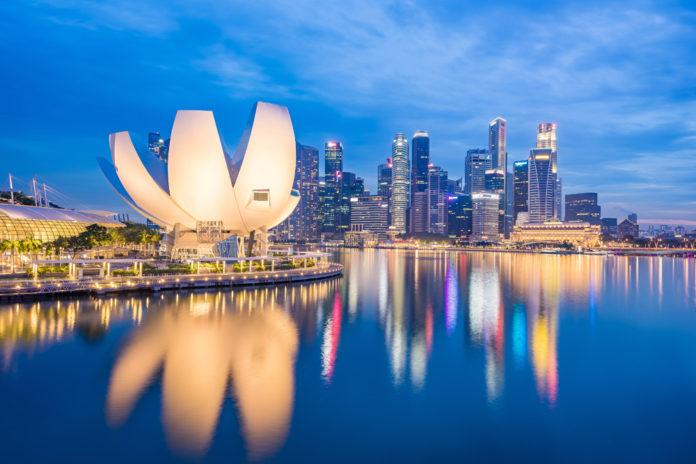
Singapore still the most liveable city for Asian expat; Marina Bay pictured

The bad news? “We have witnessed a gradual decline in Singapore’s overall quality of living in the past five years due to the deteriorating air pollution situation, while cities such as Brisbane, Sydney and Osaka have all improved in terms of their overall liveability,” Quane said.

Adelaide, Brisbane and Sydney occupy joint second place globally and in Asia-Pacific. Regionally, the most notable climb was by Australia’s Darwin, which rose from 24th place to 15th place in the global rankings as its housing situation has improved. Over the past five years, Darwin has climbed 39 places globally.

Osaka has the best living conditions of all locations researched in Japan, and is ranked fifth globally. All Japanese cities included in ECA International’s rankings are positioned within the global top 15 with Nagoya in at ninth; Tokyo and Yokohama sit in joint 11th position.

Hong Kong has fallen to 29th position in the global rankings and remains the 15th most liveable location in the Asia Pacific region. Back in 2013, Hong Kong was 11th worldwide and ninth in Asia-Pacific.

“The gap between Hong Kong and Singapore… has widened over recent years, due to worsening socio-political factors and curtailments to political freedom witnessed over the past 12 months,” said Quane.

Kuala Lumpur continued sliding downwards outside the global top 100. In 2013, the former was in 25th place regionally and 113th globally; this year, it came in at 27th and 118threspectively.

“In recent years, we have seen an increased threat from terrorism in Malaysia. While the Sabah region of the country is considered particularly dangerous for foreigners, risks have also increased in Kuala Lumpur in recent years. The impact of the seasonal forest fires in neighbouring Indonesia has also increased,” observed Quane.

Of China’s tier-one cities, Shanghai, Beijing and Guangzhou all saw marginal improvements over the past year in terms of infrastructure. Shanghai rose three places in the past year to sit in 107th spot globally and remains the most liveable of the mainland Chinese locations assessed. It also saw the most significant improvements, with quality of health services, availability of goods and services and infrastructure all picking up.

Various Indian cities have seen marginal improvements. Bengaluru, ranked 174th globally, scored most favourably, followed by Mumbai and Pune (joint 183rd). New Delhi (205th) is the least liveable.

Along with Beijing, New Delhi has the worst score for air quality globally, but has moved up three spots from last year’s rankings owing to improvements in other categories. Chennai (195th) is the only Indian city to fall in global rankings this year, with increasing air pollution and severe flooding responsible.