TTG Asia
Asia/Singapore Monday, 6th April 2026
Page 1566

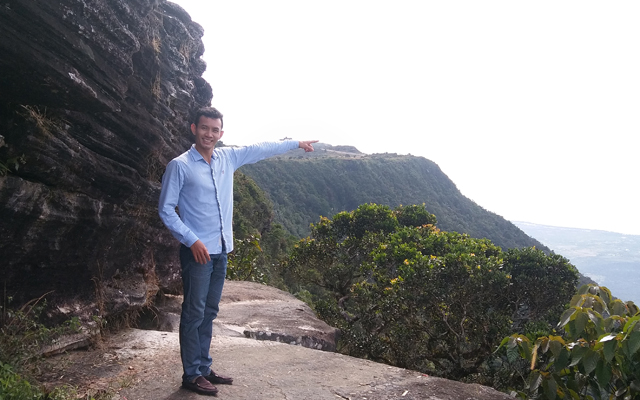
Young and hungry Tola aims to make a mark in Cambodia tourism sector

1

For Khoun Tola, Cambodia’s tourism industry has provided him with more than just a job; he also gained a way to elevate his fellow countrymen and women from the poverty they were born into.

Raised in a small village south of the capital Phnom Penh, Tola was determined not to follow in the footsteps of his forefathers and go into gruelling agricultural work. At the age of 17, he moved to Phnom Penh where he worked to pay for his education, eventually graduating from the Royal University of Phnom Penh with a degree in tourism management.
During his studies, the 31-year-old developed a passion for eco- and community-based tourism, seeing it as a way to showcase Cambodia’s natural beauty while providing a sustainable form of income to some of the country’s most underprivileged communities.

“I really wanted to use everything I had learned to help develop the country and help the disadvantaged and poor young people,” he said.

Upon graduation five years ago, his ambition and drive immediately landed him a job with Cambodia Development Rural Tours (CDRT), which runs tours and initiatives in remote areas, giving visitors the chance to delve into rural Cambodian life. “This was one of my favourite subjects and something I really wanted to focus on,” said Tola.

In the last five years, Tola has helped drive the project forward, developing a network of homestays and unique tours that take guests into the heart of the Cambodian countryside that take in locals along the way, such as spirit masters, bamboo sticky rice sellers, fishermen and Cambodians who are tirelessly working to protect the endangered nature that dots the country.

He has also played an instrumental role in pushing forward CDRT’s hospitality training programme, Le Tonlé Tourism Training Center, which recruits the poorest Cambodians aged 16 to 35 – those whose families earn less than US$1 a day – living in Kratie and neighbouring provinces, and equips them with skills to work in housekeeping, cooking, waiting and reception.

To date 95 per cent of graduates have found employment.

“Seeing the students move forward is incredible,” said Tola. “Seeing them grow from being so shy, having never seen a foreigner, to speaking English and having confidence makes me so happy because I came from that.”

Determined to grow the business further, Tola and the team are currently working on developing more tours into the country, as well as launching a cooking programme for students.

An additional five rooms are currently being added to the Le Tonle guesthouse in Kratie, next to the restaurant, which provides income for the hospitality training project, as well as a place for students to hone their new-found skills.

“There is so much potential and so much more we can do, and I am happy to be part of this,” said Tola.
 

Cote d’Azur invests in promotions in SE Asia

0
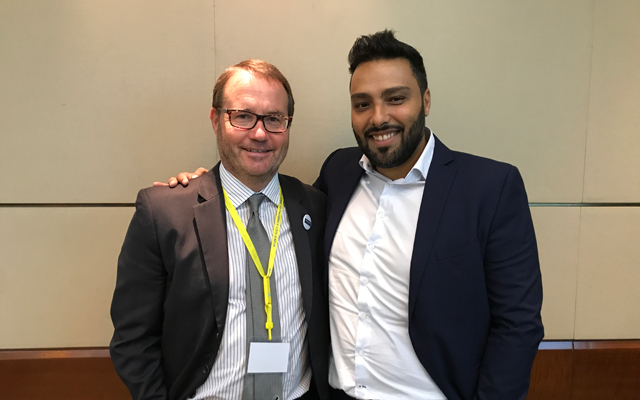
Eric Dore (left) with Mo

The Cote d’azur, known as the French Riviera, is courting South-east Asian travellers as ASEAN rises as France’s second largest Asian market after China.

The Cote d’Azur Tourism Board has over some years promoted the Mediterranean coastline of the southeast corner of France in India and China, claiming a 50 per cent growth in the Indian market this year.

Tourisme Cote d’Azur’s Eric Dore (left) with Atout France’s Morad Tayebi

Eric Dore, Comite Regional du Tourisme Cote d’Azur’s managing director, said: “We have more than 150 nationalities that visit the region, and we can’t promote everywhere in the world so we choose to focus (on one market) at a time. Every year we develop new markets. And now we’ve decided to invest in South-east Asia.”

South-east Asia’s economy has also grown, resulting in higher-spending individuals who are willing to spend on longhaul travel, he said.

In fact, according to Dore, Europeans spend an average of 80 euros (US$94) a day in the Cote d’zur while Singaporeans, for example, spend 120 euros a day.

Longhaul travellers from South-east Asia usually spend a week or more there compared to Europeans who make up 80 per cent of the inbound tourist segment and stay four to five nights.

Aside from Singapore, both Atout France and the Cote d’Azur Tourism Board also visited Indonesia.

Morad Tayebi, Atout France’s regional director ASEAN, said Singapore is a mature market with the tendency to produce repeat travellers who head to places like the Cote d’Azur as they’ve already visited Paris. On the other hand, Indonesians are usually first timers who would head to Paris first.

Indonesia ranked its top ASEAN market in 2016 with 150,000 travellers, followed by Malaysia with 130,000 visitors and Singapore and Thailand with 120,000 visitors each.

Atout France is eyeing other source markets in the region including Vietnam and the Philippines, he said.

Overall, France welcomed 83 million visitors last year, of which 700,000 were from South-east Asia, making it the second largest Asian market for France after China. Atout France is targeting 100 million tourists by 2020.

Two IHG brands breaking into Asian sub-regions

0
Kimpton Resort Sanya Haitang Bay scheduled to open in 2021

InterContinental Hotels Group (IHG) will expand Kimpton Hotels & Restaurants, a hospitality chain it acquired in 2015, in Asia, while its wellness-centric Even brand is expected to make a first appearance in Greater China in 2019.

Set to mark Kimpton’s Asia debut is the Kimpton Bali, which will open with 50 villas on the Nusa Dua coast in 2019.

Kimpton Resort Sanya Haitang Bay scheduled to open in 2021

Kimpton Shanghai Jing’an is poised to launch in 2021 featuring 150 guestrooms and 120 villas that originally belonged to the British-American Concession. Also slated for 2021 opening is the 251-room Kimpton Resort Sanya Haitang Bay, which will enjoy direct beach access.

The first of four Even Hotels to open in China will be the Even Hotel Sanya Yalong Bay, scheduled to launch in 2019 with 134 rooms and 92 villas and an “athletic studio” with translucent walls.

By 2020, IHG expects to also manage a 250-key Even Hotels within the Shanghai Tourism Zone project and the 290-room Even Hotel Jinan South (in the Shandong capital).

In addition, the 250-room Even Hotel Chongqing Central Park will open as part of a sports-themed complex and development zone.

Meanwhile, IHG will continue expanding in Vietnam with dual openings in Sapa in 2021 – the 200-key InterContinental Sapa Resort and 275-room Holiday Inn Resort Sapa. The Hotel Indigo Phu Quoc Starbay is also set to open in 2021.

Thrills and spills at Sentosa’s newly enhanced Skyline Luge

0

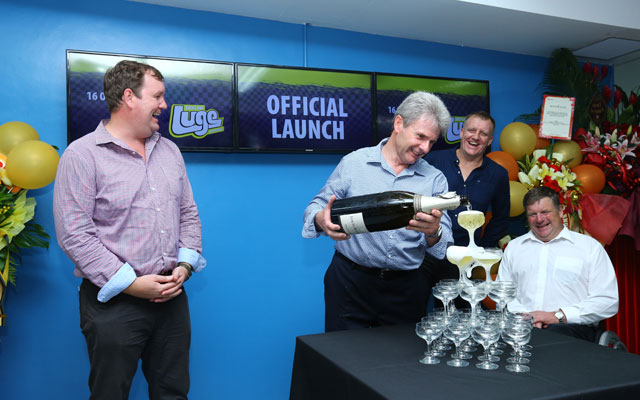
Skyline Enterprises has pumped S$14 million (US$10.3 million) into its Skyline Luge attraction in Sentosa, adding two new Luge tracks and a new Skyride.

Philippines laments shortage of multi-linguistic guides

0

The dearth of third language-speaking tour guides has been an overlooked issue over the years.

Consider this. The Philippines has only one qualified Korean-speaking guide even as South Korea has been the top source market – comprising nearly 25 per cent of tourist arrivals – for many years, prompting the hiring of some 200 Koreans to serve as tour guides in Cebu.
There’s also an insufficient number of Mandarin-speaking guides, an irony in a country with a large population of Chinese. As such, hotels and resorts catering to Chinese tourists have taken to hiring university students in Chinese-speaking countries for a short stint.

“It’s been a perennial problem, and the Department of Tourism (DoT) needs to tackle this problem seriously,” said Angel Ramos Bognot, president and managing director of Afro Asian Travel and Tours.

The DoT, which licenses tour guides, has an existing programme and training template, but a third language programme has not been implemented, said Bognot. He further suggested implementing a scholarship programme for third languages.

To cope with the shortage, tourism undersecretary Alma Jimenez announced that they would be tapping into overseas Filipino workers – who already speak foreign languages like Chinese and Japanese – to become tour guides.

For Madrid Fusion Manila, which requires interpreters fluent in Spanish and “nannies” to guide Spanish participants around the country, gets volunteers from wealthy families who are well-acquainted with Spain and its language.

Marisa Nallana, secretary-general of the Philippine Association of Convention/Exhibition Organizers and Suppliers (PACEOS) which helps in organising the annual gastronomy event, said their Spanish counterpart does the screening and interviews. Interpreters have to be well-versed in food and cuisines because are required to translate into English, what the Spanish chef is explaining, on the go.

Singapore brings greying trades to life

0

Tourism stakeholders in Singapore are rolling out tours that are promising to cast a spotlight on fading businesses and bring more travellers to the city state.

Featuring old-school trades such as traditional baking, ancestral paper-house making and Arabic perfume mixing, these tours bring out cultural flavours of Singapore beyond its modern attractions.

Tribe, one of the pioneers of such tours, offers excursions led by locals and experts in related fields, such as a master paper-house maker and one of Singapore’s last traditional bakers.
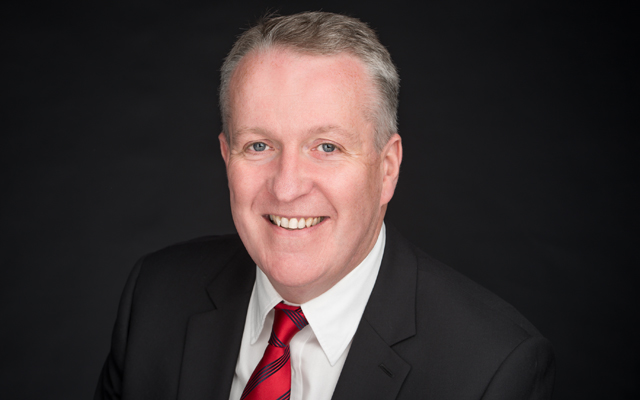
The concept can “disrupt the way tours are usually conducted”, said Tribe’s co-founder Jason Loe. He explained: “Singapore has so many layers to peel back and discover… We like our guests to come away with an authentic slice of life in Singapore.”

Similarly, tour operator Journeys takes guests to the heart of cultures and businesses oft forgotten in modern Singapore. A third of its tours include visits to traditional trade shops where guests can also interact with the owners, said its executive director Savita Kashyap.
Stops include a Chinese funeral supplies shop, a popiah (spring roll) stall, an Indian flower garland shop and a traditional Arabic perfume mixer.

Joseph Sze, project director of Siam Express, observed that travellers – especially visitors from China – are now more drawn to such shops, especially in Haji Lane and Little India, for products that “cannot be found in their own countries”.

The endangered rickshaw business has also been given new life. Operator Trishaw Uncle recently refreshed its services with GPS-guided trishaw tours through heritage districts such as Little India, Kampong Glam, Chinatown and the Civic District.

Its managing director, Png Yiow Beng, noted that such tours are growing in popularity among the youth segment. Trishaw Uncle is also attracting younger drivers who are “are very passionate about introducing Singapore’s history and landmarks”, he added.

Hoteliers have also jumped on the bandwagon; The Fullerton Hotel Singapore, for instance, offers complimentary monument and maritime tours, and has recently partnered with Jane’s SG Tour to offer experiences covering Singapore’s oldest mosque, a pre-war medical institution and culinary classes on local cuisine.

“Stories told enable travellers to appreciate Singapore on a deeper level and stay longer, beyond just a quick stopover,” said Cavaliere Giovanni Viterale, general manager of The Fullerton Hotels Singapore.

Meanwhile, the Singapore Tourism Board (STB) and the Economic Development Board in August launched a unified destination brand, which aims to tell “a fuller Singapore story beyond tourism… about this destination and its people”, said STB chief executive Lionel Yeo.

Through promotional efforts, the Passion Made Possible brand will also see operators roll out new tours highlighting heritage businesses – such as Wok ‘n’ Stroll’s food trail featuring new-generation hawkers, Ruby Dot Trails’ family businesses of Kampong Glam and Tribe’s past-to-present industry tour.

STB has identified 15 target markets for this brand, including China, India and Indonesia, Australia, the UK and US.

STB has also been expanding its marketing efforts to tier-two cities in key source markets Indonesia, China and India, said its director, strategy planning & incentive policy, Rachel Loh.

As of April 2017, year-to-date international visitor arrivals from targeted tier-two cities in Indonesia, China and India reached 170,000 (+11 per cent year-on-year), 315,000 (+17 per cent) and 58,900 (+ eight per cent) respectively.

Loh added: “We remain hopeful for a year-on-year growth of one to four per cent in tourism receipts and one to two per cent in international visitor arrivals for 2017.”

East Asia Institute of Management acquires NATAS’ training arm

0
EASB will take over training at the Tourism Management Institute of Singapore

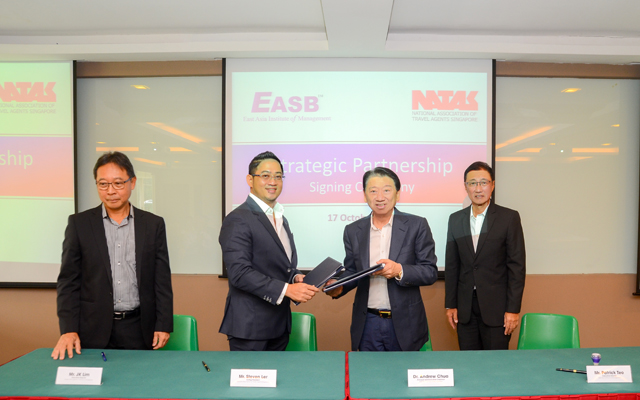
The East Asia Institute of Management (EASB) is acquiring a majority share of the Tourism Management Institute of Singapore (TMIS), the training arm of the National Association of Travel Agents Singapore (NATAS).

NATAS said this is the association’s first step in transforming the travel trade, with EASB taking over training of new entrants and existing agents with a three-step approach.

New ties (from left): TMIS’ JK Lim, NATAS’ Steven Ler with EASB’s Andrew Chua and Patrick Tan

Termed New Blend, it comprises bite-sized learning, video streaming and gamification – with a focus on integrating mobile technology into learning processes, said Andrew Chua, principal and executive chairman of EASB.

This will acclimatise trainees to working with mobile solutions, especially with the technological disruptions in the travel industry today, said Chua.

Steven Ler, acting president of NATAS, added that the partnership is the association’s first step in pushing for technology confidence in Singapore’s travel trade sector.

He said: “We are focusing on two main pillars: technology and manpower. These will be the key supports in transforming the travel trade. (With EASB) NATAS now has a focused arm to build curriculums that support new initiatives, in terms of technology and getting the right skill sets.”

In the next three to six months, NATAS will be launching an online human resource portal for greater visibility of demand and supply in the trade, said Ler.

He added that NATAS is also working closely with Singapore Tourism Board (STB) to transform tourism businesses, with several initiatives in the pipeline.

These developments may help veterans overcome their “resentment” of technology as a threat to their jobs, said Robin Yap, president, Asia, The Travel Corporation, who sees technology as a complementary tool to agency services.

“While we are embracing technology, this is a people industry, which requires people to deliver services,” said Yap. “This will be facilitated by technology, but the human element (is still needed) to deliver the finer touches.”

With increased efforts between NATAS and STB, Yap hopes to see more local travel players follow in the footsteps of agencies like BeMyGuest and emerge into the global sphere.

Bellew to leave Malaysia Airlines to return to Ryanair

1
Bellew re-joining Ryanair is "unexpected" news for Malaysia Airlines

Peter Bellew is leaving Malaysia Airlines after just over a year in charge as its CEO to return to Ryanair as COO and tackle a pilot shortage that has led to over 20,000 flight cancellations.

Bellew had been Ryanair’s director of flight operations until 2014 before joining Malaysia Airlines as COO in September 2015 and taking over Christopher Mueller as chief executive in July last year, according to a Reuters article.

Bellew re-joining Ryanair is “unexpected” news for Malaysia Airlines

With Ryanair under fire for the cancellation of 20,000 flights, a statement from the airline said that Bellew would specifically be responsible for managing pilots and “(ensuring) that the pilot rostering failure which Ryanair suffered in early September will never be repeated”.

Bellew will leave Malaysia Airlines in the midst a three-year turnaround programme at the airline, set back in recent years by high-profile incidents such as the mysterious disappearance of flight MH370 and MH17 being shot down over eastern Ukraine.

Malaysia Airlines said the announcement was “unexpected”, with Bellew as recently as September 27 expressing commitment to the airline in response to speculation of him re-joining Ryanair. Bellew was quoted by Malaysia Airlines as saying that the airline’s turnaround would be “the greatest achievement of my life”.

The turnaround of Malaysia Airlines remains on track and on schedule, as per the MAS Recovery Plan, Malaysia Airlines assured.

US holidays push Panorama Philippines to half a million in sales in Manila

0
Vuilleumier: Agents entrusted especially when it comes to longer haul holidays

New outbound agency Panorama Holidays Philippines, which aims to specialise in leisure and business events to the US and Europe, claims it has made US$500,000 in sales at the recent three-day consumer travel fair, World Travel Expo in Manila.

Its group managing director, Richard Vuilleumier, said its bestsellers wreathe 10D7N USA East Coast packages and 7D4N USA West Coast packages. For both packages, the company offered two free packages for every two packages purchased.

Vuilleumier: Agents entrusted especially when it comes to longer haul holidays

Vuilleumier said: “It was a successful sales strategy because we knew most holiday makers from the Philippines travel with families. Rooms in the US are large and fit four people as they have two queen-sized beds.

“Being an international company with offices in Malaysia and Vietnam, we believe we can, in time, become a market leader in the Philippines for the longhaul segment specialising in US and Europe due to the fact there are few big competitors. We are able to make bulk purchases from suppliers and get passengers internationally to join our group departures to Europe and US. This gives us an upper hand.”

In Malaysia, Panorama Holidays Malaysia changed its focus last year to concentrate only on the US and European markets. Previously its outbound focus was mainly on shorthaul and mediumhaul destinations.

Vuilleumier’s rationale: “Consumers tend to make their own bookings online for the short and mediumhaul segments. Longhaul tends to be multiple destinations and this is where travel agents still have an advantage. Travellers are not as confident planning their itineraries and making their own bookings. They still rely on an agent.”

Singapore travel companies boost Malaysia-bound coach fleets

0

Singapore’s Transtar Travel & Tours and WTS Travel & Tours have each expanded their fleet by adding 10 units of the Scania K-series coach – the manufacturer’s largest delivery of the kind – which will be deployed on new routes between Singapore and Malaysia.

Transtar Travel & Tours, a leading express coach company established in Singapore in 1994, operates between Singapore and Johor Bahru, Malacca, Kuala Lumpur and Genting Highlands. The latest acquisition will allow the company to introduce two new routes between Gelang Patah Sentral Bus Terminal in Johor Bahru and Singapore.

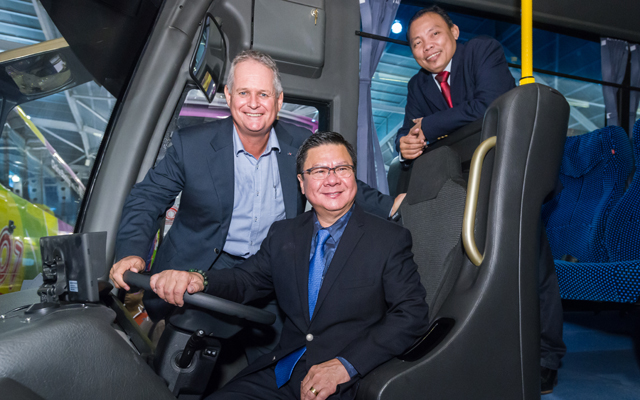
Transtar Travel & Tours’ Elson Yap (middle) takes a closer look at one of the new coach units together with Scania’s Mark Cameron (far left), and Transtar Travel Group’s Tajarul Yusmi bin Mohd Yusup

The first of these routes, starting in December, will cover Singapore’s Central Business District, while the second commencing in April 2018 will cover the Jurong and Tuas industrial areas, Clementi and Buona Vista. Adding these to its two existing routes between Singapore and Johor Bahru, the company will provide passengers with more than 70 pick-up and alighting points on the island.

WTS Travel & Tours, established as a travel subsidiary of Woodlands Transport in 1989, currently operates coach services between Singapore and Johor Bahru, Malacca, Muar, Tangkak, Kuala Lumpur and Genting Highlands. It plans to announce its new routes and travel packages at a later date.

Micker Sia, managing director of WTS Travel & Tours, said: “We expect to see between 10 and 15 per cent increase in passenger traffic when we put the new coaches on the road.”