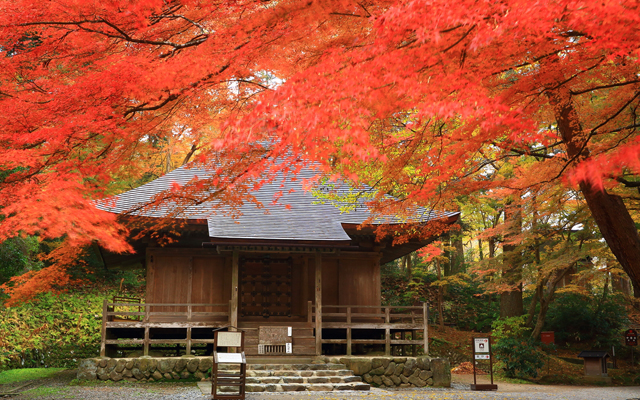
Discover Hiraizumi on foot during the Basho-themed self-guided tour
An alternative form of land tours – self-guided walking tours – is stepping into the spotlight among travellers in Japan.
Japan tourism representatives at the recent ITB Berlin told TTG Asia that there has been an uptick in new itineraries and operators offering such unique tours through both popular and lesser-known regions.
Discover Hiraizumi on foot during the Basho-themed self-guided tour
Inge Leibmann, German representative, Kyoto City Tourism Office, said: “Travellers don’t want anything cookie-cutter any more. It’s no longer just about shopping and taking pictures. There has to be some kind of unique experience.”
Popular itineraries can include a temple stay where visitors can meditate, explore mountain trails and visit hot springs. Walk Japan has also launched a self-guided Basho Wayfarer trail, which follows haiku poet Matsuo Basho’s famed classic poetic travelogue Oku-no-hosomichi (Narrow Road to the Deep North).
Leibmann shared that such tours are especially popular with Europeans and Americans, and that the office is working closely with Kyoto’s DMCs to reach out to these markets.
The rise of such self-guided tours presents a business opportunity that Japanese DMCs can take advantage of, observed Tetsuro Goda, consultancy & sales representative with Cox and Kings Japan.
Goda noted that while transportation and hotel booking is convenient in Japan, foreign visitors can benefit from “local knowledge” – that is, a reliance on DMCs – in finding ground tours and authentic local activities across different cities, from Kyoto to Kanazawa.
“It’s so easy to find hotels online, but it can be difficult to find local activities and land transfers in Japan (without local help). Moreover, DMCs can help visitors arrange transport to and identify their hotels. Tour planners can make it more convenient for travellers, and we get better rates from hotels too,” explained Goda.
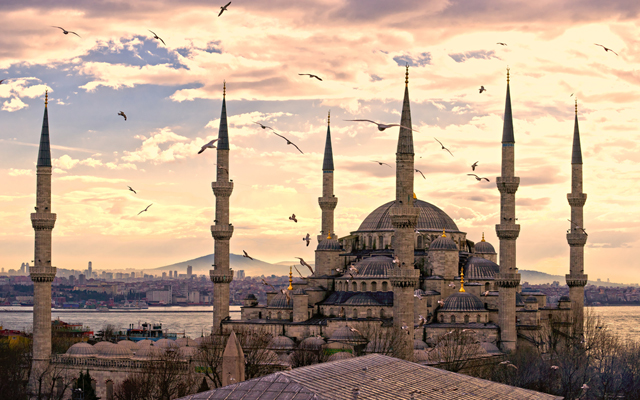
Sunset over Sultanahmet Camii, or the Blue Mosque, in Istanbul
When Mart Evers Travel and Tours invited me to join a group tour to Turkey in October 2017, I was not daunted by the political and terrorism concerns in the destination, and neither were the rest of the 37-member group. After all, we Filipinos grapple with our fair share of image issues when it comes to our country.
And so our motley crew of well-travelled bankers, lawyers, businessmen, architects, professors and managers – from the 20-something to the sprightly lady of 80 – embarked on a week-long discovery of Turkey.
Ground handler Glorious DMC fixed an itinerary, which included six out of the 17 UNESCO World Heritage Sites of natural and manmade wonders in the country, namely Troy, Ephesus, Hierapolis in Pamukkale, Goreme National Park and rock sites of Cappadocia, Pergamon near Izmir and the historic areas of Istanbul.
Sunset over Sultanahmet Camii, or the Blue Mosque, in Istanbul
Turkey is literally where East meets West, one geographical foot in Asia and the other in Europe. Apart from its involvement during the Crusades, Anatolia was part of the Silk Road and we saw remnants of the caravanserais where merchants stayed. Istanbul, on the other hand, was the imperial capital of the Byzantine and Ottoman empires.
Turkey is as exotic as the names of its towns and cities. There was no trace of the political tension and terrorism as our luxury coach passed lovely panoramas of mountains, seas and bucolic scenery. The roads were wide, well-paved and traffic-free, a respite from our traffic-clogged urban thoroughfares. Even during rush hour, the streets of Istanbul compared favourably with its Asian counterparts.
Bordering Syria and Iraq, Turkey has taken in three million Syrian refugees and a million Iraqi refugees, which has taken a toll on its economy. Perhaps signs of this are beggars on the streets of Istanbul, a way more common sight now than before.
We visited several archaeological sites beginning with the ancient city of Troy that we know from Greek mythology. That morning it was bereft of tourists except for our group. Pergamon in Izmir has an ancient medical complex called Asklepion, the world’s first psychiatric hospital. As a majority of our group were Christians, we could relate to the ruins of Ephesus which was frequently mentioned in the New Testament and home to the apostles Paul and John. It has the world’s biggest amphitheatre which sits 25,000 and is still used for concerts and other events.
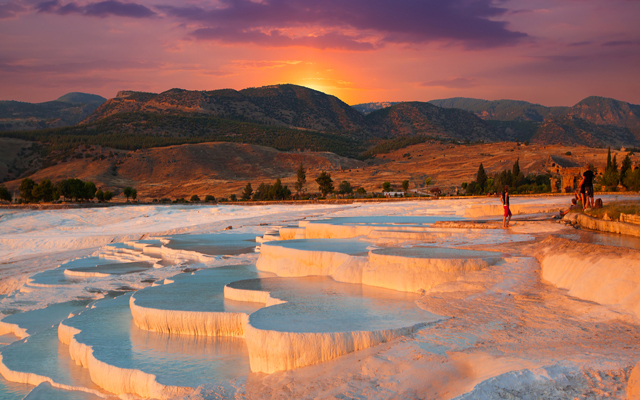
‘Cotton Castle’, stunning terraces of white lime rocks and cliffs
Picturesque Pamukkale, which means ‘cotton castle’, got its name from the terraces of white lime rocks and cliffs formed by hot mineral spring water that seeped through for thousands of years. Nearby is Hierapolis with its ruins of bathhouses, temples and the biggest necropolis or graveyard of the ancient world. Tourists here are mainly Chinese and other Asians.
Cappadocia, with its acre upon acre of surreal rock formations resulting from volcanic eruptions, is often chosen as the backdrop in many international films because of its unusual formations. It is also a favourite among Insta-happy Filipinos.
Early Christians built their houses and churches upon these rocks, including those in the underground city of Kaymakli to escape Roman persecution. Many of these cities are linked to other cities by underground tunnels.
The gung-ho elderly in the group, including the 80-year old lady, gamely joined the hot air balloon ride to see Cappadocia during sunrise. They also joined the jeep safari for a peek at the cave houses and churches.
We also passed by Konya in Ankara, a pilgrimage site for Sufis, with the tomb of Rumi in Mevlana Museum. Konya is also where the whirling dervishes originated.
Our historical and geographical immersion was punctuated by shopping sprees. Turkey is a real shoppers’ paradise. A number of Turkish designer brands are available in factory outlets at reduced prices. We also stopped by a huge carpet manufacturing shop with a dizzying array of high-quality carpets valued based on number of knots, instead of size. Other shops include those selling leather goods, handmade pottery, souvenir items, lamps and other artefacts not found elsewhere in the world.
Of course shopping in the city is incomplete without a visit to the Grand Bazaar in Istanbul. This is the biggest covered shopping place in the world, although it is getting smaller – from 3,000 shops when it first started centuries ago to the 1,000 today.
Still, the bazaar was impressive and for the shopaholics among us, a truly beguiling force. A family in this group even extended their stay by three more days so they could shop some more.
We visited several architectural wonders of Istanbul including the Blue Mosque, Topkapi Palace and of course the Haggia Sofia which was a Muslim mosque that became a Catholic cathedral, before becoming a museum for the public. It’s a transition that did not erase the past, much like Turkey’s transition into a modern republic that it is today.
Our day tour of Istanbul was capped by a late afternoon cruise along the Strait of Bosphorus, which connects Asia on the left to Europe on the right. The connection is through the world’s biggest suspension bridge built in 2016, and also the third bridge on the Bosphorus. The Bosphorus is lined with elegant buildings and mansions and palaces of the wealthy.
The sky’s colours changed as the sun set, burning a fierce orange until the darkness crept in, leaving the suspension bridge and the surrounding palaces awash with a myriad of lights. From light to dark and back to light again. What a dramatic sight to behold.
Our tour guide Nami Ardakoc, who is also a political science professor, predicted that Turkey’s tourism will pick up soon after two years of downtrend. I couldn’t help but agree.
One cannot put a good destination down. Turkey with its pedigreed history, culture, geography and natural attractions is meant to be discovered by tourists. As for me, it merits a repeat visit.
Indonesian LCC Wings Air launched twice-daily flights between Pontianak and Miri on March 15, a timely addition amid the Visit Miri 2018 campaign.
With the only other international direct flight into Miri being AirAsia’s service from Singapore, the new Pontianak route is promising to lend strength to the travel industry’s push for the northern region of Sarawak.
Miri wants to realise medical tourism potentials
Among the activities and attractions highlighted as part of the Visit Miri 2018 are the Borneo Jazz Festival (May 11-12); Miri City International Deep Sea Fishing Tournament (May 10-13) as well as its UNESCO accredited Mulu National Park.
Visit Miri 2018 is a tourism initiative by Miri City Council in collaboration with the Ministry of Tourism, Arts, Culture, Youth and Sports; Sarawak Tourism Board; Miri Resident Office; Miri District Office; Sarawak Forestry Corporation and non-government organisations.
Sarawak Tourism Board’s acting CEO, Mary Wan Mering, added: “The new flights will also help attract more medical tourists from Pontianak to the three main hospitals in Miri actively promoting medical tourism – Borneo Medical Centre Miri, Miri City Medical Centre and Columbia Asia Hospital.
“The flights could also help the state of Sarawak achieve its arrival target for 2018, pitched eight to 10 per cent higher than the 4.8 million arrivals into Sarawak in 2017,” she said.
Indonesia represents an important market for Malaysia’s medical tourism sector, contributing more than 60 per cent of the segment.
Miri is the second international destination in Wings Air’s network, after the airline launched Kuching flights in January 2018.
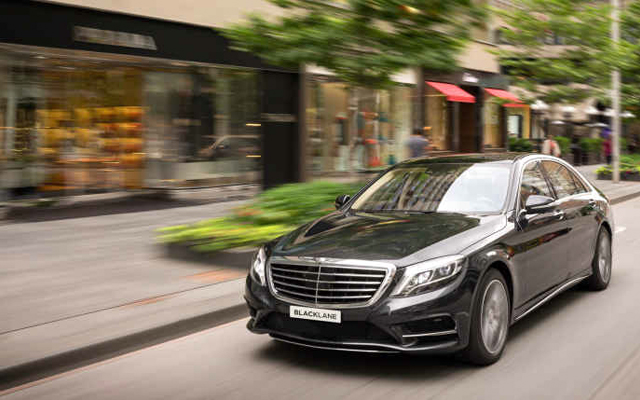
Blacklane offers chauffeur service on premium vehicles
Blacklane offers chauffeur service on premium vehicles
Blacklane, which provides affordable chauffeur services, is now a partner of Singapore Airlines Group’s frequent flyer programme.
KrisFlyer members can earn two miles for every US dollar, euro or pound spent on Blacklane’s service. To start doing so, travellers need only to add their KrisFlyer membership number to their Blacklane profile.
Blacklane serves more than 500 airports, 250 cities and 50 countries around the world.
White: get the basics right and Google will send the right customers your way
While tourism is still about enjoying visceral real world experiences, its modern marketing is not. Tourism marketing is increasingly dominated by the relentless science of artificial intelligence, specifically semantic search.
This means if you want your destination to earn market share or better, Google has to love you. And you can’t fool Google. Its AI-driven semantic search is exponentially more capable than historical search algorithms of delivering, fast, meaningful results tailored to each user’s search query.
When a person conducts online travel search today, Google takes into account information such as his or her geographical location, previous search history, and interests, as reflected by social media interactions.
Now all this is a boon to tourism businesses because it helps you connect with your customers in a targeted, relevant manner. Do your job right and your product, service or destination will be presented in search results that fully match the user’s intent and delivers you customers who will love your product.
It’s fair to say that Google is becoming more like a personal assistant than a search engine. To accomplish this Google has embedded its machine learning algorithms in a suite of products, apps and tools that are free, easy to use, and fully integrated.
White: get the basics right and Google will send the right customers your way
For example, today, the Google ‘suite’ includes Google Maps, Chrome, Plus, Home, My Business, Now, Calendars, Voice, YouTube, and more. The more you love Google, the more it loves you back.
I therefore strongly recommend travel organisations to embrace these tools in order to keep their marketing programmes on track and their content working for them.
This means tourism bodies need to create content that is relevant to the user by answering specific user questions, solving problems, and providing useful information in a variety of formats.
But before you post your great content – words, photos, videos, blogs, surveys – make sure your online fundamentals are in place:
Check your website structure Google cannot help you unless your site is easily navigated. Your site needs headings, titles and descriptions that Google can index (And don’t be fooled. You still need a website!)
Mobile compatible Google is designed primarily for mobile users (bring in an expert if you’re unsure about your site’s compatibility with mobile devices).
Don’t be caught NAPping Make sure your name, address and phone numbers (NAP) are consistent in listings.
Sign up for Google My Business Claim and list your business on Google Places, and populate it with relevant information. Local Google listings always feature prominently on mobile search queries, especially voice queries. Be sure to include videos and photos.
Get social on Google+ Create your Google + Page for your business and your Google + profile for yourself. You can then link your business website and all your online activity, and other social media accounts you use. Google indexes posts exactly like blog posts, so include text, compelling images, videos, events and customer testimonials.
Get a YouTube account YouTube is part of Google and is the second largest search engine in the world. With a YouTube account, embed the video on your own website and blog and include the link in your social media posts/
Post often Try and add something relevant to your Google + and other social media accounts daily. From Google’s perspective, these activity patterns show that you are expanding and increase the probability that you have interesting content to offer. It’s often easier to do this than many tourism businesses think. There are simple things you can do that help with this.
Summarising, David Amerland, a leader in semantic search analysis for business, gives the following four tips: develop a clear distinctive brand voice, deliver content in multiple channels in a personable, accessible way, deliver content that has real value for the end user, and embrace the free platforms and tools made by Google.
Hyatt Hotels Corporation has appointed Stephen Ho as president – greater China, global operations, as part of the group’s plans to accelerate growth in Greater China.
Effective April 16, 2018, Stephen will be responsible for the growth and operations of the hotel network, talent development and owner relations in the Greater China region. He will also refine and reinforce the group’s China outbound strategy from a commercial and operations perspective.
Prior to joining Hyatt, Stephen was CEO, Greater China Region at Marriott International, where he oversaw all hotels in operation and under construction in the region, and Starwood Hotels & Resorts’ Asia-Pacific president from 2012 to 2016.
A Singapore native, Ho boasts over 35 years of experience in the hospitality sector since launching his career in 1981. Since then, he has served in a variety of roles across multiple functions and geographies, including Brunei, Auckland, Tokyo, Hong Kong, Okinawa, Singapore, Dhaka and Beijing.
Eva Air launches Taipei-Chiang Mai service
From July 1, Eva Air will commence daily services between Taipei and Chiang Mai. Operated with a two-class Airbus A321-200 for 184 passengers, flight BR257 leaves Taipei daily at 07.25, arriving in Chiang Mai at 10.25. Flight BR258 then leaves Chiang Mai at 11.30 for arrival in Taipei at 16.45. The flight provides another an alternative one-stop route between North America and Chiang Mai, Eva Air says.
Hainan Airlines flies from Beijing to Dublin, Edinburgh
Hainan Airlines will launch the first direct flights from Beijing to Dublin and Edinburgh on June 12. With an Airbus A330 aircraft, the airline will operate flights from Dublin to Beijing four times per week, two of which will include a stopover in Edinburgh.
The direct Beijing-Dublin flights will operate on Thursdays and Sundays, with flights departing Beijing at 01.30, arriving in Dublin at 06.00. The Dublin-Beijing service will operate on Tuesdays and Saturdays, departing Dublin Airport at 11.10, arriving in Beijing at 05.00 the following day.
The Beijing-Edinburgh-Dublin service will operate on Tuesdays and Saturdays. Flights will depart Beijing at 01.30, arriving in Dublin at 09.10 via Edinburgh. The return service departs Dublin at 08.00 on Thursdays and Sundays and arrives in Beijing via Edinburgh at 05.00 the following day.
Bangkok Airways adds flights to Vientiane
Bangkok Airways will increase frequency on its Bangkok-Vientiane route to twice daily, effective March 25. The new outbound flight PG949 departs Bangkok (Suvarnabhumi) at 17.35 and arrives Vientiane International Airport at 18.50. The inbound flight PG940 departs Vientiane International Airport at 19.35 and arrives at Bangkok (Suvarnabhumi) at 20.50.
Juneyao, ANA enter codeshare deal
Juneyao Airlines will kick off its codeshare partnership with All Nippon Airways (ANA) starting from March 25, with sale of codeshare flights starting from March 22. The Chinese airline will place its “HO” code on ANA operated Sino-Japan trunk routes connecting Shanghai (Pudong) to Tokyo (Haneda), Nagoya and Osaka (Kansai), as well as onward routes from Osaka (Kansai) to Tokyo (Haneda), Sapporo and Naha.
In turn, ANA will place its “NH” code on Juneyao’s flights from Shanghai (Pudong) to Tokyo (Haneda), Nagoya and Osaka (Kansai); as well as Nanjing to Osaka (Kansai). ANA will also codeshare on Juneyao’s domestic flights from Shanghai Pudong to Chongqing, Xi’an, Harbin and Changchun.
Frequent flyers with both airlines can also earn miles on certain classes and redeem flights on both sides. The two carriers will also offer priority privileges for elite members on codeshare flights, including priority check-in, priority baggage handling, priority boarding, extra baggage allowance and lounge access.
General manager of Hyatt Regency Bangkok Sukhumvit has appointed Maria Sitanggang as director of sales and marketing, ahead of the hotel’s scheduled September opening.
Sitanggang joins Hyatt Regency Bangkok Sukhumvit after spending seven years at Hyatt Regency Hua Hin & The Barai as its director of sales and marketing. She has also worked for Hyatt properties in Bali.
She has more than 20 years of experience under her belt, having began her career with Hyatt in 2004.
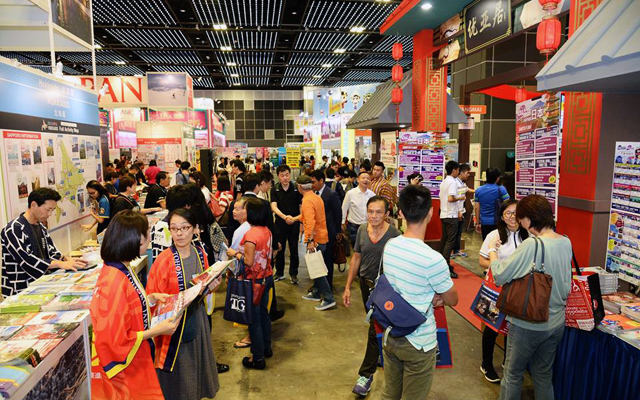
NATAS says its 2017 show attracted record attendance of 110,901 visitors
The competition between Singapore’s two main consumer travel fairs is heating up again, this time perhaps with greater ferocity with both fairs held simultaneously this weekend.
From March 23 to 25, Singapore Outbound Travel Agents Association (SOTAA) will organise its seventh Travel Revolution fair at Marina Bay Sands (B2 Expo Hall E), while the 52nd NATAS Travel fair by the National Association of Travel Agents Singapore (NATAS) will take place at Singapore Expo (Halls 4 and 5A).
NATAS says its 2017 show saw record attendance of 110,901 visitors
Ulrich Sante, German ambassador to Singapore, will grace the opening of the NATAS fair. Germany will feature considerably at the fair, with Bavarian elements on display and Lufthansa one of the exhibitors, plus performances encompassing Bavarian music and a fashion show featuring traditional attire.
SOTAA is highlighting VIPs of its own at Travel Revolution, such as local celebrities Huang Biren, Chen Liping and Jeffery Xu, who will be onstage at the i-Weekly Travel Discovery workshops to help with trip planning.
Both are plugging the many products available at wallet-friendly prices, on top of holiday planning help.
At Travel Revolution, trip planning sessions on Saturday are themed around Kenya and Tanzania; the Balkans; Hong Kong and the azure isles; New Zealand; and Northern Lights tours.
And on Sunday, the same time slots have been dedicated respectively to Switzerland rail convoy, the Balkans, Melbourne glamping; New Zealand and Western Australia.
NATAS is also running talks on holidays, including Grand Canyon National Park, Morocco, the Northern Lights and Setouchi.
As usual, both organisers will entice spending through lucky draws. NATAS is this year dangling the top prize, a pair of Singapore Airlines business class tickets to Sydney worth S$14,000, alongside other rewards such as a 10-day trip to Prague, Vienna and Budapest, European cruise, air tickets, staycations, vouchers and more.
SOTAA is putting up for grabs air tickets to Europe, Japan, Australia among others; cruises to Thailand, Indonesia, Malaysia; a hotel stay at Marina Bay Sands and more.
Both promise double the chance of winning for purchases charged to their respective credit card partner – MasterCard for NATAS Travel and American Express for Travel Revolution.
For this edition of Travel Revolution, SOTAA has announced an additional tie-up. Kay Swee Pin, president of SOTAA, said the association is partnering electronics retailer Courts this year to offer both travel and electronics products in one hall, while Courts will run its Super Brands Show in an adjoining hall. Customers at either fairs can also enjoy cross promotions.
Update: This article has been amended to accurately state the credit card partners of both fairs.
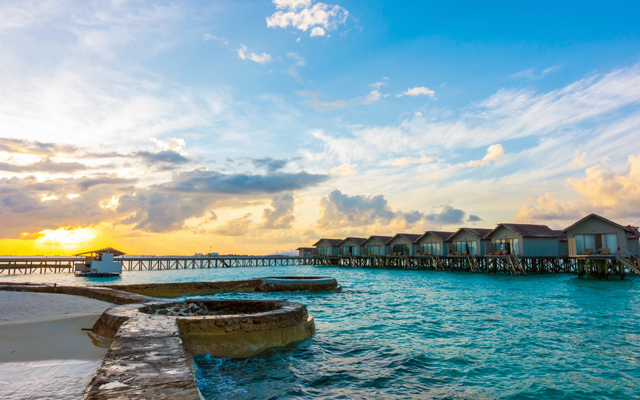
Cancellations reported in February but impact expected to be felt in ensuing months, some resorts say
Tourist arrivals to the Maldives last month rose by 19 per cent against February 2017, in spite of the spate of travel advisories issued during a 45-day state of emergency reportedly due to end tomorrow.
Data released last week show that 144,286 tourists visited in February, up 19.2 per cent from the same month last year. China, the country’s biggest source market, recorded a 38.1 per cent surge from the same 2017 period, in part due to the Chinese New Year, which fell in February this year.
Cancellations reported in February but impact expected to be felt in ensuing months, some resorts say
According to Abdulla Ghiyas, president of the Maldivian Association for Travel Agents and Tour Operators, while the arrivals for February didn’t register any drop, cancellations and declining enquiries for subsequent months are cause for concern.
“We need to look at March data too. I think April to June will be difficult months,” he said, adding that refusal by resorts to refund may have also mitigated declines in February.
Although some resorts are seeing slightly better demand than last year for the months ahead, hoteliers are expecting to fall significantly short of targets set for this quarter.
On the other hand, Ahmed Karam, president of the GuestHouse Association of Maldives, said guesthouses reported a 25-30 per cent drop in occupancy in February, which could be due to the 1,800 beds added from February 2017 to February 2018 to reach 7,000.
Other top markets that also recorded year-on-year increases in February include Italy (+24.5 per cent), the UK (+9.3 per cent), Germany (+10 per cent), France (+18.8 per cent) and Russia (+36 per cent).
Due to a political crisis, the Maldives enforced a state of emergency on February 5. The UK, Germany, the US, the UAE and Canada issued travel advisories while China later relaxed its travel advisory saying nationals should avoid visiting the capital Male, where there have been nightly protests by opposition parties.




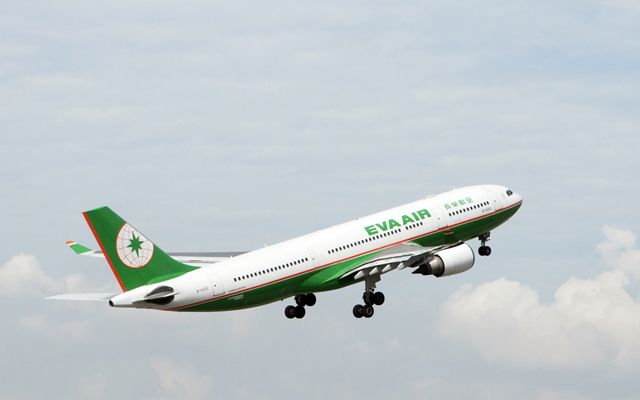
 Eva Air launches Taipei-Chiang Mai service