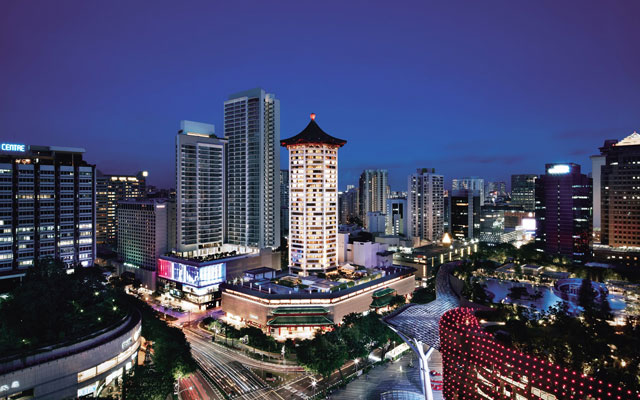
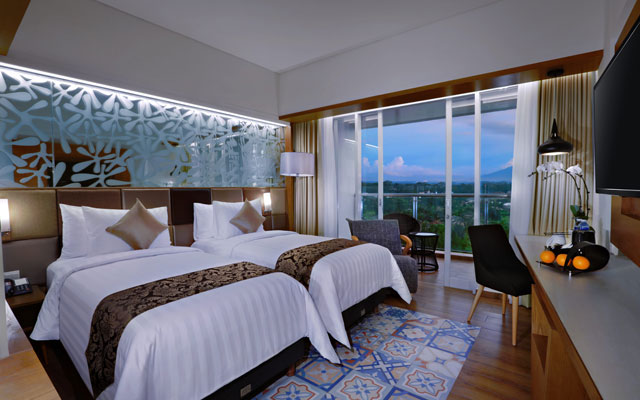
Singapore Marriott Tang Plaza Hotel has rolled out the Iconic Singapore Getaway deal following a recent redesign of its Premier Deluxe Rooms.
Aerial view of Singapore Marriott Tang Plaza
Priced at S$999 nett (US$735), the Iconic Singapore Getaway package includes three nights in a Premier Deluxe Room; a bottle of wine upon arrival; a full buffet breakfast for two at Marriott Cafe; a buffet dinner for two at Marriott Cafe; and complimentary Internet access.
Eatigo is poised for further growth after a fresh serving of capital from TripAdvisor
It now seats well over two million diners a month, stands out in the crowded online dining reservations space in Asia as a yield management platform for restaurants rather than just another marketing channel, and feels it is only scratching the tip of its full potential – reasons that give TripAdvisor a bigger appetite for Eatigo.
TripAdvisor, the largest investor in Eatigo, has given a second round of funding to the startup. Eatigo was founded five years ago with a Series A investment by an unnamed big Thai media company. TripAdvisor entered in October 2016 in Eatigo’s Series B, bringing the total raise (Series A & B) to US$15.5 million. Speculation is it added just under US$10 million to bring the total investment to US$25 million to-date.
Eatigo has a bigger bite now after a fresh serving of capital from TripAdvisor
Bertrand Jelensperger, TripAdvisor Restaurants’ senior vice president, said: “Our continued investment in this company is a sign we are pleased with the progress that Eatigo is making as a business.”
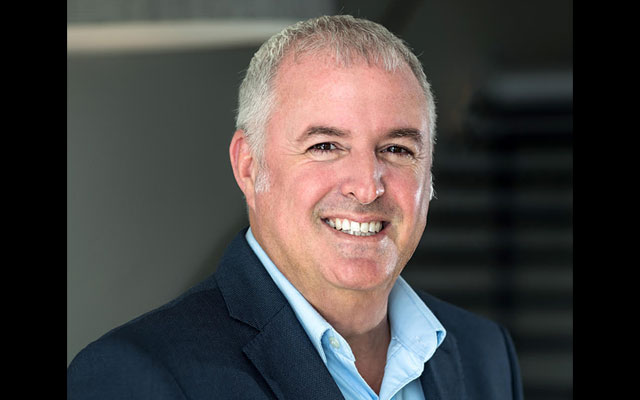
That progress included Eatigo’s expansion last year into Hong Kong, the Philippines, Malaysia and India (through the acquisition of Ressy), from operating only in Singapore, where the company was incorporated, and Thailand, its operational headquarters. The four new markets represent over 50 per cent of Eatigo’s revenue and reservations, according to Eatigo’s co-founder and CEO, Michael Cluzel.
Eatigo is hungry to expand further in South-east Asia and the wider Asian region, extend its product offering, and is doing a full rebuild of all its platforms to offer “much better speed/loading times, search functionality, fully scalable and modular built that will allow us to add countries and services seamlessly for our smoothest user experience ever”, said Cluzel.
He won’t say which new markets Eatigo would go into. It aims to grow organically but is also open to “seize consolidation opportunities as and when they present themselves”.
When asked the number of seats a month it aimed to produce with further expansion, from the two million a month Eatigo was said to be doing currently, Cluzel said: “We can’t speculate on forward-booking numbers but historically, we have been doing three to four times (more) year-on-year every year since inception.”
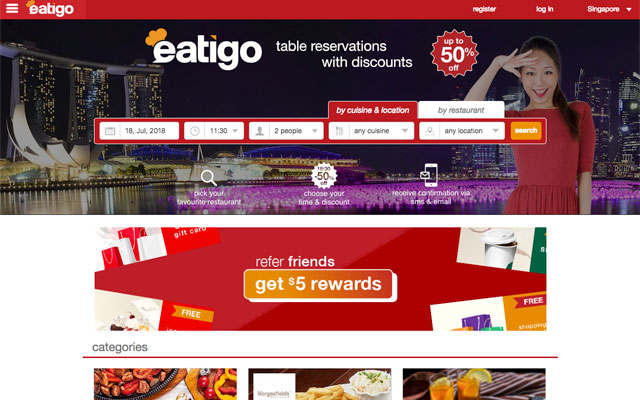
While Singapore has Chope, Hong Kong OpenRice and China Dianping – household names in the respective local markets – Eatigo differs from those in that it offers time-based discounts of up to 50 per cent with no coupons required. Dining at an off-peak hour such as 21.30 may yield a 50 per cent off, compared with 30 per cent when dining at 18.00. A diner picks a restaurant, chooses the date, number of people, time and the discount offered by the merchant, and receives confirmation via sms and email.
Cluzel believes its model is what makes Eatigo competitive in the Asian marketplace and that the company is “still very much at the beginning of our journey, considering how inefficient merchants still are on capacity utilisation”.
Said Cluzel: “Hotels generally understand and appreciate our business model and have the highest satisfaction with the results. Eatigo is designed to help successful, popular merchants monetise their existing popularity in the most efficient way; we are not a marketing platform to help struggling merchants.
“Eatigo is a yield management platform, not a marketing platform. Yielding has been around since the 1970s, pioneered by American Airlines, and its sustainability has been amply demonstrated across industries such as airlines, hotels and car rentals.”
With Eatigo’s expansion, and TripAdvisor’s continued investment, chances of restaurateurs getting incremental business from travellers, aside from the bulk of locals, are also greater, players interviewed said. Travellers using TripAdvisor Restaurants or TheFork (which TripAdvisor acquired in 2014) could take advantage of the off-peak discounts in advance of their trips to the countries that Eatigo operates in. Indeed, Cluzel said Eatigo is seeing the percentage of cross-country bookings growing strongly, especially from markets like Hong Kong and Singapore into other markets.
“With TripAdvisor’s continued backing, this could mean more visibility on the international booking platform,” said Byron Chong, general manager of Orchard Hotel Singapore whose Orchard Cafe buffet is one of the most-reserved on the Eatigo platform. “Restaurant owners and diners will stand to benefit, especially since diners are increasingly turning to online channels to make bookings.”
Hotels and restaurant operators contacted in Singapore, one of Eatigo’s best markets, attest that Eatigo indeed delivers the numbers and has great potential, although it needs to raise more awareness and find ways to be more relevant to higher-end restaurants.
One Farrer Hotel & Spa’s F&B director, Dennis Ng, said the buffet at its Escape restaurant had seen more than 7,000 covers from Eatigo since the first half of the year.
“Eatigo is the only platform thus far that allows the merchant to have full control over the (time) slots and discounts given. It is particularly useful not only to fill the venue but at what time to fill it up,” said Ng.
It also enables restaurants to yield depending on what it wants to achieve, said Ng. Using a favourite Thai saying “same-same but different”, he said 50 per cent off and One-For-One may be the same but they are two discounts serving different purposes, the latter typically meant to encourage another a diner bring another diner, while the former might be trying to make the best of a perishable table.
Screenshots of the eatigo app
Currently, however, Eatigo is commonly viewed as more suited for quick service and casual concepts than higher-end restaurants.
“I think some of our casual concepts can benefit off this but once you move up the price point then it becomes less attractive, because of branding perceptions and the discounting required,” said Loh Lik Peng, director of Unlisted Collection comprising hotels and restaurants in Singapore, Shanghai and London.
Echoed Shin Hui Tan, executive director of Park Hotel Group, which also operates free-standing restaurants: “We’re selective about restaurants that go on its platform depending on their positioning and strategy. So far, we’ve seen potential in the platform but I think awareness needs to be higher. They need to acquire and grow their user base for them to be more effective as a channel for off-peak dining.”
The il Lido Group of Restaurants reflects same thinking, using Eatigo only for its more casual concept, Sons.
Said Alicia Woon, the group’s assistant sales and marketing manager: “Eatigo does work well in terms of promotion mechanics, and the staggered discounts according to the time do push traffic at lull periods. However, brandwise, it would be best if Eatigo improves its public and industry perception. Perhaps they can achieve this by having higher-tiered F&B establishments in the list of offerings.
“Also, currently we are not sure if the customers that come through Eatigo are loyal to the restaurant, or to the discount. Would also be good to know the percentage of repeat reservations. We could also benefit from an understanding of the best-performing restaurants in terms of average discount, incremental revenue and total covers, and what they are offering so that we can also tweak our strategy better. For example, currently at Sons, our average discount is 44.8 per cent – how do we place in terms of other restaurants on Eatigo?”
Eatigo may already be looking into some of these points, with Cluzel saying the company “will be adding product offerings outside our current scope of time-based discounted reservations”. He declined to reveal more, saying the new offerings “will expand our ‘dine out and save’ positioning”.
One Farrer’s Ng said he was seeing some effort on Eatigo to improve its business strategy.
“Recently, they are shifting towards a pre-paid model, an overseas trend which has yet to reach Singapore. Merchants have to come up with good deals to bait consumers to pre-pay. The positive aspect is it reduces no-shows,” he said.
He also sees Eatigo focusing a little more on B2B than just B2C, for example offering to do marketing and advertising for restaurants.
The luxury market in the Maldives is at risk of being over-saturated, with hoteliers urging greater differentiation among resorts to better compete against competitors.
“The problem with luxury – not only in the Maldives – is that the difference between resorts is just the name on the door,” Sonu Shivdasani, founder and CEO of Soneva, asserted in a recent interview with TTG Asia.
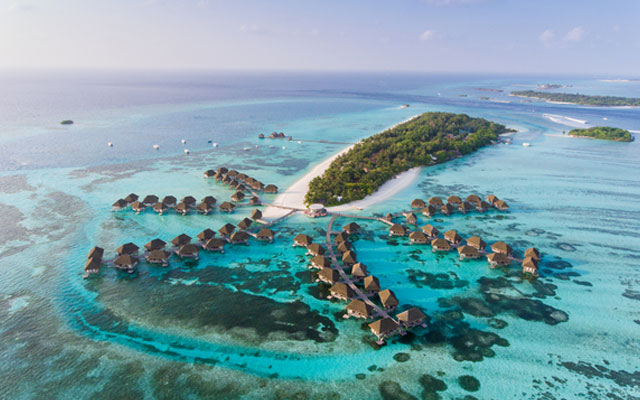
A bird’s-eye view of a resort in the Maldives
Shivdasani said many hoteliers who have built high-end resorts are suffering from their inability to differentiate against one other, apart from the one-island-one-resort concept which is “old news”.
“They are just paying bank loans, (tax) and the island lease rentals. They are not getting a return,” remarked Shivdasani, who launched his first resort, Soneva Fushi, in the Maldives in 1995.
“A lot of these luxury hotels are opening and are surprised that they are not getting the premium rates they had originally projected – because there is no real differentiation,” he added.
Confident he can create a new differentiator to stand apart from the competition, Shivdasani shared that a Soneva property with a concept that does not yet exist in the Maldives is in the works, slated for opening in 2020.
Other hoteliers such as Andrew Ashmore, chief commercial officer at Coco Collection Hotels & Resorts, agree. He said luxury hotels have expanded far too quickly, resulting in the same look and feel, while the “soul of the true Maldives has effectively or will be gone”.
Referring to the return on investment, Ashmore said that while normally the “payback” is around 10 years, it’s now doubling to 20 or even 25 years.
Industry officials said that in the next few months there will be a total of 20 new, top-end resorts. “Most of these have the same type of water villas and restaurants with everything imported,” Ashmore added.
But Suresh Dissanayake, assistant vice president – sales and marketing at Heritance Aarah and Adaaran resorts, remarks that the oversupply situation is a temporary problem and will be sorted out once the airport increases its capacity.
“There is excess supply due to limited influx. And the limited influx is (due to) the limited capacity at the airport. Once the new runway is open and the number of arrivals increase with more flights at the renovated airport, that will take care of increasing room stock,” he said.
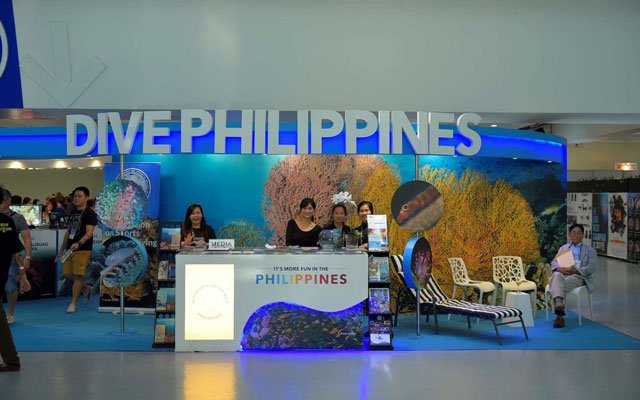
Eager to grow the country’s thriving dive tourism sector, the Philippine Department of Tourism (DOT) is attending the Dive Resort Travel (DRT) Show Philippines while simultaneously hosting the Dive Travel Mart (DTM) for B2B meetings.
At DTM, Philippine stakeholders like dive centres, shops and resorts will meet with foreign dive tour operators and travel agents for B2B meetings.
This will be the second edition of the Dive Travel Mart
Tourism undersecretary Benito Bengzon, Jr further shared that the DOT has developed other viable segments of dive tourism, such as technical diving and freediving, which will be offered in the B2B meetings.
To develop linkages with foreign buyers, Bengzon said the Philippine booth at the DRT will house at least 50 local sellers representing establishments in various dive destinations all over the archipelago.
The DRT network comprises exhibitors from 48 countries, with each show generating visitor traffic of at least 20,000 dive enthusiasts.
“We look forward to the arrival of some 100 dive travel agents, operators and media from opportunity markets including France, Italy, Spain, the Nordic Region, the Middle East and India,” said Bengzon.
DRT will take place on September 7-9 at the SM Megatrade Hall, Mandaluyong City; while the concurrent DTM will culminate to a 5D4N dive fam tour of selected diving destinations on September 10-14.
Fam-tour participants will choose from dive destinations including Anilao, Batangas; Puerto Galera, Mindoro; Dumaguete, Negros Oriental; Bohol; and Malapascua and Moalbal in Cebu; Siquijor Island; and Southern Leyte.
Admission to the DRT Show is priced at 200 Philippine pesos (US$3.74).
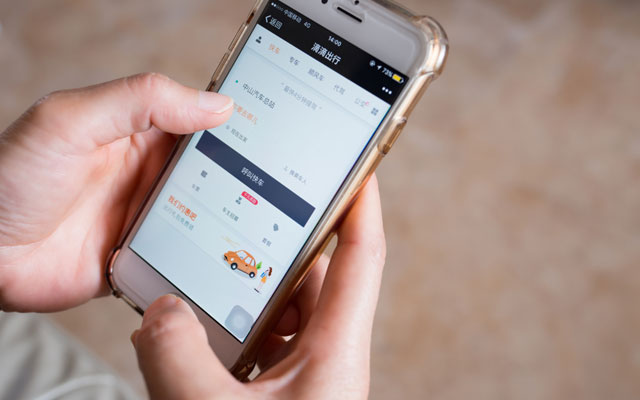
Booking Holdings has invested US$500 million in Chinese ride-hailing platform Didi Chuxing as the two parties enter into a strategic partnership.
With the partnership, Booking Holdings’ brands will be able to offer on-demand car service through their apps, powered by Didi, and Didi customers will have the option to book hotels through Booking.com or agoda.
A person making a taxi booking on Didi Chuxing
Todd Henrich, senior vice president and head of corporate development for Booking Holdings, said: “Didi has clear advantages in technology and scale in the shared mobility industry. We believe that together we can offer smarter transportation services to our brands’ customers, and help Didi’s customers… access the products and services the brands in our company provide throughout the world.”
Stephen Zhu, vice president for strategy of Didi Chuxing, said: “We look forward to seamlessly connecting every segment of the journey and improving everyone’s traveling experience through more collaborative innovation with the Booking brands on product, technology and market development.”
Didi offers a full range of app-based transportation services for over 550 million users and continues to innovate in shared mobility and smart transportation across China, South America, Australia and Japan markets.
Archipelago International is expanding to the Bogor Regency in West Java with the opening of The Alana Hotel & Conference Center – Sentul City.
The 271-room and suite property is located in Sentul City, a 3,000ha integrated township situated between South Jakarta and Bogor.
Deluxe Room
Owned by Sentul City, the developer of the township, the hotel is equipped with an all-day dining restaurant with 350 seats, and 15 meeting rooms, including a ballroom for up to 400 people.
The hotel is targeting business events and families seeking weekend getaway. Located an hour’s drive from Jakarta on the Jakarta-Bogor highway, the city serves as an alternative to Puncak or Bandung.
Apart from the swimming pools, other facilities like the gym, spa and kids club will be open by the end of this month, while the Sky Lounge with a capacity of up to 200 people will be ready in October.
Hotel restaurant
Daniel Hutagalung, general manager of the hotel, said: “We have (soft opened) since April and the hotel has been running an average of 68 per cent occupancy.”
Families can also choose from outdoor activities such as archery, shooting, pony riding and dining in the Ah Poong floating market, which is a five-minute walk from the hotel.
“(Visitors) can also do other activities such as flying fox or kite flying at Taman Budaya. We are also cooperating with the Jungle Land Theme Park for special entry fares for our guests,” Hutagalung added.
Furthermore, with the Aeon Mall under construction in the city, which will be the biggest in Asia when it opens in 2019, Hutagalung is optimistic of the hotel performance in the future as Sentul City continues to develop facilities.
The Pavilions Hotels & Resorts has appointed Scot Toon as managing director Asia.
The New Zealander first joined The Pavilions in January 2018 under a project capacity as director operations, where he was responsible for a new PMS, finance and POS system roll out across the entire group (Asia and Europe), prior to his promotion.
Toon first entered the hotel industry in 2000 when he joined Hayman Island resort in Queensland. From there, he went on to work with other hospitality brands including Stamford Hotels & Resorts and Per Aquum, where he managed luxury resorts in Sri Lanka, the Maldives and Malaysia.
In 2009, Toon moved to Thailand to become general manager of Paresa Resort in Phuket, before he moving to Kata Rocks Resort in 2014, where he served as general manager of the resort and operations director for its management company, Infinite Luxury.
Chinese demand for customised travel surged 300 per cent in 2017, with European destinations most favoured among those eschewing traditional package deals, according to a joint research by ForwardKeys and the China Outbound Tourism Research Institute (COTRI).
Summer bookings are ahead 13.5 per cent, and there are currently over 120,000 new orders a month, representing a market share of almost 15 per cent, according to the study.
Young Chinese tourists in Paris
Data from ForwardKeys, which predicts future travel patterns by analysing 17 million booking transactions a day, further shows that China bookings for Europe are ahead 10.5 per cent this summer.
Europe – and particularly the UK – are the destinations most favoured by the new breed of Chinese travellers opting for customised holidays.
This group of travellers tend to be younger than average, “money-rich and time-poor”, ForwardKeys observes. They are prepared to pay more than average for the chance, for instance, to stay in a glass igloo in Finland or propose to their partner in front of the Eiffel Tower.
And according to Chinese OTA Ctrip, travellers customising their holidays typically spend around US$400 per person per day, a number set to grow further.
Until recently, mass-market package tour groups from China drove inbound volumes for destinations, but their spending was limited to famous landmarks during high seasons. Ctrip says the trend is to make customised travel an “affordable luxury”, available to more Chinese.
Wolfgang Georg Arlt, COTRI founder, said: “Europe is a perfect example of destinations that have great potential to fulfil the demand for customised travel from China, owing to its rich history and broad cultural diversity.”
ForwardKeys CEO and co-founder, Olivier Jager, added: “There is a bright future for organisations involved in Chinese travel to Europe. As a longhaul destination, Europe has the largest market share of Chinese outbound travel, receiving 9.3 per cent of the market. Over six million Chinese citizens visited Europe as their first stop in 2017; and our figures show more growth this year.”
With the growing popularity of customised holidays, the demand for travel service providers has not waned, Arlt remarked.
“Visas, entry tickets and transport can be difficult for individual travellers to arrange by themselves and even more so in the face of language barriers. The time difference and varied ways of communicating can present complications to those travellers who are making their own arrangements. Accordingly, there is a strong demand for travel professionals to provide extensive travel services.”
Australia’s World Expeditions Travel Group (WETG) has acquired a majority shareholding in the Blue Mountains Adventure Company.
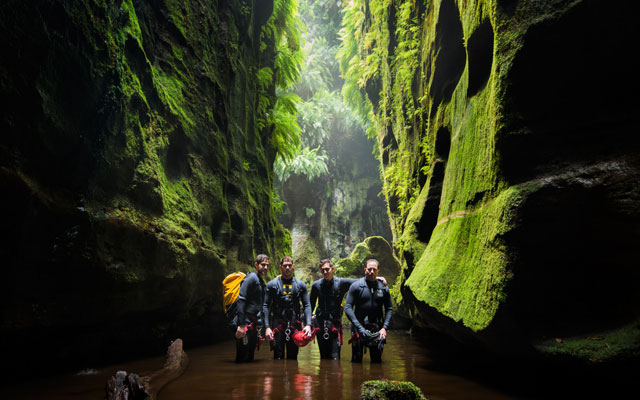
Blue Mountains Adventure Company operates day-long canyoning trips in the Blue Mountains, particularly the lesser known canyons such as Wollangambe, Serendipity and Yileen. It handles small group adventure – with groups of friends, schools and corporate groups making up the majority of the 4,000 clients it hosts each year.
Canyoning is at the company’s core, but with the acquisition, it will be developing a range of guided trips
The acquisition, which takes the number of brands within WETG to to 13, provides World Expeditions with a new operational base near Sydney, complementing its existing domestic operations in Alice Springs, Darwin and Launceston.
According to World Expeditions CEO, Sue Badyari, the company plans to develop a range of guided and self-guided walking trips in the Blue Mountains region, while remaining committed to its canyoning specialisation.
“World Expeditions has had a long held desire to have an operational base in the Blue Mountains and the acquisition provides that with its Katoomba office, allowing us to provide even more opportunities for our guide team to have year-round employment, with operations based out of four Australian centres,” Badyari said.
The Blue Mountains Adventure Company director, Dylan Jones, will stay on with the business for the next 12 months.
Hilton Worldwide has appointed Markus Kosch as general manager of the Hilton Phuket Arcadia Resort & Spa.
Kosch was most recently general manager of Conrad Guangzhou.
A 22-year veteran in the hospitality industry, Kosch began his career with Hilton Worldwide at Hilton Shanghai. In 2012, he served as cluster general manager of several Hilton properties in Sanya-Haitang Bay and Dalian.