TTG Asia
Asia/Singapore Friday, 3rd April 2026
Page 1392

Amadeus stresses agent education amid NDC revolution

0

NDC is fast becoming a reality as industry adoption of the new standard becomes more widespread, although there remains work to be done to educate agents in understanding and adopting the standard.

Earlier this month, Amex GBT joined the Amadeus’ NDC-X programme to help test and familiarise itself with the new NDC flow of “shop, book, pay”. Gianni Pisanello, global head of Amadeus NDC X programme, said: “We are laying down NDC fundamentals for more airlines and agencies to use.”

Amadeus is on track in progressing with industrialisation of the standard, targeting GUI-readiness by mid-2019, before NDC deployment by 2020, Pisanello shared.

This means travel agents can look forward to a streamlined search, book, pay and service function by next year.
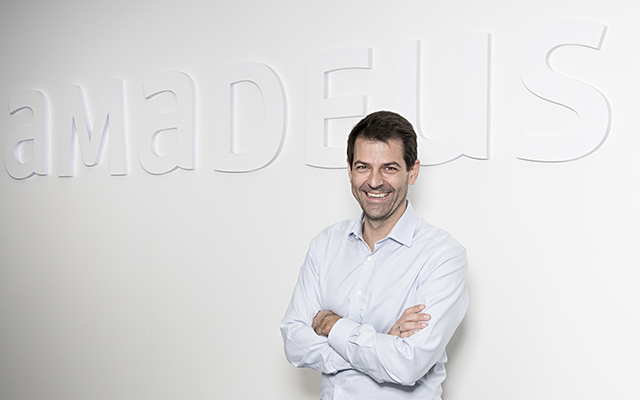
Gianni: on track to making NDC a reality by 2020

For now however, it is still very much about education from a travel agent standpoint. “At the immediate moment, travel agents should be informing themselves – figure out what the standards look like, what (the GDSs are doing with regard to NDC), and how they will deploy it,” said Pisanello.

Shedding light on why it may be worthwhile for agencies to consider NDC –without having to upend existing systems – he said: “Travel agencies are used to fast commands, which makes (the old way of booking) productive for those used to (the method). But for a new (entrant) who isn’t familiar with the commands, NDC is simpler to pick up, as it presents what you would typically find on a website – it’s a matter of search-click-pay.

“Overall NDC works for recruiting people not trained in cryptic commands, while being (slower) than what a pro-user of the command structure is used to. We plan to marry both worlds. “

Pisanello observes that in general, adoption of the standard tends to be slower in Asia-Pacific, although the region is likely to follow the lead of Europe and the US.

Pisanello said: “It’s about market dynamics. Asia’s travel industry is booming, and there is so much to take care of in terms of moving with that growth. In lower-growth markets such as in the US and Europe, there are more opportunities to think about further optimisation. It becomes more a question of priority (than about whether it is fruitful to advance with NDC).

“But once the best practices come through from Europe and the US, people in Asia will think about how they can apply.”

In the NDC revolution, Amadeus sees its role as “removing complexity” for travel agencies and airlines through providing technology solutions – but in the nearer term it is also doing its part to move travel agents forward through education. Last year, it conducted roadshows, both to educate industry players and mine feedback on travel agency needs for solutions design.

More recently, it launched an educational series on its website and worked with IATA on conferences, in addition to disseminating information through NDC champions in the travel agency sphere.

Pisanello said Amadeus is surprisingly on track in its timeline, “an unusual (feat) in the technology world”, but stressed that the NDC revolution was never cut out to be a quick change.

“Within the broader context, the current infrastructure took up to 40 years of optimising for ideas and features (year after year). We are going through a similar process with NDC,” he said.

Beyond the ease of search-book-pay-service lie more complex functions including multi-sector, multi-stop flights and refunds processing. But with “85 per cent of bookings being for point-to-point flights”, Amadeus has its eyes set on the immediate agenda.

E-ticketing coming soon to Thai marine parks

0
View of Phang Nga Bay (Ao Phangnga National Park) from Samet Nang She Viewpoint

Thailand’s Department of National Parks, Wildlife and Plant Conservation (DNP) will introduce an e-ticketing system at marine locations, effectively barring entry by walk-in, the Bangkok Post reports.

Proposed by the State Audit Office and the National Anti-Corruption Commission, the move is meant to regulate the number of visitors and increase transparency in revenue collection.

View of Phang Nga Bay (Ao Phangnga National Park) from Samet Nang She Viewpoint

The e-ticketing system will be rolled out first at Hat Noppharat Thara-Mu Koh Phi Phi Marine National Park in Krabi province, Ao Phangnga National Park and Mu Koh Similan National Park in Phangnga province.

Currently, there are three contenders bidding to become counter-service agents to sell e-tickets: 7-Eleven stores, Krungthai Bank, and Siam Commercial Bank.

Songtham Suksawang, director of the DNP’s National Park Office, told Bangkok Post that the bid winner – to be selected by a committee currently in the process of being set up by the department – will be announced by October.

SIA introduces mobile boarding pass access via Google Pay

0
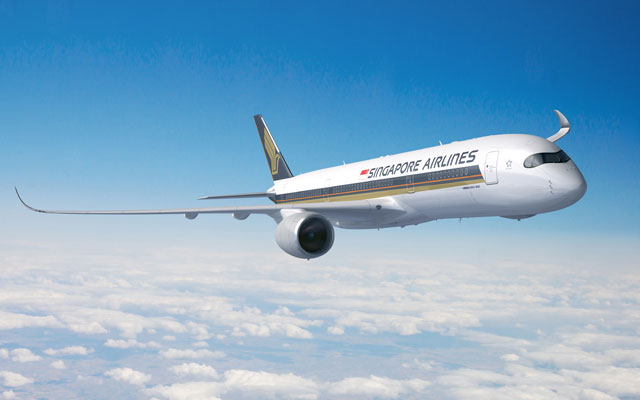
SIA’s A350-900ULR

Singapore Airlines is allowing its customers to use mobile boarding passes on Google Pay, the first time an airline in the Asia-Pacific region is offering such a capability on Google’s digital wallet platform and payment system.

With this initiative, customers can simply produce their boarding pass, which is saved to Google Pay, and proceed straight to the boarding gate after clearing immigration formalities.

SIA enter another partnership with Google

To save their boarding pass to Google Pay, customers need an Android mobile device on which they can use to generate the pass via the SingaporeAir app.

Prior to introducing this feature, SIA had also embarked on other digital projects with Google Flight, Google Now and the more recent Google Home to introduce greater ease in areas of flight information, receiving booking confirmation emails and setting reminders for upcoming flights.

Checking in for flights via a mobile boarding pass on Google Pay is available at the airports across the world. In Asia, cities include Singapore, Bangkok, Bali, Kuala Lumpur, Surabaya, Hong Kong, Seoul Taipei, Tokyo (Haneda and Narita).

Japan, India shortlisted for launch of Uber flying taxis

0

Uber has shortlisted five countries to launch its Uber Air “flying taxi” service, three of which are in Asia-Pacific.

After announcing plans to introduce electric-powered air taxis to Los Angeles and Dallas, the company now says Japan, France, Brazil, Australia and India are in the running for the third launch location.

In a statement, Uber says its criteria for the third international city include having a metropolitan population of more than two million people, dispersed population hubs, an airport at least an hour away from the city centre, and a willingness to back carpooling services.

The move comes amid heightened interest in lightweight, electric-powered, vertical takeoff and landing (VTOL, or eVTOL) aircraft. There are at least 19 companies developing flying car plans, including Boeing and Airbus, according to a report by The Verge.

Uber plans to announce the chosen country in six months, after which it will launch its flying taxi service within the next five years, although it should be noted that the technology is still in its early stages.

Vietnam’s Vinpearl Luxury resorts go on discount for travel professionals

0
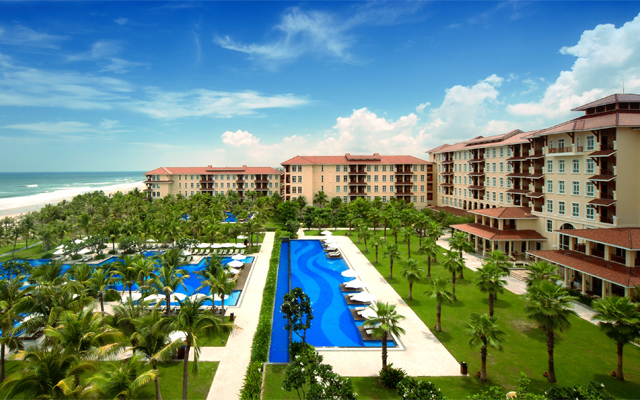
Vinpearl Luxury Nha Trang

Vinpearl is offering 30 per cent off best available rates on all room categories for travel industry professionals booking a stay at Vinpearl Luxury Nha Trang and Vinpearl Luxury Da Nang.

Valid for stays up to December 20, 2018, bookings have to be made seven days in advance and by December 16. The deal includes breakfast and comes with the promotional code: TIDLUX.

Vinpearl Luxury Nha Trang

Trade professionals can make a maximum of two rooms per booking, and proof of employment within the travel industry is required on booking. The deal is subject to availability, along with other terms and conditions.

Located on Hon Tre Island, Vinpearl Luxury Nha Trang offers villas, including some with private pools, overwater spa salas and five restaurants and bars. Vinpearl Land Nha Trang amusement park and waterpark is just next door, connecting to the mainland by a cable car.

Vinpearl Luxury Da Nang offers a choice of rooms, suites and villas, some of which have private pools, plus Akoya Spa and five restaurants and bars. The property is situated by Non Nuoc Beach. Nearby, Vinpearl Golf Nam Hoi An is an 18-hole course, while Vinpearl Land Nam Hoi An is an amusement park of rides and aquapark slides with a cultural village, riverside shopping and a dining complex.

Claudine Triolo joins Six Senses as regional DOSM

0

Six Senses Hotels Resorts Spas has appointed Claudine Triolo to the role of regional director of sales and marketing for Thailand, Bhutan and Cambodia.

Triolo joins the group following an 11-year tenure with Bangkok-based Premier Resorts & Hotels, where she spent the past eight years as director of sales and marketing.

The American first began her hospitality and travel career with Asia Transpacific Journeys in Boulder, Colorado as a tour operation manager. She relocated to Mandarin Oriental Dhara Dhevi in Chiang Mai in 2004 as director of guest communications before joining Premier Resorts & Hotels in 2012.

Facing the rate challenge

0
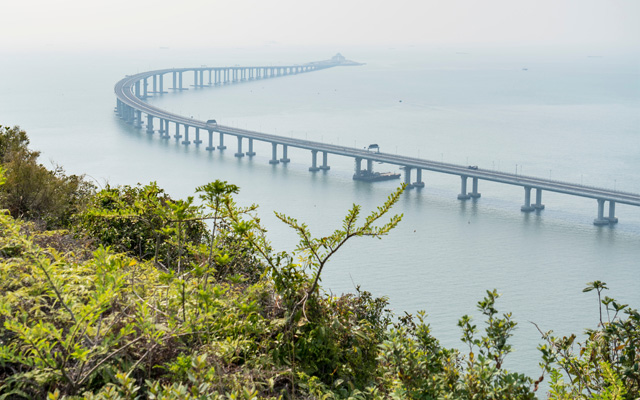
The new Hong Kong-Zhuhai-Macau Bridge

While the rebound of mainland Chinese traffic in 2H2017 uplifted the hotel business in Hong Kong, fluctuating and dynamic room rates remain a concern in the travel industry.

Last year, average room occupancy grew 2.3 per cent to 90.8 per cent and average room rates increased 3.4 per cent to HK$1,220 (US$155). And in April this year, average room occupancy hit 92.4 per cent with average room rates up by 13.3 per cent to HK$1,396.

The new Hong Kong-Zhuhai-Macau Bridge is likely to shore up Chinese traffic into the city

Some in the industry anticipate further growth in Chinese traffic following the Hong Kong-Zhuhai-Macau Bridge and Express Rail Link, heightening concerns of rate increases and fluctuations.

This is an especially salient matter for agents such as PC Tours and Travel’s general manager Cary Chiu, faced with the challenge of dynamic pricing with the rise of OTAs and direct booking.

“Hotels have scrapped traditional contracts for room allotment arrangements. Room rates can be double the contract rate after the cut-off period. Some hotels even ask us to tell clients to switch travel dates in order to suit the available room dates,” Chiu said.

“As a B2B operator, how can I sell rooms to overseas agents with a markup, when clients can book direct? We can’t do much and just pray for ourselves,” he lamented.

“So far, only local hotels still stick to contract rate with us to promote their brand overseas but in the long term, I don’t think this partnership will last long once they establish their name with overseas clients.”

Simple Travel Services’ director Vandana Sachdeva pointed out that fluctuating room blocks and rates, while not a new trend, pose an added challenge for markets such as India.

She said: “It becomes more challenging (for the Indian market) as the contracts signed for a period go for a toss and then the agents in India lose trust in DMCs as the quotes given don’t hold any value after a period of time.

“With greater connectivity, the mainland market is bound to overtake other markets. The hotels need to evaluate which market/business they would like to support in the long run. If short-term profit is the only objective then it will definitely have an impact on the hotels in the long run when the Chinese market dips during any economic downturn,” Sachdeva added.

While Chiu is sceptical that the new connectivity infrastructure would drive up hotel demand, since easy accessibility promotes same-day return, he still welcomes new hotel supply especially in the underserved four-star category.

Seoul’s hotel development kicks into high gear

0

Improving international relations and exposure gained from global events have spurred a burgeoning hospitality scene in Seoul and provinces beyond. In the capital city alone, 15 hotels with 4,451 rooms will be expected to open from this year to 2020.

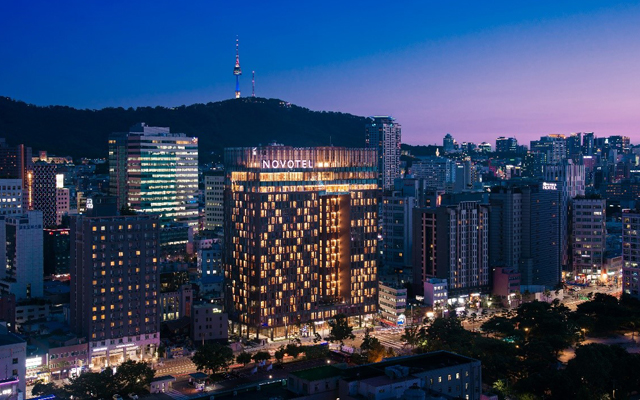
Novotel Seoul Ambassador Dongdaemun, one of the newest properties in the city

In October last year, South Korea’s first “lifestyle hotel-plex” Seoul Dragon City opened with 1,700 rooms across four AccorHotels brands: Grand Mercure Ambassador Seoul Yongsan, Novotel Suites Ambassador Seoul Yongsan, Novotel Ambassador Seoul Yongsan, and ibis Styles Ambassador Seoul Yongsan.

Seoul was a prime location for the group to launch four hotel brands to target four segments of the travel market from luxury to economy, shared Hasmin Hwang, hotel manager, executive office, Grand Mercure Ambassador Seoul Yongsan.

The four-brand “hotel-plex” allows each hotel to tap on the facilities and services of the others, said Hwang. AccorHotels has since opened Novotel Ambassador Seoul Dongdaemun in July.

This year, Marriott International has four new projects in Seoul and Busan. Hotels are also debuting in secondary locations, such as the Gangwon province where the Pyeongchang Winter Olympics were held earlier this year.

For Wyndham Hotel Group, there are seven hotels just opened or in the pipeline across the country. Besides two Ramada properties in Seoul, the group is setting up camp in other areas such as Cheonan, Cheongju and Incheon Airport, raising its total South Korea portfolio to 36.

“There is huge demand for South Korea, especially by tourists from Mainland China, Malaysia, Singapore and Taiwan. We have seen a dramatic increase in Chinese tourists in our Seoul properties; for example, Ramada Seoul Dongdaemun has seen an average occupancy of 85 to 90 per cent,” said Michael Kim, director franchise operations, South Korea, Wyndham Hotel Asia Pacific.

He added: “Sokcho and the whole of Gangwon have received huge benefits from the Olympic Games. Ramada Sokcho saw 100 per cent occupancy during the Olympic Games, and now sees an average of more than 80 or 90 per cent. Tourism is booming in the Gangneung area too, so we have opened properties in line with this, such as in Chuncheon.”

As the hotel scene heats up, players are also stepping up to develop luxury offerings in South Korea. For example, Hyatt will bring boutique brand Andaz to Gangnam in 2019, and AccorHotels has announced plans to open the 326-room luxury property Fairmont Ambassador Seoul in 2020.

In April last year, Lotte Hotels and Resorts launched the six-star hotel Signiel Seoul, the country’s latest luxury landmark standing at 101 storeys atop the Lotte World Tower.

Morten Andersen, general manager, Signiel Seoul, said: “A lot of Russian and Middle-Eastern clientele come for shopping and medical treatments. South Korea is getting very popular (in these markets), and we are also seeing visitors from China and Japan. With the Michelin Guide now in its second year, a lot of gourmands are coming, especially wealthy Europeans.”

Andersen noted that his hotel’s guests are slightly more conservative in exploring South Korea, largely remaining in Seoul for three nights and at most venturing to Jeju or Busan.

When asked about standing apart from competition, president & general manager of Grand Ambassador Seoul associated with Pullman, Bruce Lee, shared that the hotel has developed a Namsan Trekking Package that “has been a steady seller for over five years”, as well as transformed all 25 guestrooms on the 16th floor into Internet of Things Smart Rooms. This allows guests to control functions from lighting to room temperature on their own smart phones.

Lee stated: “To attract more luxury guests, Korean hotels need to enhance personalised service and authentic Korean experiences. One of the best ways to approach guests (in a personal way) is with recognition, which can lead to casual talks (where) the hotel staff can learn what guests want.

“Also, authentic Korean experiences need to be developed. For instance, when Korean War veterans visited the hotel, our hotel’s concierge associates wore Korean traditional gatekeeper’s attire to welcome them. This kind of service can guests give extraordinary experiences to attract more to Korea.”

To complement the trade’s movements into the luxury market, the Korea Tourism Organization (KTO) released an updated version of its luxury travel guide, which now features an expanded list of products such as traditional craft experiences and Michelin-star restaurants.

Yoon Seung Hwan, director of KTO’s Singapore office, noted that the destination’s mass market image has posed a challenge in pursuing the luxury segment, but it can be surmounted by intensified marketing efforts and potential special interest tours involving North-South diplomacy.

Agencies take on bigger role in travel tech value chain

0
Flight Centre Travel Group's Nooning: helping drive the narrative forward in a way that represents the interests of all parts of the travel value chain

With airline distribution in the travel industry set to undergo major technological change, some agencies say they are becoming more involved in helping shape the development of NDC solutions.

Sabre has enlisted Flight Centre and Carlson Wagonlit Travel as two of four industry partners in its Beyond NDC programme. These partners will participate in the NDC solution design process and leverage beta-testing capabilities.

Flight Centre Travel Group’s Nooning: helping drive the narrative forward in a way that represents the interests of all parts of the travel value chain

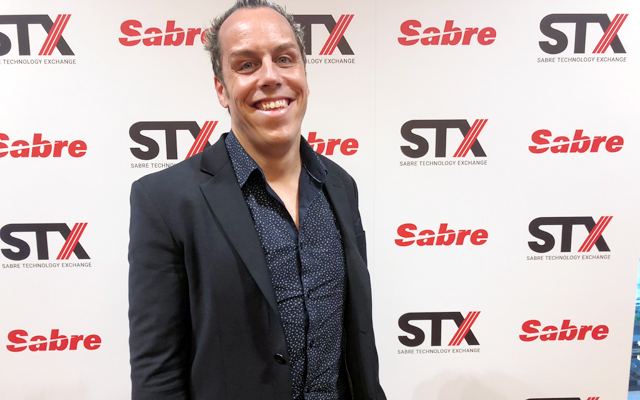
More partners in Asia-Pacific and beyond will soon be announced, revealed Kathy Morgan, vice president, NDC, Sabre, on the sidelines of the Sabre Technology Exchange yesterday.

Jason Nooning, global NDC coordinator, Flight Centre Travel Group, told TTG Asia: “It’s really great to be helping to drive the narrative from the perspective that’s in the best interest of all the constituents in the value chain. We’re ensuring that if there are any gaps in the functionality, we’ve got a broader voice with the largest TMCs in the world.”

Flight Centre has since rolled out a number of new products in collaboration with Sabre that provide new features such as trip appraisals and new retailing capabilities.

Sean Menke, president & CEO of Sabre, described: “We have really engaged – especially talking about NDC – both the travel agencies and the suppliers side of the equation. If we do not have that, then we’re not going to get prioritisation of problems we have to solve.

“You have to have that level of insight with your customer. I think there’s more work and collaboration that needs to be done, not only for the technology providers but also hoteliers and airlines.”

To push this further, Sabre has integrated its airline and agency teams into a single “Travel Solutions” umbrella in order to streamline its internal processes and the product awareness for partners in both circles.

“We didn’t have people within our hospitality organisation or airline solutions talking to people in the travel network organisation. (Now) we have to bring it to the forefront to our partners to understand the breadth and depth of the technologies we have,” explained Menke.

Head of operations for Australia-based Phil Hoffmann Travel, Genevieve Thompson, opined that there is definitely room for more innovation, especially in online booking tools, as “it’s very important” for agents to be involved in the technology value chain.

She explained: “Agents are the ones dealing with travellers day in, day out, so their thoughts and ideas are really important for GDSs like Sabre to be in touch with industry trends.”

For Brunei-based Century Travel Centre, the degree of engagement between technology providers and travel agents leaves much to be desired, as there is hardly any awareness of other options in the market, said general manager Foo CP.

“Attending more events like these would be good to help us see what solutions there are,” he said.

Waldorf Astoria pushes into Bangkok’s luxury hotel space

0
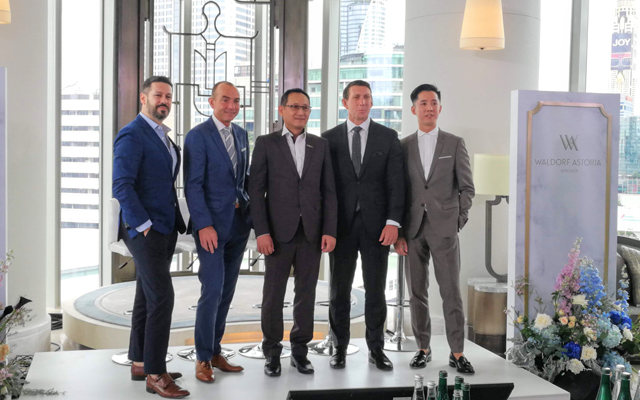
The people behind Bangkok Astoria Bangkok (from left): AvroKO's William Harris, Hilton's Martin Rinck, MCDQ's Visit Malaisirirat, Hilton's Alan Watts and AFSO's André Fu

The much-anticipated Waldorf Astoria Bangkok officially opened its doors yesterday, the latest in a growing swathe of luxury hotels that have launched or are launching soon in the Thai capital to tap the country’s robust inbound tourism sector.

The first Waldorf Astoria in South-east Asia and the fourth in Asia-Pacific – after Shanghai, Beijing and Chengdu in China – the new hotel is the fruit of Hilton’s partnership with Magnolia Quality Development Corporation (MQDC), which is the property development arm of Thailand’s Charoen Pokphand conglomerate.

The people behind Bangkok Astoria Bangkok (from left): AvroKO’s William Harris, Hilton’s Martin Rinck, MQDC’s Visit Malaisirirat, Hilton’s Alan Watts and AFSO’s André Fu

MQDC’s CEO Visit Malaisirirat, speaking at the press conference yesterday, said the alliance marks “an important strategic move into ultra-luxury hospitality” for the Thai property developer, which recently announced another mixed-use development in Bangkok’s Bangna district.

“We have been looking for flagships in South-east Asia for some time,” commented Alan Watts, Asia-Pacific president of Hilton. “Bangkok is one of the most competitive markets in Asia, and Waldorf Astoria will redefine luxury not only for Bangkok but also South-east Asia.”

But Waldorf Astoria is not the only luxury hotel brand that has come knocking on Bangkok’s doors. Even within its prominent Ratchadamri location, Waldorf Astoria Bangkok already calls The St Regis Bangkok its immediate neighbours, while the recently opened Park Hyatt Bangkok and Rosewood Bangkok (opening 2019) – both of which stand less than a kilometre away – are a constant reminder of the level of competition crowding Bangkok’s luxury hotel market, not to mention upcoming hotels like Capella Bangkok (opening 4Q2018) and Four Seasons Bangkok at Chao Phraya River (opening 2019).

Hilton is, however, maintaining “an extremely bullish outlook” on Thailand, including the luxury segment, vice president, operations, luxury Asia-Pacific Daniel Welk told TTG Asia. “Look at the number of arrivals coming into Bangkok, which hit 35 million last year and is expected to reach 38 to 39 million this year,” he said. “The city itself is dynamic and offers amazing products, and the infrastructure is improving.”

And if there’s anything that growing competition has brought, it’s greater clarity for Hilton’s hotel brands, Welk stated. “The swim lanes are more defined now,” he said. “(Waldorf Astoria Bangkok) is Hilton’s ninth hotel in Thailand, and we’re well positioned to absorbed any new competition the market will bring.”

After Bangkok, Hilton has another three additional Waldorf Astoria hotels in the pipeline for Asia – the Maldives (opening February 2019), Bali and Jarkarta (both opening 2020).

Asia overall is a region of strong growth for Hilton’s luxury brands, revealed Martin Rinck, global head, luxury & lifestyle group. There are some 35 Conrad properties worldwide, and 12 out of 18 currently under development are located in Asia.

Canopy, the new lifestyle brand launched in 2017, is now Hilton’s “fastest-growing brand” with 30 under development and Chengdu will be the first city in Asia to welcome the brand this year, Rinck added.

A new luxury brand, LXR, will debut this year-end as Hilton’s collection of independently established properties with their own identities.


Glitzy new kid on the block

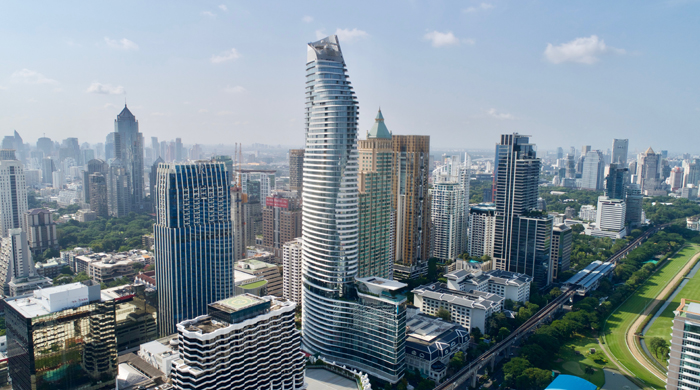
Waldorf Astoria Bangkok has 171 rooms and suites housed between levels six and 15 in Magnolia Ratchadamri Boulevard, a 60-storey, mixed-use luxury complex whose free-form architecture was designed to resemble a sprouting magnolia flower. The complex sits on a prime strip of land on Ratchadamri Road next to Grand Hyatt Erawan, overlooking the Royal Bangkok Sports Club.

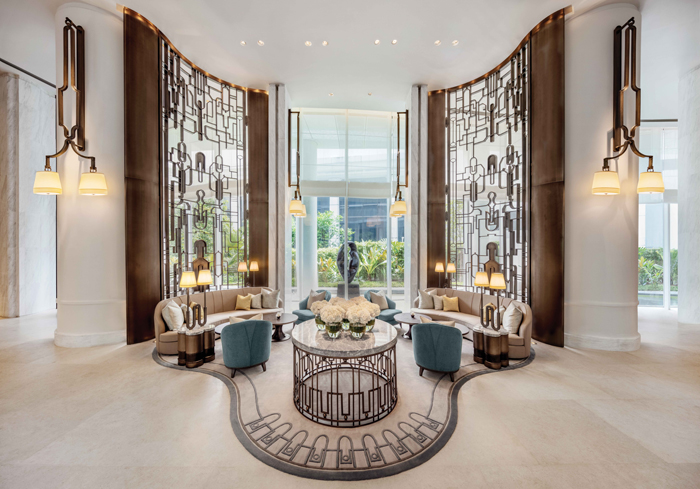
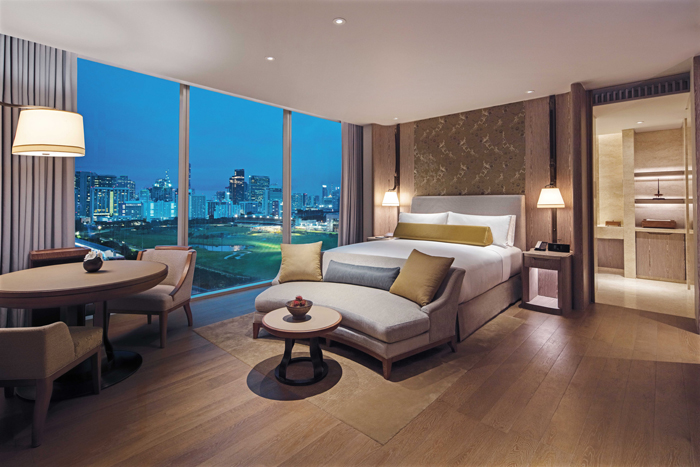
Renowned architect André Fu is responsible for the design of Waldorf Astoria Bangkok’s interiors, melding Art Deco design elements with Thai artisanal traditions, curvy lines and bespoke items in the 171 residential-style guestrooms and suites – which start at an expansive 50m2 – as well as the Front Room signature restaurant, the Peacock Alley lounge and The Brasserie restaurant on the Upper Lobby.

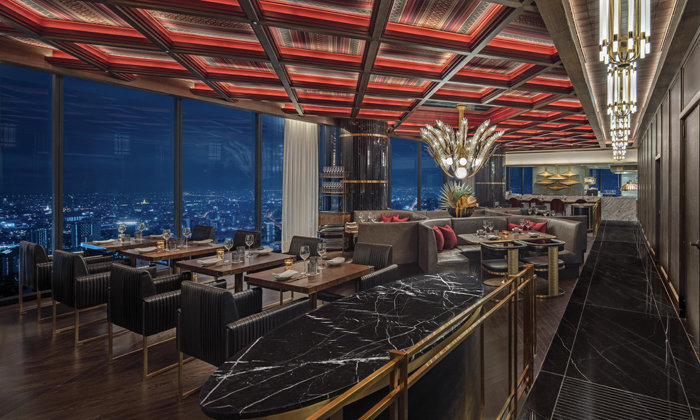
New York-based design and concept firm AvroKO is the creative force behind the trio of distinctive dining outlets perched at the hotel’s top three floors from levels 55 to 57, decking out the Bull & Bear steakhouse with the naga-and-garuda chandelier piece de resistance as a local narrative of the New York classic; giving The Loft bar a touch of an Upper East Side artist’s apartment with sketches and ideas as part of the décor; and the Champagne Bar at the hotel’s peak on level 57.

Beyond the topmost floors, the hotel also features another three restaurant concepts. Front Room, the signature restaurant helmed by chef Far Rungthiwa Chummongkhon, serves up new Nordic and Thai flavours on the ground floor; The Brasserie, located on the upper lobby on the 15th floor, offers traditional French brasserie fare all day; and Peacock Alley, modelled after the New York original, presents pastries and refreshments.

The hotel is also home to the 730m2 Magnolia Ballroom on level 10, which is expected to be a sought-after events venue for high-end weddings and functions with its eight-metre ceiling, a statement-sweeping staircase and capacity to accommodate 700 standing guests or 330 seated guests.

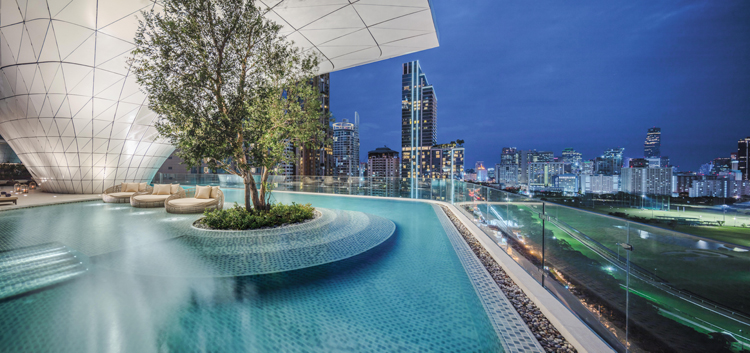
Other amenities at this luxury outpost include an outdoor temperature-controlled swimming pool, 24-hour fitness centre, spa and personal concierge service.

Room rates start from 13,000 baht (US$397), plus applicable government taxes and service charges.