TTG Asia
Asia/Singapore Tuesday, 7th April 2026
Page 1362

Cambodia Travel Mart broadens horizons for country’s tourism businesses

0
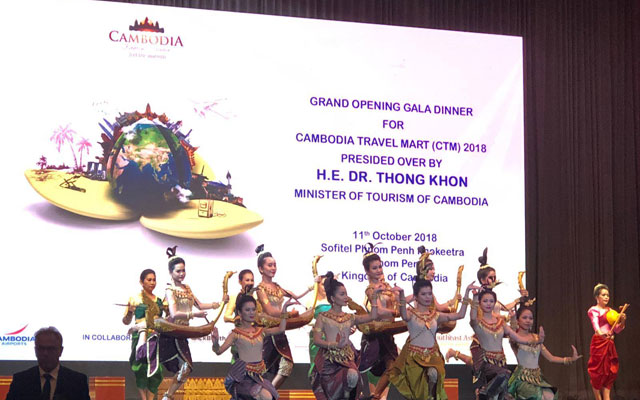
The Grand Opening Gala Dinner at this year's Cambodia Travel Mart

Tourism industry leaders have sights on securing growth from their non-traditional target markets as this year’s Cambodia Travel Mart (CTM) attracts buyers from a range of countries.

The second CTM took place from October 11-13, attracting more than 300 buyers, sellers and media from 80 countries. More than 2,000 visitors attended the three-day event held at Diamond Island Exhibition and Convention Centre in Phnom Penh.
The Grand Opening Gala Dinner at this year’s Cambodia Travel Mart

Kevin Rangsey, managing director of Slickbooth, which co-organised CTM alongside the Cambodian Ministry of Tourism and TTG Events, said Cambodia’s growing tourism industry prompted a need for the mart to provide a platform for the kingdom’s burgeoning attractions to showcase their products to an international audience.

He said: “Cambodia is very new, and the industry has little exposure to travel tradeshows. In the past, when they wanted to attend, they had to join neighbouring countries with the Ministry of Tourism booth. Now, they have the chance to promote their products and services in their own country. This (CTM) spreads all the positivity of Cambodia and contributes to promoting Cambodia and the region.”

Benoit Jancloes, general manager of Sokha Phnom Penh, said there was strong representation from ASEAN countries as well as a good number of South Korean buyers. He said: “South Korea is a rapidly growing market for Cambodia and one we should target more, so (the rising interest from this market) was good to see.”

Jancloes added India is another emerging source market that Cambodia is actively targeting, with a healthy delegation from the country attending the mart.

Harry Grieg, Sofitel area marketing manager, also believes the mart will further fuel tourism growth, especially in emerging source markets. However, he suggested there should be more focus on the MICE market when the event is held in the capital and leisure when in Siem Reap, the setting of last year’s inaugural event.

He said: “The kingdom is becoming much more accessible to visitors, so we believe there are some great opportunities to develop the MICE market in particular.”
ICYMI: TTG’s top 5 headlines from ITB Asia

0

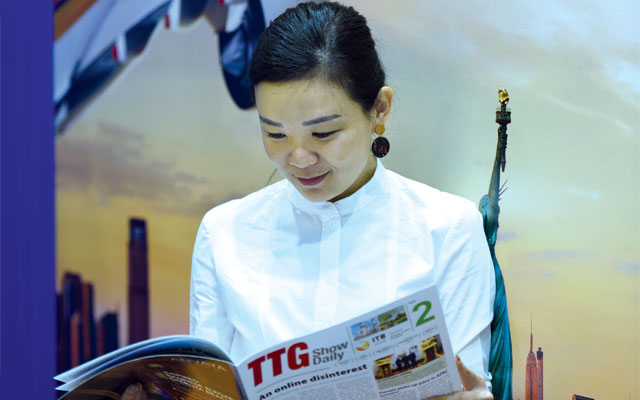
If you didn’t manage to get hold of a copy of our TTG show dailies at ITB Asia 2018, here’s a look back at the stories that had people talking at the show.

  1. World demand rising for Asia
  2. Triple whammy for Philippine outbound
  3. Funding declines for new travel start-ups
  4. An online disinterest
  5. New mindset to court Muslims 

Click here to view digital editions of the TTG show dailies.

Surging fuel prices put squeeze on airline profitability

0
XXX

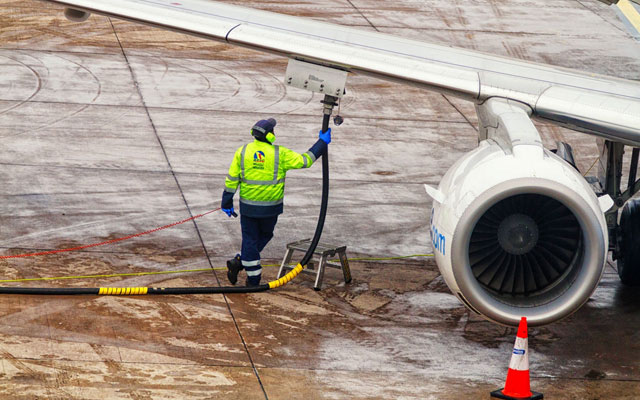
As the number of international passengers carried by Asia-Pacific airlines continue to grow – by a healthy eight per cent from January to August this year – significant increases in fuel prices are eroding margins and profitability.

“It’s been very difficult to pass on the fuel cost impact,” said Andrew Herdman, director general of the Association of Asia Pacific Airlines (AAPA), at the 62nd Assembly of Presidents in Jeju last week. And the fuel cost that can be passed on to airfares also varies dramatically by markets, he pointed out.

Air fares are not keeping pace with fuel prices in APAC region

Overall, carriers in the Asia-Pacific region have seen margins decrease and profits weaken, despite the robust passenger traffic numbers amid rising fuel prices.

IATA’s jet fuel monitor showed that jet fuel prices in Asia and Oceania as of October 12 was almost four per cent higher versus a month ago, and about 41 per cent higher from a year ago.

While India may be the fastest-growing market with a double-digit growth in travel demand, Herdman said that “Indian carriers are not profiting right now”.

Philippine Airlines, also feeling the same pressures from higher fuel costs, has recently added fuel surcharges to airfares, admitted its president and chief operating officer Jaime Bautista.

Meanwhile, some markets are seeing cracks in general consumer confidence, brought about by currency weakness, politics and macroeconomic policy.

Nevertheless, Herdman projects clear growth prospects for Asia-Pacific airlines next year, as the global economy is set to grow by 3.7 per cent, demand for business and leisure travel likely to be sustained, and Asia-Pacific airlines continue their investment in next-generation aircraft, latest technology and other customer service initiatives.

Finland wants Asians to find adventure for all its seasons

0
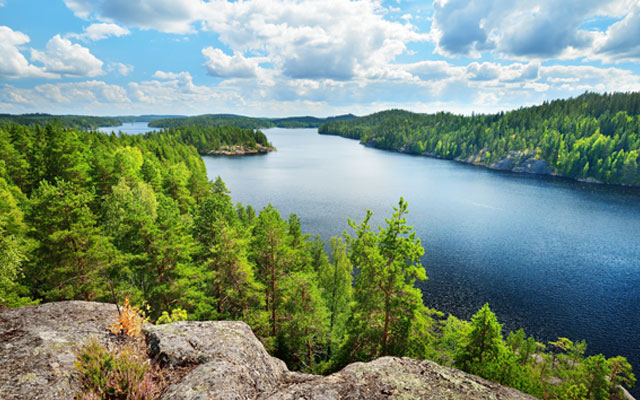
The tourist promotion board wants to spread the word the country is a year-round destination; Saimaa Lake in Finland pictured

In a bid to get more South-east Asians to consider Finland as a year-round destination, as opposed to it solely being a winter wonderland, the Visit Finland delegation at this year’s ITB Asia was the largest to date – comprising 80 delegates across 53 companies – since it first exhibited at the show six years ago.

Heli Mende, director, head of Global Sales Promotion Visit Finland, shared: “The general misconception among Asians is that Finland is only good to visit during winter. Another misconception we wish to dispel is that the Northern Lights is diminishing or that it can only be seen when it snows. The aurora borealis is a natural phenomenon, and is not only seen during the winter season. This year, it could be seen from early September.”

The tourist promotion board wants to spread the word the country is a year-round destination; Saimaa Lake in Finland pictured

That is why Mende reiterated that the delegation was at ITB Asia last week to “promote Finland as a year-round destination”, as all its four seasons are unique, and offer many activities that can be conducted throughout the year, such as river rafting, sailing or midnight sun golfing.

Aside from year-round travel, Visit Finland is also keen to promote adventure travel during the four seasons to agents, especially those that cater to the growing FIT segment, experiential travel, as well as incentive groups.

Adventure activities Mende listed include snowmobile safaris, husky safaris and spending an overnight in a snow castle.

Finland is also a business events destination, Mende stated. She said: “We have excellent infrastructure, experienced DMCs, and we are a peaceful nation. We also have conference venues that are of international standard. Earlier in July, Helsinki hosted the Trump-Putin meeting with a lead time of just two weeks.”

Train derails along popular tourist route in Taiwan

0
Puyuma Express train arriving pulling into Dongshan station in Yilan

Yesterday afternoon, a train passing through Yilan county in Taiwan’s north-east derailed on a coastal route popular with tourists.

The Puyuma Express 6432 was carrying 366 passengers when it went off the tracks between Dongshan and Suxin stations at 16.50.

Puyuma Express train arriving pulling into Dongshan station in Yilan

Reports put the death toll at 18 people, while 168 others were injured, 10 of whom were in serious condition.

At least one of the passengers injured is a foreigner, a 43-year-old American woman.

Reportedly, many of the passengers who were hurled out of their seats were not wearing seat belts, which were not available to them.

The cause of the accident is still unknown at press time, with investigations still underway.

The incident has been said to be the worst rail disaster Taiwan has seen since 1991, when 30 passengers were killed and 112 injured in a collision between two trains in Miaoli.

Ctrip, KLM seal strategic partnership agreement

0
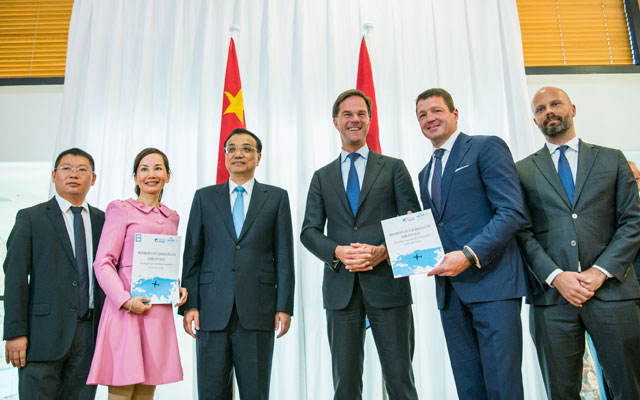
From second left: Ctrip's Jane Sun, Chinese premier Li Ke Qiang, Netherlands prime minister Mark Rutte and KLM's Pieter Elbers

Chinese OTA giant Ctrip and KLM Royal Dutch Airlines last week entered into a strategic cooperation agreement to further develop China-Europe flight routes, in a signing ceremony presided by Chinese Premier Li Keqiang and Netherlands prime minister Mark Rutte.

The agreement marked a milestone and deepening of cooperation in the civil aviation industry for the 2018 EU-China Tourism Year, with several new flight routes recently beginning operation.

From second left: Ctrip’s Jane Sun, Chinese premier Li Ke Qiang, Netherlands prime minister Mark Rutte and KLM’s Pieter Elbers

Pieter Elbers, president and CEO of KLM, said: “With so many complementary areas across our businesses and supply chains, the partnership with Ctrip has the potential to help us realise significant innovations in areas including customer service, data operations, flight route development and product marketing. This will help to solidify and grow the Netherlands’ position as the ‘Gateway to Europe’ for Chinese travellers and enterprises.”

CEO of Ctrip Jane Sun added: “With the great opportunities presented by the EU-China Tourism Year, Ctrip will help more Chinese tourists travel to Europe, broadening horizons and benefiting business partners in the region. We hope Chinese tourists can become a bridge promoting trade cooperation, cultural exchange and people-to-people diplomacy between China and Europe.”

Through the partnership, Ctrip is expected to leverage its large customer base to help foreign airlines develop innovative membership service systems, and to provide passengers with more abundant and distinctive travel products.

Ctrip’s new travel trend report shows that Europe is increasingly a popular destination for Chinese tourists. In 2017, the number of Chinese outbound tourists to Europe ranked second among all continents, increasing 26.3 per cent compared with 2016. Average travel spending per person also increased by 36 per cent year-on-year.


Could you be a Tourism for Tomorrow Award winner in 2019?

0

Brought to you by World Travel & Tourism Council

The stories of grassroots activism are plentiful, from remote lodges converting a shark-finning camp into a nature reserve to trekking companies lighting up Himalayan villages for the first time. Big business plays its part too. Winners include airlines adhering to sustainable food policies, global hotel chains supporting responsible employment and tourist boards putting long-term sustainability before short-term economic gain.

Tourists flock to southern Asia for its coral reefs, beaches, wildlife-filled jungles and some of our planet’s most untouched landscapes. It’s unsurprising therefore that hotels have been quick to protect these precious assets, even when higher authorities fail to act. For 15 years, the Tourism for Tomorrow Awards have been celebrating the initiatives that have led this responsibly-minded charge.

Driving to Indonesia’s remote Raja Ampat in 2004, Misool owners Marit and Andrew Miners were horrified to discover an abandoned shark-finning camp that epitomised how much wildlife had been undervalued — overfishing was commonplace and the fragile ecosystem was being eroded. After years of negotiating with local communities and government organisations, the Miners established the Misool Private Marine Reserve, which protects 300,000-acres of ecologically important coral reefs and is funded in part by Misool’s eco-resort, offering exclusive adventure tourism. This continued commitment led to Misool being awarded the Environment Award in 2017.

Jetwing Vil Uyana is another Environment Award winner recognised for putting nature first. Before construction began on a site under Sri Lanka’s UNESCO rock fortress, Sigiriya, Jetwing employed environmental experts to regenerate three habitats: seven acres of wetlands, one of organic and traditionally-harvested paddy fields, and five of land re-forested using native species. Environmentally-sensitive lodges were built into the vegetation, which is now home to 80 species of birds, 17 of mammals and 36 of butterfly.

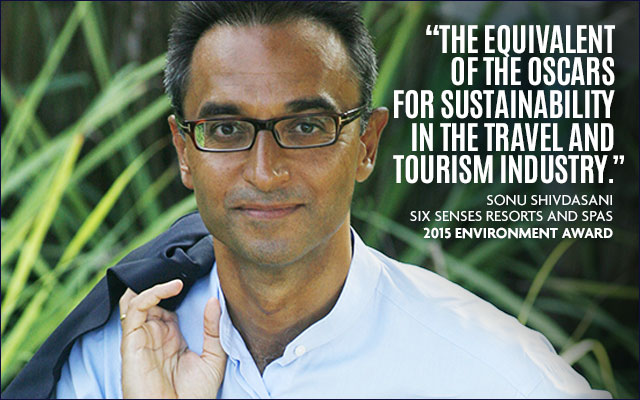
In 2012, Singapore-based Banyan Tree Hotel Group won the Sustainable Business Award for its commitment to help protect nature and cultural heritage from Mexico to China. Banyan Tree was a pioneer in banning shark’s fin across its menus and paving the way for company-wide sustainability targets. Four years earlier, the Global Tourism Business award was given to Six Senses Resorts & Spas for their systematic ‘Social and Environmental Conscience’ programme and in 2015, Six Senses’ founder Sonu Shivdasani won the Environment Award for The Soneva Group’s unfaltering commitment to reducing carbon emissions. Situated in one of The Maldives’ most remote atolls, Soneva Fushi has addressed infrastructure and supplier challenges through a sustainable filter — imported water was banned in 2008, 79 per cent of waste is recycled through an innovative Waste-to-Wealth initiative, and onsite vegetable gardens produce $48,000 worth of food every year.

Care for the community also plays a pivotal role in the Awards. In 2013, El Nido Resorts’ Ten Knots Development Corporation won the Community Award after 30 years of ensuring that tourism benefits local people, while in 2014 the Lao National Institute of Tourism and Hospitality (LANITH) won the People Award for establishing diplomas, colleges and vocational courses that give young people a brighter future.


Next year’s Awards will be held at the World Travel and Tourism Council’s Global Summit in Seville, Spain, on the 3rd and 4th April 2019. The programme is now open for entries, and organisations can apply and find out more at wttc.org/tourism-for-tomorrow-awards.


World demand for Asia rising

0

In Asia, emerging destinations like Sri Lanka and the Philippines are shining brighter on the global tourism stage as a growing demand for experiential travel and improved air links are encouraging travellers to venture farther for holidays.

Philippe Roussel, tour operator at Asie Voyages in France, is looking for “off-the-beaten-track” destinations in South-east Asia that offer local immersion and CBT programmes, as the French are increasingly showing a preference for experiential, eco-conscious travel.

Philippines is one of the countries in Asia benefitting from stronger community-based tourism demand and better air links

The Philippines, in particular, is gaining popularity.

Although there is currently no direct air connection between France and the Philippines, the Gulf airlines have opened up “many possibilities” of travel from Europe into South-east Asia through their Middle Eastern hubs, and along with it interest in the Philippines as a travel destination, Roussel added.

Another emerging contender is Sri Lanka, said Roland Galka of Private Travelling. The Germany-based luxury tour agent has observed a spike in interest and enquiries in Sri Lanka among his clients, driven by the destination’s improving infrastructure, growing crop of hotels, and diverse offerings ranging from nature and culture to food.

“The numbers (to Sri Lanka) have gone through the roof the last couple of years,” he said.

Meanwhile, Galka noted that Indonesia is another up-and-coming destination in Asia for Europeans, pointing to the many undiscovered locations like Rajat Ampat.

“I’d like to push Indonesia again (as a holiday destination); it did very well 20 years ago until the Bali bombings,” Galka said.

The wheel of fortune is clearly turning in favour towards Indonesia, as more international airlines mount direct flights to Indonesia, opening up opportunities to connect longhaul markets to the country.

Ethiopian Airlines, which began thrice-weekly Addis Ababa-Jakarta flights via Bangkok on July 20, has anchored Ethiopia as a new source market for Indonesia, particularly the family market.

Panorama Destination, Ethiopian Holidays’ groundhandler for Indonesia, has seen families travelling to Bali during the last school holiday season.

Ricky Setiawanto, director of business development Africa, Europe, and Baltic States for Panorama Destination, commented: “As they are new to Indonesia, they took the two-day Jakarta/five-day Bali package, which is common among first-timers.”

Ricky said what the market needs going forward is greater awareness of Indonesia and easier visa application. Ethiopia is not on the visa-free or VoA list.

Coming up are direct flights from Moscow to Bali, which will be jointly operated by Aeroflot and Rossiya Airlines (under Aeroflot’s SU code) starting October 29. The thrice-weekly service is expected to boost Russian arrivals to Indonesia.

The new connection is aligned with Pacto’s plans to expand the Russian market. Ade Rachmadi, world product manager of Pacto, said: “Last year, we appointed a (sales) representative there. And recently, we went on a sales mission to Russia to introduce ourselves to the local players and learn about the market profile.” – additional reporting by Mimi Hudoyo

Why tours and activities in Asia are not listing online

0
WIT 2018 opening ceremony

The tours and activities sector has come into view as the next frontier for travel intermediaries, but online players continue to struggle as they navigate the highly fragmented space, particularly in Asia, impeded by software as well as inventory limitations surrounding these typically last-minute, in-destination purchases.

According to a PhocusWright study, only 20 per cent of tours and activities are booked online.

It’s Getting Hot In The Experiences Kitchen session at the WIT 2018 session on Tuesday; WIT 2018 opening ceremony pictured

In Asia, the proportion of online to offline bookings is likely to be even smaller, industry players at WIT 2018 said.

“We’ve got a really long way to go. There are products out there in Asia… but they are not listed online because they are not ready to be sold online,” said Graham Hills, chief commercial officer, BeMyGuest, an online tours and activities distributor.

When working with OTAs on product selection, for example, the first thing the partner asks is if the product can be instantly confirmed upon booking.

“If not, we won’t even display it. So those don’t even go into the consideration set for online shoppers. We have a long way before products can be (made) available online, let alone be booked online,” said Hills.

While the PhocusWright study shows that the proportion of tours and activities suppliers with third-party reservations systems have quadrupled from 11 per cent in 2011 to 45 per cent in 2016, WIT panelists say the number in Asia is likely to be even less than 11 per cent.

Hills, for example, said many providers in the long tail of travel still lack the technology that enables distribution through online channels.

At the moment, tours and activities still tend be booked in-destination and with short lead times.

Said Mark Rizzuto, CEO of Livn: “When we look at resellers targeting the space, their inventory closes in the last 48 hours because access to live inventory is limited by technological capacity. There are below-the-surface challenges in the sector (and) enormous opportunities that are poorly tapped into.”

From a supplier perspective, the strength of offline, foot traffic and tendency for travellers to book activities on the day itself are reasons why some suppliers are not motivated to go through online third parties, according to Zishan Amir, general manager of Mega Adventure Group which operates the MegaZip flying fox on Singapore’s Sentosa island.

“Visitors to Sentosa (wanting to do activities) would have come to us anyway. What’s the purpose of having a third-party system?” said Zishan.

He added: “Many Asian travellers still rely on traditional travel agents to tell them what the itinerary is. They will do their research but still want to trust someone (offline).”

On the other hand, travellers from the US or the UK tend to rely on a larger travel website like TripAdvisor as their first point of contact.

While acknowledging the reach that marketing through third-party sites could bring, there continues to be “fear and trepidation” surrounding the loss of control over branding in that process.

“To engage some markets (directly) may be a costly exercise. (Alternatively, we could) use an intermediary that already has access. But for a lot of attractions, this is completely new.

“We don’t have the experience and resources for marketing, let alone digital marketing. There’s also a fear that once you (list on a third-party website) you lose brand control. We just don’t understand enough,” said Zishan.

Sentosa poised for new hotel cluster, redevelopment

0
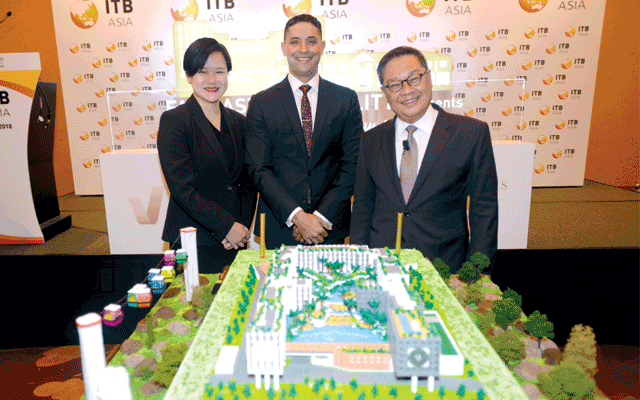
From left: Far East Hospitality Management’s Christine Choo, Gill Ishwinder and Arthur Kiong

Sentosa and its surrounding waterfront areas will undergo total rejuvenation and development, following announcements by key players and agencies at ITB Asia 2018.

Three new hotels were announced yesterday by Far East Hospitality’s CEO, Arthur Kiong, to bring the island destination “a wonderful mid-tier range of products”.

From left: Far East Hospitality Management’s Christine Choo, Gill Ishwinder and Arthur Kiong

These are Village Hotel at Sentosa, offering 606 rooms including family rooms, as well as the 193-key adults-only The Outpost Hotel – both slated to welcome guests in April 2019. Come 3Q2019, The Barracks Hotel will open with 40 rooms in a conserved colonial building.

The three properties will raise Sentosa’s total room count to 4,200, and their rooms will be “egalitarian” and “priced effectively”, said Kiong.

He explained: “Sentosa is a driver of business (for Singapore’s tourism) and is very popular, but it’s interesting that 90 per cent of its room inventory are in the luxury class.

“(Our new cluster) caters to families, groups, business events and niche segments. Visitors may be encouraged to extend their stay in Singapore and Sentosa from one to two days.”

This comes on the back of an announcement by Singapore’s senior minister of state for trade and industry, Chee Hong Tat, of plans to reshape the entire Sentosa island, as well as to develop the adjacent Pulau Brani, and the 1,000ha waterfront area along Tanjong Pagar.

This area, which Chee said is “as large as Sentosa itself”, will be branded the Southern Gateway of Asia. He revealed: “One area which I am personally very keen to explore and push ahead is how we can encourage more activities at night on Sentosa.”

Kiong expressed: “This is the harbinger of very, very exciting developments for Sentosa as well as the rest of the precinct.”