TTG Asia
Asia/Singapore Wednesday, 8th April 2026
Page 1355

SE Asia a key market as Finnair’s APAC growth picks up pace

0

Having seen a 20 per cent increase in longhaul capacity since winter 2017, Finnair is now looking to accelerate its growth in the South-east Asian, Australian and New Zealand markets.

The airline has appointed Tamas Hanyi as general manager Asia-Pacific, based in Singapore. Hanyi is tasked with the development of Malaysia, Indonesia, Australia and New Zealand source markets, using Singapore as the transfer point to Helsinki and beyond.

Hanyi was at the recent ITB Asia to reinforce the message that Finnair offers the shortest and fastest route between Asia and Europe, with the airline flying to more than 100 destinations in Europe via Helsinki.

While China, Japan and South Korea are the biggest Asian growth markets for the airline today, South-east Asia is also important, Sebastian Grossmann, Finnair’s regional manager – Singapore, Malaysia and Indonesia, shared in a separate interview with TTG Asia.

He added that South-east Asian feeders are showing “a good amount” of growth, especially from Singapore to the Nordic countries.

Watch the full interview with Grossmann here:


Jonne Lehtioksa, area vice president, Asia & Oceania, commercial unit at Finnair, described Singapore and Australia as high growth, critical markets for business and leisure traffic to Helsinki and beyond. Approximately 30 per cent of seats on the Singapore-Helsinki flights were filled by Australians.

Lehtioksa also noted the different buying behaviours in the markets. The Singapore market comprised mostly a millennial crowd that sought new European destinations such as Iceland and Sweden, and travellers were more digitally savvy and willing to book online. Australians and New Zealanders, on the other hand, relied more on travel agents.
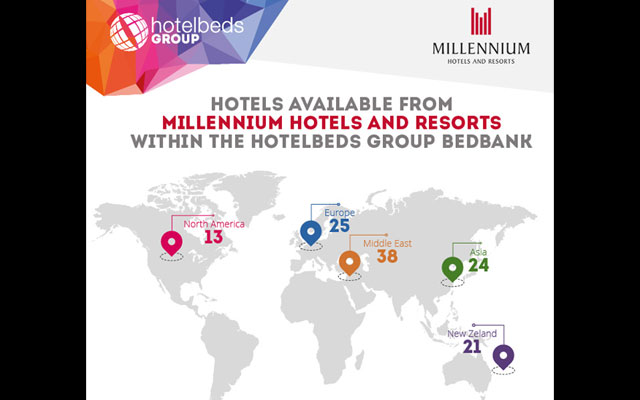
Millennium Hotels seals partnership with Hotelbeds Group

0
The agreement powers up all of the Hotelbeds Group brands – including Hotelbeds, Bedsonline, Tourico Holidays, and GTA - with direct real-time access to MHR’s 1.4 million-plus annual room nights in over 60 leading global business and leisure travel destinations.

Hotelbeds Group and Millennium Hotels and Resorts (MHR) are joining forces in a new strategic partnership.

The agreement will enable the global bedbank’s brands – including Hotelbeds, Bedsonline, Tourico Holidays and GTA – with direct real-time access to MHR’s 1.4 million-plus annual room nights in over 60 destinations worldwide.

The agreement give all of the Hotelbeds Group brands with real-time access to MHR’s more than 1.4 million annual room nights in over 60 destinations

Meanwhile, MHR will be able to step up distribution through Hotelbeds’ portfolio of 60,000-plus travel distributors in more than 140 markets with the new alliance. These channels of distribution help hotels access a wider international reach and end customers’ profiles, who typically reserve with longer lead times and have lower cancellation rates.

Mark Redmond, head of global chains at Hotelbeds Group, said: “This will be a strong relationship delivering special rates and availability across the MHR portfolio to our 60,000-plus clients, while giving MHR access to higher-margin, niche segments of the travel market.”

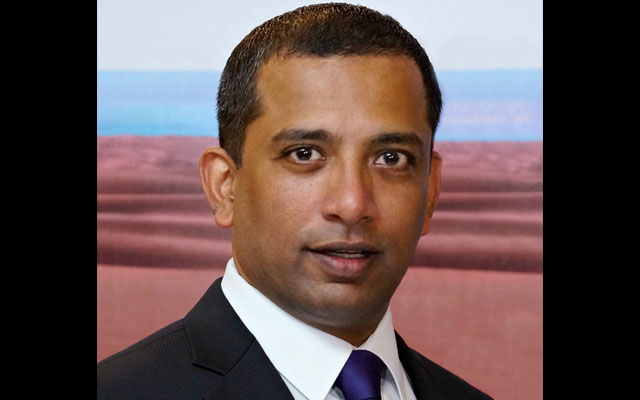
Nayan Peshkar, senior vice president digital, distribution & revenue strategy, Millennium Hotels and Resorts, added: “This supports the group’s wider distribution strategy of reducing reliance on static rate and room agreements in the leisure segment. Our guests are now able to get the best rates at all times across all channels. Deeper penetration of Hotelbeds’ client base will support higher margins and propel a more dynamic customer relationship.”

VFS to provide Germany visa services across APAC

0
VFS Global has been awarded the Regional Contract to provide Germany visa services in the Asia Pacific

VFS Global has been awarded a regional contract by Germany’s Federal Foreign Office to provide Germany’s visa services in the Asia-Pacific region.

Under the terms of a new contract, VFS Global will operate visa application centres in 36 new locations across 14 countries – Brunei, Fiji, Cambodia, Laos, Malaysia, Mongolia, Myanmar, Papua New Guinea, Singapore, Vietnam, Indonesia, Philippines, China and Thailand. China alone will see the addition of centres in 15 cities.

VFS Global has been awarded the contract to provide Germany visa services in APAC

VFS Global is expected to start operations in the new application centres during 1Q2019. The visa outsourcing application company has worked with the German government for the past 13 years since 2005 but on a smaller scale.

In addition to these facilities, VFS Global will also offer a mobile biometric service in 24 locations throughout the region, enabling applicants to submit their documents and biometric information from a location of their choice, e.g. from their home or office, eliminating the need to visit a visa application centre.

Chris Dix, head – business development, VFS Global, remarked: “VFS Global currently operates 59 Germany visa application centres across 16 countries – this new contract will take the total number of countries which have centres operated by VFS Global to 30.”

Emirates to launch ‘biometric path’ for passengers at Dubai airport

0
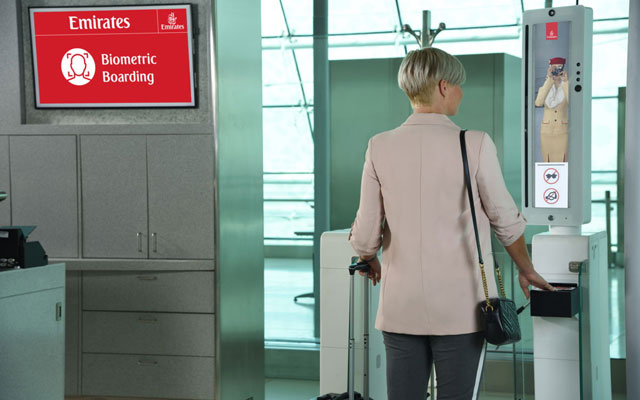
An Emirates passenger going through the biometric gates

Emirates is gearing up to launch the world’s first “biometric path” for passengers at the airline’s hub in Dubai International Airport.

Utilising the latest biometric technology – a mix of facial and iris recognition – Emirates passengers can soon check in for their flight, complete immigration formalities, enter the Emirates lounge and board their flights.

An Emirates passenger going through the biometric gates

The latest biometric equipment has already been installed at Dubai airport’s Terminal 3. This equipment can be found at select check-in counters, at the Emirates Lounge in Concourse B for premium passengers, and at select boarding gates. Areas where biometric equipment are installed will be clearly marked.

Trials for the Smart Tunnel, a project by the General Directorate of Residence and Foreigners Affairs in Dubai (GDRFA) in collaboration with Emirates, was launched on October 10. It is a world-first for passport control, where passengers walk through a tunnel and are “cleared” by immigration authorities without human intervention or the need for a physical passport stamp.

Once its internal tests are completed, Emirates will launch trials for biometric processing at other key customer points at the airport – check-in, lounge and boarding gate – and subsequently at transit counters/gates, and for its chauffeur drive services. All biometric data will be stored with GDRFA, and customers invited to participate in the trials will be asked for their consent.

Adel Al Redha, Emirates’ executive vice president and COO said in a statement: “All systems will eventually be linked with each other resulting in better service to our customers and a happier journey whether arriving, departing or transiting in Dubai.”

The airline’s “biometric path” aims to improve customer experience and customer flow through the airport with less document checks and less queuing. Eventually, the “live” passenger tracking capability will also enable the Emirates airport team to locate and assist ‘late’ customers who would otherwise miss their flights.

Initially focused on First and Business class travellers, Emirates intends to speedily extend the “biometric path” to Economy class travellers in Dubai, and potentially extend the service to other airports outside of Dubai, and also for its own dedicated crew check in facility.

Lindsay Nelson heads up TripAdvisor’s new Core Experience unit

0

Lindsay Nelson has joined TripAdvisor as president of its newly formed Core Experience (CoreX) business unit, as the travel giant evolves to become more social and personalised in its offerings.

In this role, Nelson will oversee the global TripAdvisor platform and brand, lead content development, and scale revenue generating consumer products and features that enhance the travel journey.

Prior to joining TripAdvisor, Nelson was the chief commercial officer for Vox Media. She also spent four years as Vox Media’s chief marketing officer.

Banyan Tree Phuket welcomes new area DOSM

0

Banyan Tree Phuket has appointed Shannon Creado as the new area director of sales and marketing.

Born and educated in India, Creado began his hospitality career in 1999, rising through the ranks until he became director of sales and marketing for Goa Marriott Resort in 2006.

He later took on sales & marketing director positions at other Marriott resorts, as well as Anantara and Minor Hotels, in South Korea, Sri Lanka, India and Thailand.

Conversational commerce will shape future of travel in APAC: Facebook

0
Facebook's Meghan Joseph on the deeper role of messaging between brands and consumers

Messaging, or “conversational commerce”, is poised to be one of the hottest trends shaping travel in 2019, according to Facebook’s global travel strategy and planning lead, Nikhliesh Ponde.

At the Facebook’s APAC Travel Summit in Singapore, it was revealed that people and businesses around the world now exchange over 10 billion messages each month.

Facebook’s Meghan Joseph on the deeper role of messaging between brands and consumers

This preference for messaging is even more pronounced in Asia-Pacific, where 87 per cent of smartphone owners use a messaging app every month.

“We recently conducted a global survey and found that people in emerging markets are twice as likely as those in mature markets to message a business at least once a month. People increasingly expect businesses to be available via messaging apps. This is a dynamic that travel businesses in Asia-Pacific are poised to leverage, given these are mobile-first markets,” Ponde added.

Some leading brands have already taken the leap by using WhatsApp to send timely notifications and offer customer support. First movers include leading airlines such as Singapore Airlines and travel planning websites like MakeMyTrip.com.

Messaging can also play a much deeper role as it draws people and businesses together into an ongoing conversation, said Meghan Joseph, client partner, Facebook Singapore.

“Consumers today visit numerous travel-related touch points over a few weeks when making a travel purchase. It’s much easier to make travel decisions when you have a personal and direct conversation – this is something that messaging can enable,” Joseph said.

The insights carry greater weight considering the emergence of a new middle class in Asia-Pacific. Nearly one in every two Internet users in Asia travels abroad at least once a year, the highest proportion of any region in the world.

Thailand inbound finds silver lining amid Chinese booking slump

0
Some inbound segments are seeing a silver lining

It’s not all bleak and gloom for Thailand’s tourism sector even as Chinese tourist arrivals continue to tumble in the wake of the Phuket boat incident in July.

As it turns out, a slump in Chinese arrivals in recent months is creating a silver lining for some inbound segments, as hoteliers roll out tactical measures and look to other markets to make up for the booking shortfall in 2H2018.

Some inbound segments are seeing a silver lining

“With Chinese business dropping off since the incident, hotels are throwing out tacticals for the entire winter, which is unusual,” noted Tobias Fischer, director of business development, Go Vacation Thailand, sharing his observations with TTG Asia at the recent ITB Asia in Singapore.

“DMCs are seeing a better chance of getting hotel bookings this period because hotels still have allotments, and we are still able to book rooms at static rates now,” said Fischer.

This is opposed to the usual BAR rates that DMCs are contracted to when hotels are running on high occupancies, particularly during the winter period, he added, with such strategies extending even to the typically high-occupancy months of February and March.

Shreyash Shah, cluster director of sales at Mytt Beach Hotel in Pattaya, is “filling up the vacuum this winter season by pushing for longhaul and regional markets”, including working with DMCs to target group series from South Korea, India and Japan, from where he has registered a “pick up” in bookings.

It would, however, take another six months for the Chinese inbound market to recover, predicted Shah, although he is already seeing “good demand from the Chinese market” for the Lunar New Year period in 2019.

Meanwhile, lagging Chinese demand in recent months has driven Matthew Hindmarch, director of hotels and resorts at Phuket-based Aksara Collection, to show “new markets more love”. These include Kazakhstan, Azerbaijan, India and the Middle East.

Hindmarch is “already closing out April next year” with bookings from South Africa, a “bright, cheerful and friendly market” where he sees small groups of lady travellers an emerging trend.

As well, Shah is finding cheer in the Russian market, which is “coming back in a good way”, with Mytt Beach Hotel hosting an average of 10 agent fam trips from across different Russian cities each week.

Search and rescue efforts underway for Lion Air crash

0
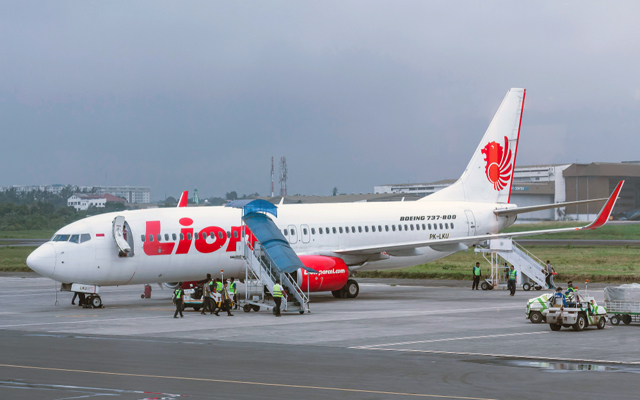
The aircraft was experiencing technical problems a day before take-off, before allegedly being cleared to fly according to procedure; pictured: a different Lion Air aircraft at the Husein Sastranegara International Airport

The cause of Lion Air JT 610 crash yesterday remains unknown as search and rescue operations continue around Tanjung Pakis, Kerawang, West Java.

The ill-fated Boeing 737 Max 8 plane lost contact 13 minutes after take-off yesterday morning from Soekarno-Hatta International Airport. It was bound for Pangkal Pinang, Bangka Island, carrying 189 people. All passengers are feared dead.

The plane was experiencing technical problems a day before the ill-fated take-off, but was allegedly cleared to fly according to procedure; pictured, a different Lion Air aircraft at the Husein Sastranegara International Airport

Apart from the plane’s captain Bhavye Harvino, an Indian passport holder, all passengers on board were Indonesians, more than 20 of whom were government officials returning to their posts in Pangkal Pinang after spending the weekend with families in Jakarta.

Search and rescue teams are currently working round the clock to locate the exact location of the wreck, and the search for the black box is also underway.

Technical issues were earlier reported for the plane during its Denpasar-Jakarta service on Sunday evening. However, Edward Sirait, CEO of Lion Air told the media that the airline’s engineers had fixed the problem and the flight was cleared to fly and landed safely in Jakarta.

Edward added that the plane was airworthy and pilot had taken all pre-flight inspections according to procedures.

Lion Air has just acquired the Boeing 737 Max 8 in August and has operated eight of 11 it has on order. The aircraft had only 800 hours of flight time recorded.

According to Reuters, this Lion Air accident was the first reported involving a MAX aircraft. Boeing has also issued a statement on its website that it was providing technical assistance at the request of the Indonesian authorities.

The accident may tarnish the image of the Indonesian airline safety, after ICAO awarded the Indonesia Ministry of Transportation the Council President Certificate, an award related to improvement on flight safety.

Earlier this year, the EU removed all Indonesian carriers from its air safety blacklist following improvements in their air safety.

Next Story Group adopts ‘hub and spoke’ model for Kafnu’s growth

0
Kafnu Alexandria, Sydney

Following the debut of Kafnu in Hong Kong, the Next Story Group is accelerating the brand’s Asian expansion, targeting 50 Kafnu premises within the next three years, predominantly in key capital cities.

The Kafnu concept is a blend of a private members club, shared workspace and boutique hotel.

According to group chief development officer, Andreas Flaig, the expansion will adopt a “hub and spoke” strategy, with “hubs” of 5,000-10,000m2 surrounded by “spoke” locations in smaller spaces of 2,000 – 5,000m2.

Kafnu Alexandria, Sydney

To date, there are three operating Kafnu properties, namely Hong Kong, Taipei and Bengaluru. By the end of 2018, Kafnu will add two more locations in Australia and Vietnam.

Projects in the pipeline are in Sydney, Ho Chi Minh City, Colombo, Mumbai and Bali, and the group is eyeing multiple locations within key cities such as Hong Kong, Mumbai and Delhi.

The group is also keen to step up its membership focus to drive loyalty across Kafnu properties in different cities.

Speaking to TTG Asia at the recent HICAP in Hong Kong, Flaig explained: “The beauty of the concept is that the membership is not bounded by geography; they can access the overseas premises and can network with local members there. As you see the intra-Asia traffic is growing, so we’d like to make sure when they travel, they stay with Kafnu. So far, Kafnu properties in Hong Kong and Taiwan have over 400 members altogether.”

Membership is on a selection basis, and is driven by members’ word of mouth and via the members’ own network, he revealed.

In terms of finding suitable locations, the group have looked at the commercial, retail and hotel spaces in three markets, namely India, Greater China and Australia.

Another aspect of the Kafnu strategy is conversion projects. Flaig added: “We can take an old, rundown, unprofitable small-scale hotel and convert it into a Kafnu. Take Greater China as an example. We are planning to have two to four in each cities like Shenzhen, Beijing, Guangzhou, Shanghai and potentially Chengdu. I lived in China for nine years and China has a lot of non-performing or over-built assets, which do not produce enough revenue.”

Beyond the Kafnu brand, the Next Story Group is also mapping expansion of its hotel brands. Among the upcoming openings are The Next Hotel Colombo, a 255-key property in Melbourne and a Sage Hotel in Ho Chi Minh City, the group’s CEO Darren Edmonstone shared.