While China’s theme parks are seeing lower attendance than other developed countries’, global infrastructure firm AECOM projects the Asian country would surpass the US in the global market by 2020.
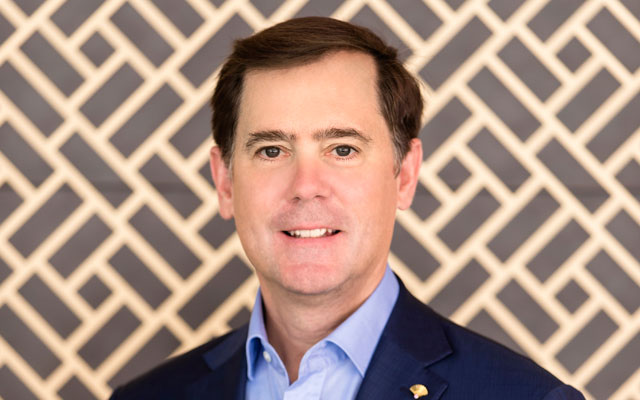
“In recent years there has been a substantial investment by Chinese theme park owners and operators, but our research shows that attendance levels are still considerably lower than other developed markets such as the US,” said Chris Yoshii, vice president, economics and global director of leisure + culture, Asia, AECOM.
Robust theme park pipeline for China
“While the total attendance at China’s theme parks grew to 190 million visits in 2017, a 20 per cent year-over-year growth, it is still a markedly lower per-capita attendance compared with other developed economies. These findings demonstrate a significant opportunity for future growth in the Chinese market.”
According to AECOM’s China Theme Park Pipeline Report, the future pipeline for theme parks in China appears robust, with least 70 new theme parks under construction or in a detailed planning stage.
“We anticipate that by year 2020, China will have surpassed the US in terms of total theme park attendance,” said Yoshii.
At a time when China’s theme park industry is flourishing, and owners and operators are assessing trends and potential paths forward, he added: “We found that parks with a clear and distinctive theme, such as those tied to international intellectual property brands, stand a higher chance of business success than independent parks.
“Overall, however, trends for China’s theme park industry are strong and offer a myriad opportunities for both themed and non-themed owners and operators.”
Mark Bradford in now general manager of Mandarin Oriental Wangfujing, Beijing, which will open in early 2019 as the group’s first property in the Chinese capital city.
Prior to his Beijing move, he was the opening general manager of the Mandarin Oriental, Marrakech in Morocco.
Bradford possesses more than 17 years of hotel management experience with Mandarin Oriental Hotel Group. He first joined the group in 2001, and has spent time in the Bangkok property as hotel manager, and helmed the Chiang Mai, Jakarta and Manila properties as general manager.
With more purchases made via mobile in today’s mobile-dominant economy, the Expedia Group is urging travel businesses in Thailand to revisit their mobile strategy to better grow customer acquisitions and drive conversions.
“Mobile is now one of the main tools that many businesses in Thailand are using to attract and convert consumers,” said Pimpawee Nopakitgumjorn, director of market management at Expedia Group. “Across Expedia Group brands, one in three bookings are made via mobile, and over 50 per cent of our traffic arrives via mobile. Yet, many Thai businesses are still not effectively leveraging mobile as a channel for customer acquisitions.”
Expedia urges Thai businesses to change its approach to mobile bookings
In Thailand, smartphone penetration continues to grow at a rapid rate. By 2021, smartphone will be used by nearly 80 per cent of the country’s total population, up by more than 10 per cent of today’s rate. Last year, half of all online purchases in Thailand were made through mobile devices.
Instead of a “build it, and they will come” approach to mobile and assuming that customers will automatically download apps just because they exist, Expedia urges Thai businesses to consider how consumers can benefit beyond the primary functions of browsing and shopping on a mobile device.
And in place of creating a dedicated app to join the millions of new apps, Thai businesses should focus on building a responsive mobile web and look to leverage third-party apps.
As well, businesses should ditch the ‘set and forget’ mentality and continuously test, learn and evolve, as consumers’ behaviours online are constantly evolving, Expedia reminded.
“As technology innovations continue shifting the power of decision-making to consumers, it often puts more squeeze on the businesses. It is imperative for Thai companies to be savvy with tools and platforms available in the marketplace, and reap the benefit of mobile technology,” surmised Pimpawee.
A consortium including Thailand’s Minor International is considering an investment of about US$350 million into Indian hospitality firm Hotel Leelaventure, reported Bloomberg.
The proposed bid, which is also backed by investment firm Trinity White City Ventures, includes a mix of equity and debt. The consortium would end up with a majority stake in Mumbai-based Hotel Leelaventure if the transaction is successful.
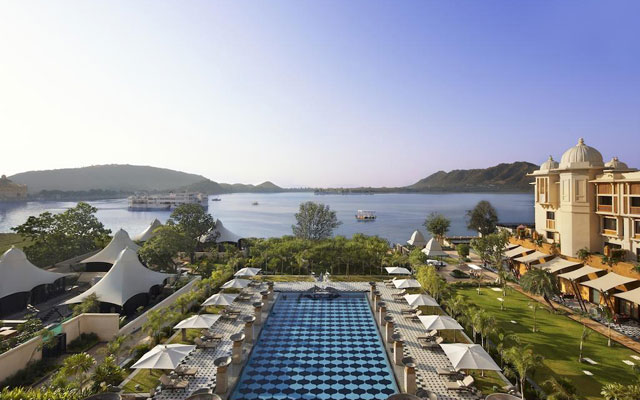
The Leela Palace Udaipur
Dillip Rajakarier, CEO of Minor’s hotel unit, told Bloomberg that the company is “currently exploring the option”, but nothing has been confirmed. Trinity White City Ventures has also reportedly confirmed the deliberation.
Hotel Leelaventure runs a chain of hotels and resorts, with nine properties it owns or manages across India. Its luxury properties include The Leela Palace Udaipur, situated on Lake Pichola, and The Leela Kovalam, in the southern state of Kerala.
Minor has been betting on an aggressive expansion and acquisition strategy in recent times, which includes spending US$2.6 billon this year to take control of Spanish chain NH Hotel Group.
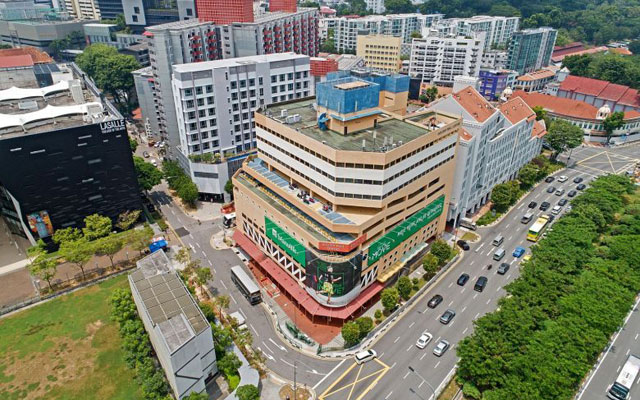
Hotel 81 owner bags Golden Wall Centre. Photo: ET&Co
Freehold commercial property Golden Wall Centre has been sold en bloc for S$276.2 million (US$200 million) to City View Holdings, a wholly owned subsidiary of Worldwide Hotels, which owns and manages hospitality chains such as Hotel 81 and Hotel Boss.
Singapore’s Business Times reported that the amount was higher than the reserve price of S$260 million, which was similar to what the strata unit owners wanted in their first attempt at a collective sale two years ago.
Hotel 81 owner bags Golden Wall Centre. Photo: ET&Co
Golden Wall Centre has a land area of approximately 2,250m2 and is zoned for commercial use under Master Plan 2014. An application for hotel use at the existing approved gross floor area of about 11,000m2 has been approved by the Urban Redevelopment Authority.
The property stands near Rochor MRT station on the Downtown Line, and within 400 metres to Little India MRT interchange, situated within the Beach Road/Ophir-Rochor Corridor which is envisioned to be a mixed-use cluster under Master Plan 2014.
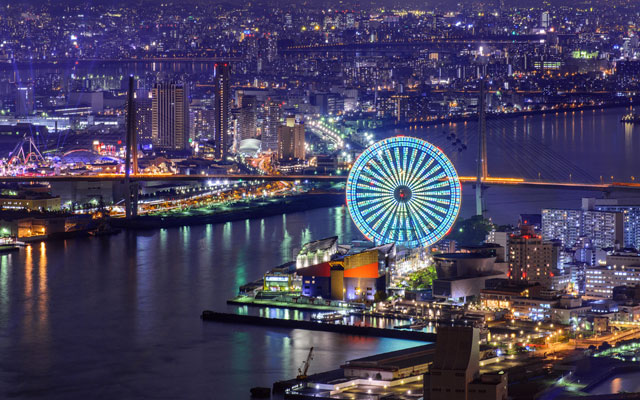
Osaka has won the rights to host the 2025 World Expo, edging out Russia’s Yekaterinburg and the Azerbaijan capital of Baku.
The 2025 World Expo is officially known as the Osaka-Kansai Japan Expo, a reflection of the effort to promote the bid as one with the support of the wider Kansai region, which includes the neighbouring cities of Kyoto, Nara and Kobe.
Osaka (night-time view pictured above) has won the World Expo 2025 bid
The theme will be Designing Future Society for Our Lives, and it will be held on Yumeshima, a man-made island in Osaka Bay, between May 3 and November 3.
Pavilions are slated to showcase advanced technologies, particularly in the fields of artificial intelligence and biotechnology, and designed to help meet 2030 United Nations sustainable development goals in health and welfare, especially in ageing societies.
About 28 million visitors are expected to attend the 2025 event and new transportation links to Yumeshima will have to be built, with construction costs estimated at 125 billion yen (US$1.1 billion), financed by the central government, Osaka Prefecture and the city of Osaka, plus the Kansai business community.
The World Expo returns to the city 55 years after the 1970 Osaka Expo, which drew 64 million visitors.
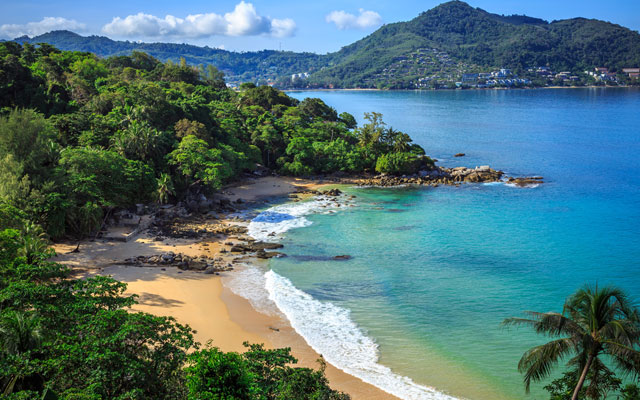
Phuket (Laem Sing Beach pictured above) aims to reduce, and eventually, remove all foam and plastic usage
Hot on the heels of Koh Samet’s plastic clampdown, Phuket will become the next tourist destination in Thailand to tackle plastic pollution with a new initiative to ban the use of plastic and foam.
Phuket’s No Foam No Plastic initiative was announced earlier this month when the island’s key public and private sectors came together to sign a MoU at the Phuket Sustainable Tourism Blueprint 2018.
Phuket (Laem Singh Beach pictured above) aims to reduce, and eventually, remove all foam and plastic usage
Stakeholders of the MoU included Phuket Province and heads of the Tourism Authority of Thailand (TAT) Phuket Office, Phuket Tourism Council, Thai Hotels Association Southern Chapter, Phuket Industrial Council, Patong Hotels Association, Kata-Karon Hotels Association and the Phuket Chamber of Commerce.
The local administration will promote the No Foam, No Plastic effort among the local community and tourism stakeholders to stop using foam containers for food or other items, effective February 14, 2019.
The next phase of the initiative, starting October 1, 2019, will seek to encourage people to switch entirely to paper or eco-friendly bags and straws.
TAT governor, Yuthasak Supasorn, said in a statement: “This is an important step in the right direction in line with the Thai government’s Thailand 4.0 sustainable tourism development goal. Hopefully, Phuket will be a positive case study that the whole country could follow.”
As millennials and transit visitors drive a new standard in budget accommodation, more companies in Indonesia are foraying into the sector to capture the growing business opportunities.
The hostel market is expected to grow seven to eight per cent through 2018, reaching roughly US$7 billion, according to a Phocuswright study.
Nomad Kemang, the inaugural property of Archipelago International’s new hostel brand
Most hostel guests are millennials, with three out of four travellers under the age of 35, according to a joint study by Phocuswright and booking engine Hostelworld.
Recognising the huge business potential young travellers bring, Archipelago International launched its newest brand, Nomad Hostel.
John Flood, president and CEO of Archipelago International, explained: “We know that young travellers try to save as much as they can (when it comes to) hotels and flights, but they are willing to spend more on experiences, so we give what they want and need.”
Millennials tend to embrace the social and sharing aspects of travel. For some of these travellers, dormitory-style accommodation – which better allow guests to exchange travel tips and information – are preferred over closed and private hotels.
Flood added: “Young travellers love to be in close contact with people (and experience a sense of) community. You need to have communal spaces, where they can gather and do stuff together.”
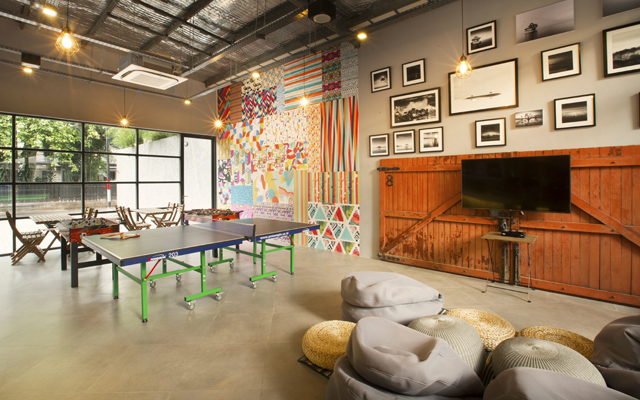
Instead of having a traditional lobby, Nomad Hotel offers a communal space designed for interaction and engagement. There is also a backyard barbecue zone with ping-pong tables, live music, a pool and sun loungers.
Sahid International Hotel Management & Consultant also added brands under the Dotnet concept to appeal to travellers who want less service and more connectivity – both technologically and socially.
Vivi Herlambang, Sahid’s director of sales, marketing and business development, said: “High-speed Wi-Fi is a must for (millennials). The always-connected generation needs to be able to easily share their experiences.”
Miranda Haryoanto, owner of Kini Capsule, found a captive market in transit passengers in Jakarta when she decided to open the hotel. For some travellers, Jakarta is not the main destination, but a gateway to places such as Bali and Yogyakarta.
According to Miranda, who is also the general manager of Kini Capsule, transit visitors do not need facilities typically found in star hotels. For them, the most important criteria are safety and cleanliness.
Another crucial element is experiences. She said: “When you’re travelling, the communal experiences could turn out to be the most memorable part of the trip. Nowadays it’s about real interactions. Younger travellers want to join a community where they can feel the uniqueness of place.”
To cater to experience seekers, even affordable hotels need to be in the vicinity of activities such as movie nights, batik-making lessons, cooking classes and culinary tours.
Angkasa Pura II, state-owned airport services company, has opened the Digital Airport Hotel on the first floor of Terminal 3 of Soekarno-Hatta International Airport.
Muhammad Awaluddin, president director of Angkasa Pura II, said the idea for a capsule hotel was based on a survey finding that lodging at the airport did not need to be large and luxurious.
There remains a myriad of challenges that must be tackled by hostels or capsule properties. Miranda said many still perceive budget hotels to be dirty, and with poor locations and service standard.
With more than 130 million outbound trips made by Chinese travellers last year, this upward trend will continue to fan the development of more direct international air links and charter flight services from China, particularly from second-and third-tier cities.
Chinese lower-tier cities’ connectivity is growing faster than their tier one counterparts, with more than 10 non-stop routes mounted between China and Europe in 1H2018 alone, revealed Ivy Alliance Tourism Consulting.
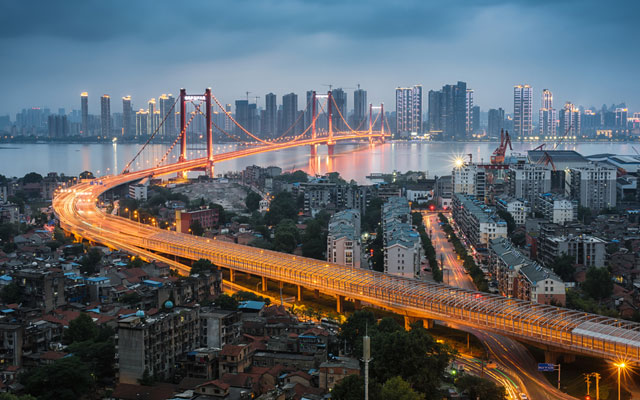
Wuhan (pictured) is one of the lower-tier cities that is benefitting from new air links
Ctrip also lists tier two cities as among the beneficiaries of new air routes launched, such as Shenyang-Frankfurt (Lufthansa), Nanjing-Helsinki (Finnair), Wuhan-London (Hainan Airlines) and Chengdu-Zurich (Sichuan Airlines).
While Shanghai, Beijing and Chengdu remain Europe’s top tourism source markets in China, rapid growth in international air connectivity is now seen for secondary cities like Kunming, Chongqing and Xi’an.
South-west China’s busiest air hub, Chengdu Shuangliu International Airport, last month welcomed a new route to Cairo, while a new airport – now under construction in Jianyang – is set to replace Shuangliu as the biggest airport in the province, Molly Dai, general manager, Sichuan Global International Travel, told TTG Asia.
Sun Bing, general manager of Nanjing-based CITS Jiang Su, said: “After the recent addition to St Petersburg and Helsinki, international flights from Nanjing are expected to grow next year. Scheduled flights to the Philippines’ Cebu and Manila are on our wishlist.”
The trade has been pushing for greater connectivity from western China too. Tokyo-based Eiwa International Tour Consultant’s president Zhou Wen has initiated talks on launching chartered flights linking Japan to cities like Gansu, Xi’an, Chengdu and Qinghai.
He explained: “We are optimistic about entering Western China because many Chinese (in this region) haven’t seen the world yet. For sure, there will be a lot of first-time outbound travellers there.
“I hope to grow (the region) further next year by launching charter flights to Xi’an or Lanzhou,” said Zhou.
However, Shanghai-based iview’s business development manager Zhang Jing-jing played down the threat from second- and third-tier cities, saying it’s “still a long way” for them to catch up with tier-one cities, especially in terms of frequency of international flights.
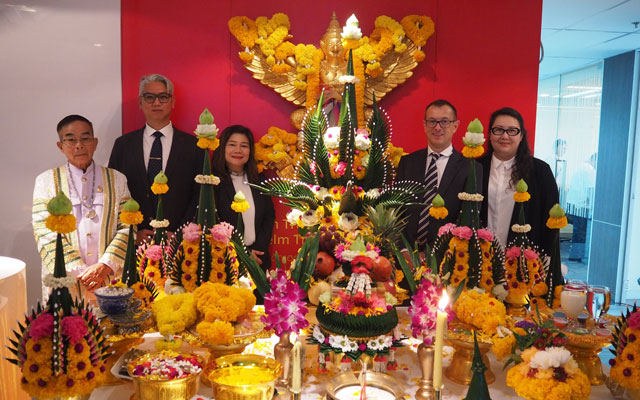
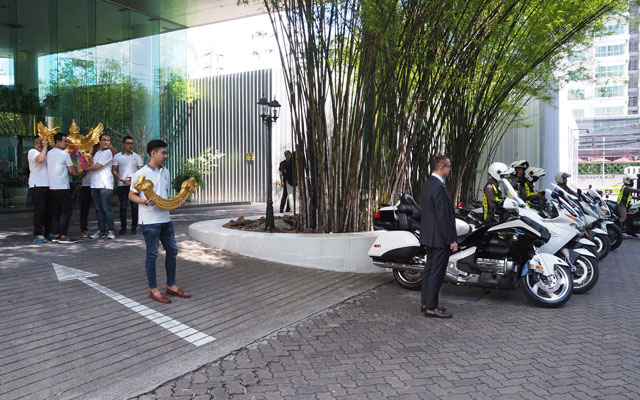
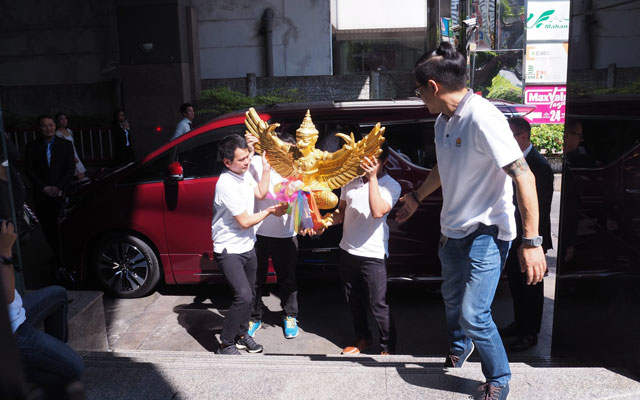
As part of the relocation of its Bangkok headquarters this month, Diethelm Travel Group moved its golden royal Garuda image to its new home in a special ceremony.
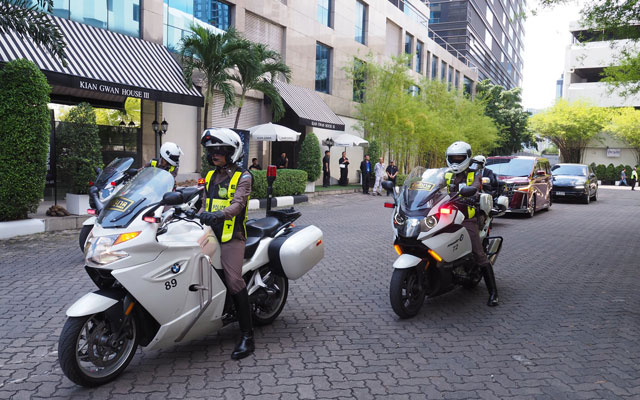
On November 21, a grand procession was held to move the statue from the group’s previous office just north of Lumpini Park to the new location on Silom Road.
Diethelm's royal Garuda image moves to new office
1 of 6
In line with tradition, the ceremony was led by a Hindu priest, or Brahman, who first made way to the new offices by convoy. The convoy included a police escort, royal escort and the Garuda image enclosed safely within a vehicle followed by the company’s management team.
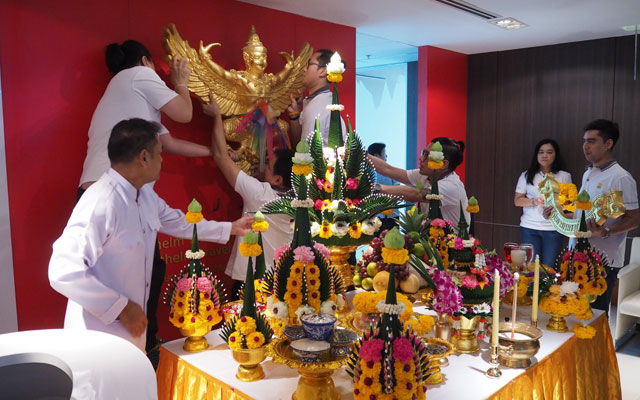
Upon arrival at the new office, the entire Diethelm Travel Thailand team took part in a blessing ceremony as the Garuda was displayed in its new home.
The Garuda image represents the prestigious royal warrant of appointment from the Thai monarchy. Diethelm is one of the few foreign travel companies within Thailand that has obtained the accolade, bestowed by the late King Rama IX.