TTG Asia
Asia/Singapore Tuesday, 7th April 2026
Page 1318

New hotels: La Seine Hotel by Burasari, Fairfield by Marriott Hotel Busan and more

0

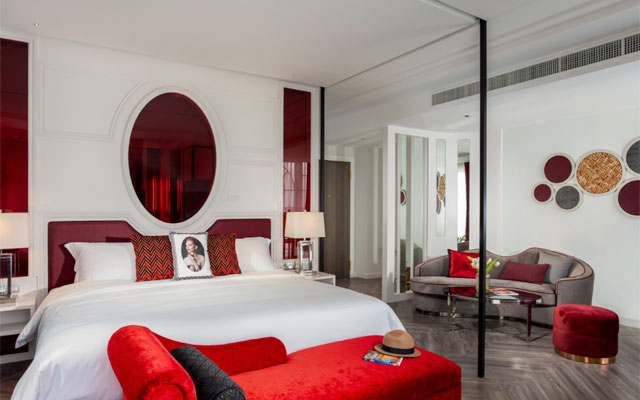
La Seine Hotel by Burasari, Laos
The five-star property has opened on the river promenade in Vientiane, Laos’ capital city. The boutique hotel offers 37 rooms and suites, and boasts bold colour palettes and Art Deco-inspired interiors. All rooms come with bath amenities and an in-room espresso machine. The hotel has two F&B options, a rooftop bar and The Red Rose Restaurant, and offers a happy hour special on selected wines.

Fairfield by Marriott Hotel Busan, South Korea
Marriott has opened a 225-room Fairfield by Marriott-branded property in Haeundae, a beach resort destination in eastern Busan. There are 224 guestrooms, one of which is a 45m2 family room that includes a separate living room. All guestrooms are furnished with 49-inch flatscreen TVs, ergonomic desks and chairs, minibars and safety deposit boxes. Facilities include a restaurant, fitness centre, and for business travellers, workspaces in the lobby, as well as a meeting room that can hold up to 30 people.
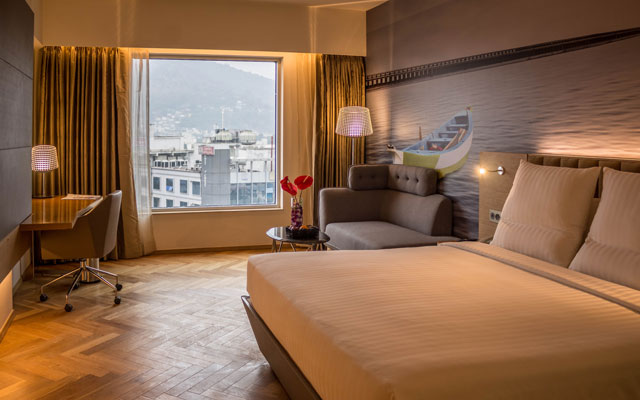
Novotel Vijayawada Varun, India
AccorHotels is the first international hotel brand to set up shop in Vijayawada, Andhra Pradesh’s commercial centre. The property has 194 rooms, 25 apartments and 12 suites, alongside recreational facilities such as a rooftop swimming pool, fitness centre, jogging track and a spa. There are also four dining options on-site ranging from the all-day dining restaurant to the Chinese kitchen, as well as a 930m2 banquet hall.
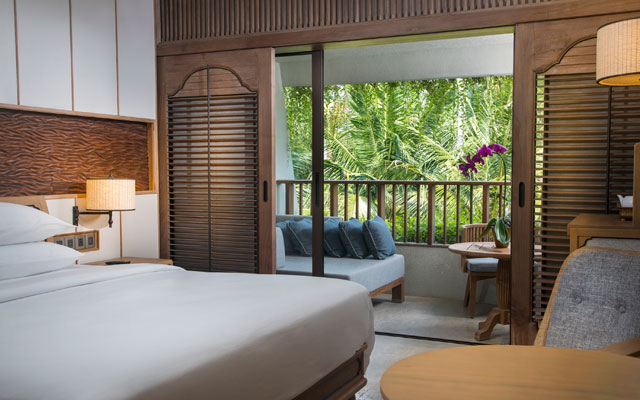
Hyatt Regency Bali, Indonesia
Previously known as the Bali Hyatt, the nine-hectare property has opened after five years of extensive renovations. It now features 363 keys, which includes 39 one-bedroom suites that come with a private balcony, separate living room, and an additional powder room with a shower. Guests who book suites are also offered access to the Regency Club Lounge.

Amenities on-site include three F&B venues, three swimming pools, a 24-hour fitness centre, and the Shankha Spa complete with 10 spa suites. Meanwhile, the hotel’s meeting facilities comprise a 468m2 ballroom that can accommodate up to 600 guests cocktail-style, an outdoor courtyard that can hold up to 120 attendees, and four multifunctional meeting spaces ranging from 92m2 to 324m2 in size.
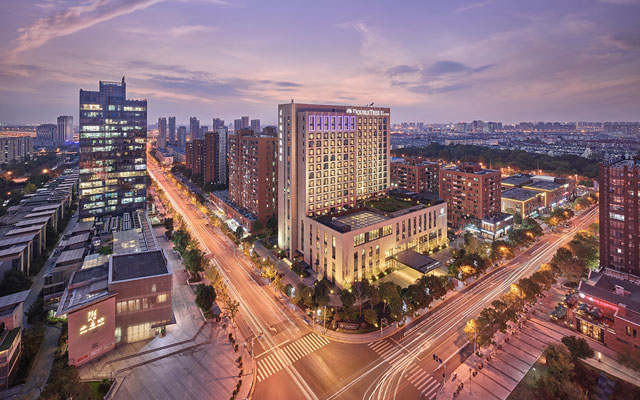
DoubleTree by Hilton Shanghai Nanxiang, China
A 313-key DoubleTree by Hilton has risen in the up-and-coming CBD in Shanghai Jiading, the only international hotel in the town of Nanxiang. Aside from the four F&B options on-site, recreational facilities include an indoor swimming pool, sauna and steam rooms, spa and 24-hour fitness centre. Meeting planners will be able to avail the hotel’s 1,300m2 of event space across 12 function rooms, among which is a 750m2 grand ballroom which can accommodate up to 850.

Budget Car Rental returns to original GSA in Japan

0

Budget Car Rental has once again named Jeiba Corporation as its General Sales Agent (GSA) in Japan.

Jeiba was the company’s original GSA in Japan of 13 years, from 1996 to 2009.

As Budget Car Rental’s GSA, Jeiba Corporation will be responsible for delivering value through customer service, and promoting to general outbound travellers, including business customers, with the aim of being the go-to car rental company for Japanese travellers.

Mark Servodidio, president, international, Avis Budget Group, said: “Japan is an important market for Budget. We know Japanese customers enjoy self-drive road trips and authentic travel experiences, both domestically and when visiting other destinations including the US, Hawaii, Europe and closer to home in Asia.”

New GMs at Carlton hotels in Singapore, Bangkok

0
From left: Darren

The Carlton Group has appointed new general managers for its Singapore as well as upcoming Bangkok property.

From left: Darren Ware and Mark Bulmer

Darren Ware, previously general manager of Carlton City Hotel Singapore, is now heading Carlton Hotel Singapore in the same capacity.

Former general manager of Carlton Hotel Singapore, Mark Bulmer, has relocated to Thailand take up the new role of general manager at Carlton Hotel Bangkok Sukhumvit, set to open in late 2019 as the group’s first property outside of Singapore.

Agents up in arms over Garuda’s new commission model, minimum sales requirement

0
Agents will need to meet the minimum sales requirement of 50 million rupiah to receive their three per cent incentive

Garuda Indonesia’s plan to implement a new commission and incentive policy for agents starting January 21, which the airline says would “create a healthy business environment”, is met with strong pushback from travel agency and ticketing companies’ associations in the country.

The Indonesian national carrier has so far been giving agents three per cent commission on domestic ticket sales, according to Pauline Suharno, secretary general of The Indonesian Travel Agents Association (ASTINDO). With Garuda’s planned change, this commission will be replaced by an incentive, payable after the sector is flown.

Agents will need to meet the minimum sales requirement of 50 million rupiah to receive their three per cent incentive

The new policy also stipulates a minimum sales of 50 million rupiah (US$3,450) for the agent in order to receive a three per cent incentive, and none if the sales is below the amount.

In a letter the Association of the Indonesian Tours and Travel Agencies (ASITA) sent to president Joko Widodo requesting for the airline’s plans to be annulled, the move was described as “damaging (to) agencies and counter-productive to the development of tourism in the country”.

Negotiations between the associations and Garuda are ongoing. Agents are expecting a favourable outcome; otherwise, ASITA said its members were ready to stage a rally.

In a media briefing in Jakarta, Asnawi Bahar, chairman of ASITA, said: “Garuda has taken a unilateral action with (the planned policy). This will bring down the performance of travel agents, and threaten the livelihood of the small travel agencies’ businesses in the country, which comprise 70 per cent of travel companies in the country.”

ASTINDO’s Pauline added: “Let’s say if the booking is for next month, we will only receive the incentive by the end of next month. As we live out of the commission, how do we survive this month?”

Commenting on the minimum sales requirement, Pauline said: “That is too hard for small agents to achieve. We have members in the region with only five million rupiah in sales.”

She also pointed out that the new commission policy would affect agents handling government agencies. “Government agencies do not recognise service fee so if the zero commission is applied agents will not profit from selling Garuda tickets.

“Moreover, travel companies are not allowed to charge the merchant discount rate of credit card payment to customers, so the zero commission policy will cause travel companies to suffer more loss.”

In addition to the new incentives, Garuda will also introduce a top-up system whereby agents deposit a sum of money with the airline and receive up to eight per cent cash-back.

Asnawi remarked that only the bigger players are likely to benefit from this. To receive the cash-back, he said an agent needs to deposit five billion rupiah to receive a one per cent top-up incentive, and a company needs to deposit 400 billion rupiah to gain eight per cent cash-back. “How can an (average) agent afford to take part in this?”

Awan Aswinabawa, chairman of West Nusa Tenggara Chapter of ASTINDO, commented: “We are shocked to hear the news. It arrived at a time when we in Lombok are working hard to get back on our feet, still struggling to recover from the impact from the disaster last year.”

The cash-back incentive also applies to Garuda’s sister carriers Citilink and Sriwijaya Air, according to Awan, although the amounts vary. Citilink’s top-up policy, for example, stipulates a minimum of 50 million rupiah to gain one per cent cash back.

Explaining the new policy, Garuda’s vice president coordinator international sales, distribution & charter, Pikri Ilham Kurniansyah, told TTG Asia: “This is to create a new airline industry ecosystem whereby every component will get sufficient benefits to grow together. I don’t want to see agents dumping prices to get passengers but not the benefits.

“We want to encourage the agents to sell Garuda tickets in a profitable way for them. The agents will still receive the three per cent sales benefit just the same, the difference is that they have been receiving it up front, and now it will be paid at the end of the month.

“By giving the incentive after sales, we expect the agents to keep the three per cent commission on their benefit instead of throwing that to the customers by selling cheap tickets like (what we’re seeing) today.”

He added that setting the minimum sales at 50 million rupiah was reasonable.

“When you look at our prices, the amount will translate to only about 20 tickets, that’s very small for a month’s sales. Out of this amount, agents only receive 1.5 million rupiah… I believe a Garuda agent sells more than that and I want them to sell and prosper from Garuda more for their livelihood.”

Still, Pikri admitted that eventually not everyone could continue to be Garuda agents. He said: “Like with any other businesses, at the end of the day there will be a natural selection. The fit ones will stay.

“My responsibility is to turn over US$10 million a day. To reach that target I need those who can really support me, otherwise the airline will collapse and in turn, the agents will not survive either.”

Air NZ’s Singapore campaign takes off with Pete the kiwi

0
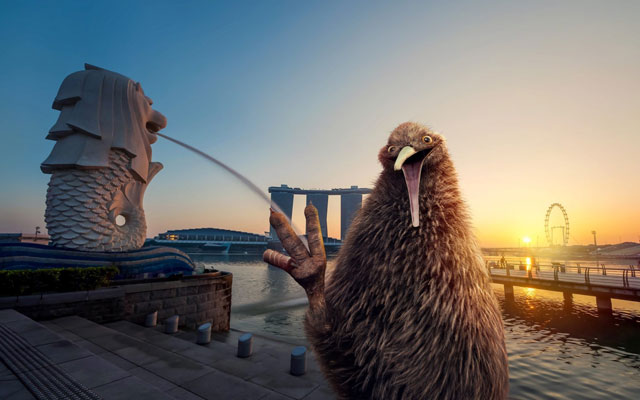
Pete the Kiwi

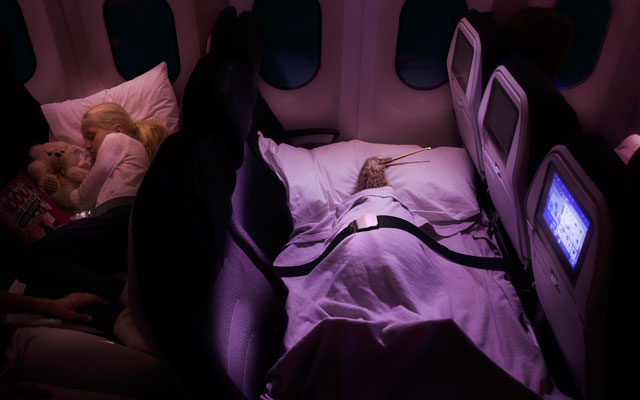
Air New Zealand today launched its first-ever global brand campaign in Singapore, with the help of Pete, a flightless bird native to New Zealand.

The airline’s new campaign is led by Pete the kiwi, which wants to travel but is hampered by his inability to fly. But the flightless bird has now been given the chance to explore the globe by taking flight with Air New Zealand, and hopes to take travellers on an experiential journey to show them the best of the carrier’s inflight offerings and classic Kiwi hospitality.

On why Singapore was chosen for the launch, Air New Zealand’s head of South & South East Asia, Jenni Martin, revealed: “Singapore is among the top 10 countries of visitor arrivals to New Zealand and one of our most important markets. As of October 2018, we recorded a seven per cent year-on-year increase in visitor arrivals from Singapore.”

But Singapore’s outbound market is not the only segment Air New Zealand is keen on.

Martin told TTG Asia: “Singapore also acts as a hub for travellers in the South-east Asia region into New Zealand. While we are very focused on growing Singapore traffic to New Zealand in its own right, we also recognise the growing interest in New Zealand from other South-east Asian markets, and India.”

“(In the South-east Asian region), Vietnam, Thailand, Indonesia, Malaysia and Singapore are our priority markets. These markets were identified as the biggest opportunity for (the Singapore Airlines (SIA)-Air New Zealand joint venture) based on the traffic numbers that were going into New Zealand when we first signed it. We will continue to focus our resources on these markets.”

Earlier in October 2018, SIA and Air New Zealand’s joint venture received renewed approval from the New Zealand Ministry of Transport, which enabled the two flag carriers to extend their alliance a further five years until March 2024, reinforcing the potential the South-east Asian region has to offer. This alliance has been a key part of Air New Zealand’s market strategy in this region, and both carriers together offer 25 flights per week.

To meet the “very high demand” from Singapore, capacity was increased on the Singapore-Auckland route in October last year, plus an upcoming seasonal service that will fly between Singapore and Christchurch five-times weekly beginning December 1, 2019 to February 22, 2020.

However, when asked if any more direct routes to major airports in South-east Asia such as Kuala Lumpur would be formed in the future, Martin stated: “At this point in time, the alliance with SIA is serving everything that we need for the market.”

Elsewhere in Asia, Air New Zealand started direct flights between Auckland and Taipei last November.

Focus on tourist spend as Indonesia struggles with arrivals targets

0
The disaster mitigation agency says 'hundreds of smaller quakes to come', but Lombok and Gilis are 'safe'

Reporting by Mimi Hudoyo and Tiara Maharani

After a series of natural disasters last year put a spanner in the works of Indonesia achieving its visitor arrivals target in 2018, key tourism decision-makers are now steering the focus away from volume and onto revenue for 2019.

Visitor arrivals to Indonesia last year is estimated to be around 16.2 million, around five per cent lower than the target of 17 million.

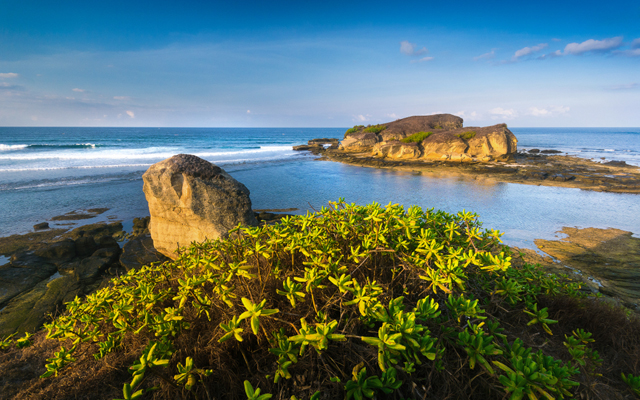
Batu Payung beach in Lombok

The full 2018 data is not available at press time, but figures from Statistics Indonesia issued on January 2 showed that January-November arrivals totalled 14.4 million.

Indonesia minister of tourism Arief Yahya said the country was on track to meet the arrival target in the first half of the year – until an earthquake and tsunami hit Lombok late July and early August. “There were huge cancellations, up to 75 per cent. Between August and December, (arrivals) dropped by around 500,000,” he shared.

Achieving the 2019 arrivals target is likely to be a challenge, with devastating tsunamis hitting Palu and on Sunda Strait in the last weeks of 2018, while the travel industry also expects the national and presidential elections taking place in April to affect inbound numbers.

Arief said: “Although the arrival target for 2018 was not reached, we managed to reap total revenue of US$17.6 billion, (slightly) higher than target.

“The good news is, with this revenue, tourism has become the biggest foreign exchange earner, surpassing or at par with crude palm oil, which (brings in around) US$16 billion.”

Bambang Brodjonegoro, Indonesia’s national development planning minister, opined that the tourism sector should shift its focus from volume to boosting revenue.

He said during a tourism coordinating workshop: “We should not be content with seeing long queues of tourists at immigration counters at the airports anymore. It is not recorded in the current account. To increase foreign exchange earnings, we need more tourists to spend more money in Indonesia and as much as possible, stay longer.”

Bambang said his office was currently developing a tourism development plan, where a strategy would be drawn up in line with these priority areas.

However, Faisal Basri, chief of the advisory board of Indonesia Research & Strategic Analysis, pointed out that the net revenue from the tourism sector was small when discounting expenditure by Indonesian travellers, which according to the Ministry of Finance, reached a total of US$8 billion.

Faisal said: “There is (revenue surplus) but very small. So when we talk about the target, this should be in net income. The success of tourism is when we succeed in making tourists shop and spend their money in Indonesia.”

Breaking down the travel trends between baby boomers, millennials: TripAdvisor

0
TripAdvisor's TripBarometer study unveils top travel trends for 2019

TripAdvisor has released its annual TripBarometer study, revealing a significant gap in spending habits between older and younger generations, as well as how travellers choose destinations and accommodation.

TripAdvisor’s TripBarometer study unveils the top travel trends for 2019

Hotel brands
When selecting hotels, Asian travellers, particularly those from China, value hotel brands much more than Europeans, with 82% of Chinese travellers reporting that it is important to stay in a hotel with a brand name they know and trust.

Travellers from the UK are the least interested in hotel brands (22%), according to the report.

Families are also more likely to prefer a hotel with a brand they trust (44%) compared to other traveller groups.

The generation gap – spending and pre-booked attractions
The TripBarometer results show the divide in spending habits between generations, with participating baby boomers spending almost twice as much on accommodation (S$1,540, or US$1,137) when compared to their children’s generation.

Millennials have the smallest accommodation budget by a significant margin, spending an average of just S$675 on accommodation on their most recent trip. However, while younger travellers are more cautious with their finances, they are just as willing as their parents’ generation to pay a little more for luxury, with 54% of millennials and 56% of baby boomers prepared to pay a little more for a luxury trip, TripAdvisor said.

The 25-34 age group is also more likely to be attracted to a great deal, with 16% being prompted to think about their trip because of a bargain – however, this declines with age; 65+ age group are less tempted by a deal (9%).

Younger people are less fixed on a destination when they start thinking about a trip, with 46% of participating 18-24 year olds having decided on their destination before starting their research. For the 65+ age group this is a lot higher; 70% have already decided where to go.

Millennials are more likely to book attractions than older travellers, with almost half (49%) pre-booking things to do before embarking on their trip. Baby boomers are far less likely to book in advance with just over one third (35%) pre-booking attractions. However, across all respondents, the majority (57%) do not take advantage of bookable experiences, potentially meaning longer time spent queuing for tickets and entry while on holiday.

Choosing a destination
When it comes to choosing a destination, culture is more of a factor than weather for participating travellers. One third (34%) choose their destination to experience the culture, society and people, compared to just one fifth (20%) of travellers who are seeking good weather.

City breaks are the most popular type of trip, with nearly one in three travellers (30%) taking a city break, and this type of trip is even more popular among millennials (42%). Millennials are also far more likely to conduct thorough research to find the right accommodation and flight combination to make their city break a more economical trip, and to stay within their limited budget.

Most expensive holidays
Surprisingly, cruises came out as the most expensive type of holiday, at an average cost of S$5,442 per person, even more than safaris (S$4,626) which might traditionally be seen as one of the most expensive types of trips. Unsurprisingly, some of the cheapest trips were taken by travellers visiting family or friends (S$3,017).

The TripBarometer survey, conducted by independent research firm Ipsos MORI in partnership with TripAdvisor, is the analysis of more than 23,000 responses from TripAdvisor travellers across 33 markets worldwide. They were quizzed about their most recent trip, including their destination, budget, activities and concerns while travelling.

Singapore, South Korea take second place in Henley Passport Index

0
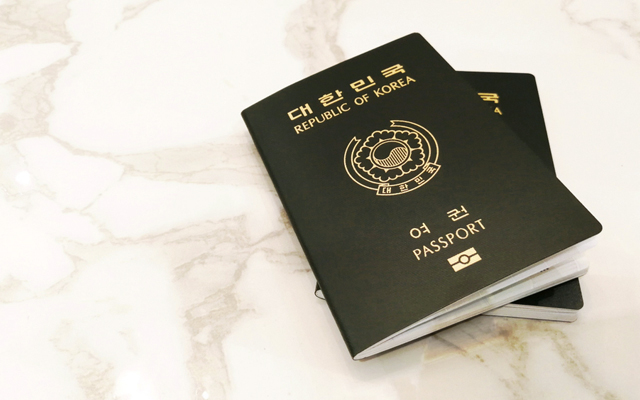
South Korea scored 162, tied with Singapore

Japan tops the world’s most powerful passport list in the latest Henley Passport Index, while South Korea is now tied with Singapore in second place.

Citizens of both Singapore and South Korea enjoy visa-free/visa-on-arrival access to 189 destinations around the globe. Japan, which overtook Singapore to take the lead on the index last October, scores 190 on the same measure.

South Korea shares second place with Singapore on the Henley Passport Index

Germany and France remain in third position, with citizens able to access 188 countries and territories.

The US and the UK – which were tied at the top of the index in 2015 – continue sliding down the ranking, and now sit in joint sixth place with a score of 185.

As they have done for much of the index’s 14-year history, Iraq and Afghanistan remain at the bottom of the ranking, with access to just 30 visa-free destinations.

Dominic Volek, managing partner of Henley & Partners Singapore and head of South-east Asia, commented that this latest ranking shows that despite rising isolationist sentiment in some parts of the world, many countries remain committed to collaboration.

“The ascent of countries such as South Korea and the UAE on the Henley Passport Index reminds us that opening your borders to others results in reciprocal benefits and improved passport strength for your own citizens. The countries that perform well on the index are those that are embracing new models of global citizenship and adapting to, rather than shrinking away from, an increasingly globalised world. The general spread of open-door policies has the potential to contribute billions to the global economy, as well as create significant employment opportunities around the world.”

Asian countries’ continued dominance of the Henley Passport Index reflects the remarkable effect that international mobility and migration has had on the region.

China’s steady ascent up the rankings over the past few years is a clear demonstration of this, Henley noted. In 2017, the country was ranked 85th, with citizens able to access just 51 destinations. Going into 2019, China sits in 69th place, with its nationals now able to access 74 countries and territories around the world.

Going forward, Henley cited experts sentiment that neither the US nor EU member states are in line to substantially revise their current visa policies, whereas countries in other parts of Europe (such as citizenship-by-investment newcomers Moldova and Montenegro), as well as those in Asia and the Middle East, look set to continue seeking visa-waiver agreements with diplomatic allies.

A question mark remains over the ultimate impact of Brexit. While the deal hangs in the balance, it is difficult to anticipate what the ultimate ramifications will be for EU and UK citizens, as well as for EU and UK trade and co-operation.

Finally, insights from the report show that the ever-growing trend towards visa-openness is unlikely to slow down. Overall, 2019 looks set to hold some surprises in the travel freedom space as more countries and citizens embrace the benefits of global mobility.

2018 marred by fatal accidents but air travel still ‘extraordinarily safe’: AAPA

0
Amadeus says it is one of the first providers to have achieved level three certification both as an aggregator and IT provider

Air travel is “extraordinarily safe” despite the fatal accidents that took place last year, said the Association of Asia Pacific Airlines (AAPA) while reflecting on 2018.

Last year’s air transport safety performance marked a departure from 2017, which was declared the safest year in the history of commercial air travel.

AAPA says flying is still very safe with 2018 seeing a loss rate of one major accident for every three million flights

Worldwide, in the calendar year 2018, more than four billion passengers were carried safely on 38 million flights, according to AAPA. There were 13 major accidents involving commercial airline operations, which resulted in a total of 523 fatalities.

This represented an overall loss rate of one major accident for every three million flights, AAPA said.

Looking more closely at the data, there were seven major accidents involving large western-built commercial airline jets, which resulted in a total of 304 fatalities, representing a loss rate for this category of operations of one major accident for every five million flights.

Asia-Pacific carriers experienced two major accidents involving large western-built commercial airline jets, which resulted in 190 fatalities. AAPA member airlines experienced zero major accidents during 2018.

Turning to turboprop aircraft operations, worldwide there were five major accidents in 2018 involving commercial airlines, which resulted in a total of 148 fatalities, including one accident involving an Asian operator which resulted in 51 fatalities.

Turboprop operations play an important role in the development of new routes and connectivity to relatively inaccessible regions. Overall safety performance for turboprop operations has benefitted from collective efforts to address specific risk factors and operational challenges.

Andrew Herdman, director general of AAPA, commented: “Flying is extraordinarily safe, and major accidents are rare events, but the industry experienced a number of fatal accidents in 2018 which reinforce the need to maintain and further enhance the highest safety management practices and standards.

“Attaining ICAO’s global aviation safety objectives requires active collaboration of regulators and industry, at all levels, to establish proactive safety management systems across the industry, identify evolving safety priorities and address common operational challenges.”

The booming demand for air travel comes with added challenges, again reinforcing the importance of collaboration between governments and the industry to “tackle existing aviation infrastructure capacity constraints and congestion, while investing in the future to ensure that the air transport system is able to meet the expected growth in demand”, he added.

Sri Lanka tourism on rebound as political crisis tapers

0
Galle, Sri Lanka

Sri Lanka’s tourism industry is starting to recover from the recent political crisis, which resulted in dampened inbound arrivals for the traditional peak season.

The country now has a new cabinet, with the reappointment of Ranil Wickremesinghe as prime minister on December 16 ending a 52-day political impasse that followed president Maithripala Sirisena’s sacking of Wickremesinghe and replacing him with former president Mahinda Rajapaksa.

Galle, Sri Lankagalle

Tourism minister John Amaratunga, who was reappointed along with many other cabinet ministers, said the new So Sri Lanka destination marketing campaign will be launched at ITB Berlin in March along with plans to target an ambitious four million arrivals by 2020. Sri Lanka received 2.3 million arrivals in 2018, short of the expected 2.5 million.

“All promotional campaigns were in limbo (due to the political crisis) but we’ll roll them out again,” he told reporters last week. Campaigns in the next few weeks include participation in travel fairs in Mumbai and Delhi, and the Arabian Travel Mart in Dubai.

Several countries, including the UK, the US and Canada, had earlier issued travel alerts advising their citizens to be wary when visiting Sri Lanka. Tourist Hotels Association of Sri Lanka president Sanath Ukwatte is optimistic that with a cooling of tensions, travel advisories are now more likely to be relaxed.

Still, Ukwatte pointed out that the usual tourism flows have restarted and noted that travellers don’t generally follow travel advisories to the tee. “Look at the Maldives last year, despite travel advisories due to a state of emergency, arrivals didn’t fall,” he said.

“Things are looking good,” Ukwatte added, revealing his projections for bumper year in arrivals following Lonely Planet’s endorsement of Sri Lanka as one of the best places to travel in 2019.

Minister Amaratunga was quoted as saying Lonely Planet officials were to visit Sri Lanka to launch a fresh programme to showcase Sri Lanka, which too was delayed. No details were available but Ukwatte said the authorities should publicise the Lonely Planet endorsement in Sri Lanka’s overseas markets. “We need to be publicising this a lot overseas (tradeshows and roadshows),” he said.

There remains some lingering uncertainty in the country though. Appointments to the position of chairman of the four tourism institutions – Sri Lanka Tourism Promotion Bureau, Sri Lanka Tourism Development Authority, Sri Lanka Institute of Tourism and Hotel Management, and Sri Lanka Convention Bureau – are yet to be finalised.

The appointments, all affected by the political upheaval, are expected to be finalised in the coming week.