TTG Asia
Asia/Singapore Saturday, 4th April 2026
Page 1297

Growing midscale appeal

0

Hospitality chains are seeing a clear growth path in India’s midscale segment with an expanding domestic middle class fuelling overall tourism growth.

India’s travel sector is currently driven by the domestic market, which industry players estimate to be nearly 10 times bigger than the international market.
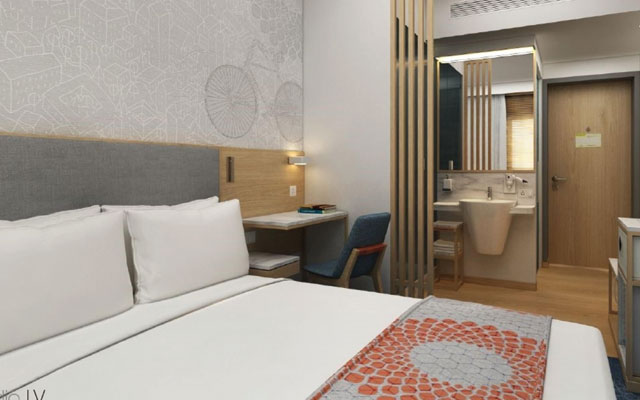
Holiday Inn Express Gurgaon Sector 50

The country is seeing a travel boom that has translated to increased demand for midscale hotels, with both Indian and international hospitality players alike expanding their presence to capture the growth.

InterContinental Hotels Group (IHG) is already eyeing deeper penetration into the mid-tier market with its Holiday Inn brand.

“Our Holiday Inn brand family suits the domestic, midscale travel sector very well. We see great opportunities in tier-two and -three cities, and are looking for strategic partners with the right-sized properties and aligned vision,” said Sudeep Jain, IHG’s vice president, development, South-west Asia.

In fact, 2018 has been a year of expansion for the Holiday Inn brand, which now makes up more than 80 per cent of IHG’s pipeline in India.

This was boosted by the partnership with SAMHI last year, which saw the rebranding of about 2,000 rooms and 14 hotels in the latter’s Indian portfolio – both operating and under construction – to Holiday Inn Express properties.

“We recently opened the first hotel from our partnership with SAMHI, the Holiday Inn Express Gurgaon Sector 50. We will be opening an additional eight to 10 Holiday Inn Express hotels in the near future,” added Jain.

IHG has also signed a deal with Lotus Trans Travel Private to establish four Holiday Inn hotels in the Buddhist Circuit of India.

Rahul Chaudhary, executive director of Nepal-based CG Corp Global Hotels & Resorts, is also sizing up opportunities in the midscale market.

“We look at this segment as an area of opportunity for us and will continue to expand our Fern & Zinc branded properties in India, (as) we expect greater profitability margins from the mid-market segment,” said Chaudhary.

“This is because a growing section of the middle class is taking up leisure travel, and (this segment) sees mid-market hotels as a key part of their travel experience.”

Greater cost control in business travel, Chaudhary pointed out, has also benefitted the mid-market hotel development in India.

Chaudhary added that CG Corp will continue to invest and add more rooms in the midscale segment as long as land and infrastructure costs are competitive. “We expect greater profitability margins from the mid-market segment,” he said.

For Sarovar Hotels and Resorts, midscale properties are also favoured as “their smaller scale represent faster breakeven points and less debt exposure”, said vice president sales, S Karthikeyan.

The India-based hospitality chain has recently opened a midscale property, Saira Fort Sarovar Portico, Jaisalmer, and has several other midscale openings lined up in Lucknow, Junagarh, Dibrugarh, Bodh Gaya, Jammu, Gorakhpur and Dahisar.
US grants Vietnam permission for direct flights

0
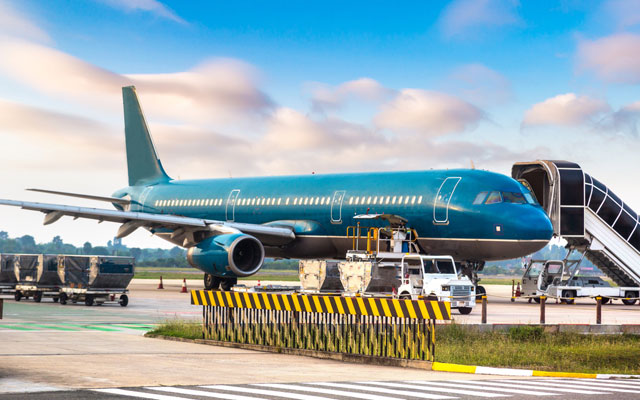
Vietnam Airlines is planning to launch four-times-weekly flights to Los Angeles

With the US set to permit direct flights from Vietnam, Vietnam Airlines has announced plans to launch four-times-weekly flights to Los Angeles.

The US embassy in Hanoi was to deliver a Category 1 rating from the US Federal Aviation Administration (FAA) to Vietnam on Friday (February 15) afternoon, according to the Ministry of Transport’s website.

Vietnam Airlines is planning to launch four-times-weekly flights to Los Angeles

The approval comes ahead of the upcoming meeting between US president Donald Trump and North Korean leader Kim Jong Un in Vietnam, scheduled for February 27 and 28.

Officials from North Korea and the US began arriving in Hanoi on Saturday (February 16) in preparation for the widely watched summit.

A VnExpress report quoted Vietnam Airlines CEO Duong Tri Thanh as saying that the carrier would begin with four flights a week to Los Angeles, followed by daily flights to the US West Coast, home to a large Vietnamese community.

A Vietnam Airlines official had previously told VnExpress International that the airline is considering buying wide-body aircraft such as the Airbus 350-1000 or Boeing 787-8 Dreamliner for the direct service.

Duong said it would take at least five years for the direct service to the US to break even.

Budget airline Vietjet and private airline Bamboo Airways have also expressed interest in operating direct flights, although concrete details of their plans were not available at press time.

Citing figures from the Vietnam Ministry of Culture, Sports and Tourism, VnExpress shared that the number of Americans visiting Vietnam grew by 11.9 per cent last year to 687,000.

An ethnic Vietnamese population of over 2.1 million in the US is also expected to provide a steady source of travel demand, industry insiders told VnExpress.

WTTC teams up with border management and tech association to promote biometrics

0
XX

The World Travel & Tourism Council (WTTC) and the International Border Management & Technologies Association (IBMATA) are joining hands to promote the use of technology such as biometrics to facilitate safe, secure and seamless travel across international borders.

IBMATA is global non-profit organisation promoting communication and collaboration between border agencies and technology providers worldwide.

Making use of biometrics to enhance security, while also providing seamless travel

Tony Smith CBE, chairman of the association, said: “Border agencies are dealing with more international passengers at their international borders than ever before, against a backdrop of static or declining resources. It is important that they make best use of new and emerging technology to enable them to facilitate the traveller experience for the vast majority of low risk traffic, while at the same time maintain safe and secure borders.

“Our relationship with WTTC will enable us to maximise collaboration between the travel industry, border agencies and technology providers to help us deliver this important function.”

Gloria Guevara, president & CEO, WTTC, added: “Travel and tourism employs one in ten people on the planet today and over the course of the next 20 years we will witness a doubling of the number of travellers and the creation of as many as 100 million jobs around the world. We have a responsibility to prepare for the future by transforming the traveller experience while increasing security by working together and with governments.”

Qantas conceptualises first class lounge in Singapore through VR

0

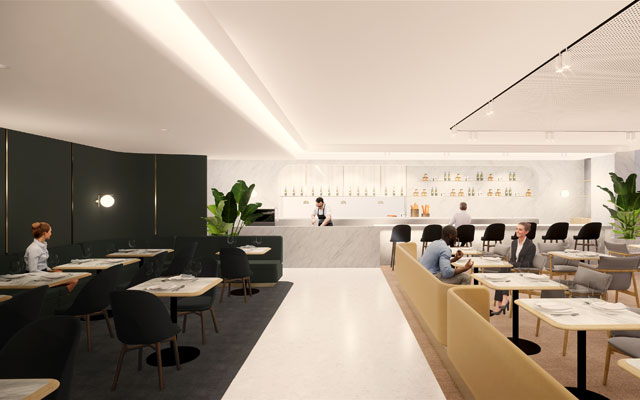
Qantas is putting virtual reality (VR) to work in the development of its new First Lounge at Singapore’s Changi Airport, set to open end 2019.

Qantas International’s CEO Alison Webster said that VR gives the airline a completely new way to ensure that a lounge meets customer needs right from the conceptualisation process.

“While we already use VR technology to promote destinations, this is the first time we have used it to better understand a lounge design. Being able to immerse ourselves in a virtual lounge gives us a more accurate sense of space and an understanding of how it will look to scale,” said Webster.

Industrial designer David Caon and his team have been appointed to create an immersive VR representation of the design concept, enabling Qantas to preview and fine-tune lounges and speed up the design consultation process. A similar approach is being used for the airline’s upgrade of its A380 cabins.

The new lounge for 240 customers is designed to suit transit travellers with generous and comfortable seating options, featuring shower facilities, a la carte dining including an open kitchen, a cocktail bar and plenty of device charging stations.

The interiors will take on a neutral colour palette, luxurious materials and leafy green highlights, with the latest light technology advances incorporated into which to allow passengers to feel relaxed and better synchronise their body clocks with future time zones, according to Caon said. Key materials like marble and oak will also be used.

Aside from the First Lounge, Qantas’ existing Business Lounge will be expanded and will open mid-year. The overall lounge capacity in Singapore will increase by 60 per cent, and when combined, the First and Business Lounges will offer seating for more than 800 customers.

Aviation still vulnerable to cyber attacks despite greater IT spend: SITA

0
XXX

While the aviation sector has demonstrated awareness of the rising threats to security and data privacy, companies are still lacking in resources and capabilities to beef up their cybersecurity systems, revealed findings in a survey by SITA.

SITA’s president of Asia-Pacific, Sumesh Patel, shared that 92 per cent of organisations have developed an IT security strategy, and cybersecurity spend is rising year-on-year.

There is a need for the same standard and technology to better aviation security

However, the rate of growth remains sluggish. From 2017 to 2018, the percentage of airports’ IT budget spent on cybersecurity rose from 10 to 12 per cent, and airlines’ from seven to nine per cent.

Barriers inhibiting faster growth include a lack of resources, tight budgets and missing manpower skills. According to the survey, 78 per cent of aviation organisations cited limited resources as a key challenge when implementing cybersecurity.

Patel said: “The industry challenges are the same (across the board), but the problem is that not everyone is aligned. We need standards and technology that can help to bring the industry together and promote industry collaboration.”

To do this, SITA has been stepping up outreach and aiding organisations by pooling resources. For example, it launched an aviation blockchain sandbox last year to encourage collaboration and information sharing among airlines and airports.

Another area that SITA is building up on is operational excellence, which helps counter the impact of disruptions. Patel revealed: “(Flight disruption) is one of the areas where the industry is losing the highest amount of money. This is to the tune of almost US$35 billion.”

In this area, SITA has launched an enhanced flight prediction solution that grants airports visibility of its incoming flights six hours before arrival; the typical visibility range is 30 minutes to an hour. Patel confirmed that Changi Airport has implemented this solution, which will allow the airport to plan its resources and runway slots efficiently and in advance.

Looking into 2019 and beyond, IT investment for airports is largely channeled into self-boarding technologies. Some 74 per cent of airports will have self-check-in facilities by 2021, and 70 per cent self bag-drop.

Seeking out wellness in China

0
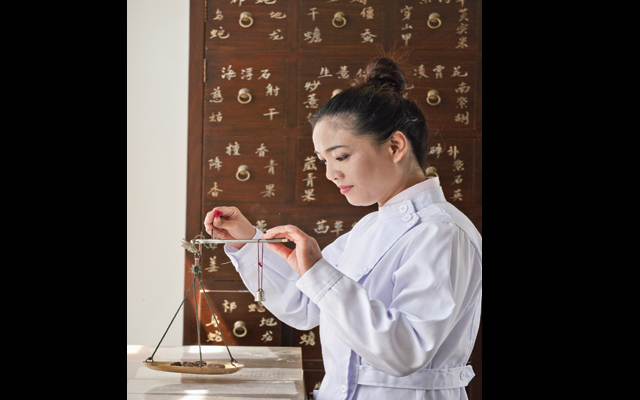
Traditional Chinese medicine therapies, such as acupuncture and massage, helps to attract visitors and travellers from international markets

Often perceived as a heritage and culture destination, China has much to offer in health and wellness tourism, with niche and speciality offerings in these segments quickly on the rise among foreign visitors keen to seek out novel and enriching experiences.

Exo Travel China’s product manager Seaver Qin has observed an uptick in client requests for novel and unique experiences, among them wellness and health tours. He explained: “(Foreign) markets are now aware that there are other types of Chinese martial arts like yongchun, tai chi, qigong, etc. So far, traditional Chinese medicine (TCM) and tai chi yield a lot of queries and bookings.

Traditional Chinese medicine therapies, such as acupuncture and massage, helps to attract visitors and travellers from international markets

“We arrange visits to TCM clinics for (travellers to acquire) basic knowledge like massage and acupuncture, plus guided tours by a specialist. Meanwhile, tai chi or qigong classes can be arranged at venues like Temple of Heaven and local parks,” shared Qin on the various ways the DMC crafts and incorporates wellness packages for its clients.

Likewise, Pacific World Shanghai, destination manager, Violet Wang, also noted a rise in supply, as well as demand, for wellness tourism in China. Chinese health and wellness themed destinations such as Hangzhou, Moganshan, Anji and Water Villages are often proposed as pre/post-tour extensions to the DMC’s high-end incentive and corporate events.

The growing attention paid to the emerging wellness segment was evident at the most recent China International Travel Mart (CITM) in Shanghai last November, where a dedicated zone was erected for Chinese wellness operators and suppliers keen to attract more overseas business.

Among the participating operators at CITM’s wellness zone was Sheenjoy Health Care and Tourism Group. The 23-year-old Chinese group has cast its sights on expanding beyond the domestic silver market to reach out to the international markets, while it aims to grow its existing 30 bases to 200 in the country within the next five years.

Its headquarters channel manager, Wang Kaikai told TTG Asia that its Kunming base is already drawing a considerable number of Russians keen to learn about TCM. He said: “It is typical to see Russians spend an average of two weeks (in China)… Aged around 50-70, our target groups are the mid to high-end clientele.”

Meanwhile, Chinese hospitality player Sunriver has established a foothold in Mount Qiyun – regarded as the Four Sacred Mountains of Taoism in China – in Anhui province since 2012 by building holistic wellness facilities including a 290-room resort, cultural town, teahouse and more recently treehouses of 32 rooms within the mountain area.

According to manager Sha Teng-hai, health-related activities like seasonal tea-picking tours and tea appreciation are popular among foreigners, who mostly hail from South Korea and Taiwan and stay an average of three days.

He said: “We also hope to tap more Asian countries like Japan given the improved infrastructure like high-speed rail launched in 2015. The train has shortened the six-hour journey from Huangshan Airport to only 1.5 hours, making (Mount Qiyun) more attractive. There is also domestic demand from neighbouring provinces like Fujian as domestic health tourism is also a popular trend.”

A spokesperson at Hong Kong-based Hong Thai Travel described that China has no lack of wellness products, ranging from hot spring tours in Guangdong or taiqi/kungfu tours in signature locations like Chengdu’s Mount Qingcheng, but it’s typically study and incentive groups which are more receptive to the wellness/health theme than general group tours.

Another challenge, the spokesperson pointed out, is the association of China as a wellness destination for older travellers 50 and above, whereas the younger generation are more likely to flock to South-east Asia for wellness experiences.

Other impediments to this segment’s growth lie in the lack of quality offerings and manpower, Pacific World’s Wang remarked. “When pushing this (wellness) theme, we found a limited high-quality product supply in China so far, and sometimes there is a  lack of bilingual instructors in health and wellness programmes,” she said.

To overcome the interpretation issue, Pacific World hires Chinese-speaking local instructors on top of additional translators. “This situation is getting better with time, especially with increasing numbers of bilingual professionals,” said Wang.

Jokowi receives Father of National Tourism award

0
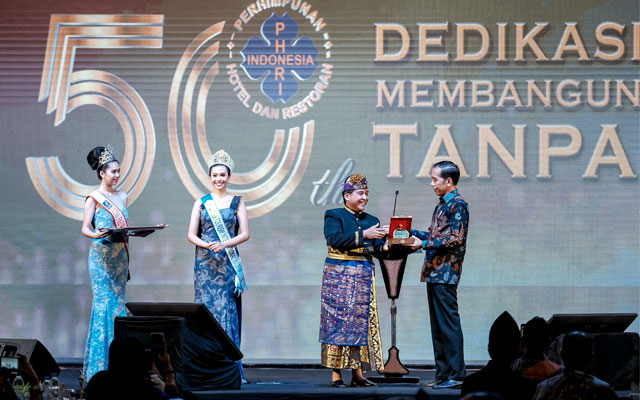
Haryadi Sukamdani presents Joko Widodo with the award during IHRA's 50th anniversary

Indonesia president Joko Widodo has been honoured as Father of National Tourism by the Indonesia Hotel & Restaurant Association (IHRA).

The award was presented by IHRA chairman Haryadi Sukamdani at the gala dinner held in conjunction with the association’s 50th anniversary on February 11.

Haryadi Sukamdani presents Joko Widodo with the award during IHRA’s 50th anniversaryIHRA

In his welcome address speech at the dinner, Haryadi said the title was given to the president for his leadership in the development of tourism and for his commitment to infrastructural development.

He added that infrastructural improvements during the president’s tenure – including toll roads, 11 new airports, seaports and power plants – directly affected the growth of tourism in the country.

Haryadi also mentioned that the visa free policy granted to 169 countries has helped the country’s arrivals growth surpass the regional average.

Moreover, under Jokowi’s administration, the tourism budget has increased from two trillion rupiah (US$142.8 million) in 2014 to 2.1 trillion rupiah in 2015, and 3.3 trillion rupiah in 2016. In 2018, the budget totalled 3.4 trillion rupiah and went up to 3.8 trillion this year.

IHRA records as of 1H2018 show that investment in hotel and restaurant development increased by 78.6 per cent since the president took his post.

India raises adventure tourism profile but perceived cultural destination image lingers

0
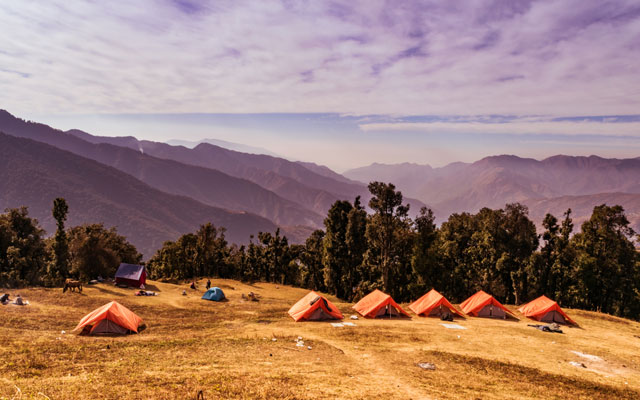
View from Nag Tibba basecamp, the highest peak in the lesser Himalayan region of Garhwal, Dehradun, Uttarakhand

Recent efforts by India’s Ministry of Tourism and state tourism boards to promote adventure tourism are expected to drive more international arrivals and promote the country as a destination for adventure holidays and activities.

Last year saw India making a visible push into the adventure tourism arena, with the Indian Ministry of Tourism declaring 2018 as the Year of Adventure Tourism while the state of Madhya Pradesh became the first destination in Asia to host Adventure Next in Bhopal in association with US-based Adventure Travel Trade Association (ATTA).

View from Nag Tibba basecamp, the highest peak in the lesser Himalayan region of Garhwal, Dehradun, Uttarakhand

Indian states like Uttarakhand, a state in northern India crossed by the Himalayas and which is better known for its Hindu pilgrimage sites and yoga offerings, are opening up to adventure tourism.

Uttarakhand is currently hosting PATA Adventure Travel And Responsible Tourism Conference & Mart in Rishikesh between February 13-15.

Dilip Jawalkar, secretary, tourism, religious affairs and culture department, government of Uttarakhand, commented: “Traditionally, we have been seeing demand from international markets for spiritual and wellness tourism. Adventure is a new segment for us and we want to promote destinations like Rishikesh and Auli for adventure activities.”

With the attention these recent trade events have brought to a previously under-tapped segment, travel operators and buyers alike are finally starting to realise the potential of India as a destination for adventure tourism.

Tom Parsley, personal travel consultant of Hays Travel, a UK buyer attending the PATA event in Rishikesh, expects the efforts of the Indian government and trade adventure tourism stakeholders will reap benefits in future.

“As an adventure destination, India is a new market for UK and in the past we have done tours of Golden Triangle and big monuments,” Parsely told TTG Asia. “Adventure is one of the fastest-growing outbound segments for UK, and India has jumped (ahead of) other countries to get to that market. I see demand coming from FITs to explore adventure tourism in India.”

Swadesh Kumar, president, Adventure Tour Operators Association of India, noted: “There has been a buzz created for adventure tourism in India and the promising future it holds. If India has to grow its inbound numbers rapidly, activity holidays need to be promoted. We as an association will try to bring more adventure tourism events in India.”

However, among the key impediments to the adventure tourism’s growth in India is the perception of the country as a cultural destination in the international markets.

“The perception of India remains as a cultural tourism destination and I don’t see it changing in the near future. If India wants to grow its adventure tourism segment it needs to adopt best practices from a market like Nepal,” Ambrose Bittner, founder & managing director of US-based Red Lantern Journeys, remarked.

Concurred Tejbir Singh Anand, founder & managing director, Holiday Moods Adventure: “At present international tourist arrivals for adventure are far less than cultural tourists in India. Traditionally, the image of India is (associated with) Taj Mahal, Kerala or Rajasthan, so international events like these will help to project the adventure side of India.”

It is hence vital for the Indian authorities to keep up its efforts of promoting Indian as an adventure tourism destination, Anand recommended.

Airbus to cease production of A380 as orders dry up

0
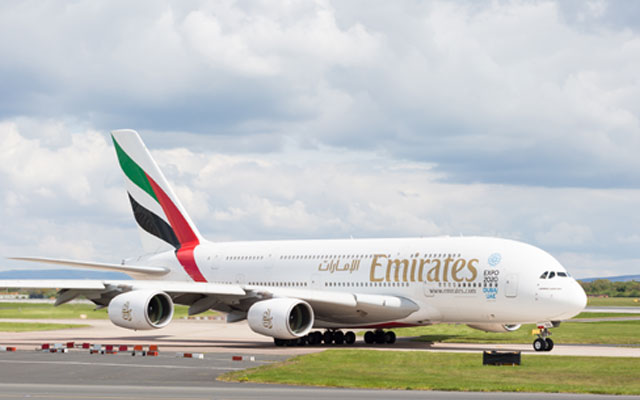
Airbus scraps A380 superjumbo jet as sales slump, the last straw being Emirates pullout

European aircraft manufacturer Airbus will soon cease production of the A380, with the last of the world’s largest passenger aircraft expected to be delivered in 2021.

The decision comes after Emirates, Airbus’ largest A380 customer, reduced its order from 162 to 123 aircraft. Fourteen more A380s are expected to be delivered to Emirates over the next two years regardless.

Airbus scraps A380 superjumbo jet as sales slump, the last straw being Emirates’ reduction

The UAE-based airline has also placed an order for 40 A330-900 and 30 A350-900 widebody aircraft.

Airbus’ CEO Tom Enders – who steps down in April – said in a statement that as a result of this, there is “no substantial A380 backlog and hence no basis to sustain production”.

Despite the aircraft manufacturer’s sales efforts with other airlines over the past few years, orders have slumped.

“The A380 is not only an outstanding engineering and industrial achievement. Passengers all over the world love to fly on this great aircraft. Hence today’s announcement is painful for us and the A380 communities worldwide. But, keep in mind that A380s will still roam the skies for many years to come and Airbus will of course continue to fully support the A380 operators,” Enders added.

“The A380 is Emirates’ flagship and has contributed to the airline’s success for more than 10 years. As much as we regret the airline’s position, selecting the A330neo and A350 for its future growth is a great endorsement of our very competitive widebody aircraft family,” said Guillaume Faury, president of Airbus Commercial Aircraft and incoming Airbus CEO.

Airbus will start discussions with its social partners in the next few weeks regarding the 3,000 to 3,500 positions potentially impacted over the next three years. However, the ongoing A320 ramp-up and the new widebody order from Emirates will offer a significant number of internal mobility opportunities.

Oyo receives US$100 million boost from Didi Chuxing

0
China's Didi Chuxing latest to back Oyo hotels up

Chinese ride-hailing giant Didi Chuxing has pumped US$100 million into India hospitality company Oyo.

The latest investment, which continues to value Oyo at about US$5 billion, comes two months after Singapore ride-hailing firm invested in the Indian unicorn for the same amount in Oyo in December 2018.

China’s Didi Chuxing latest to back Oyo hotels up

The latest investment has been made by Didi-controlled entity Star Virtue Investment, reported The Economic Times. This brings to a close Oyo’s US$1 billion financing round led by existing backer SoftBank Vision Fund, which has pumped US$800 million into the company, according to the same report.

Of the US$1 billion that the company has raised in the current round, Oyo has earmarked US$600 million to be channelled into its China business – Oyo Jiudian – with the rest going to other overseas markets such as India, South-east Asia and the UK.

Oyo had partnered with Didi for its foray into China in November 2017. According to data released by India-based startup company last month, Oyo Jiudian is present in 280 cities across China, operating more than 5,000 hotels and 260,000 rooms via a mix of franchised and leased properties.

Earlier this month, Oyo reported a more than three-fold jump in revenue for its India operations during the 2018 financial year. The company has projected a revenue of almost Rs15 billion (US$211 million) for the current financial year.