TTG Asia
Asia/Singapore Thursday, 2nd April 2026
Page 1279

Philippines mulls cruise tourism development plan amid Boracay concerns

0
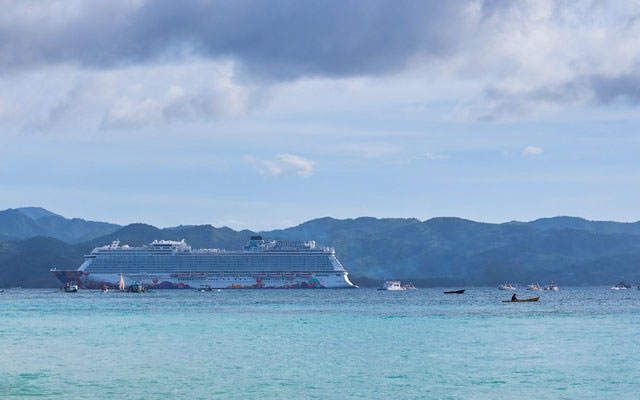
Cruise ship at Boracay, Philippines

The Philippines may have to revisit its cruise tourism development plan amid the ongoing overtourism challenge in Boracay, as the destination looks at reducing the number of cruise ship calls due to their environmental impact and low tourist expenditure.

Boracay is looking at reducing the number of cruise ships calling on the island, as tourism stakeholders have noted the low income from cruise passengers. They added that the passengers crowded out the beaches, and did not spend their tourism dollar at establishments such as hotels and restaurants. In addition, there was the question of ships’ impact on the environment including coral reefs.

Cruise ship at Boracay, Philippines

“The whole Boracay experience has compelled us to take a closer look at our development models – particularly for resort destinations or destinations that are getting higher (tourists) volume than the others,” shared Philippines’ tourism undersecretary Benito Bengzon Jr.

Bengzon cited the need for an “optimum mix between headcount and revenue” in cruise tourism. This is in light of the revenue per passenger of expedition ships usually being higher than mega ships, but the latter help to boost arrival numbers.

In addition, expedition ships offer a “low-density, high-value experience” with no more than 700 passengers. They are also compact and less crowded than ships with thousands of passengers. Such cruise ships also have greater flexibility, and can visit smaller destinations.

Bill Barnett, managing director of consultancy C9 Hotelworks, said: “Cruise ships should be a key part of Philippine tourism, and it’s a natural fit. But it needs planning, infrastructure and the ability to handle mass movements of people.

“For Cebu, Davao and Manila, it’s a no brainer given these can support (large numbers of visitors), but once you start talking Boracay and Palawan, it’s a questioning of having proper handling capacity and port management.”

Barnett believes the Philippine government should seriously consider cruise tourism, but urged them to develop the sector responsibly.

“So much of the Philippines is domestic-led or mass market, i.e. China and South Korea. It’s hard to understand the push back. Go to Tahiti, the Seychelles or other romantic island destinations and (see how) they thrive on the (cruise) sector,” Barnett added.

Similan Islands gets green light to limit daily visitor numbers

0
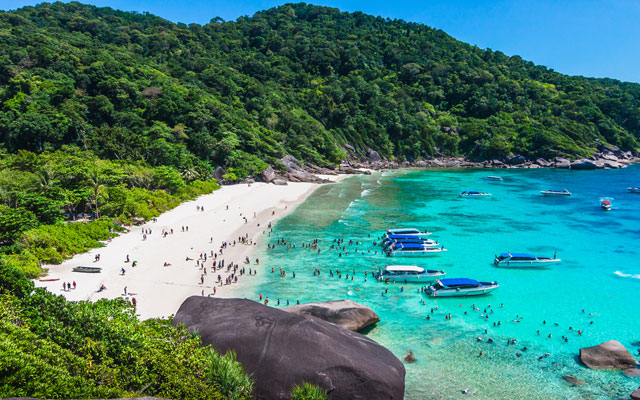
Speed boats and tourists on an island in Similan, Phang Nga Province, Thailand

Thailand’s Similan Islands National Park, a popular diving and snorkelling spot in the Andaman Sea, has been given the green light by the Supreme Administrative Court to limit the number of visitors to protect the archipelago from further degradation, reported the Bangkok Post.

The Supreme Administrative Court’s decision last week overturned an earlier ruling from the Phuket Administrative Court, which said a plan to limit numbers by the Department of National Parks, Wildlife and Plant Conservation (DNP) was illegal.

Speed boats and tourists in Similan, Phang Nga Province, Thailand

Last October the department announced plans to limit daily visits to the park to 3,325 tourists and 525 divers, and that visitors could not stay overnight with permission.

However, the DNP’s plans was met with resistance from tour operators, who had petitioned the Phuket Provincial Court to annul the visitor limitations as it would severely affect their businesses.

This was followed by the Phuket Provincial Court’s issuance of an injunction against visitor limitations but the department appealed against the ruling.

Following the closure of Maya Bay, curbing visitor numbers to the Similan Islands is the DNP’s efforts to control tourism and limit environmental damage to Thailand’s popular destinations.

Sri Lanka and Maldives: an Indian Ocean pairing that works well together

0
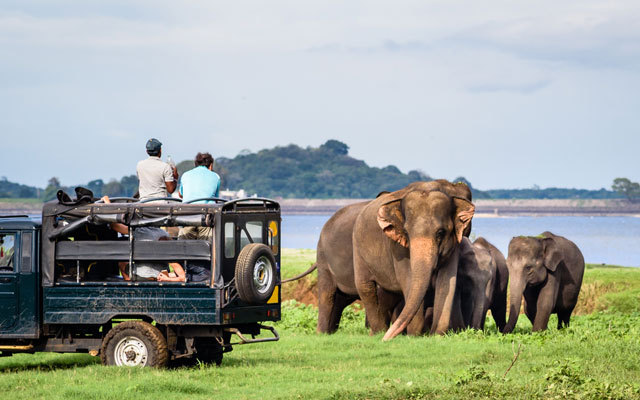
Elepahants safari in Minneriya, Sri Lanka

With Sri Lanka and the Maldives in close proximity to each other, just 50 minutes apart by flight time, tour operators are now seeing greater potential and value in promoting packages combining both countries.

The two markets complement rather than compete with each other, with the Maldives’ strongest asset being its beaches affording privacy while Sri Lanka is favoured as a destination for its diverse cultural attractions and wildlife parks, said Tracy Neureuther, director of Mosaic Tourism Consulting in Germany.

Elepahants safari in Minneriya, Sri Lanka

Echoing similar observations of Champika de Silva, cluster director of sales at Anantara Resorts Sri Lanka, said: “During my recent visit to Spain, almost all the tour operators and travel agents I met booked Sri Lanka using the Maldives for the beach stay.”

However, de Silva has yet to see the combo trend pick up for the German, French and Benelux markets to Sri Lanka, possibly “due to price” issues, although a small number of high-end British visitors are already booking Anantara’s Sri Lanka resorts for beach stays at the end of a round-trip destination with the Maldives.

Nevertheless, hoteliers like Sanath Ukwatte, president of the Hotels Association of Sri Lanka, whose Colombo-based Mount Lavinia Hotels group owns a 75-villa resort in the Maldives, now sees “huge potential in promoting joint packages” of both destinations.

While joint packages form just 10-15 per cent of its business, Maldives-based Coco Collection Hotels & Resorts/Sunland Hotels’ chief commercial officer Andrew Ashmore, likewise, sees a lot of potential in pairing up both destinations.

“(Demand) has grown of late as Sri Lanka is becoming a huge emerging (destination) for Europe. We see interest from mainly the UK and Germany. Generally it’s six (nights) and four (nights), or five and five, or seven and three,” he shared.

While pairing these two destinations may be a new segment for some players, Nalin Jayasundera, managing director of Aitken Spence Travels which owns the Adaaran chain of resorts in Sri Lanka and the Maldives, has been promoting joint tours for some time.

“At one time when there were no direct flights the Maldives, the Chinese used to visit Colombo en route to the Maldives and do combined tours; now there are direct flights to the Maldives,” he said, adding that there is potential to drive joint promotions for the European markets.

Garuda’s new Nagoya service likely to benefit corporate over leisure segment

0
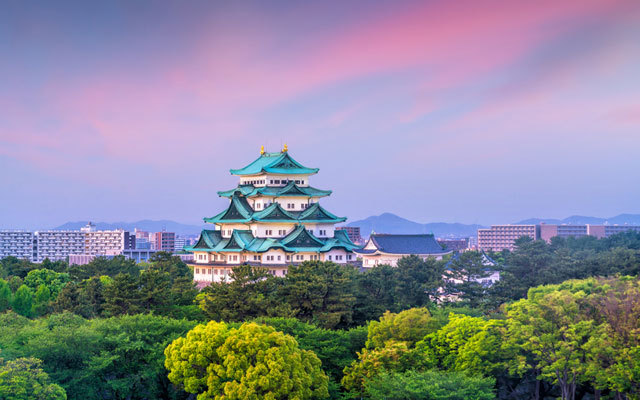
Nagoya (pictured) now connected to Jakarta

Indonesia’s outbound agents are hopeful that Garuda Indonesia’s new four-times weekly direct service between Jakarta and Nagoya – launching on March 23 – will bring more business both ways.

Ari Ashkara, president director of Garuda Indonesia, believes that the new service to Nagoya in Aichi Prefecture, Japan’s fourth largest city, will boost investment and trade opportunities in addition to attracting more Japanese outbound travellers to Indonesia.

Nagoya (pictured) will soon be connected to Jakarta

Rudiana, director of sales of WITA Tour in Jakarta, said this new route this would benefit Jakarta, Indonesia’s key business and administration centre where many Japanese companies are headquartered.

And with a flight schedule that arrive in Jakarta early in the morning, Rudiana predicted that the service would attract more business than leisure travellers. “In Indonesia, the most favourite destination for leisure travellers is Bali, not Jakarta,” he noted.

Like Rudiana, Pauline Suharno, managing director of Elok Tour, opined that the direct flight “will be very attractive for business travellers”.

As for the leisure market, Suharno hopes that the national carrier will launch competitive airfares to attract Indonesia’s outbound travellers. Otherwise, she added, Indonesian travellers are more likely to choose other airlines that provided more affordable tickets even if they are not direct flights.

Rudiana agreed, sharing that airfares would determine whether Garuda could win the market for the Nagoya route. If airfares were too expensive, said Rudiana, Nagoya is unlikely to attract leisure travellers as it is perceived as an secondary tourist destination in Japan.

“Tokyo and Osaka have been deemed ordinary by today’s Indonesian travellers,” he shared.

Cebu to host PATA annual summit this year

0
Cebu in the Philippines to host the PATA Annual Summit, including a one-day conference themed Progress with a Purpose

PATA Annual Summit (PAS) will take place in Cebu from May 9-12, 2019.

Hosted by the Philippine Department of Tourism, the four-day event will be held at Radisson Blu Cebu. The PAS programme will also comprise a one-day conference under the theme, Progress with a Purpose, which will highlight the fundamental challenges, issues and opportunities within the travel and tourism industry and how together actionable change for the better can be brought about.

Cebu in the Philippines to host the PATA Annual Summit, including a one-day conference themed Progress with a Purpose

Keynote speaker Andrew Staples, global editorial director at The Economist, will be presenting on the ‘State of the World Economy’. This will be followed by John Koldowski, special advisor to PATA CEO, who will give insights on the ‘Current and Future State of Travel and Tourism in the Asia-Pacific’. These presentations will be followed by a BBC moderated panel discussion, titled ‘Navigating the Numbers’.

Other topics to be discussed during PAS 2019 include ‘Destination Management in Times of Uncertainty’, ‘Mainstreaming Sustainable Tourism’, ‘The Power of Data and Insights for Responsible Development’, ‘Accessible Tourism for All’ and ‘The Future of Sustainable Destination Branding’.

Confirmed speakers in the line-up include Haitham Mattar, CEO, Ras Al Khaimah Tourism Development Authority; Robin Yap, chairman emeritus, The Travel Corporation; Martin Heng, accessible travel manager & editorial advisor of Lonely Planet; and Maja Pak, director general of Slovenian Tourist Board.

Alongside the conference, students and young tourism professionals will also be able to engage with industry leaders at the PATA Youth Symposium. A half-day UNWTO/PATA Leaders Debate is also part of the summit programme, providing an opportunity for tourism leaders in the private sector to discuss the issues, challenges and opportunities facing the travel and tourism industry today.

Investment company buys travel tech firm Air Black Box

0
Air Black Box forst tp provide capability for airlines to network and cross-sell with each other, regardless of carrier type or PSS platform

Airline technology company Air Black Box has been acquired by 777 Partners, expanding the Miami-based investment firm’s portfolio of companies in the aviation sector.

“Air Black Box’s expert team and technology platform fits our criteria for investing in disruptive aviation companies that create efficiencies and drive revenue in areas that haven’t been fully optimised,” Juan Arciniegas, a principal of 777 Partners, said in a statement.

Air Black Box the first to provide airlines capability to network and cross-sell with each other, regardless of carrier type or PSS platform

“In aviation’s evolving global marketplace, their technology plays a key role in achieving our shared vision for an airline industry that is more agile, flexible and profitable for all stakeholders.”

Ian Reyner, CEO of Air Black Box, said the acquisition by 777 Partners will enable the firm to bring its solution to more airlines and a broader segment of the travel industry.

Air Black Box, a platform that enables airlines to network and cross-sell with each other, is also the technology behind Value Alliance, the world’s first LCC alliance and Asia-Pacific’s largest – comprising Cebu Pacific, Cebgo, Scoot, Nok Air, NokScoot, Vanilla Air and Jeju Air.

Jeju Air, one of the founding members of the Value Alliance, in 2017 made an investment in Air Black Box Asia Pacific.

Centara West Bay Residences and Suites Doha

0

Location
Located in the heart of Doha’s CBD in the city’s prestigious West Bay, Centara West Bay Residences and Suites is conveniently situated close to many main attractions such as The Gate Mall, Doha Corniche, Souq Waqif, and the Museum of Islamic Art.

Its prime location also boasts sweeping city views of the Qatari capital’s collection of shimmering skyscrapers, contrasted by the Arabian Gulf’s startling turquoise waters. The hotel is also within walking distance of many restaurants, boutiques and entertainment hubs.

Rooms
Boasting a total of 292 units comprising studios, one-, two- and three-bedroom apartments and penthouses spread across 42 floors, Centara West Bay aims to provide upmarket contemporary comfort for short- and long-term stays.

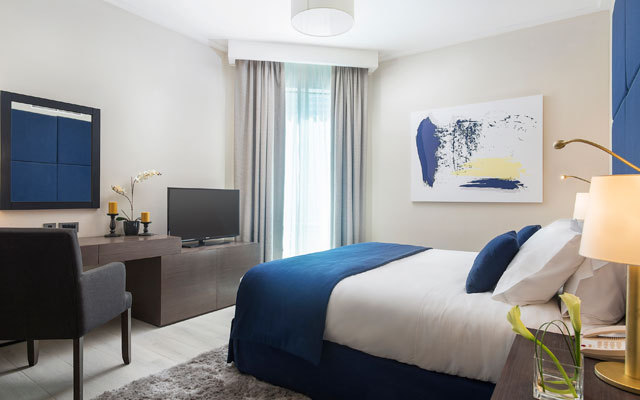
I stayed in a deluxe studio, a lofty and bright space thanks to light flooding in through the floor-to-ceiling windows. My room looked out towards the towering skyscrapers of the city, but rooms on the other side of the property offer sweeping views of the Arabian Gulf’s twinkling waters.

Two bedroom apartment

The spacious room takes in 69m2 of living space, with the modern décor giving it a smart yet casual feel. The well-equipped kitchenette came with an oven, microwave and fridge. A dishwasher, washing machine and tumble dryer are also provided.

Well-designed so all space is utilised, the studio features a work station, living area with a sofa, seating, smart TV and a comfortable queen-size bed. The bathroom is spacious and takes in a rain shower and bathtub.

F&B
Centara West Bay’s pièce de résistance when it comes to dining is Dalchini, and hopes are being pinned on the restaurant being a game-changer in Doha, serving five-star progressive Indian cuisine. The 75-seat restaurant has sophisticated modern décor to match the menu, which has been drawn up by Alfred Prasad who is at the helm of Dalchini. Prasad previously oversaw the Tamarind Collection’s four restaurants, including Michelin-star Tamarind Restaurant in London’s prestigious Mayfair.

Elsewhere, Caprice is a more casual affair that serves Thai and European dishes. A hearty buffet breakfast is served in the morning, with a la carte and buffet options on offer throughout the day and evening. The startling white décor is given a splash of colour through bold red seating and floral decorations.

The Lobby Lounge follows a modern café theme, serving freshly-brewed coffees, fine teas, baked cakes and pastries. A range of salads and European and Middle Eastern specialities are also available. The third-floor swimming pool also has a bar offering a range of salads, snacks and drinks.

Facilities
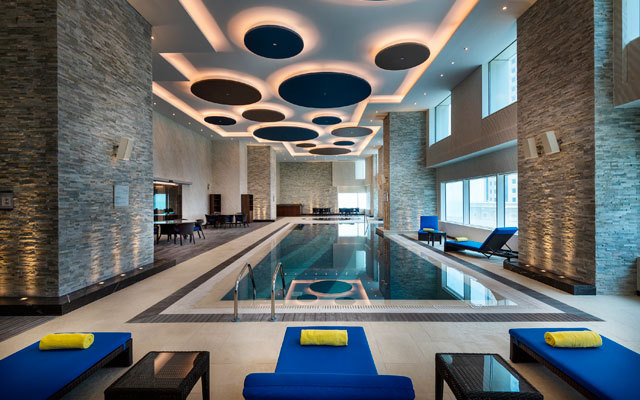
Aiming to provide residents with a one-stop-shop, Centara West Bay boasts a swathe of facilities, ranging from the 264m2 wellness centre with a fitness suite, aerobics studio and large indoor pool and children’s pool, to steam rooms and saunas.

Catering to families, Centara has a kids’ club which can arranges excursions, such as dune tours in the desert.

Business travellers can also use the 225m2 flexible meeting space offered at the Sapphire Room. There, floor-to-ceiling windows allow natural light to flow in, while offering impressive views of West Bay.

Service
The hospitality is top-notch and the attention to detail is excellent, with staff on hand warmly offering help from organising transport, to suggesting activities and promptly responding to room service.

Verdict
Centara has done a fantastic job in creating the perfect home away from home. The extensive amenities and services, including a kitchenette complete with cutlery and cooking utensils, makes this the perfect place to set up home in Doha, whether it be for a night, a month, a year or beyond.

No. of rooms 292
Rates From QAR495 (US$135) per night
Contact details
Tel: (974) 4009 5555
Email: cwq@chr.co.th

Fusion Resort Cam Ranh welcomes new GM

0

Dawid Koegelenberg has been appointed general manager of Fusion Resort Cam Ranh on Vietnam’s south central coast.

The South African brings with him close to a decade of experience in hotel management in Asia.

Koegelenberg’s most recent role was at Paresa Resort & Spa in Phuket where he was general manager for five years. He has also held management positions at two other Thailand properties, Six Senses Koh Samui and Sarojin Resort in Khao Lak.

VR efficiencies

0

In 2017, a 27-year-old Lucas Leung made the decision to set up TraVR HK, recognising the travel industry applications of an emerging technology that won him over while he was on a thrill ride.

TraVR, which stands for “Travel via Revolution”, is a new online platform with travel content focussed on virtual reality (VR), augmented reality and mixed reality.

Lucas Leung

A hotel and tourism management graduate from the Chinese University of Hong Kong, Leung underwent management training programmes at Walt Disney World Resort Orlando and Hong Kong-based Swire Travel, before settling down in the latter’s corporate travel team.

During his time in this industry, Leung picked up on several challenges including incomplete travel product previews and a heavy burden on MICE event planning teams, which he felt could trigger high staff turnover and other manpower issues.

Inspired by the excitement he experienced while on a VR ride, he began watching trends in the technology and quickly realised potential new applications in travel.

Leung said: “It’s hard to stimulate the imagination with just pictures, especially when the younger generations favour more (dynamic) and immersive visuals.

“Our VR tourism hub (offers) a platform for service providers like airlines and cruises to upload VR resources anytime (to connect with travellers). This saves our own cost of production as it is hard to chase and keep up-to-date with their content changes.”

The platform underwent a soft launch in mid-2018 and targets to kick off with the first batch of content in 1Q2019.There are currently no plans to incorporate a booking function.
“At this stage, we are in dialogue with agents, NTOs and hotels, hoping to consolidate a batch of 50 brands from the outset. As a start-up, we signed MOUs with travel trade partners only in order to drive support and funds from potential angel investors. So far, about 15 brands (NTOs, airlines, cruises and hotels) are confirmed.”

Going forward, he sees the most potentially game-changing application of his product being in the events sector.

Planners will be able to do site inspections by simply accessing 3D model renderings.
“Rather than seeing only the wall onsite, our VR technology enables clients to see different setups with only a few clicks,” he elaborated.

Next on the start-up’s agenda is incorporating VR and AR into study tours, replacing pamphlets and audio guides.

Making most of social media

0

Destinations could do more to exercise greater creativity and innovation in leveraging social media for destination marketing, with a tremendous amount of content now available online as an increasingly digital-savvy generation seeks out shareable experiences during their travels.

Damian Cook, CEO and founder of Kenya-based E-Tourism Frontiers, said: “Travel has become a shared experience. When people travel, they have an intense desire to share that experience constantly. Put smartphones and Wi-Fi into the mix, and you will have constantly shared content. That content is by-and-large publicly posted, accessible and visible to us.”

Cook shared that Kenya is tagged in some 26,000 photos a week on various social media platforms, of which about 4,000 are usable. This translates into “thousands of copyright-free, quality, authentic images” that can be turned into daily social media updates or campaigns for DMOs, he pointed out.

“(Travellers) feel it’s an honour for a destination to take their image and use it to market the destination, especially when (they are) given credit,” said Cook.

Tapping user-generated content is exactly the path the Philippine Department of Tourism (DoT) has taken, having just rolled out the refreshed It’s More Fun in the Philippines campaign, which is entirely built on crowd-sourced photos and videos shared by tourists through the hashtag #itsmorefuninthePhilippines.

A creative example is also seen in Visit Scotland’s launch of a pop-up travel agency in London to sell holidays in Scotland – via Instagram photos, no less. The DMO created touchscreens with aggregated Instagram photos, allowing walk-in customers to simply tap five photos they like and place them into an itinerary that could be booked on the spot.

Visit Scotland is using “visual inspiration” to drive the decision-making process for travellers, explained the DMO’s senior market manager, Christina Bruns. “What is key especially for consumers today is participation and authenticity. What we have is authentic online content from consumers, their memories and experiences of Scotland, and we’re sharing that to create new memories and experiences for people coming through our door.”

The Mekong Tourism Coordinating Office (MTCO) has also created a collaborative storytelling platform, Mekong Moments, that draws destinations articles and reports from various sources. This initiative was driven in part by marketing budget constraints, as well as a way to build its digital marketing capacity through social media sharing, revealed MTCO’s executive director, Jen Thraenhart.

He also envisions Mekong Moments becoming a visual content sharing platform that could drive “social commerce”. For instance, visitors to the platform could click on a picture and use the #MekongMoments tag find out more about the destination and service provider.
“The more (travel operators) encourage their guests to share their experiences, the more content created, the more the Mekong region is promoted. This in turn also drives exposure for the business, and the region as a whole,” Thraenhart noted.

Cook agreed: “Once these (active links) start working and people receive booking enquiries, that really incentivises the industry to get their customers to take more photos and tag them – because they know the photo may end up being used by the DMO, which in turn drives business to them. This is a win-win relationship.”

Travel stakeholders think there is also value in using social media as a tool for visitor dispersal and overtourism, driving travellers to Instagram-worthy locations that are lesser-known and promoted.

Willem Niemeijer, CEO of Thailand-based Yaana Ventures implores destination marketeers to move away from promoting “perceived highlights” in South-east Asia.

Bagan, which is now overrun with visitors, continues to receive heavy promotion in Myanmar, while other unique but lesser visited places in the country such as Mrauk U deserves greater marketing and visitor attention, said Niemeijer.

It’s a similar story in Cambodia, where an icon like Angkor Wat continues to receive millions of tourists each year, while a short distance away lie other untouched temple complexes such as Banteay Srei.

Even in Phuket, whose beaches see daily throngs of crowds, Niemeijer contends that there remains unseen aspects on the popular island, varying from a gibbon rescue centre to turtle release programmes.

Moreover, destination marketeers can also turn to social media as a means to manage visitor traffic flow and volume, as every publicly shared image comes with location data.

For instance, Cook shared the example of tourism authorities using a heat map created from Instagram to ascertain the most popular timings and sections among hikers on the Appalachian Trail, which extends between Springer Mountain in Georgia and Mount Katahdin in Maine in the US.

Through the map, authorities could easily see where all the hikers were at a given point in time, and built a strategy to thin out the traffic by offering alternative hiking routes and trip start dates.

The heat map is held up as a great visitor dispersal tool by Cook, who sees its application for any landmark or attraction where tourists tend to accumulate.

Despite the common association of social media with the millennials and hence the greater online efforts targeted at this segment, Richard Cutting-Miller, executive vice president of US-based Resonance consultancy, sees a prospective gold mine in digital travel marketing lying on the other end of the age spectrum.

“Everyone is crazy about the millennials,” he said. “But the reality is there’s a lot of old people, and the difference between millennials and seniors is that (the latter) have already paid off their house and put their kids through college.

“These seniors have time, money, means and health to travel. We’re talking about 20 to 30 more years of leisure travel consumption, but (instead of just focusing on millennials) destinations have to be ready for seniors as well, who aren’t going to be bungy jumping for instance.”

Urging travel marketers to understand the social media preferences and online behaviour between the different generations, Cook added: “Social media is a powerful tool when it comes to targeting audiences. People don’t use social media in the same way. You have to push the correct content to the correct audience.”

One way to target these seniors could be through the use of Twitter, suggested Cook. He advised: “What social media is replacing for these seniors is the newspaper. It is a good way for them to stay up to date, with numerous links to click through for articles. This generation still likes to read and consume text, and Twitter is a great way or propagating links to text-based content for their consumption.”