TTG Asia
Asia/Singapore Thursday, 2nd April 2026
Page 1266

Oyo expands into Japan’s hospitality sector through Softbank JV

0
China's Didi Chuxing latest to back Oyo hotels up

On the heels of its recent partnership with Yahoo to enter into Japan’s home rental market, Oyo Hotels & Homes is now foraying into the country’s hospitality market through a joint venture with Tokyo-based SoftBank Corp and SoftBank Vision Fund to form Oyo Hotels Japan.

The new venture will be led by Prasun Choudhary as the operating partner, an Oyo founding member who is said to have successfully launched a number of global Oyo businesses.

The Indian company’s rapid expansion plans extend into Japan’s hotel market

Oyo Hotels Japan aims to harness its innovative business model and technology-led operational capabilities to offer convenient and comfortable accommodations to travellers and guests in Japan and create increased business opportunities for its partners, the company said in a statement.

Ken Miyauchi, president & CEO of SoftBank Corp said that Oyo Hotels Japan believes that the new venture will “provide brand-new hotel experience to travellers in Japan” through its dynamic pricing and reservation systems offerings, contributing to the elimination of labor shortages and flexible pricing.

“We are sure that Oyo Hotels Japan will contribute to the revitalisation of the travel market, including inbound tourism and regional revitalisation in Japan,” he commented.

Ritesh Agarwal, group CEO & founder, Oyo Hotels & Homes, said that the company sees “a huge opportunity” in Japan being one of the most popular tourist destinations in Asia.

“We are thrilled to now be able to offer OYO’s affordable, hassle-free and quality living experiences to guests across Japan – and to be empowering Japan’s independent hoteliers with the latest technology innovations like AI and machine learning powered hotel/ryokan management system, predictive analytics led pricing and revenue management and seamless operational expertise that helps them focus on customer experience and thereby generate increased, sustainable incomes,” he added.

Boeing accepts responsibility for fatal 737 Max crashes

0
Boeing's CEO Dennis-Muilenburg

Boeing chairman, president and CEO Dennis Muilenburg has publicly apologised and extended his sympathies for the lives lost in the two recent air tragedies involving Boeing 737 Max 8 planes.

Earlier last month, Ethiopian Airlines Flight 302 from Addis Ababa to Nairobi crashed minutes after takeoff, killing all 157 people on board. This was the second air tragedy that involved a Boeing 737 Max 8 in the past six months, coming after the Lion Air crash with a plane of the same model in October 2018.

Muilenburg publicly admits faulty software, pledges safer return of future planes

Since then, China, Indonesia, Singapore, Malaysia, Oman, Ethiopia, Norway and the Netherlands are among the list of countries which have suspended Boeing 737 Max jet from their airspace.

Full details of the two accidents have yet to be issued by the relevant government authorities, but preliminary reports have identified the common problem on both flights was the Maneuvering Characteristics Augmentation System (MCAS), activated in response to erroneous angle of attack information.

Muilenburg has indicated that Boeing is taking a “comprehensive, disciplined approach”, and working closely with FAA and their customers to “finalise and implement a software update”.

This update, along with the additional training and extra educational materials that pilots have requested in the wake of these accidents, will eliminate the possibility of unintended MCAS activation and prevent an MCAS-related accident from ever happening again.

He added that the update is nearing completion, and certification and implementation will be done to the 737 MAX fleet worldwide in coming weeks.

Muilenburg ended the statement by stating that Boeing will “do everything possible to earn and re-earn that trust and confidence from our customers and the flying public in the weeks and months ahead”.

https://twitter.com/BoeingCEO/status/1113880952575549441

Lonely Planet finds Trill in turning images into bookings

0

Betting on visual search and influencer content in travel, Lonely Planet has acquired Trill Travel, a AI-driven travel marketplace that analyses pictures and automatically creates links to booking sites, enabling users to book a hotel, experience or table at a restaurant with the touch of a picture.

The acquisition of Trill, according to Lonely Planet, will help in “bridging the gap between those wanderlusting and those on the road by streamlining the booking process through a powerful visual search mechanism”.

“We are looking at this acquisition from an asset perspective – we want to incorporate Trill’s tech and capabilities into our digital products and soon reimagine our Pathfinders programme,” said president and CEO, Luis Cabrera.

Following Lonely Planet’s recent purchase of ArrivalGuides, Trill marks the second acquisition the company has done since Cabrera joined the company in early February 2019.

“Trill is another example of how we strive to enable a seamless user journey and interaction between influencers posting content, consumers looking for adventure and our travel partners,” he added.

To attract and incentivise influencers, Lonely Planet will also adopt Trill’s revenue share model, which automatically pays out commissions for confirmed bookings tied to each individual post.

“This dual-sided marketplace helps travel brands drive direct bookings through organic social content, and acts as a monetisation platform for content creators,” said Cabrera.

Going forward, Trill’s founder & CEO, Eric Shepard will report directly to Cabrera, and is expected play a large role in Lonely Planet’s venture experiments, including integrating Trill’s technology and model into Lonely Planet’s digital properties, then focusing on finding further transformative adjacent spaces in travel.

Korean Air chief passes away

0

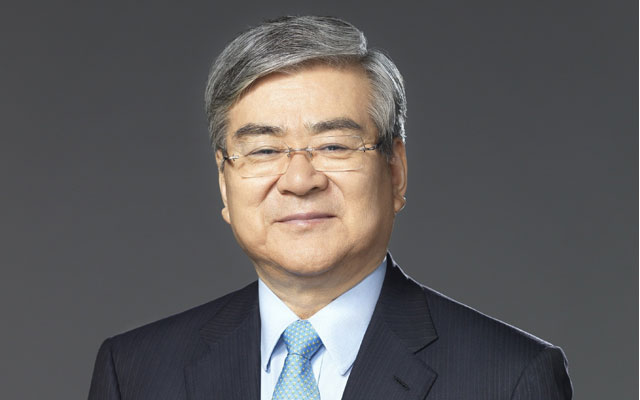
On April 7, Korean Air’s chairman and CEO, Yang Ho Cho, died peacefully in a Los Angeles hospital at age 70.

He was a founder of the Skyteam international airline alliance and led the bid committee that brought the 2018 Winter Olympics to South Korea. He recently completed development of the Wilshire Grand complex in downtown Los Angeles, the tallest building west of the Mississippi.

Yang Ho Cho

He served on the board of governors of IATA; the board of trustees of his alma mater, University of Southern California; and has received honorary doctorate degrees from Embry Riddle Aeronautical University (Florida) and the Ukraine National Aviation University.

Under his guidance, Korean Air became a global powerhouse flying to 124 cities and 44 countries, emerging as America’s largest Asian airline with 15 North American gateways. He recently negotiated a joint venture with Atlanta-based Delta Air Lines, creating what’s said to be the industry’s most comprehensive transpacific network. The airlines are scheduled to launch a new non-stop route between Boston and Seoul on April 12.

Cho was in the airline industry all his life, with his father Choong-Hoon Cho having acquired and privatised Korean Air 50 years ago. The younger Cho was named the airline’s chairman and CEO in 1999 after serving as president and CEO four years earlier. Cho began working for Korean Air as a manager in the Americas Regional Headquarters in Los Angeles in 1974 after graduating from University of Southern California.

He has been recognised with accolades including Grand Officier’ in France’s Légion d’Honneur, Polaris in Mongolia and also the Mugunghwa Medal in Korea – all of which are the highest order of civil merit awarded in these countries.

Ho is survived by his wife, Myung-hee Lee, son Walter, daughters Heather and Emily, and five grandsons.

India, China and SE Asia to drive Marriott’s 2020 vision for 1,000-strong APAC portfolio

0
Port Muziris, Kochi, a Tribute Portfolio Hotel

Marriott is targeting to have 1,000 hotels open in Asia-Pacific by the end of 2020, with China, India and South-east Asia identified as key growth areas.

In 2019 alone, the company expects to add close to 100 new hotels, or close to 20,000 rooms, with several brand debuts in Australia, Hong Kong, the Philippines, Nepal and India.

Marriott’s portfolio in Asia-Pacific currently encompasses over 710 properties in 23 countries and territories, operating under 23 of the company’s 30 global brands.

Port Muziris, Kochi, a Tribute Portfolio Hotel

China continues to be the strongest growth driver for Marriott in Asia-Pacific, with more than 300 hotels in the pipeline. The country accounts for more than 50 per cent of the company’s pipeline in Asia-Pacific. This year alone, Marriott targets to open more than 30 hotels in China, including the first JW Marriott Marquis Hotel in China, the 515-room JW Marriott Marquis Hotel Shanghai Pudong featuring six F&B outlets; and the first Renaissance Hotel in the Fujian province with the planned opening of Renaissance Xiamen Resort & Spa in 4Q2019.

Outside of mainland China, the St Regis brand is set to debut in Hong Kong in the historic Wanchai district.

India remains the company’s second fastest growth engine in the region with more than 50 properties in the pipeline. Marriott expects to achieve its goal of 30,000 rooms open in India by end 2023. Given India’s robust economy and rising middle class, the country continues to present exciting growth opportunities, with strong demand for Marriott’s select-service brands.

The hospitality giant also intends to grow the footprint of its upscale brands in India, with Port Muziris, Kochi, a Tribute Portfolio Hotel, the brand’s first in the country, in 2Q2019.

Marriott has over 140 signed hotels in its South-east Asia pipeline, with Indonesia leading growth. In the Philippines, the company expects to more than triple its hotel portfolio by 2023. Sheraton, its most global brand, recently debuted in the country with the opening of Sheraton Manila Hotel.

It is also continuing its growth momentum in the Pacific region, with 50 hotels anticipated to be open by 2020. Australia should see several brand debuts in coming years, including The Luxury Collection and The Ritz-Carlton.

The Tasman, a Luxury Collection Hotel, is scheduled to open in Hobart in late 2019, and the 205-room The Ritz-Carlton Perth in June 2019. Element Hotels, Marriott International’s eco-conscious brand, is expected to debut in Australia with the opening of Element Melbourne Richmond in 3Q this year.

With its 2020 vision, the hotel giant estimates it could contribute to the creation of 50,000 more jobs in the region.

Another W goes to Bali

0
A rendering of W Ubud's Wet Deck

Come 2020, W Hotels Worldwide will launch its second hotel in Bali, this time in the island’s cultural heart of Bali, a decade after the opening of W Bali – Seminyak in 2010.

Developed in partnership with Indonesia’s Ruang Teknik Group, W Bali – Ubud will offer 100 guestrooms, including 10 villas with private swimming pools and an EWOW suite (the brand’s take on the traditional Presidential Suite).

A rendering of W Ubud’s Wet Deck

Perched on a hilltop with views of the sunrise and the Tanggayuda Valley, the hotel will weave the Balinese festival culture and aesthetic into its design alongside carved stone and pura (terra cotta) finishes throughout.

Recreation spaces at W Bali – Ubud will include two pools – a Wet Deck (pool deck) featuring terraced pools inspired by the area’s traditional rice paddles and another a designated quiet pool – plus the poolside Sunset Bar and the signature Away Spa by W Hotels with a large open social deck.

W Bali – Ubud will be home to multiple on-site bars and restaurants, including the all-day dining restaurant Morinda; Synn, a partially underground speciality restaurant serving Balinese and world cuisines; the FIT (gym) bar, which will feature a pressed juice lab by day and a high-energy bar by night with UV-responsive, painted displays; and the Wanderbar, offering 360-degree views of the surrounding and inventive concoctions.

Events at the new W hotel can be held at a 176m2 meeting room featuring natural lighting and outdoor lawn area, with bamboo being a key feature to accent both the outdoor and indoor event spaces with a natural touch.

No formal decision made on Komodo’s possible closure: Indonesia’s environment ministry

0
XXX

The Ministry of Environment and Forestry (KLHK) has clarified that no new decision has been made regarding the closure of Komodo Island, with research to assess the situation and determine what needs to be done still pending.

The East Nusa Tenggara government this week released a statement saying the island would be closed next year.

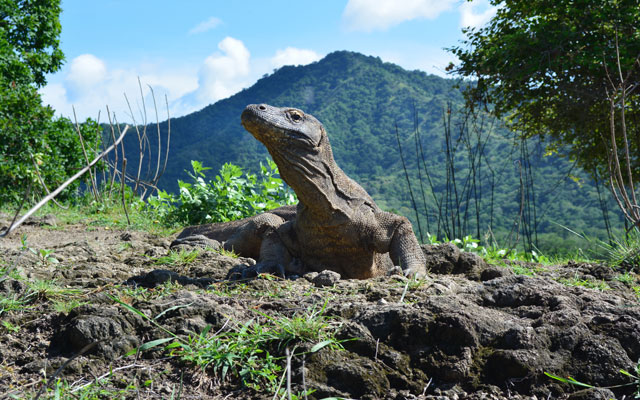
Komodo National Park is well-known for its Komodo dragons; the government is mulling a tourist ban to save these endangered reptiles

In response, Siti Nurbaya Bakar, Minister of Environment and Forestry, told TTG Asia: “At the moment, the integrated team is still conducting research until August, and we will stick to (the earlier decision) to wait for the results (before making any new announcements).”

In the meantime, the ministry and its team will continue to carry out steps to improve the sustainability of Komodo National Park, she added.

The ministry also issued a press statement to clarify the matter yesterday. Wiratno, director general of Natural Resources Conservation and Ecosystems at KLHK, reiterated that the closure of the Komodo National Park or Komodo Island must be based on scientific considerations.

Wiratno said: “We understand that we need to give certainty to tourism stakeholders, both local or international, as this could potentially affect of the country’s foreign exchange income, tourism business, and local economy.

“(However), Komodo National Park is managed with the principle of caution. To determine such a decision like closing the park, there must be scientific studies and discussions with relevant parties.”

The ministry held a coordination meeting between the director general of KLHK, the East Nusa Tenggara Provincial Government and the West Manggarai Regency Government last February 2019.

A team represented by the local government, KLHK, tourism stakeholders, the Indonesian Institute of Sciences (LIPI), the Ministry of Tourism, and civil society organisations, is scheduled to work together until July, before providing recommendations to KLHK in August.

Until the integrated team completes its research, tour operators can still sell tour packages to Komodo Island. However, rules around tourism activities, such as tracking, snorkelling and diving have been tightened to ensure the sustainability of the ecosystem.

Commenting on news that confirmed the park’s closure, Ng Sebastian, managing director of Incito Vacations said: “KHLK has to be firm (and warn) the regional government that they have no right to make (such announcements) as policies with regards to national parks are the jurisdiction of the central government.”

And in making the final decision, he urged for KLHK to take into consideration cruise ships that have been set to arrive two years in advance.

He said: “Cruise ships are probably the most affected (should the island be closed), because at this moment only Komodo Island can be visited by larger cruise ships.”

Ng pointed out that Rinca Island cannot be used as an alternative destination because the open area for tourism is only in the north, where many small islands are located and this will make it difficult for a cruise ship to pass, while the area south of Rinca Island is restricted for tourism activities.

Chiang Mai braces for watered-down Songkran as city chokes in smog

0
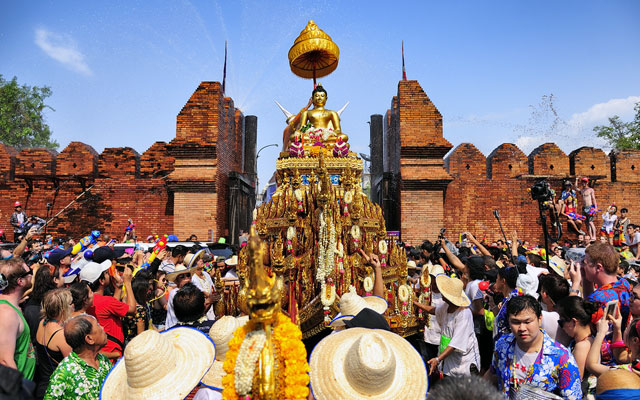
Songkran in Chiang Mai

Chiang Mai’s travel trade is bracing for muted Songkran celebrations as the smog crisis is likely to put a dent on visitor arrivals to the northern city and the surrounding provinces for the upcoming Thai New Year.

Thailand’s biggest annual festival fall during April 13-15 each year, and Chiang Mai province has traditionally been among the country’s most popular destinations to celebrate the water festival. Last year, Chiang Mai welcomed a total of 150,000 local and international visitors during the Songkran period.

Songkran in Chiang Mai

While the Tourism Authority of Thailand (TAT) projected a three per cent increase in domestic tourism during Songkran this year, Chiang Mai and the northern region, however, are likely to see a fall of about 11 per cent in visitor numbers due to ongoing air pollution.

Industry members on the ground are predicting even more dire impacts from the smog. Damrong Ong-arj, president of Chiang Mai Tourism Business Association, suggested that the number of foreign and local tourists to Chiang Mai could drop by up to 50 per cent during the festival if the situation remains unchanged.

Not only are large declines projected for the Japanese and European markets over health concerns, many locals have also cancelled their room bookings in Chiang Mai, Chiang Rai and Mae Hong Son provinces, he added.

“We strongly urge the government and authority to resolve the problem ahead of Songkran festival in order to save business,” Damrong implored.

La-Iaid Bungsrithong, president of Hotels Association Northern Chapter and general manager of Ratilanna Riverside Spa Resort, also forecasted the average occupancy rate for Chiang Mai hotels to dip to 60 per cent from the usual 70-75 per cent during the first half of April, inclusive of the Songkran festival.

An occupancy drop of 10 to 20 per cent during Songkran is likely for The Legend Hotel in Chiang Rai, assistant general manager Suwat Fuwan told TTG Asia, as many tourists have shifted to other provinces to avoid the smog.

However, many groups from Europe who had already booked accommodation are going ahead with their trips as planned, Suwat shared.

Chiang Mai was recently ranked the most polluted city in the world amid its worst-ever air poulltion, although the Geo-Informatics and Space Technology Development Agency reported earlier this week that the number of burning hot spots in Chiang Mai and the North have declined 50 per cent following Thai prime minister Prayut Chan-o-cha’s visit to Chiang Mai on April 2 and demanded solutions to tackle the severe pollution.

TAT, which issued a travel advisory to Chiang Mai earlier, said it is cooperating with Chiang Mai Municipality to install water tunnels, fountains, water curtains and artificial waterfalls at key locations. It is also urging high office buildings as well as attractions to help reduce dust by cleaning their premises and spraying water ahead of the Chiang Mai Songkran Festival 2019.

Sluggish demand for Johor during recent Singapore school holidays

0
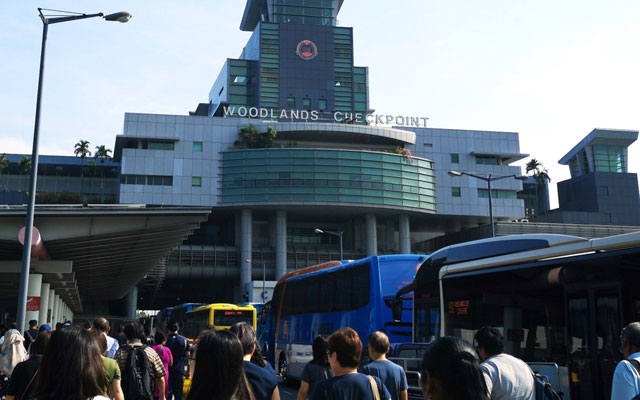
Singaporeans at the Woodlands Checkpoint

Inbound travel players in Malaysia saw a decline in arrivals from Singapore to Johor during the March school holidays, attributing this partly to congestion on the causeways and the lack of new products in the state.

Arokia Das Anthony, director, Luxury Tours Malaysia, said: “Travelling by road from Singapore, it takes at least two hours to clear customs and immigration during peak hours and public holidays. When traffic is this bad, there needs to be a compelling reason to travel to Johor for a holiday.

Singaporeans at the Woodlands Checkpoint

“There is also a lack of new products in the state, which is not helping tourism,” he told TTG Asia.

While acknowledging that Desaru Coast Adventure Waterpark is a new attraction, he pointed out that it is an hour’s drive from Johor Baru.

“I see demand picking up once the ferry service between Tanah Merah in Singapore direct to Desaru Coast opens in 2Q2020.”

At the same time, Arokia said demand for Penang, Ipoh and Langkawi picked up during the recent Singapore school holidays. To cater to youthful preferences, the company offered experiential and soft adventure activities such as zip lining and abseiling.

Raaj Navaratnaa, general manager of Johor-based New Asia Holidays Tours & Travel, too opined that Johor lacks major new attractions to entice Singaporean visitors already familiar with the state’s offerings.

“While we saw a decline in demand for tours in Johor during the Singapore school holidays, demand for other local destinations such as the east coast of Peninsular Malaysia and East Malaysia increased because these destinations are relatively new and unfamiliar with many Singaporeans,” he said.

“These are destinations we will be focusing on for the Singapore market who are into water-based activities, culture, nature and heritage.”

John Chan, business advisor at Isma Holidays in Johor Baru, added that the strong Singapore dollar and competition from regional destinations made it much more difficult to tap the Singapore market, especially repeat visitors to the state.

Like others TTG Asia spoke with, he said Johor could benefit from new tourism experiences to entice Singaporeans to make repeat visits to Johor.

“We saw a drop in the Singapore market during the recent school holidays as well as year-to-date. We are concentrating on domestic tourism to make up for the shortfall in the Singapore market. After promoting culture, arts, heritage and homestays to the local market, we saw a small five per cent increase during the recent March Malaysian school holidays over the same period last year.”

Tourism Malaysia’s director-general, Musa Yusof, shared recently that the NTO welcomes new ideas from the travel trade for incubation and joint development.

Sri Lanka to grant visas on arrival for 39 nationalities

0
The campaign launch will proceed as planned at WTM London

From May 1 to October 31, nationals from 39 countries visiting Sri Lanka will be eligible for visas on arrival (VoA).

The countries included in the programme are Austria, Belgium, Bulgaria, Cambodia, Croatia, Cyprus, Czech Republic, Denmark, Estonia, Finland, France, Germany, Greece, Hungary, Ireland, Italy, Latvia, Lithuania, Luxembourg, Malta, Netherlands, Poland, Portugal, Romania, Slovak Republic, Slovenia, Spain, Sweden, UK, US, Japan, Australia, South Korea, Canada, Singapore, New Zealand, Malaysia, Thailand and Switzerland.

The VOA pilot is hoped to boost off-season tourist arrivals

The introduction of VoA is aimed at attracting more tourists to the nation, particularly in the off-season. Sri Lanka’s largest tourism source, India, is not included in the list of countries that qualify for VoA.

“We will run this as a pilot project initially to increase arrivals during the off-season. We estimate that this will result in a 20 per cent increase in arrivals. Depending on its success, we will decide whether to continue with it,” said Sri Lanka’s tourism minister John Amaratunga in a media announcement yesterday.

In addition to the visa relaxation, Sri Lanka Tourism in association with airlines, hotels and other industry stakeholders will also launch a discounted, off-season promotion package for tourists.

Industry stakeholders welcomed the move, which they believe would help generate more arrivals and tourism income.

“This is definitely a step in the right direction,” said Tourism Hotels Association of Sri Lanka’s president Sanath Ukwatte, citing the case of Indonesia, which saw tourist arrivals grow significantly after offering VoAs to nationals from multiple countries, including Sri Lanka.

Sri Lanka attracted more than 2.3 million visitors last year and is targeting three million visitors this year.