TTG Asia
Asia/Singapore Monday, 6th April 2026
Page 1232

Down, but not out

0
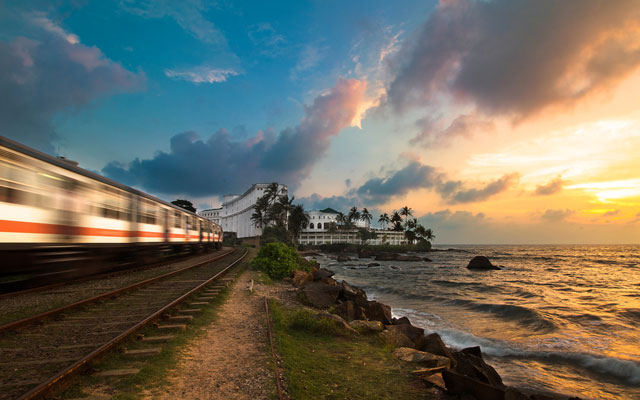
The Easter Sunday blasts have taken a toll on Sri Lanka’s emerging tourism sector (pictured: Mount Lavinia Beach, Sri Lanka)

Barely a few months after Lonely Planet named Sri Lanka the top travel destination in 2019, the country was rocked by a series of deadly bomb attacks on April 21, which killed over 250 people and sent the lucrative US$4.4 billion tourism industry into a tailspin.

With visitor arrivals taking a severe hit – the post-attack Sri Lanka receives an average 1,800 visitors daily compared to 4,500 earlier – authorities are looking to expedite the launch of a destination marketing campaign to restore confidence in the country.
The Easter Sunday blasts have taken a toll on Sri Lanka’s emerging tourism sector (pictured: Mount Lavinia Beach, Sri Lanka)

According to Kishu Gomes, chairman of Sri Lanka Tourism Promotion Bureau (SLTPB), there are plans to mount an aggressive destination marketing campaign as soon as travel advisories are relaxed.

Contrary to the three-year-long So Sri Lanka campaign earlier unveiled, which was originally scheduled to start in mid-2019, Gomes said the new campaign will now be fast-tracked as a six-month offensive given the current environment where intensive marketing and promotion efforts are urgently required.

Cabinet approval is also being sought to appoint a PR company and a global advertising agency to implement the US$5.6 million marketing campaign. Gomes added: “In order to build confidence we are also looking at offering insurance cover by Sri Lankan insurers to visitors.”

Debt-ridden hotels have also been provided with a one-year moratorium on loans and interest repayments and tax concessions as the battered hospitality industry struggles to pick up the pieces after occupancies plunge as low as 10 per cent, a dramatic fall from 60-70 per cent before the attacks.

With security being the key towards relaxing a proliferation of travel advisories from key source markets, the government is planning a security audit even as senior government leaders say the situation is now slowly returning to normal.

In a bid to relax the travel warnings, which also hinders travel insurance for tourists, military intelligence officers are holding regular briefings with the defence attachés of foreign missions in Sri Lanka to explain the security situation.

At press time, China, India, Germany, Switzerland and Sweden have just announced the relaxation of travel restrictions to Sri Lanka.

Security has been tightened across the island with military checkpoints at various places while metal detectors and body searches are routinely done. Colombo hotels have also provided with military guards.

Nalin Jayasundera, vice president of Sri Lanka Association of Inbound Tour Operators, said that key areas that have to be addressed include convincing diplomats that the situation is under control and to lift or soften the travel advisories, ensuring airlines keep flying to Sri Lanka without reducing frequencies or pulling out due to fewer passenger loads; promotions jointly funded by the SLTPB and tour operators; and publicity for the enhanced security measures at hotels to ensure guest safety.

As well, Dileep Mudadeniya, vice president – brand marketing at Cinnamon Hotels & Resorts, sees a need to build up public perception of Sri Lanka as a safe destination.

“Schools have to open, people should return to parks and other public places and businesses should return to normal,” he said, adding that this is key to ensuring the country is back to normal, and the security situation is under control.

However, one of the biggest challenges in convincing Sri Lanka’s key visitor source markets to lift travel advisories appears to be the lack of a single voice, as sought by the industry, in explaining the status of security in the country.

President Maithripala Sirisena and prime minister Ranil Wickremesinghe, who represent different political parties in the incumbent administration, have provided somewhat contradictory opinions on the security level. While Sirisena has said the situation is under control, Wickremesinghe has expressed the view that it is not fully under control.

“Not having a unified voice on the security threat is confusing to us,” said a western diplomat who declined to be named. Also of concern to foreign envoys is the country’s intelligence gathering capabilities which they say needs to be strengthened, citing media reports and public awareness that information of a possible Easter Sunday attack was known to some political leaders and the defence establishment, but these threats were not taken seriously.

Meanwhile, at least 50 tourism organisations including Sri Lanka’s biggest local hotel chains – Jetwing Hotels, Heritance Hotels and Resorts, and Cinnamon Hotels and Resorts – supported by international chains, Movenpick and Anantara have come together to form the Sri Lankan Tourism Alliance (www.lovesrilanka.org) to provide a single point of contact for updates to travellers and for trade overseas.

“We felt there was a need for an independent message from the industry, apart from the government’s, on the status in Sri Lanka because there were different messages going (around),” said Hotels Association of Sri Lanka president Sanath Ukwatte, who is also chairman of Mount Lavinia Hotel, one of the supporters of this initiative.

“Until they are convinced that it is safe for travel, the travel advisories will remain. We are hoping our alliance will help provide that assurance of security in addition to assurances from the government,” he said.

Industry officials say it would take a year for tourism to return to its pre-April 21 status when it was heading for nearly three million arrivals this year, up from 2.3 million in 2018. Arrivals this year are now expected to plunge 25-30 per cent to around 1.6-1.8 million.

According to Cinnamon’s Mudadeniya, a positive factor in Sri Lanka’s tourism recovery effort is the global reduction of risk perceptions since the 9/11 attacks. “Due to the frequency and manner of these attacks, (travellers) have reduced their perception of risks,” he said.

Moreover, a strong recovery plan, as well as the popular perception of Sri Lanka being a must-visit destination, could help to absorb part of negative publicity arising from the recent blasts.

Krishan Balendra, chairman, John Keells Holdings, noted: “If you look at similar incidents in other countries, in about a year we should be back to where we were, assuming there isn’t a recurrence. I’m sure that it will very unlikely recur.

“Our rating was 1 which is a very safe country, now we have gone to a 4 if you use the US rating mechanism. We can go to a 2 which says terrorist attacks are likely. For that matter, most of Western Europe is also rated at 2,” Balendra noted.

Abbas Esufally, group director at Hemas Holdings – which has several hotels including the Anantara brand under its wing – believes that once the travel advisories are lifted and the security situation is improved, an aggressive destination marketing campaign should take off.

“If this happens in the next few weeks or months, we feel there would be a slow, steady recovery of the industry and have a pickup by winter,” he said.

Experiences arms race heats up as long tail of tours & activities sector moves into digital age

0

The travel industry is witnessing an arms race in the tours and activities sector, as travel providers and sellers seek to tap opportunities in one of tourism’s fastest-growing segments. According to Phocuswright, tours and activities make up around 10 per cent of the global travel market, and steady advances over the next few years will take this segment to US$183 billion by 2020.

That tours, activities and attractions sector is a piece of the travel pie that everyone wants a piece of is a no brainer. Tours and activities have been one of the longest tails in the travel industry, as the sector’s slow rate of online adoption is encumbered by challenges including fragmentation of small disconnected suppliers and buying habits of travellers, who tend to book activities closer to their trip, which could range from a few days to a few hours prior.

But changing consumer behaviours, which see travellers placing a growing premium on in-destination activities and experiences, is a driving force for the above-market growth rate of the tours and activities sector.

On their part, OTAs have also been applying greater sophistication to their marketing and distribution efforts, helping suppliers streamline the complicated process of selling experiences online.

Tremendous growth opportunities and investment have been observed in the travel and activities marketplace. Airbnb ventured into the space when it launched Experiences in 2016, and has been readily expanding its portfolio to offer 30,000 activities in over 1,000 locations. Tours and activities booking platforms Klook and GetYourGuide have received massive funding in the past year, while Booking Holdings and TripAdvisor have acquired tour specialist technology providers FareHarbor and Bokun respectively.

Now, major industry players also want a bigger slice of the action, as travel corporations are starting to shift their business models toward a full-service “ecosystem” approach to own the customer journey.

Having tested destination development with the “successful” launch of Atlantis Sanya, Fosun Tourism Group – the leisure and travel arm of the Shanghai-based investment conglomerate Fosun International – is keen to generate synergy among its resorts, destination and tourism products business to create a “Fosun holiday ecosystem” for Chinese customers, chairman and CEO Qian Jiannong has revealed.

AirAsia, under its outspoken chief Tony Fernandes, has never been shy about its expansion plans beyond the business of flying people, including incorporating financial services and activities to build a wider brand experience. At the recent Skift Forum Asia in Singapore, AirAsia’s deputy CEO, technology and digital Aileen Omar reaffirmed the airline’s “ambitious but doable” plan of being the “Amazon of travel”.

The online ascent of the tours and activities sector has only just begun. But with most tours and activities continuing to be booked in destination and in person, how easy is it to bring more of these offline transactions online?

And while most travellers have no qualms about purchasing a tour lasting several hours online, they are likely to express hesitation at buying longer, more complex multi-day tours without speaking to an agent.

Furthermore, what about privacy issues, as travel companies make use of data for personalisation?

Everyone wants to be an Amazon, but who will get there? The tours and activities sector is now a space to watch.

Why quality isn’t enough

0

How have your prior experiences in the public sector helped you in your role?
My time in the public service has given me the ability to learn how to work with different agencies and stakeholders. In anything that STB does, we need to work with many other government agencies. For example, we have NParks, Urban Redevelopment Authority, Land Transport Authority and the private sector (involved) in (the rejuvenation of) Orchard Road.

My previous jobs have helped me understand how to build common ground for seemingly different perspectives or even competing positions. My work as a trade negotiator has been very useful.

What pertinent concerns in the tourism trade do you hope to address during your term?
When I came here, I knew that STB was riding on a high of at least three years of good tourism growth. Everyone was saying that my job would be very easy because we had Crazy Rich Asians and the Trump-Kim Summit. As statistics will tell you, there’s always a return to the norm, which means that we can’t keep growing at the levels that we’ve been seeing. Of course, we still want growth, but realistically I knew there was no way we could grow at six to eight per cent year after year.

The question, therefore, is how do we get better quality growth? How do we attract visitors who are willing to spend more time in Singapore to understand and appreciate our richness more? How do we continue to maintain tourism as a vital contributor to the Singapore economy, even when we feel that international visitor arrivals would taper off or slow down? That’s what I’m concerned about.

We are quite keen to attract more repeat travellers from many of our markets. For some markets, we want to give first-time travellers a feel of a global city that’s different from Hong Kong or Sydney.

What are the biggest challenges holding Singapore back from seeing such “quality growth”?
There is still a big perception that Singapore is a stopover destination, and there’s not much to do here apart from eating and shopping. People think that they’ll spend just two or three days here, but there’s so much more. From the big players like Gardens by the Bay and Singapore Zoo to smaller museums, they all have interesting events going on, but sometimes they struggle to make them known.

One of my biggest challenges then is how do I get travel agents, OTAs and DMCs, hotels and technology companies to collectively work together to show visitors there’s so much more they can do here to make a longer visit worthwhile. It would require an industry-wide effort to get all this rich content out there; (so as) to create the effect that there’s so much going on (that) visitors wish they could spend one more night in Singapore.

So we’re trying to create a platform to make all these events knowable to visitors, hotels, travel agents and DMCs alike. Our Tourism Information Hub reflects this market gap that we want to close.

What can trade players do then?
What we need to do is persuade DMCs to broaden their offerings and find opportunities to work with new, emerging and interesting providers. You may have customers who still want to visit the regular big-name attractions, but these customers may also want to spend a day trying teas in Chinatown or visiting shophouses in Kampong Glam. Right now, the DMCs aren’t hunting for those opportunities, so we need to work with them to expand their knowledge of such offerings.

People can develop all of these experiences, but they’ll need a good intermediary like the DMCs. Otherwise, they may have platforms like Airbnb Experiences or their own websites, but the reach is limited.

The other aspect that we need to look at is a much greater appreciation of digitalisation and data. (The trade has) to use digital tools more effectively in order for our tourism industry to be able to meet the needs of the 21st century’s digitally savvy travellers. These travellers expect everything to be at their fingertips – not just recommendations, but also the accessibility to book, pay, and check in and out – with as little human interaction as possible.

We need our attractions to embrace this. It’s not just a fad. They may even need to change their systems in order to adapt to consumer expectations and use data to plan their resources more effectively. I think our tourism industry can do a much smarter job this way.

With Singapore’s tourism landscape set to undergo a major transformation, what accompanying changes do you hope this will bring to the sector here?
Let’s talk about hotels. Today, we are running at 87 per cent occupancy on average. This is very high and we need hotels to meet the future demand. However, we don’t have unlimited manpower. So one of the big changes I hope to see in the near future – if we want to see more hotels – is really a mindset change in how we operate hotels.

In Asia, there’s a mindset that luxury equals high touch. I was recently in New York City, in a hotel where the fees are astronomical and they bill themselves as “minimalist luxury”. You can do self-check in and check out. The room is small but everything is high-finish – beautiful sheets, Bang & Olufsen speaker, a very Japanese aesthetic. The room is maybe 20m2; if you go to a five-star hotel in Singapore, you have 37-46m2 rooms. You hardly see any staff, but you still get high-quality service and experience.

That is the mindset shift that we need to see in Singapore: that high-quality accommodation does not equal to high personal touch. People are still willing to pay five star-equivalent prices even if you don’t have somebody greeting them at every step. We have to (consider) how hotels can continue to deliver high value with half the staff, and I’m very happy to see that some of our hotels are already doing so.

Thailand hotels look to India to fill gap amid plummeting Chinese arrivals

0
Some inbound segments are seeing a silver lining

China might have been a darling source market for Thailand in the last couple of years, but if last year’s Phuket boat tragedy has shown anything, it is that any decline in inbound numbers from this massive market would be acutely felt, and it appears that the top tourist market for the country has not been able to fully recover since.

According to figures released by The Association of Thai Travel Agents (ATTA), the number of tourists from China using ATTA member services at Bangkok’s Suvarnabhumi and Don Muang airports registered just nearly 1.4 million from January 1 to May 31, 2019, plummeting 14.8 per cent from the same period last year.

Chinese markets continue to weaken for tourism players

Hoteliers across in Thailand’s major destinations are now grappling with a sharp fall in Chinese visitor numbers.

At The Yama Hotel Phuket, senior sales manager Warawut Tappairee is seeing an overall 30 per cent drop from China, with the decline significantly more pronounced for the Chinese group series than the FIT segment which continues to fare well.

The double whammy of plunging Chinese numbers as well as constantly expanding room supply are exerting a downward pressure on room rates in Phuket, he noted.

“It’s going to be a very bad year for Phuket, as supply goes up while rates go down,” said Warawut. “It will be a challenging year.”

Fast-growth days of Chinese market over
It’s a similar situation in Koh Samui, which has received an influx of Chinese tourists in recent years.

But that changed in the wake of the Phuket boat tragedy, which was extensively reported in the Chinese media and sent Chinese numbers to Thailand in a free fall.

While Dhruvrai Singh Chauhan, cluster account manager – leisure (India & Middle East market) at Renaissance Koh Samui Resort & Spa and The Naka Island, a Luxury Collection Resort & Spa in Phuket, saw a Chinese New Year blip in Chinese bookings earlier this year, the numbers from China have once again “dropped” for his two properties after the major holiday.

He pointed to a number of reasons for the loss in Chinese market, with Thailand no longer seen as “the trendy destination for the Chinese unlike three years ago”, while Chinese outbound travellers finding “more value for money” in regional destinations like Vietnam or the Philippines amid a weaker renminbi.

The days of fast growth from the Chinese market are over, remarked Phathchanistha Piakanyatha, cluster assistant director of sales at Ramada Aonang Krabi and Days Inn Aonang Krabi.

Even the number of charter flights from China into Krabi has reduced, she noted.

“The Chinese market has dropped since the Phuket incident last year. We’re unlikely to see the growth momentum observed from the Chinese market in 2014 and 2015, but 2019 is the year when the dip in Chinese numbers is particularly visible.”

Eyes on Asia’s other giant
Many hoteliers in Thailand are hence turning their attention to another major market in Asia – India – to fill up the gap left in the wake of declining Chinese numbers.

The Yama Hotel Phuket’s Warawut sees good potential in the Indian market, as his four-star hotel – which is located on Karon beach, a less popular accommodation spot than the busier Patong beach for Indian travellers – has registered 500 Indian roomnights so far this year, surpassing the 450 roomnights recorded for the market in the entire year of 2018.

Likewise, Chauhan is seeing “healthy growth” from India for his two properties Renaissance Koh Samui Resort & Spa and The Naka Island, Phuket – which hitherto were not actively targeting this market.

Meanwhile, Shreyash Shah, director of business development of Chada Hotel Group, is looking to India to fill rooms during the low season months. The group has traditionally been dependent on the western longhaul markets, but a new direct link from India to Krabi has aided marketing promotions to Indian travellers.

Although Phuket remains the key gateway city for Indian travellers, Phathchanistha expects the upcoming Krabi international airport – which is set to be ready within the next two years – to stimulate growth from the Indian market.

“Indian travellers are familiar with the Ramada brand, so we’re expecting growth from this market,” said Phathchanistha.

Minor Hotels to hit the tracks in central Vietnam

0
Minor is doing up a train carriage to transport guests from Anantara Quy Nhon Villas (pictured) to Anantara Hoi An Resort

Minor Hotels has bought a train carriage from the Vietnamese state-owned railway, with which it hopes to reimagine transportation between two Anantara resorts in a marriage of old-timey romance and modern-day comfort.

Mark Thomson, spokesperson for Minor Hotels, recalled that he had tried to travel from Quy Nhon to Hoi An by train, thinking “it will be the most romantic experience”, but this did not quite hit the mark.

Minor is doing up a train carriage to transport guests from Anantara Quy Nhon Villas (pictured) to Anantara Hoi An Resort

The Thailand-based hotel group now wishes to take the rail experience into its own hands, Thomson said on the sidelines of ILTM Asia Pacific.

“We still like the idea of train travel; it (strikes us as) quite romantic”, mused Thomson. “And so we approached the state railway asking if we could buy a carriage.”

Minor’s vision of glamorous rail travel from Anantara Quy Nhon Villas to Anantara Hoi An Resort could soon become a reality, with its own spruced-up carriage set to hit the tracks in July, according to Thomson.

The carriage is now in late stages of being decked out to “five-star standards”, complete with spa therapists, mixologists, lounge areas and more, he added.

More details including the carriage’s capacity will be announced at a later time. Thomson hinted that the carriage will be towed behind a public train along a fixed route from Quy Nhon before Minor guests break away en route to Anantara Hoi An Resort.

It remains to be seen if Minor’s touch of ingenuity will offer a more seamless and fuss-free way to travel between Quy Nhon and Hoi An compared to domestic flights.

But suffice to say, if this materialises, hotel guests will be introduced to another layer of the Anantara treatment and extra reason to pair the brand’s resorts during their visit to Vietnam.

The experience of travelling out of Quy Nhon by train could also help preserve parts of the quaint charm associated with the destination for Anantara guests, before this eventually gets chipped away by mass market tourism.

“We brought Anatara to Quy Nhon, which I believe is one of the last untouched parts of Vietnam that is not touristy. Today it has stunning beaches and the charming countryside. But this is going to change completely. In two or three years, there will be a new international airport, which I think will ruin (the destination’s charm).”

Birdwatchers flock to Philippines’ Cagayan for grey-faced buzzard

0
Japanese birdwatchers began arriving in Cagayan to see the grey faced buzzard

Birdwatching is the new tourism product of Cagayan in northern Philippines, thanks to the interest elicited by grey-faced buzzards that migrate from Japan to escape winter.

The town of Sanchez Mira in Cagayan is part of the flyway of grey-faced buzzards. When assistant tourism secretary Robby Alabado, an avid birder, referred Alex Tiongco, head of Raptorwatch Network Philippines to the Department of Tourism Region 2 (that includes Cagayan) in January last year, a group of some 20 Japanese birders immediately visited.

Japanese birdwatchers began arriving in Cagayan to see the grey faced buzzard

Two groups from Japan visited Sanchez Mira last year and another two this year, said Virgilio Maguigad, regional director of tourism for Region 2 at the sidelines of the PATA Annual Summit held recently in Cebu City.

The groups are composed of birders, academicians and scientists, both males and females, young but mostly older persons keen on watching the migratory birds, monitoring their numbers, learning more about them, and intent on conserving the species and their habitats.

Maguigad said bird-watching is a good fit for Cagayan because it involves small communities and is not a mass tourist activity.

The birders stay from one week to two weeks and include another region, the Ilocos, in their itinerary. Itineraries have been prepared for the birders including a side trip to indigenous communities in Cagayan.

And as people became aware of the tourism potential of birdwatching, they stopped hunting the raptors.

Feedback from Japanese visitors is that the practice of hunting grey-faced buzzards has decreased significantly and that they had never seen a change in people’s behaviour so fast.

Cagayan is currently stitching together several tourism circuits, including birdwatching, to attract tour operators to come on board and sell them as tour packages.

Alabado said the Philippines is one of the best places in the world for grey-faced buzzard watching because they can be seen by the hundreds in trees, unlike in Japan where they are hidden in mountains or nesting.

He was hoping that eventually other nationalities too will be drawn to the Philippines because there are also other raptor species migrating from Taiwan. Their flypath includes various points in the Philippines, Malaysia and Indonesia.

Alabado said the Philippines has many varieties of raptors including the Philippine eagle as well as the Philippine falconet, which can only be found in the country, as well as many species of endemic birds and a number that migrate from temperate countries.

The interest in raptors has led to the holding of the first International Summit on Grey-Faced Buzzards on May 25-26 in Japan’s Tochigi prefecture. The second summit next year will be in Miyako Island in Okinawa while the third will be hosted by Sanchez Mira in 2021.

The latter will coincide with the 500th year of Ferdinand Magellan’s circumnavigation of the world from Spain to the Philippines which will mean hefty marketing and promotions.

ILTM grows into title of premier luxury travel show in APAC

0
Gilmore: Singapore ideal when considering air links, visa regulations and ease of getting from hotel to venue

Staking its claim as the premier B2B luxury travel event in the region, ILTM Asia Pacific last week returned to Singapore “100 per cent bigger” than its inaugural edition, with a heightened stringency in buyer sourcing and matchmaking earning the satisfaction of many attendees.

The second ILTM Asia Pacific hosted 572 buyers from across the region, who took part in 30,422 one-to-one, pre-selected meetings. Apart from the standout market of New Zealand – from where the organisers reported 133 per cent increase in buyers – growth was also seen from Australia (nine per cent), South Korea (21 per cent), Malaysia (33 per cent), New Zealand (133 per cent) and the Philippines (38 per cent). First-time agents from Bangladesh, Moldova, Armenia and Belarus were also in attendance.

Gilmore: full schedules, tight business matching

Quiet aisle, quality business
The absence of idle crowds, or any crowding at all, was a common observation of attendees at this year’s show.

Alison Gilmore, head of ILTM said this is every bit what was intended, and the outcome of stringent scheduling and matchmaking.

“The aisles should be clear,” Gilmore remarked. “It’s a military operation. Everyone comes here to work and do business. We make sure everyone has a diary full of appointments, otherwise they would not be allowed to enter the show.”

While ensuring suppliers get face-time with a stream of qualified buyers, the organisers also want to present buyers with diverse luxury travel products. “Some clients will only stay in a Ritz. Others will want something off the beaten track. We need to give them a palette of different products and services.”

While it may be a tall order for smaller suppliers to take up booth space, Gilmore is upbeat about their continued presence in subsequent shows, whether it be standalone or as part of representation companies or NTO-led delegations.

“If you’ve got just two villas or seven rooms (citing the example of two exhibitors at this year’s show), it’s a big investment. You’ve got to sell a lot of rooms to get your money back. The fact that we have these people exhibiting here means we’re doing something right for them. Some of them have returned, which says to us that they are getting their ROI,” she added.

It’s a match
Extra steps were taken this year in the area of buyer sourcing and matchmaking, all going towards maximising quality and conversion. “There are more millionaires here in Asia than ever before. There are also lots of buyers out there, many with a certain level of quality. It’s about finding them.”

For this year’s edition, ILTM hired an expert in the Asian travel trade to deepen buyer engagement. “He has been able to find new buyers. With a real track record in the luxury travel trade and knowing all the agents, he’s a little diamond and a great asset,” Gilmore said. “He has helped not only to weed out (rogue buyers or those he knows to not convert), but also get on the phone with registered buyers when they’ve not made their appointments.”

It seems the rigour and expertise that went into this year’s show are paying off. In its own press release, ILTM Asia Pacific cited examples of satisfied attendees. One of them, Ninna Haflidadottir of Iceland Luxury, said: “We received good bookings and increased interest in our destination as a direct result of attending ILTM last year. This year the meetings have taken it to another level.”

As well, Jeannie Yom of The London West Hollywood told ILTM: “This is our first time at ILTM Asia Pacific and we are really meeting clients that matter. ILTM is very specific in marketing to both suppliers and buyers, matching decision makers with decision makers and I received booking requests while I was sitting at the show. This is one show you have to be every year.”

“Last year was excellent but ILTM Asia Pacific is a much better quality show again. All my clients have had a full agenda of very qualified appointments and a lot of genuine interest. We’ll be back bigger and better next year!” said Christine Galle-Luczak of Heavens Portfolio.

Developing a life of its own outside China
Looking back on the decision to carve up an 11-year-old show in China into two separate regional editions, Gilmore said taking that step is “absolutely the right strategy”.

“China is culturally very different. Consumers have different travel habits and travel agents buy differently. You could have a 24-year-old booking travel for his four friends and bring in millions to the supplier, which is not typical elsewhere in Asia. There are such big differences, and we are happy we now get to focus on what works in each show,” she said.

This year, the show in Singapore received just 20 Chinese buyers out of all 572. The plan is to bring this number down to zero over time, to continue to cater to the different sub-regional strategies of suppliers in a more targeted way.

“This is just the start. We’re only in our second year,” said Gilmore. Going forward, she plans to bring back The Retreat and keep the conversation going with buyers and suppliers. “We will continue to be guided by what buyers and suppliers want. This year, New Zealand was the No. 1 top requested buyer market from our suppliers. We went out and got those buyers. If our suppliers feedback that they want Vietnam buyers next year, that’s where we’ll be looking.”

Chinese FIT surging despite trade tensions

0
Chinese FIT to Europe on the up

ForwardKeys’ analysis of Chinese outbound travel in the first four months of this year revealed a 12.7% growth in FIT.

“The growth was extraordinary, given the ongoing trade tensions, currency inflation and a slowing economy,” remarked Olivier Ponti, vice president, Insights at ForwardKeys.

The strong performance is being fuelled by Shanghai, where FIT outbound bookings for a trip between May and August are 22.4% ahead compared to the same period in 2018; Guangzhou, where they are 28.7% ahead; and 11 second-tier cities which are collectively 25.8% ahead.

Chinese FIT to Europe on the up

The trends were particularly marked during the Chinese New Year, at the end of January and early February, which is the busiest time for Chinese outbound travel, accounting for around three quarters of total international air departures during the first three months of 2019.

Chinese FIT outbound travel grew by 18.8% during 2019’s Chinese New Year holiday, compared to the equivalent holiday period in 2018.

FIT travel has also surged – and is set to surge – over recent and upcoming public holidays, Qingming on April 5, Labour Day at the start of May and the Dragon Boat festival on June 7-9.

“The way the Chinese government has allocated public holidays has created more opportunities for people to take breaks abroad. For example, in 2019, the Labour Day holiday has been extended from one day to four days, May 1-4, for 2019, which means that, this year, Chinese travellers can take three days of paid leave and enjoy an eight-day vacation,” Ponti observed.

An increase in seat capacity has also helped to fuel the growth in travel to Europe. For example, between January 1, 2018 and June 30, 2019, seat capacity from China to London increased by 24.8%, compared to the equivalent period a year before, thanks to the addition of nine new routes.

Capacity to Paris increased 8.1%, thanks to five new routes and capacity to Rome increased 31.7% from one new route.

In 2Q2019, 88 flights per week are scheduled between China and the UK, up from 65 weekly flights in 2Q2018. And there is more to come, as bilateral trade agreements provide for further capacity growth from China to the UK, France and Italy.

Meanwhile, Ponti catutioned: “It is important to notice that trends can vary significantly from one year to the other and marketeers can’t just repeat what they have done the year before. Destination popularity can be heavily influenced by currency fluctuations and by immigration rules.”

This year, a few countries have eased their visa regulations in a bid to attract more Chinese visitors. For example, Ukraine has introduced an e-visa from January 1.

Singapore now allows Chinese travellers to enter visa-free for up to 96 hours, either on the way to a third destination or on the way back home. Japan has also further simplified the visa application process for Chinese students and repeat visitors.

Alipay tie-up with Splyt allows Chinese travellers to book rides in-app

0
Alipay integrates Splyt's on-demand ride-hailing content

Alipay has entered its first deal to integrate mobility solutions, partnering UK mobility startup, Splyt Technologies, to give Chinese travellers in-app access to a global ride-hailing inventory.

Chinese tourists are now able to hail taxis on demand when overseas through Alipay, without having to download a new app.

Alipay integrates Splyt’s on-demand ride-hailing content

The Splyt platform, which reaches 1.5 billion users in over 50 countries and territories, will provide Alipay users access to its network of transport partners in over 1,000 cities.

At launch, Alipay users from mainland China are able to use mobility services from Splyt partners in the UK, the UAE and South-east Asia, with further coverage across the globe being rolled out later this summer.

All payment is processed in the user’s preferred currency. In addition to 24/7 customer support, an in-app chat function is available to help passengers communicate with drivers even if they don’t speak the same language.

“Consumers don’t want 100 different apps – they want tools that make their lives easier,” said Kiki Wu, director of business development, cross-border business, Alipay.

“This brand-new taxi hailing mini programme makes it possible to search, book and pay for taxi rides in our users’ native currency. Partnering with Splyt gives us unparalleled access to a roster of transport providers across the world that will make getting around when travelling easier.”

Sabre and Infini sign new Japan distribution agreement

0
Infini's Kimio Uemura (left) with Sabre's Todd Arthur

Infini has been appointed the official distributor of the Sabre Global Distribution System (GDS) in Japan.

The Tokyo-headquartered ticketing and reservation system will now market and sell the Sabre GDS in Japan alongside the Infini distribution product.

Infini’s Kimio Uemura (left) with Sabre’s Todd Arthur

This agreement also gives travel agents across the market access to Sabre’s technology solutions that enable the delivery of compelling offers to travellers, provide access to a rich, global travel marketplace, and generate a more seamless customer experience.

With travellers to Japan numbering nearly 32 million in 2018, Infini has been supporting local travel agencies and OTAs as they expand their global footprint.

The new agreement with Sabre extends Infini’s portfolio to also include global functionalities that will provide solutions to agents with international customers.