TTG Asia
Asia/Singapore Friday, 3rd April 2026
Page 1102

Thailand inbound predicted to grow less than 5% in 2020

0
Chinese tourists riding an ATV in Phuket

Thailand is expected to see a less than five per cent increase in overall foreign tourist arrivals this year due to a global economic slowdown and a strong baht, reported Reuters.

The country welcomed a record 39.7 million foreign visitors in 2019, but missed the 40 million target – partly due to the very strong baht, Chairat Triratanajaraspon, president of the Tourism Council of Thailand, told Reuters.

Chinese tourists riding an ATV in Phuket

He added that while the number of tourists is increasing, it’s “not much”, sharing that while there was a 10 per cent growth in previous years, this year Thailand may only see a less than five per cent growth.

Tourism is a key driver of the Thai economy, but the strength of the currency has cut tourists’ purchasing power, particularly those from China, the country’s biggest source of visitors, Chairat told Reuters.

The council predicts the number of Chinese visitors this year will be around last year’s 11 million, as more Chinese holidaymakers are choosing to travel to other countries in Asia. Another reason why Chinese tourist numbers are not seen growing much is the baht, which rose 10.7 per cent against the Chinese yuan last year, and “that has had quite a big impact”.

The baht was also Asia’s best-performing currency, with a nearly nine per cent rise against the dollar in 2019.

On the flipside, it is predicted that the number of Indian tourists will jump more than 30 per cent this year from more than two million in 2019, as the base is still small. India is Thailand’s third-largest source of tourists after China and Malaysia.

Temburong Bridge inspires new tourism investments in Brunei

0
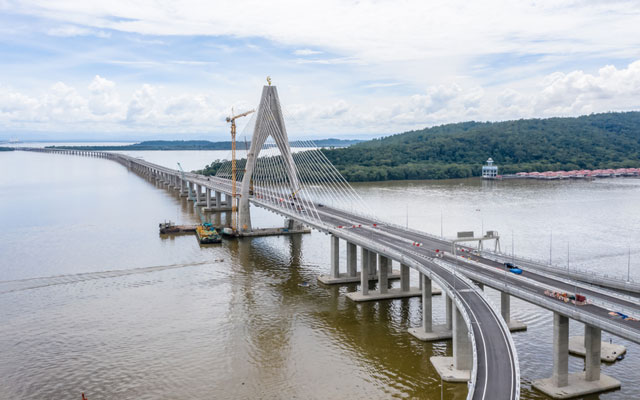
The Temburong bridge is helping to develop tourism in Brunei

Brunei’s Temburong district is gearing up for more visitors as South-east Asia’s longest overseas bridge nears completion.

The 30km Temburong Bridge and causeway will link the capital Bandar Seri Begawan with the district, eliminating the need for travellers to pass through borders with the Malaysian state of Sarawak and reducing travel time from two hours to less than 30 minutes.

The Temburong bridge is helping to develop tourism in Brunei

Currently, visitors wanting to get to Temburong from Bandar Seri Begawan must pass through four border checks, and catch a 45-minute speed boat to complete the journey. The B$1.6 billion (US$1.2 billion) bridge will shave 70km off the journey.

Salinah Selleh, acting deputy director of Brunei Tourism’s tourism development department, told TTG Asia: “We hope to see the bridge contribute to a rise in tourism. As well as international visitors, we hope it will lead to an increase in domestic tourism. Not a lot of locals have visited Temburong because it is not easily accessible.”

Salinah added the ministry is working with tour operators in the area to develop full-day to multiple-day packages that will appeal to both international and domestic visitors.

Siti Nur Hazirah Bte Haji Abd Latif, assistant officer of marketing and product development at tour operator Darussalam Holdings, said the bridge will bring opportunities for communities to develop products that will boost the local economy.

This month, Eco-Green Development announced it will start construction on Temburong’s first luxury eco-resort. The B$4.5 million two-hectare project will feature 30 chalet-style villas and is slated to be completed by the end of 2020. The company has pledged a further B$300,000 to refurbish Temburong’s old district office into a tourist information centre.

Meanwhile, the Ministry of Primary Resources and Tourism also plans to invest B$387,000 into developing a river centre in Batang Duri to service boats cruising to Ulu Temburong National Park.

Hazirah said: “There are a lot of products and attractions that can be developed in Temburong district; with the bridge comes huge potential.”

Tom Chong Tze Tzen, assistant tour supervisor of Freme, welcomed the bridge, claiming it adds flexibility. However, he noted: “Without the speedboat, guests lose the experience of travelling through the mangroves.”

Indonesia is Vietnamese’s new darling

0
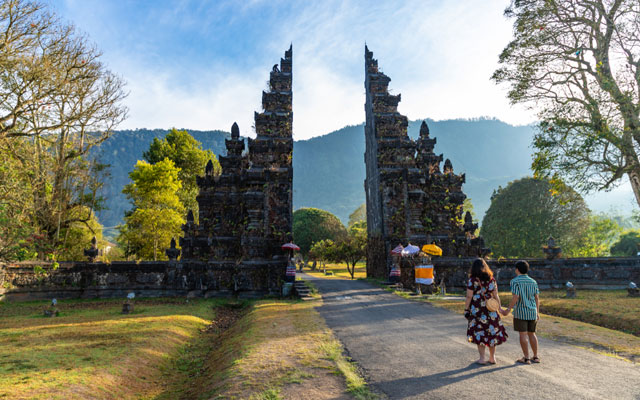
Bali has been a popular destination among Vietnamese tourists; Handara Gate in Bali pictured

Indonesian tour operators are upbeat about the growth of arrivals from Vietnam on the back of improved access from Ho Chi Minh City and Hanoi.

Bali, in particular, has seen healthy growth in traffic from Vietnam, particularly since Vietjet started a five-times-weekly service from Ho Chi Minh City last May, after which Vietnam Airlines started to fly the same route in October. As well, Jakarta enjoys direct connections with Ho Chi Minh City with the help of Vietnam Airlines.

Bali has been a popular destination among Vietnamese tourists; Handara Gate in Bali pictured

Arrivals between January and November 2019 grew by 26 per cent over the same period in 2018, while arrivals into Bali was up 40 per cent, according to data from the Ministry of Tourism and Creative Economy (MTCE).

Further growth is expected this year as Vietjet commences its daily service between Hanoi and Bali from January 26.

Irwan Raman, executive director of OneAsia Indonesia, said: “Through our representative in Vietnam, we already have 13 leisure and incentive groups to Bali and two to Yogyakarta. We are optimistic that the market will continue to grow, thanks to the direct flights.

“I hope that the MTCE will strengthen its marketing activities here. In fact, they should start expanding their reach to the neighbouring cities.”

Jonathan Tran, executive director of Ho Chi Minh City-based Lac Hong Voyages, said: “Vietnamese travellers like Bali, particularly for its culture, food and weather. Now, every week, we have groups going to Bali and we have started to see some groups going to Yogyakarta, too.

“Last year, we did a presentation to introduce Indonesia (to clients) in Hanoi, and the feedback was good.”

Meanwhile, Adjie Wahjono, operations manager of Aneka Kartika Tours, sees the opportunity to maximise capacity by tapping the longhaul markets, especially with Vietnam Airlines, which also has flights to Europe.

He said: “Philippine Airlines’ Manila-Bali route, for example, does not only carry Filipinos but also Chinese and Japanese markets. So there is an opportunity for European tour operators to work with Vietnam Airlines to bring tourists to Indonesia through Ho Chi Minh City.”

In fact, Tran said the DMC had been selling combined packages to leverage Vietnam Airlines’ Paris, London and Frankfurt services to Ho Chi Minh City.

Conversely, Vietnam has yet to benefit significantly from the improved air connectivity with Indonesia.

Ha Van Siew, vice chairman of Vietnam National Administration of Tourism, Ministry of Culture, Sports and Tourism, explained: “(Most of) these flights are to Bali, while the (key outbound) market is Jakarta. What we need is a good link (with Jakarta).”

On this, Tran said: “We are waiting for Garuda to begin flights to Vietnam.”
He added that Vietnam needs to compete with popular destinations like Thailand, Japan and South Korea, and to improve on its halal offerings in order to attract Indonesian travellers.

Irwan opined that Vietnamese airlines could still capture the Indonesian market by capitalising on the airlines’ longhaul and regional network.

Different paces

0

Asia has taken a prominent step forward in the travel experience sector over the last few years – the segment larger in size and growing faster than its European and US industry counterparts.

South-east Asia, in particular, is a standout. Often the region is referred to in one breath, minimising the regions true size and complexities. We dug deeper and found significant differences between North and South-east Asia, and each country within it. With such diversity comes an evolution of customer behaviour.

Singapore-based BeMyGuest, specialists in technology and distribution for the travel experience industry in Asia, reviewed a sample of FIT transactional data for outbound travellers gathered between 2016 and 2019, and presented their findings at WebInTravel in October 2019.

The analysis reinforced that Asia remains a very traditional market and digitising travel experience products is still in its early stages, and each country has its own unique traveller trends.

Booking Windows in North Asia and South-east Asia
One of the key drivers the global industry has been focused on is bringing operator’s products online with instant confirmation capabilities, assuming that customer behaviour worldwide in general resembles that of developed markets where travellers book activities for the same day that they’re in-destination. However, this is untrue for specific Asian customer segments, who as first-time travellers still appreciate the benefits of booking in advance.

North Asia
Overall, travellers from China have the strongest preference for same-day bookings of travel experiences which our data recorded at over 83 per cent in 2019, predominantly accredited in general to the consumption of attraction products. Similarly, mobile-first travellers from Hong Kong and Taiwan overwhelmingly prefer same day bookings.

In contrast, Japanese and South Korean travellers only recorded 25 per cent same day booking behaviour, and surprisingly over 36 per cent of travellers booked between two and seven days in advance. We noticed too their preference for more unique and experiential products, which also made an impact on the results.

South-east Asia
The data analysed reinforced the fact that the preference to book the same day is not as widespread as once believed, with each country showing a diversity of booking behaviour.

Indonesia, Thai, Vietnamese and Filipino travellers display similar booking window timings to each other with only 32 per cent of travellers from these source markets preferring same day bookings. While there’s been a shift to same-day bookings over the years, there’s still a solid percentage who book in advance ranging from one to four weeks out.

We attribute this behaviour to lower disposable incomes which play a role in motivation to seek great value deals ahead of time.

Conversely, our data showed that more mature and experienced travellers from Singapore and Malaysia are strong same day booking customers, at over 75 per cent and remaining so from early in 2018.

Technology Adoption and Delivery Timeframes
With more frequent adoption of booking systems and e-ticketing solutions and the digitising of travel experience products, the true impact of technology over the years becomes apparent when analysing ticket delivery times to customers. These times also reflect the complexities associated with travel experience categories, and it’s why relevant technology that supports this type of content is so vital to help these businesses scale.

We analysed some of the key trends by South-east Asian operators and found:

Average e-ticket delivery times for attraction operators went from almost 28 minutes in early 2018, to just 0.14 mins in late 2019. Overall, attractions only require a general admission ticket – perhaps differentiated by adult, child or senior, making electronic ticket adoption faster and easier.

For activity operators, average e-voucher delivery times reduced from eight hours to half an hour during the same time period. While half an hour still sounds like a lengthy time compared to attraction tickets, most activity operators face capacity constraints that require more sophisticated booking technology, and hence adoption has been slower-paced.

For day tour operators, where capacity, as well as pick-up options play a significant role in the booking process, e-voucher delivery times reduced from over 16 hours to a little over one hour during the same period.

There has been a distinct progression of technology adoption by operators and innovation by various technology players, but there is still huge room for improvement in particular for operators with products that have the capacity or availability constraints.

The Reality of Dynamic Pricing
Dynamic pricing was not commonplace in the travel experience industry in Asia during the period analysed, and this applies to both small and large companies.

We made a comparison between two similar, and very popular theme parks – one located in Japan, and the other in Singapore.

The Singapore attraction established its rate for the year, and over a 12 month period, their sales were evenly spread, and very flat. The Japanese attraction, who introduced the dynamic pricing model, saw its sales spike during seasonal and promotional periods over the same 12 months resulting in new additional revenue.

While building a strategic advanced pricing calendar can result in increased returns in revenue, only a handful of key operators in Asia have taken a step forward in this direction.

Offline Still Matters
While the spread and adoption of experiences as an ancillary revenue product line for online travel agents continues to progress throughout the region, traditional, offline travel agents remain an important revenue stream for Asian operators, with strong business relationships having been established over long periods of time. The value and importance of offline channels still matter and both online and offline combined, play a role in sales strategies.

Since 2016, with a greater focus placed on this industry segment, along with the visibility and strength of rapidly developing online travel agents, the transition to online from offline channels has had a greater impact on single-day experiences now made more accessible
through the digitising of products.

Looking Forward
The industry is adapting to digitisation, but at its own pace, and as it does in Asia, in its own unique way. Even the large operators of well-known Asian travel activity brands are not yet enabled with API connectivity and only some have shifted to booking systems that can enable further online distribution.

Most of the volume in online bookings for the experiences sector in the region has occurred in the last five years with greater investment in new B2C travel brands that have hit the market such as Klook in Hong Kong, MyRealTrip in South Korea, Traveloka in Indonesia, among others.

More established B2C travel brands, at least in Asia, have shown a much slower pace in integrating and offering experiences products to their travel customers, with the exception of China, where brands such as Ctrip and Meituan Dianping have led the way.

Overall, Asia’s travel experience industry is the most remarkable and unpredictable in the world, going forward, going backwards and maturing through a lifecycle all its own. Ultimately innovation and growth are driving the region forward at an enormous pace.

Future Watch – the way forward for tours and activities/experiences in Asia are insights from a data sample incorporating over 300 companies, two million travellers, more than 15 Asian countries and over 50 Asian destinations for the period 2016-2019.


Philippine DMCs lament about limited cruise earnings

0
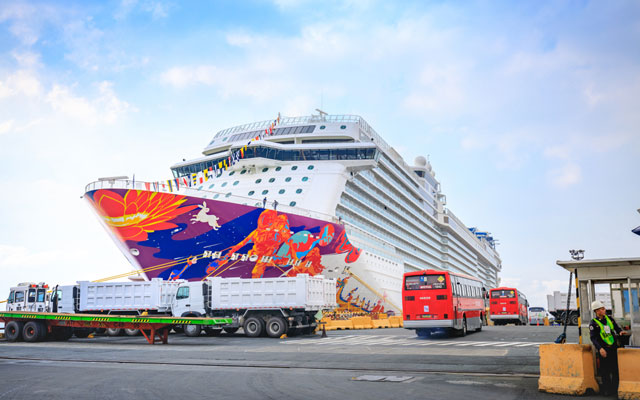
World Dream in Manila

The number of passengers and cruise ships that called at Philippine ports has plunged between January and September 2019 over the same period in 2018 – 83 ships with 90,571 pax made port calls in 2019, down from 143 ships with 149,272 pax.

Tourism undersecretary Benito Bengzon Jr blamed the poor performance on the lack of cruise facilities in the country and Boracay’s six-month closure in 2018, plus the subsequent restrictions on ships docking at the island during high season to maintain the island’s carrying capacity.

World Dream docked at the Manila port

The news, however, was met by nonchalance among the country’s DMCs – a response that highlights the limited business opportunities cruises bring to local tourism players. Philippine inbound travel specialists told TTG Asia that cruise tourism is considered low-yielding for their business.

Sid Santiago, Jeron Travel and Tours’ senior travel coordinator, said groundhandlers generally do not earn much from cruise ships as they dock in the port for a day and require mainly buses, tour guides and restaurants for shore excursions.

DMCs in the Philippines, like his, typically focus on higher-yielding segments such as business events and corporate accounts, Santiago added.

A Philippine travel consultant who requested anonymity said that the inbound cruise business is “quite complicated” as bookings come mainly through the GSAs of the cruise lines, and for the burgeoning Chinese cruise market, groups prefer to engage a tour leader from China.

Lyn Karay, CTPH Travel outbound manager, whose business was unaffected by the dismal cruise tourism performance last year, explained that her company only does cruises when there are promotions from Star Cruises.

“They have other tourism offerings (through parent company Genting Group) and cruising is just a small part of their business,” said Karay.

According to Benjie Bernal, tour operations manager at Sharp Travel Services, the decline in cruise tourism numbers for the Philippines is not unexpected, as cruise itineraries are seasonal. However, their exit from a port has a big impact on overall passenger numbers because big ships handle a large volume of people each time.

On his part, Bengzon is optimistic that the numbers will increase. “The fact that we’re able to get Superstar Virgo to homeport with us is a major achievement as ordinarily, the requirements are quite stringent,” he remarked.

Bengzon said that while the strategy is to maintain an optimum mix of big and expedition ships, the tourism authority’s ultimate task is to “work on homeport opportunities”.

His team is also working on increasing cruise passengers’ expenditures in Boracay, as a resolution for local travel trade’s common gripe that cruises bring limited income with just a day’s call while congesting the beaches.

Adventurous baby boomers hit the road

0
Senior travellers are no longer content with lying on a beach, but are increasingly starting to embrace adventure holidays

Retirees are getting gutsier with their travels and eschewing laid-back itineraries for more exciting and adventurous ones, observed travel agents at ATF 2020.

“I have customers from Japan who are 65 years old or older, and they love adventure. They go trekking by waterfalls, cycling and even kayaking,” said Norakoun Tanseri, manager, Lao Boutique Travel, who added that favoured itineraries also include nature experiences such as staying in treehouses, gibbon-spotting, and Mekong dolphin-sighting.

Senior travellers are no longer content with lying on a beach, but are increasingly starting to embrace adventure holidays

Even in a relaxing destination like Bali, older travellers are swapping out their beach towels for sporting gear as they take a gander at low-impact water activities and land exploration, said TRM Hospitality’s sales manager Mardian Putra.

Nensi Setyaningsih, ASEAN inbound manager, TMS Tours, chimed in that these guests are opting for more invigorating activities that include tree-top adventure courses, snorkelling or a jungle lazy river.

“For our older guests, we can work together with the tour company to arrange a special tour that can provide activities that are not as dangerous. For example, we can replace river rafting with an outdoor lunch (while still giving them access to) other activities on the tour like tree-top adventure and snorkelling,” said Mardian.

Sun Princess calls at Kangaroo Island

0
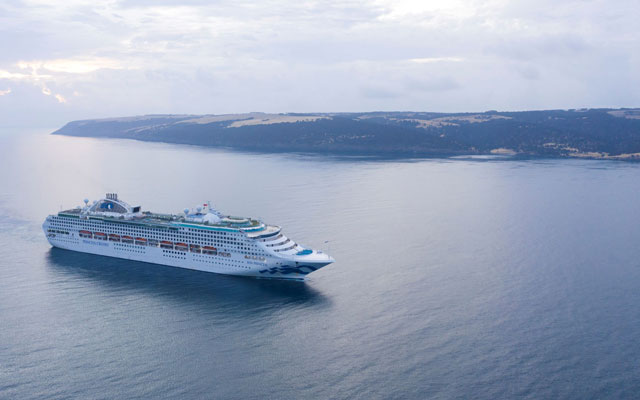
Sun Princess at Kangaroo Island

Princess Cruises’ 2,000-guest Sun Princess yesterday became the first cruise ship to return to Kangaroo Island in Australia as a show of support for the local community since the recent bushfire disaster.

Guests came ashore on tender vessels and fanned out on a range of tours by local operators while many others visited market stalls established by the local community on the nearby Penneshaw Oval.

Sun Princess at Kangaroo Island

Princess Cruises’ senior vice president Asia Pacific Stuart Allison said that the visit signals to the world that Kangaroo Island is on the path to recovery.

“It is our hope that this visit by Sun Princess and her guests will serve to boost morale and send a message to the community that their lives are getting back to normal,” Allison added.

Sun Princess’ captain Diego Perra added: “Understandably, some local tours won’t be available as a result of the impact of the fires. We have encouraged our guests to support the local tourism operators who have worked so hard to ensure there is a good selection of experiences from which to choose.”

Sun Princess is currently on a 13-night cruise from its current homeport of Fremantle with the majority of guests onboard residents of Western Australia. An earlier cruise to Kangaroo Island had been diverted to Port Lincoln at the height of the bushfire emergency.

Nils Rothbarth named GM of Park Inn by Radisson North Edsa

0

Park Inn by Radisson North Edsa has appointed Nils Rothbarth as its first general manager.

Prior to moving to the Philippines, Rothbarth spent three years at Fairmont Zimbali Lodge and Resort, South Africa in the same capacity.

The German’s career spans three decades in various countries. Rothbarth has also helmed a number of properties belonging to the Carlson Rezidor Hotel Group, Swiss-Belhotel International, and Southern Sun Hotels, among others.


Australia’s tourism industry projects US$3.1 billion loss from bushfires

0
Fire and Rescue personal run to move their truck as a bushfire burns next to a major road and homes on the outskirts of the town of Bilpin on December 19, 2019

The drop in inbound tourism traffic in the aftermath of the Australian bushfires will cost the industry an estimated A$4.5 billion (US$3.1 billion) loss, according to a survey by Australian Tourism Export Council (ATEC).

Revealing that the overall status of forward bookings has softened significantly compared to this time last year, ATEC estimated that tourism will see at least a 10 per cent decline in international visitor numbers.

Fire and rescue personnel fighting the raging blaze on the outskirts of Bilpin in December

“ATEC undertook a survey of its members who represent both Australian-based tourism businesses as well as inbound tour operators – the people who sell Australian travel in-market – with 70 per cent of respondents recording significant cancellations of travel to Australia by internationals,” ATEC’s managing director Peter Shelley said.

He added that the value of cancellations seen by tourism businesses and tour operators range from A$5,000 to A$500,000, with significant impacts seen across key inbound markets such as the US, UK, and Europe.

Fears around air quality, safety, and the impact fires have had on the country’s tourism offerings, coupled with uncertainty around the length of recovery, are reasons why foreign tourists are cancelling trips, noted ATEC.

“The bushfires have impacted at a significant time for international bookings, with the booking window for around 50 per cent of the UK, European and the US travellers typically captured from these markets between December and the end of February,” Shelley said.

As such, a positive campaign highlighting that Australia is “open for business” needs to be at the core of Australia’s bushfire recovery initiatives, urged ATEC.

To aid in the sector’s recovery, the Australian government announced an A$76 million industry-specific bushfire recovery fund over the weekend, a move that ATEC welcomes.

“Timing is now of the essence with key booking windows from our larger international markets closing towards the end of February, therefore engaging these markets in the short term, especially via the established tourism trade channels will be critical,” Shelley said.

“While Australians understand the extent of the bushfire damage, and have already been keen to re-engage and support the affected areas, we need to work hard to positively influence the narrative around our global reputation as a leading tourism destination.”

Shelley added that the tourism industry the “economic backbone” of many regional communities impacted by recent bushfires. As such, ATEC is getting behind them by promoting products around Australia that are open for business and ready to welcome international visitors through its social media campaign #bushfirebounceback.

Slow travel, social activism to drive growth of Muslim travel

0
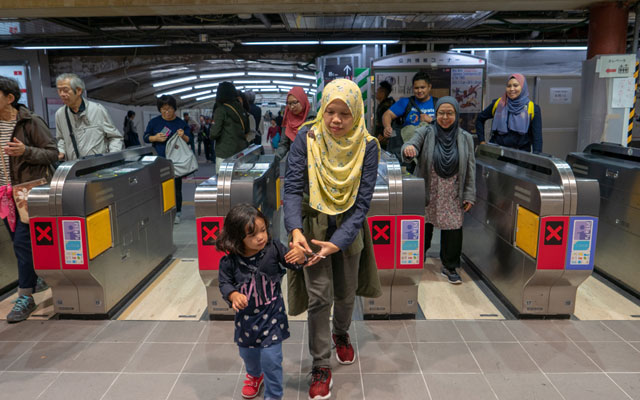
Muslim travellers passing through the ticket machine at Osaka Station in Japan

Often touted as the world’s last great untapped market, the Muslim travel sector is gaining prominence in the tourism industry, with distinct patterns and trends coming to the fore as the segment swells in numbers.

In 2018, the global Muslim travel population clocked at 140 million, according to the Mastercard-CrescentRating Global Muslim Travel Index 2019. The index projected that by 2026, this figure will surge 64 per cent to reach 230 million.

Muslim travellers passing through the ticket machine at Osaka Station in Japanpam

This segment’s expenditure is also expected to rise. The index predicted that the market will spend US$220 million this year, and by 2026, this will rise 34 per cent to US$300 million.

As this market grows, experts have observed the emergence of distinct travel patterns. Fazal Bahardeen, CEO of CrescentRating & Halaltrip, shared four “key drivers” of this segment: technology, social activism, the Gen Z and alpha demographic, and the environment.

“For travel companies catering to the Muslim market, these (trends) should drive the next phase of product development,” he said.

Singling out social activism, Fazal explained that Muslim travellers – especially the millennial generation – are no longer travelling just to relax, but also “looking for ways to contribute back to the community”.

He shared that CrescentRating will be partnering with the United Nations Security Council Resolutions to develop a report on social activism in Muslim travel, particularly concerning issues such as ongoing refugee crises. The report is set to release this year.

Meanwhile, more leisurely travellers are gravitating towards “slow travel”, noted Have Halal Will Travel’s co-founder, Mikhail Melvin Goh. In newfound destinations such as the small Japanese town of Gunma, such travellers are “spending a lot more time doing a lot less things”, he described.

“This is encompassing the immersive travel trend. It’s about the stories that a country can offer, and the service that (hospitality) brands have. For example, can the concierge understand and offer Muslim travellers recommendations for their needs?” Goh said.

Fazal chimed in that the trend of Muslim women travelling either solo or in small groups is also burgeoning, and will continue to grow in future.