Marriott International and The Fern Hotels & Resorts have surpassed 75 hotel signings and 50 property openings under the Series by Marriott brand in India, less than six months after the collaboration launched in November 2025.
The milestone adds more than 3,556 rooms to Marriott International’s India portfolio and marks one of the company’s fastest regional brand expansions to date.
Marriott International and The Fern Hotels & Resorts have reached 75 signings and 50 openings for Series by Marriott properties across India
Developed in partnership with Concept Hospitality Private Limited (CHPL), Series by Marriott was introduced as a collection brand bringing together locally recognised hotel groups under the Marriott Bonvoy platform. The portfolio now spans 43 cities across India, including Tier 1, 2 and 3 markets, as well as resort destinations.
Open properties include The Fern Mumbai, Goregaon, Series by Marriott; The Fern Jaipur, Series by Marriott; The Fern Habitat Goa, Candolim, Series by Marriott; Rakabi The Fern Igatpuri, Series by Marriott; and The Fern Residency Bengaluru, Seshadripuram, Series by Marriott.
The brand targets domestic and regional travellers seeking internationally recognised standards alongside locally rooted hospitality experiences. Properties are designed around core travel essentials such as accommodation, connectivity and service consistency, while incorporating regional identity and destination-specific elements.
Selected hotels within the portfolio also offer fitness facilities, breakfast options and meeting spaces catering to both leisure and business travellers.
In addition, guests staying at participating properties can access Marriott Bonvoy benefits, including points earning and app-based travel services.
“When we launched Series by Marriott in India last November, we spoke of a brand designed to scale with both speed and purpose,” said Kiran Andicot, senior vice president, South Asia, Marriott International. “Reaching 75 signings, with 50 open and operating hotels across the country, in under six months is a validation of that vision. India is not simply a launchpad for this brand; it is proof of concept.”
Suhail Kannampilly, managing director, Concept Hospitality, added that the partnership combined The Fern’s regional hospitality approach with Marriott International’s global distribution and loyalty network, contributing to stronger owner and traveller interest in the brand.
Global Hotel Alliance (GHA) has added four new hotel brands to its network, expanding the alliance’s footprint across Europe, the Middle East and Asia.
The additions include Almanac Hotels, Regal Hotels International, Story Hotels & Resorts and TemptingPlaces Collection, collectively contributing 22 properties to the GHA Discovery loyalty programme.
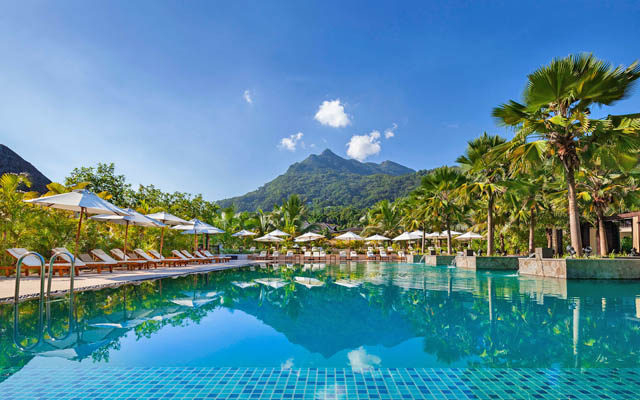
Global Hotel Alliance has expanded its network with four new hotel brands spanning Europe, Asia and the Middle East; Story Seychelles, pictured
The expansion strengthens GHA’s presence in destinations including Hong Kong, Barcelona, Vienna and Prague, while also introducing the alliance to new markets such as Zagreb in Croatia and Rabat in Morocco.
GHA said the latest additions continue its strategy of broadening its portfolio of independent hotel brands while enhancing options available to its more than 35 million GHA Discovery members.
Almanac Hotels joins the alliance with boutique properties in Barcelona, Vienna and Prague, focusing on locally inspired hospitality and design-led stays. Regal Hotels International adds 11 properties across its Regal, Regala and iclub brands, bringing approximately 6,800 rooms and more than 30 dining venues into the network.
Story Hotels & Resorts contributes five properties across the Middle East, North Africa and the Indian Ocean, including beachfront and urban hotels centred on destination-led experiences and wellness. TemptingPlaces Collection joins with a portfolio of boutique properties in Europe, including Château d’Augerville Golf & Spa Resort in France and Dent Blanche Resort in Switzerland.
Alongside the new brand additions, GHA said existing member brands have introduced 14 additional hotels and resorts since the start of the year. Recent openings include Capella Kyoto in Japan, Tivoli Palazzo Gaddi in Florence, Corinthia Rome, Anantara Kafue River Tented Camp in Zambia and Avani Mooloolaba Beach Hotel in Australia.
“Our continued expansion reflects the strength of our alliance proposition and the growing desire for collaboration within the independent sector,” said GHA CEO Chris Hartley.
“With the addition of these eclectic brands, we are further diversifying our portfolio and the value we deliver to over 35 million GHA Discovery members.”
The PuLi Group has named Dean Winter as CEO, effective June 1, 2026, as it prepares for the next phase of expansion and the relaunch of The PuLi Shanghai.
He joins from Swire Hotels, where he was managing director, overseeing a portfolio that includes The Upper House Hong Kong.
With more than three decades of luxury hospitality experience, Winter will lead the group’s strategic direction, brand development and portfolio growth across Asia.
Recognising Asia-Pacific as the world’s aviation growth engine, a recent presentation by OAG Aviation’s commercial and industry affairs leader for APAC and MEA, Mayur Patel, underscored the importance of continuous infrastructure development to keep pace with growing travel demand.
His presentation, delivered at the PATA Annual Summit in Gyeongju, South Korea, noted that Asia-Pacific’s aviation industry has recorded annualised growth of 5.2 per cent over the past 25 years, double the global average.
Mayur Patel said aviation profit margins remain thin, making it important for airlines to operate efficiently and sustain growth carefully
Patel described the performance as “encouraging and positive, especially when you’ve got half of the world’s population – 4.8 billion – people residing here”. He added that he sees “global opportunity to do more business together”.
To build the foundation for the next decade of growth, Patel emphasised the importance of infrastructure investment, noting that many airports are already expanding with future demand in mind.
Patel said: “Hong Kong is moving its airport capacity towards 120 million passengers and is (enhancing its) infrastructure with a third runway and new terminal. It is also getting new airline capacities into the system.
“Singapore’s Changi Airport is looking towards 140 million passenger capacity by mid-2030, and the fifth terminal is now under construction to get more passengers into the air hub.
“At Incheon International Airport (South Korea), the fourth runway is completed and a fifth is being planned, with the aim of serving a capacity of 106 million per year.”
Expansion projects are also underway across the region, including at Suvarnabhumi Airport in Bangkok; Long Thanh International Airport, currently under construction east of Ho Chi Minh City; second airports planned for Delhi and Mumbai; and 25 airports under construction across China in 2025 alone.
Patel said most airports in the region currently handle between 65 million and 80 million passengers annually, with many aiming to process between 120 million and 250 million passengers over the next decade.
“There will be significant capacity (to support) airlines that are ordering new aircraft that will need to be filled by more passengers,” Patel remarked.
He noted that Asian carriers have more than 5,800 aircraft on order – double the total of any other region – which is expected to add 1.38 billion seats across Asia-Pacific over the next decade.
As most future fleets will comprise narrow-body aircraft, Patel said low-cost airlines will have greater opportunities to expand, creating new city pairs, opening new markets and attracting different traveller segments.
However, Patel stressed that growth must also be resilient.
“Aviation profit margins are very thin (2.3 per cent, which is far below the 3.9 per cent global average), so we’ve got to be very smart about how we operate and sustain growth,” he said, adding that airlines must optimise yield, not just seat capacity, to avoid fragile networks driven by profitless growth.
Further, modern airport technology, particularly biometric systems, will ensure efficient growth. Using Hong Kong and Singapore as examples, Patel noted that travellers can complete immigration procedures quickly while keeping their passports in their bags.
Next, Patel discussed the evolution of the low-cost carrier model as a contributor to resilient aviation growth.
“The low-cost carrier model has been one of the great success stories of Asia-Pacific aviation; 22.5 per cent compound annual growth since 2000 is a remarkable track record. But as these networks mature and unit costs inevitably rise, the primary challenge shifts from growth to profitability. The era of simply adding routes and seats is giving way to a more complex question: how do you sustain margins when the structural cost advantages that defined the model begin to erode?
“The natural response is the hybrid model, carriers that retain the cost discipline of a low-cost operation while layering in the product and service flexibility of a full-service airline. We’re already seeing this play out across the region. Travellers today are not a homogeneous group. A millennial leisure traveller, a corporate road warrior, and a premium family holidaymaker have fundamentally different expectations. A carrier that can serve all three, without the overhead of a traditional full-service structure, has a genuine competitive advantage – a good example of this is India’s IndiGo Airlines.”
Patel added that resilience will also depend on smarter aircraft with lower unit costs, greater point-to-point connectivity, diversified demand, and the expansion of ultra-longhaul services. He cited Qantas’ Project Sunrise, scheduled for 2027, which will connect Sydney and London non-stop in approximately 22 hours.
TRENZ, New Zealand’s annual tourism trade event, has concluded its 2026 edition in Auckland, with organisers confirming Christchurch as the host city for next year’s show.
Tourism Industry Aotearoa (TIA) said TRENZ 2027 will be held at Te Pae Christchurch Convention Centre from May 11 to 13 next year, marking the fourth time the event has taken place in Christchurch and the second at the venue.
Christchurch has been confirmed as the host city for TRENZ 2027; River Avon in Christchurch, pictured
According to TIA, this year’s event in Auckland brought together around 1,200 delegates and facilitated approximately 16,000 business meetings across two-and-a-half days.
TIA chief executive Rebecca Ingram said Auckland had delivered a strong host city experience, supported by partners including Tataki Auckland Unlimited, Tourism New Zealand and Air New Zealand. She also highlighted new initiatives such as the International Media Marketplace introduced during this year’s event.
The announcement comes as Christchurch continues to see growth in international visitor arrivals. TIA said 287,000 international travellers passed through Christchurch Airport between November 2025 and March 2026, up 22 per cent year-on-year.
Anne Newman, general manager of visitor economy at ChristchurchNZ, said the city had continued to expand its tourism infrastructure, accommodation and visitor experiences since previously hosting TRENZ in 2023.
“There’s a real buzz in Ōtautahi, and we’re looking forward to sharing that energy with the travel trade and our industry partners,” she said.
Tourism Port Douglas Daintree, in partnership with Tourism Tropical North Queensland and Cairns Airport, will host a travel trade familiarisation trip from May 26-29 aimed at strengthening domestic tourism sales for the region.
The Port Douglas and Daintree Signature Famil will bring together travel agents and product managers from Helloworld, Flight Centre, Ignite – My Queensland and Luxury Escapes for a series of tailored itineraries showcasing the destination’s tourism experiences.
Travel agents will explore reef, rainforest and wildlife experiences across Port Douglas and the Daintree during the four-day showcase; photo by Tourism Tropical North Queensland
Participants will undertake one of three bespoke itineraries covering reef, rainforest, Indigenous and wildlife experiences, while also inspecting accommodation and dining venues across the region. A workshop involving 15 tourism operators will also be held as part of the programme.
Tourism Port Douglas Daintree executive officer Emma Tunnock said growing domestic interest in the destination was being supported by recent industry recognition, including Port Douglas being ranked second in Australian Traveller’s Top 100 Towns to Visit.
Tourism Tropical North Queensland CEO Mark Olsen said the showcase would help strengthen domestic travel sales by giving agents direct exposure to local tourism products and operators.
Participating operators include Ocean Safari, Sailaway, Quicksilver Group, Sheraton Grand Mirage Resort Port Douglas, Skyrail Rainforest Cableway, Thala Beach Nature Reserve and Walkabout Cultural Adventures.
The travel industry has spent the last decade optimising for discovery. But the next phase of growth will be won at the point of decision – and that is where the industry is underperforming.
Today, the longevity travel economy is valued at US$1.9 trillion and is projected to reach US$2.6-2.9 trillion by 2030. It is also the most resilient segment in travel: 86 per cent of adults over 50 rank travel among their top spending priorities, while 64 per cent plan to travel in 2026 despite economic headwinds. This is not future demand. It is already the most dependable demand in the system.
Yet most travel platforms continue to be designed around a different behavioural model – one built for price sensitivity, short booking cycles and high-frequency decisions. The 50+ traveller behaves differently. Across Asia-Pacific markets, this segment plans trips 77 days in advance, travels for 7.5 days and typically books in small groups of two to three adults. These are high-consideration purchases where confidence – not price – drives conversion.
This is where the industry’s current model starts to break.
Greytt’s analysis shows that nearly 47 per cent of traveller preference is concentrated in just four factors: ease of transport, room comfort, dining flexibility and quiet environments. These are not new needs, but they remain underrepresented in how travel is surfaced and sold.
Most OTAs still prioritise filters such as price, star rating and generic amenities. More difficult to access – or entirely absent – are signals around walkability, noise levels, proximity to support services and the availability of human assistance. The result is a structural mismatch: what is optimised for discovery is not aligned with what drives decision-making.
The commercial implications are measurable. Even high-performing properties show up to 15.9 per cent conversion leakage, often driven by gaps in perceived safety, environmental comfort and ease of experience. Closing even part of that gap can deliver mid- to high-single-digit conversion gains without incremental acquisition spend. In a market where customer acquisition costs continue to rise, this represents a material opportunity.
Two patterns stand out. First, safety is emerging as a conversion lever rather than a compliance requirement. Across chains and destinations, “Safety & Support” consistently appears as the largest unmet need – particularly in how it is communicated, not just delivered.
Second, experience quality is increasingly defined by friction reduction. Attributes such as quiet environments, reliable transport and predictable service are not premium add-ons. They are baseline expectations for a segment that prioritises ease.
There is also a timing advantage. High-value segments such as “Leisure Curators” plan travel up to 91 days in advance, creating a longer window for engagement, pricing strategy and conversion optimisation.
Taken together, these signals point to a broader shift. The industry has historically approached older travellers as a demographic category, but the data suggests a move towards behaviour-led segmentation, where planning horizon, trip intent and experience priorities matter more than age itself.
This has implications across the stack: product teams must surface decision-critical attributes, not simply more inventory; marketing teams need to engage earlier in the booking cycle; and operations must be designed for predictability, not just efficiency.
At Greytt, we have approached this through the Greytt Score, a framework that translates these preferences into a standardised signal across hotels and experiences. But the broader takeaway is independent of any one system. Growth over the next decade will not come from adding more supply. It will come from aligning supply with how high-value travellers actually choose.
The longevity traveller is not underserved because demand is unclear. They are underserved because the industry’s lens has not fully adapted. Until that changes, a significant portion of the market will remain visible – but not fully captured.
Oceania Cruises has unveiled its holiday sailing programme for the 2026-27 and 2027-28 seasons, with voyages across Europe, Asia, Australia and the Americas.
The collection includes itineraries ranging from one week to nearly 40 days, with departures across much of the fleet. Ships featured include Oceania Insignia and Oceania Allura in 2026-27, with Oceania Sonata and Oceania Aurelia joining the following season.
Festive voyages span Europe, Asia, Australia and the Americas, with itineraries ranging from seven to 40 days
Onboard, guests can expect seasonal programming including live performances, festive menus, and holiday traditions such as Christmas celebrations, New Year’s events and Hanukkah menorah lightings.
Itineraries cover a mix of regions, from the Caribbean and South America to the Mediterranean and South-east Asia. Selected sailings include overnight stays in ports such as Barcelona, Bali and Singapore, as well as scenic cruising through areas including the Panama Canal and Milford Sound.
Highlighted voyages include a 23-day Australia and Indonesia itinerary departing December 15, 2026, a 36-day Miami to Buenos Aires sailing departing December 19, 2026, and a 15-day South-east Asia journey from Hong Kong to Singapore departing December 21, 2026.
For the 2027-28 season, itineraries include a 29-day Miami to Los Angeles voyage departing December 6, 2027, and a 12-day Australia to New Zealand sailing departing December 23, 2027.
Tourism Australia has appointed Kathryn O’Brien as executive general manager, global markets, overseeing the organisation’s international offices across 16 markets as well as airline and distribution partnerships.
She joins from Air New Zealand, where she is currently general manager Australia. O’Brien also previously held senior roles with Experience Co and Hamilton Island Enterprises.



 From all of us at TTG Asia Media, Selamat Hari Raya Haji to our Muslim friends!
 With more than three decades of luxury hospitality experience, Winter will lead the group’s strategic direction, brand development and portfolio growth across Asia.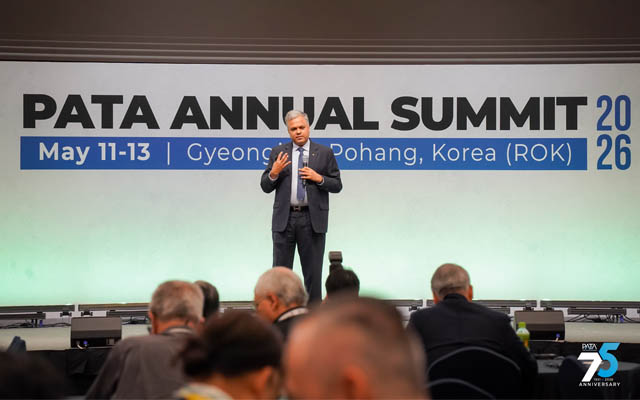



 The travel industry has spent the last decade optimising for discovery. But the next phase of growth will be won at the point of decision – and that is where the industry is underperforming.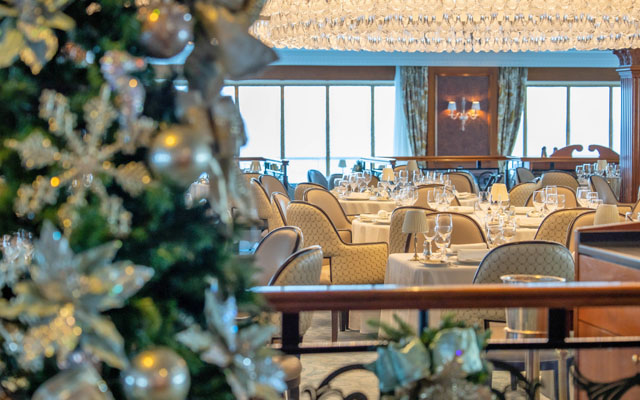

 She joins from Air New Zealand, where she is currently general manager Australia. O’Brien also previously held senior roles with Experience Co and Hamilton Island Enterprises.