TTG Asia
Asia/Singapore Monday, 8th June 2026

Why Seoul is the perfect city to work, play and live in

0
Seoul Botanic Park conveniently located near MICE facilities for an escape in nature

Brought to you by Seoul Tourism Organization
Seoul Botanic Park conveniently located near MICE facilities for an escape in nature

With its seamless integration of business, leisure and culture, the South Korean capital has been an attractive destination for business and leisure travellers. 

To build on this dynamic ecosystem where productivity meets relaxation, the government is actively encouraging business travellers, and those who travel with their families, to extend their stays in the capital.

Leveraging its world-class infrastructure, business strength, and cultural appeal, Seoul is establishing itself as a destination for working and living. 

Established MICE hub with scenic views

Located in the inner west area along the Han River lies Magok, a modern district that offers the convenience of business infrastructure, transport connectivity, and hospitality is the Magok district. 

With easy connectivity to both Gimpo and Incheon airports, Magok is conveniently situated for business travellers. 

At its heart is Seoul MICE Plaza, which serves as a dedicated platform for global conferences, events, and industry exchange, as well as a ‘workation’ hub.

Nearby is the COEX Magok Lewest, a large-scale MICE complex comprising a convention centre, hotel and meetings facilities, providing top of the line MICE facilities. 

Offering some nature in the urban setting is the Seoul Botanic Park, home to a glass greenhouse, themed gardens, waterfront trails, allowing visitors to step into a calm and restorative environment. 

Fine hospitality
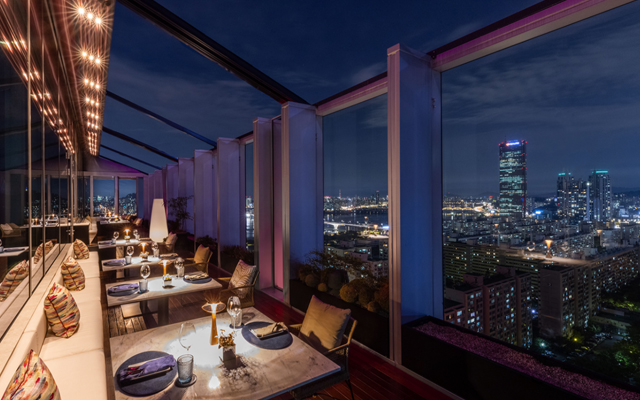
Travellers can get their downtime at several upscale hotels in the area. 

The Mercure Ambassador Seoul Magok and Courtyard by Marriott Seoul Botanic Park offer convenient access to both business venues and green spaces. 

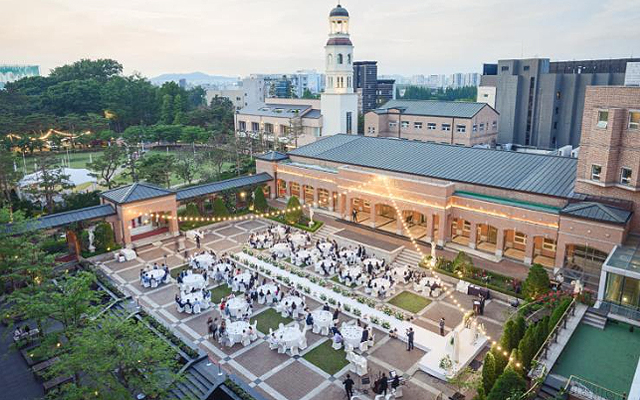
For those seeking a refined cultural and culinary experience, Mayfield Hotel provides a distinctive traditional Korean experience. Set within serene gardens and hanok-inspired architecture, the hotel combines traditional aesthetics with seasonal cuisine at its restaurants.This environment is particularly suited for high-level meetings and private gatherings, allowing guests to engage with Korea’s heritage alongside a professional agenda.

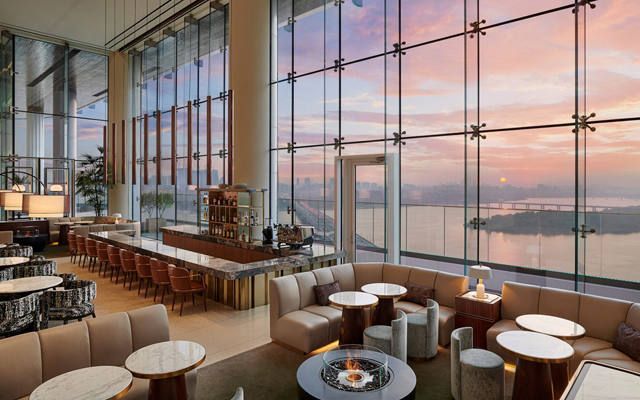
Further towards the city centre, Hotel Naru Seoul MGallery offers a luxurious escape, pairing Han River vistas with interiors designed for both focused work and restorative rest. 

Similarly, both Conrad Seoul and Fairmont Ambassador Seoul provide elevated environments with expansive views over the Han river and city skyline. These five-star spaces provide business-ready spaces for use in the day and sophisticated settings in the evening where the lights along the riverfront create a serene backdrop for unwinding.

Seoul’s creative and cultural scene

See the city from a different perspective with a cruise along the Han River

Beyond Magok, Seoul’s ‘workation’ landscape reflects a more creative and community-driven way of working. 

Across the river, Oil Tank Culture Park, is a success story of urban regeneration. Formerly a cluster of oil storage tanks, the area was designed as a cultural complex for exhibitions and performances, turning the city’s industrial heritage into contemporary expression. 

To complement this cultural immersion, a Seoul Cruise experience offers a different perspective of the city. Whether for informal meetings or team bonding sessions, a journey along the Han River allows travellers to appreciate the glittering skyline of the city.

Visit Seoul to see the diverse experiences that await.
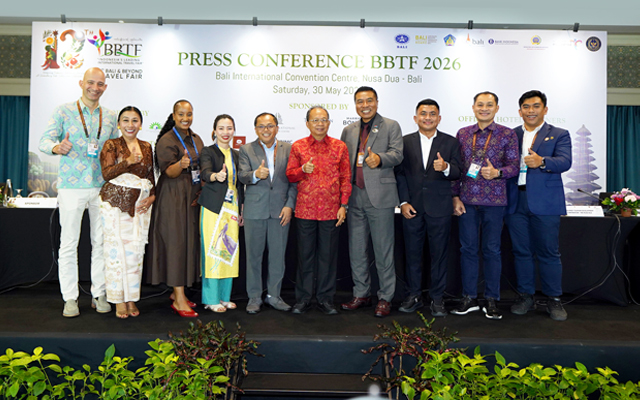
Bali targets infrastructure bottlenecks amid tourism growth

0

Bali is stepping up efforts to address key infrastructure challenges, including waste management, traffic congestion, water distribution and energy security.

Speaking at the Bali and Beyond Travel Fair (BBTF) 2026, Bali governor I Wayan Koster said: “Bali will have waste-to-energy plant funded by Danantara and the project will break ground this June with a target to complete by late 2027.”

Bali governor I Wayan Koster (centre) with BBTF 2026 delegates and organisers as the province advances infrastructure projects to support tourism growth

The facility will process 120 tonnes of waste daily, with Koster aiming for a garbage-free Bali by 2028.

To address traffic congestion, the provincial government is working with the central government to improve land and sea transport connectivity, with projects targeted for completion by 2030. Water challenges will be addressed through improvements to distribution networks, while Bali is also developing local clean energy facilities to strengthen energy self-sufficiency.

These initiatives support Bali’s target of achieving net-zero emissions by 2045 through rooftop solar deployment, virtual power plant technology, and large-scale solar projects in Nusa Penida and Muara Nusa Dua.

Koster said these infrastructure projects are important to support Bali’s tourism-driven economy, which has continued to grow following the pandemic.

“In 2025, foreign arrivals reached a historic high of 7.5 million visitors, proving Bali’s enduring appeal despite weathering intense negative media campaigns in late 2025,” he said.

“Last year, visitor arrivals to Bali increased by 350,000 tourists compared to 2024, meaning Bali alone contributed (nearly) 46 per cent of Indonesia’s 15.4 million total foreign visitors in 2025.”

Bali generated 176 trillion rupiah (US$11 billion) in tourism foreign exchange earnings, accounting for 55 per cent of Indonesia’s total tourism revenue.

According to Koster, tourism contributes 66 per cent of Bali’s economy and helped drive economic growth of 5.8 per cent, the fifth highest among Indonesia’s provinces.

To support continued growth, the regional government has introduced stricter enforcement measures.

“Tourists who violate legal regulations or disrespect Balinese cultural values will face swift deportation under newly established enforcement systems,” he said.

Koster said Bali’s hotel and restaurant tax revenue reached 2.89 trillion rupiah during the first five months of the year.

“The hotel tax increased from 1.7 trillion rupiah to 1.8 trillion rupiah, and the restaurant tax also increased from 885 billion rupiah to one trillion rupiah; the data is clear because this is an online system,” he said.

While conflict in the Middle East contributed to a nine per cent decline in international arrivals in April, the decrease narrowed to seven per cent in May as demand began to recover.

“So the negative trend is slowing down, but if we look at the impact on hotel occupancy rates and the impact on hotel taxes, it is actually increasing, meaning that even though the number of foreign tourists has decreased, the impact on PHR has not dropped,” Koster noted.

Looking ahead, the Bali government will focus on ensuring visitors stay in licensed accommodation, as many travellers are currently using unlicensed properties that do not contribute tax revenue.

Rakuten Travel Xchange eyes global expansion

0

What are your first steps as you move from COO to CEO?
My priority is to build and organise the integration process for a harmonised strategy.

Rakuten Travel is focused on the Japanese market and adding value to Japanese suppliers and customers, while RTX – which buys inventory to introduce to the Japanese consumer, and supports Asia-Pacific and global players to simplify their global connectivity through our platform – is to drive global expansion, and add value to the travel industry.

To accelerate our globalisation, it is important to expand the number of our clients, the client reach, and develop a direct supply relationship with hotels.

What do the Q12026 results show, and where is global expansion taking place?
Year-on-year, the travel business, both domestic and global, maintained high growth rates with gross transaction value increasing 8.1 per cent and 69.7 per cent respectively.

For the second part, I have to split the answer into two categories: the demand side and the supply side.

We are seeing a boom in the number of US consumers, in vacation rentals, and travellers who are not just using Expedia, but also non-travel related and financial websites.

Chinese and Koreans are travelling abroad more than the Japanese these days, and we can capture that demand.

There are also big changes in B2B, with players plugging into white-label platforms and requiring inventory.

While China and the US are the largest travel markets, Europe is also growing. Online travel is dominated by just the one or two companies. But usage is changing, and we wish to provide the hotel inventory.

On the supply side, there are synergies in the US West Coast and whenever we get new inventory, we introduce it to the Japanese consumer and Asia-Pacific-wide.

The US East Coast is also important because the US is still largely dominated by domestic demand, and the East Coast, including the Caribbean islands, are top destinations.

What about closer to home?
We have more than 10 offices in the Asia-Pacific region in cities such as Seoul, Taipei, Singapore, and Bangkok, and we have introduced those inventories to the Japanese customer, and driving supply expansion from these regional offices.

We are targeting higher-tier hotels, and have also customised connectivity solutions for the Japanese customer.

Our first targets are regional chains, especially business hotel chains, in big cities or resort areas, which tend to be dominated and managed by Western companies.

We want to work with local chain hotels to build something new Asia-Pacific-wide. While I can’t name them, I can say were are focusing on South-east Asian brands.

From the supply side, South-east Asia is one of the most popular regions in Asia-Pacific, and cities such as Bangkok are one of the top destinations in the world.

From the demand side, the number of South-east Asian travellers is increasing, and so is spending.

How does RTX stand out? Would you say it’s the numbers – 500,000 hotel properties, 200,000 vacation rental properties, 20,000 directly contracted properties, and being in 200 countries?
Yes, we have access to a big number of partners and industry players in the world. But what is most important is being able to access an exclusive rate, and how much of a differentiation – and our biggest differentiator is, of course, the Japanese hotels.

We haven’t seen anyone who can call out “We are the largest in Asia-Pacific” yet, so we want to be in that position.

How are you using AI?
We have launched AI concierge on our Japan platform and it will be the model globally.

With Rakuten AI (a comprehensive, agentic AI platform and suite of Large Language Models, developed by Rakuten Group to integrate AI across its vast ecosystem), Rakuten Travel’s new booking feature allows users to receive end-to-end agentic support from tailored recommendations to accommodation facility booking.

We are now collecting more intelligence and user behaviour, and like other online travel companies, we do see a big increase in AI (and Agentic AI) use.

AI can help Japanese hotels and accommodation partners who tend to explain their beauty and charm in great detail, but consumers may not have time to consume so much information.

Japanese customers love reading all the details, but not necessarily customers in other countries.

When we roll out in South-east Asian, AI will definitely add value to standardise fragmented hotel descriptions, in mapping hotels and room types, remove overlapping – when a hotel’s name, or room type is slightly different, AI knows which is correct and which is wrong, correct it, and increase accuracy.

Another area where AI can do better is in translation, especially in Asia-Pacific with so many different languages, different alphabets, and Chinese, Japanese, and Korean characters.

Rakuten AI can translate original copy in Chinese, Korean, etc, more accurately into standardised English or other key languages, compared to asking hotels to translate and submit copy in English.

The booking service itself is still in development, and only available for the hotel portion. But in future, booking a rental car or packages will be on one single AI platform.

Note: Rakuten Group is a Japanese technology and Internet conglomerate that operates as a global ecosystem of over 70 businesses spanning e-commerce, fintech, digital content, and telecommunications.

Trip.com Group, Tourism Tasmania deepen tourism collaboration

0

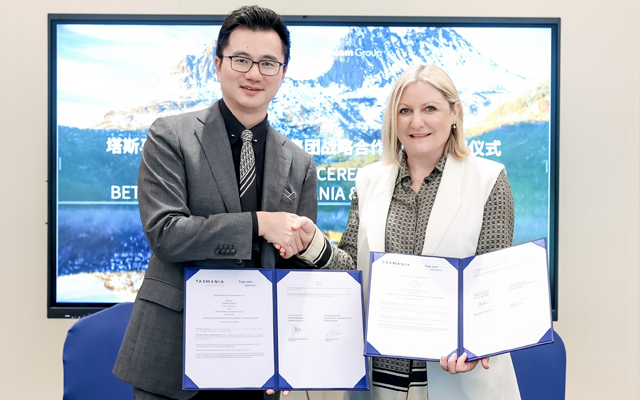
Trip.com Group and Tourism Tasmania have signed a one-year memorandum of understanding (MoU) to expand their tourism partnership and promote Tasmania to international travellers.

Signed during the Envision Conference in Shanghai, the agreement establishes the first global MoU between the two organisations and sets out a framework for tourism marketing and destination promotion across multiple markets.

The one-year agreement will focus on marketing, training and tourism promotion across key international markets

Under the partnership, Trip.com Group and Tourism Tasmania will work to improve the visibility of Tasmania’s tourism products on the Trip.com platform, including accommodation, attractions, tours and visitor experiences. The agreement also includes training and familiarisation programmes for Trip.com staff.

The partners will use platform data and traveller insights to support marketing activities targeting mainland China, Hong Kong, South-east Asia and Australia.

The MoU builds on several years of collaboration between the organisations. Following the pandemic, the two parties worked together on tourism recovery campaigns in mainland China during 2022 and 2023 before extending joint activities to Hong Kong and Singapore between 2024 and 2025.

According to the organisations, the agreement aims to increase awareness of Tasmania’s nature-based tourism experiences among international travellers and support growth in the state’s visitor economy.

Edison Chen, vice president of Trip.com Group, said: “This MoU represents a milestone in our efforts to provide global travellers with access to high-quality, authentic experiences.”

Sarah Kingston Clark, CEO of Tourism Tasmania, added: “We are delighted to continue to strengthen our partnership with Trip.com and Tasmania’s presence across their platforms, which plays an important role in connecting Chinese consumers with Tasmania’s world class tourism experiences.”

Beyond Green spotlights coral conservation projects ahead of World Oceans Day

0

Beyond Green is highlighting coral reef conservation initiatives across its member properties ahead of World Oceans Day on June 8.

The sustainable hospitality network said member properties in destinations including Tanzania, Costa Rica, Dominica, Malaysia, Colombia and French Polynesia are supporting projects aimed at protecting and restoring coral reef ecosystems.

Member properties across Africa, Asia-Pacific, the Caribbean and Latin America are supporting coral reef restoration and marine conservation programmes

Coral reefs support around 25 per cent of marine life despite covering less than one per cent of the ocean. However, they face increasing pressure from climate change, coral bleaching, pollution, overfishing and coastal development.

According to Beyond Green, the initiatives form part of a broader effort across its portfolio to support marine conservation and sustainable tourism practices through research, restoration and community engagement.

Among the projects highlighted is the Reef Stars programme at andBeyond Mnemba Island off the coast of Zanzibar. Developed by Oceans Without Borders, the initiative uses locally produced reef star structures to stabilise damaged reefs and support coral regeneration following a mass coral bleaching event in 2024.

In Costa Rica, Corcovado Wilderness Lodge by SCP works with conservation organisations Innoceana and Restor Laboratories through its Adopt a Coral programme, which allows guests to participate in coral monitoring and restoration activities.

Coulibri Ridge in Dominica supports coral restoration through the Daniel Langlois Coral Rescue Center, which maintains coral nursery tanks in a controlled environment to support future reef restoration efforts.

At Gayana Marine Resort in Sabah, Malaysia, the Marine Ecology Research Centre focuses on giant clam propagation and coral reef regeneration, while Hotel Las Islas in Colombia has planted 90,000 corals in partnership with the local Barú community.

In French Polynesia, The Brando supports marine conservation through the Tetiaroa Society and its Tetiaroa Atoll Restoration Program, which focuses on ecosystem restoration and the reintroduction of native species linked to reef health.

Amadeus launches AI-driven travel advertising platform with Accenture

0

Amadeus has introduced a new AI-powered advertising platform developed with Accenture, aimed at helping travel brands identify demand trends earlier and improve campaign performance across digital channels.

The Amadeus Travel Advertising Platform was unveiled during the company’s inaugural Advertising Summit in Antibes, France, replacing its previous Amadeus Media Solutions business.

The new platform is designed to help travel brands identify travel demand earlier and optimise campaigns across digital channels

The platform combines Amadeus travel demand data with Accenture’s campaign management technology to help travel companies manage advertising activity across channels including search, social media and online travel platforms.

Its first live feature, the Omnichannel Budget Allocator, uses AI to monitor campaign performance and automatically shift advertising spend based on targets such as bookings and return on ad spend.

Amadeus said the platform is designed to address rising customer acquisition costs and changing traveller behaviour as trip planning increasingly takes place across AI tools, social media and digital content platforms.

Dan Ciocoiu, head of advertising solutions at Amadeus, said many travel brands still relied on historical performance data that often arrived too late to capture emerging demand trends.

The platform is currently being used for managed hotel advertising services, with airline and destination marketing capabilities expected to follow.

Ahead of the launch, Amadeus also recruited advertising executives from Accenture Song and WPP to support the expansion of its advertising business.

Aviation roundup: Singapore Airlines, Cathay Pacific and more

0
Singapore Airlines

Singapore Airlines adds Amsterdam flights, boosts New Zealand capacity
Singapore Airlines (SIA) is increasing capacity across its Europe and New Zealand networks, adding three weekly flights to Amsterdam and expanding services to New Zealand through its alliance with Air New Zealand for the Northern Winter 2026 season.

SIA will increase services between Singapore and Amsterdam from daily to 10 weekly flights between August 1 and October 22, 2026, subject to regulatory approvals.

The additional Amsterdam frequencies build on recent European network growth, including increased services to Manchester, Milan and Munich, a double-daily operation to London Gatwick, and a new five-times-weekly Madrid service via Barcelona.

Separately, SIA and Air New Zealand will increase capacity across their joint Singapore-New Zealand network by 17 per cent, adding around 72,000 seats.

Air New Zealand will launch a new three-times-weekly Singapore-Christchurch service and add four weekly Auckland-Singapore flights. Combined with SIA’s existing Christchurch operations, the airlines will offer up to 15 weekly Christchurch services during the peak period from November 2026 to February 2027.

SIA will also deploy the Airbus A380 on one of its two daily Auckland services, replacing the Boeing 777-300ER on that frequency.

Cathay Pacific

Cathay Pacific to launch Almaty flights
Cathay Pacific will commence direct flights between Hong Kong and Almaty in the first quarter of 2027, marking the airline’s first destination in Central Asia.

The carrier intends to operate three weekly flights using Airbus A330-300 aircraft. The route will be the only direct air service between Hong Kong and Kazakhstan.

The new service will expand Cathay Pacific’s network in Central Asia and strengthen connectivity between Hong Kong and a key Belt and Road market.

Mabuhay Miles and Qantas Frequent Flyer members can now redeem points across both airline networks

Philippine Airlines, Qantas strengthen frequent flyer partnership
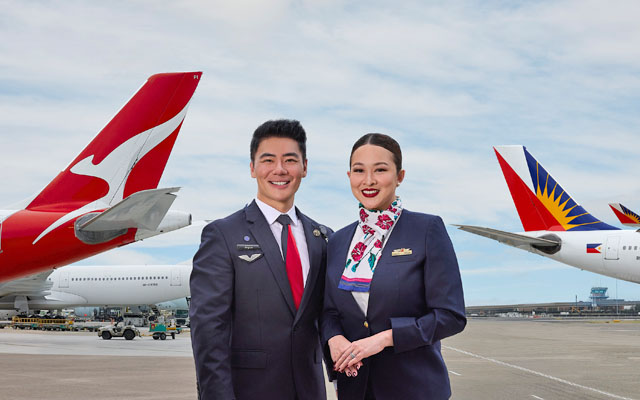
Philippine Airlines and Qantas Airways have expanded their frequent flyer partnership, allowing members of the Mabuhay Miles and Qantas Frequent Flyer programmes to redeem points across both airlines’ networks.

Mabuhay Miles members can now redeem miles on Qantas international and domestic flights, while Qantas Frequent Flyer members gain access to Philippine Airlines’ network across the Philippines and South-east Asia.

The agreement broadens redemption options across both carriers and marks the fourth airline partnership under the Mabuhay Miles programme.

Vietjet

Vietjet adds Prague and Nha Trang routes in network expansion
Vietjet will launch services between Hanoi and Prague from October 10, 2026, and between Nha Trang and Singapore from December 11, 2026.

The additions expand the airline’s European and South-east Asian network, strengthen connectivity between Vietnam and key international markets, and increase access to destinations across Vietjet’s network.

The new Hanoi-Prague route will operate twice weekly using Airbus A330 aircraft, with a stop in Almaty, Kazakhstan. The service marks Vietjet’s expansion into the Czech market and further strengthens links between Vietnam and Europe.

Vietjet has also introduced a new direct service between Nha Trang and Singapore. The route will operate four times weekly and will become the airline’s fifth direct connection between Singapore and Vietnam.

Homm Laguna Bintan rolls out school holiday family offer

0

Homm Laguna Bintan is offering a school holiday package for families, combining accommodation with resort activities and dining benefits.

Guests who book directly by June 30, 2026, will receive a complimentary resort credit of S$30 (US$23) per night, which can be used for dining, activities and selected experiences at the property.

Homm Laguna Bintan’s school holiday programme includes hands-on activities designed for families and younger guests

The resort’s family-focused programme includes activities such as the Junior Chefs Experience, cupcake decorating classes and exploration sessions designed for younger guests.

Families can also make use of the resort’s facilities and choose from a range of optional activities, including beach experiences, water sports and nature-based excursions around Bintan.

For more information, visit Homm Laguna Bintan.

Expo 2025 leaves lasting tourism legacy for Osaka and Kansai

0

Expo 2025, which attracted 29 million visitors to Osaka over 184 days, generated an estimated economic impact of 3.6 trillion yen (US$22.56 billion), according to the Japanese government.

The event delivered an immediate boost to international tourism. Edouard Tripkovic Katayama, a consultant at JTB Tourism Research & Consulting, said the Expo drove longhaul travel linked to a once-in-a-generation event, encouraged longer stays combining Osaka with destinations such as Kyoto, Nara, Hiroshima and Tokyo, and increased international visibility through high-level diplomatic visits.

Infrastructure upgrades linked to Expo 2025 are expected to strengthen Osaka and the Kansai region’s appeal to international visitors

Industry observers now expect the Expo to leave a lasting legacy for Osaka and the wider Kansai region as inbound tourism destinations.

Four years before the event, Japan’s Ministry of Land, Infrastructure, Transport and Tourism launched plans to improve infrastructure and tourism attractions around Yumeshima, the artificial island in Osaka Bay that hosted the Expo, as well as across the city.

“Hosting the Expo led to improved transportation access, which in turn advanced infrastructure development,” said Expo 2025 secretary general Hiroyuki Ishige, citing the extension of the Osaka Metro’s Chuo Line to a new station on Yumeshima, which provides direct access from central Osaka to the bay area in 30 minutes.

Services on the Chuo Line have also been increased, reducing intervals between trains to 2.5 minutes, while platform doors have been installed across all subway stations. Road infrastructure was upgraded as well, with the expansion of the Yumemai and Konohana bridges and surrounding roads to ease congestion.

Kansai International Airport completed a major renovation of Terminal 1 ahead of the Expo, increasing annual capacity to 40 million passengers. The project expanded the international departures area by 60 per cent, introduced smart security lanes and created Japan’s largest walk-through duty-free area.

At Osaka Port, the Tempozan Wharf passenger terminal was redeveloped to accommodate Expo-related traffic. The three-storey facility offers upgraded customs, immigration and quarantine processing, while port enhancements enable faster turnaround for large cruise ships.

The city has also strengthened its position as a waterfront destination through new cruise experiences on the Yodo River and Osaka Bay, as well as sightseeing services connecting Osaka with nearby destinations such as Kobe and Awaji Island.

Ishige described the developments as a catalyst for medium- to long-term growth, supporting regional revitalisation across Japan.

Yumeshima’s transformation is continuing beyond the Expo. The northern section of the island is being developed into a 492,000m² integrated resort project valued at around US$10 billion.

The development will include a casino, three hotels – MGM Osaka, MGM Villas and Musubi Hotel – with a combined 2,500 rooms, as well as 30,000m² of exhibition space, 37,000m² of conference facilities and a 3,500-seat theatre. Dining, retail, wellness facilities and a tourism concierge promoting travel across Kansai’s seven prefectures will also form part of the project.

Scheduled to open in autumn 2030, the resort is expected to attract 20 million visitors annually, including six million international travellers.

Air Astana steps up capacity as Kazakhstan emerges as a key Europe-Asia connector

0

Air Astana Group is benefiting from changing aviation flows between Europe and Asia, increasing capacity as geopolitical uncertainty makes some traditional transit routes through the Middle East less predictable.

“We have seen a significant increase in transit traffic through Kazakhstan in recent months. During 1Q2026, Air Astana Group’s international transit traffic increased by 65 per cent year on year, including a 158 per cent increase in March alone,” Yerbolat Baissalykov, senior vice president, revenue management and commercial planning, Air Astana Group, told TTG Asia.

Air Astana is expanding capacity across Asia and Europe as transit traffic through Kazakhstan grows

In response to disruptions in the Middle East, the group redeployed around 18 per cent of its network capacity within a month, shifting resources to higher-demand markets including China, South-east Asia, the Commonwealth of Independent States (CIS), the Caucasus and selected European routes.

Europe continues to perform strongly. “In March 2026, ASK growth to Europe increased by 10 per cent year on year, while RASK growth reached 53 per cent, reflecting both stronger demand and improved yields,” Baissalykov said.

He believes the increase in traffic is part of a broader change in regional aviation patterns rather than a short-term reaction to geopolitical events.

“We are seeing stronger demand not only for transit connections between Europe and Asia, but also for travel into Kazakhstan itself as the country gains visibility as both a tourism and business destination,” he said.

Air Astana Group sources around 70 per cent of its fuel requirements domestically, providing stable access to supply. However, Baissalykov said the group’s position is also supported by operational and financial discipline and a young, fuel-efficient fleet.

Air Astana expects to receive two Boeing 787 aircraft in 2026, supporting fleet growth from 67 aircraft this year to 86 by 2030.

The group currently serves 104 routes and plans to launch 11 new routes this year, including services from Astana to Shanghai, Guangzhou, Larnaca and Dalaman, alongside additional seasonal routes.

While Air Astana continues to evaluate opportunities across Europe, Central Asia and South-east Asia, Baissalykov said Asia remains the immediate growth priority.

“Asia is currently the primary growth focus, particularly China and India, where demand growth remains very strong. Capacity allocation to China has tripled compared to pre-crisis levels, and the group continues to expand frequencies and destinations across the region,” he said.

China has become one of the group’s most important growth markets. Following the launch of Shanghai services in March, Air Astana plans to more than double flights to China this summer, while low-cost subsidiary FlyArystan is preparing to announce additional destinations in the market.

Looking ahead, the group will continue to assess opportunities based on demand trends, fleet availability and long-term network sustainability.

“Our focus is not opportunistic short-term growth, but building a sustainable Eurasian network that strengthens Kazakhstan’s role as a key connector between Europe and Asia,” Baissalykov concluded.