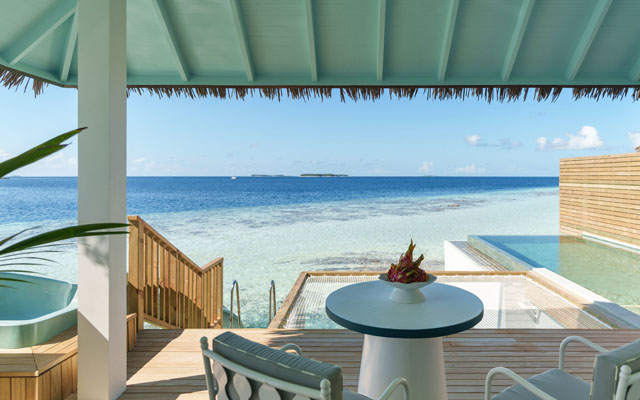
Sun Siyam Vilu Reef, the Maldives Sun Siyam Vilu Reef in the Maldives has introduced 50 new overwater accommodation known as the Ocean Signature Villas with Pool and Slide. The collection comprises 48 one-bedroom villas and two two-bedroom villas positioned over the lagoon with sunrise and sunset views.
Each villa features a private pool, outdoor hammock, direct lagoon access via an 11-metre water slide, separate lounge area, integrated pantry and an open-plan bathroom with a freestanding bathtub. The two-bedroom option is designed for families or groups, with private en-suite facilities for each bedroom.
Part of the Sun Siyam Privé Collection, the new villas expand the resort’s overwater accommodation offering in the South Nilandhe Atoll.
Courtyard by Marriott Okinawa Resort
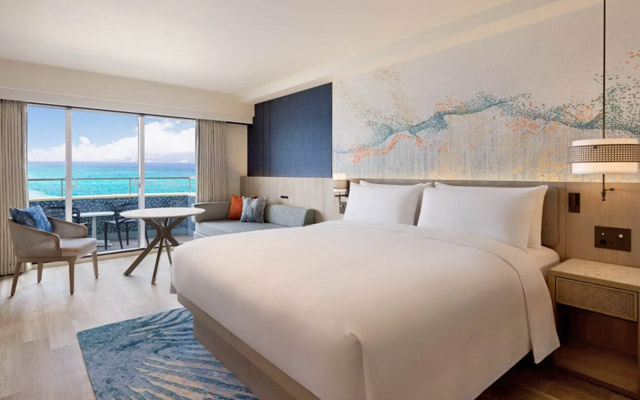
Courtyard by Marriott Okinawa Resort, Japan Courtyard by Marriott Okinawa Resort is a 170-room beachfront property located on Kise Beach in Nago, northern Okinawa. The hotel offers guestrooms and suites with ocean or mountain views, including family-friendly accommodation options.
Facilities include an all-day dining restaurant, lobby lounge and bar, fitness centre, kids’ club and Marine Club Berry, which offers activities such as diving, flyboarding and stand-up paddleboarding. The resort also features a 210m² function room and a chapel for meetings, events and weddings.
Located around one hour by road from Naha International Airport, the hotel provides access to northern Okinawa’s beaches and outdoor attractions. Nearby points of interest include the Busena Marine Park Underwater Observatory, Kanehide Kise Country Club and the UNESCO-listed Yambaru National Park.
voco Kuching
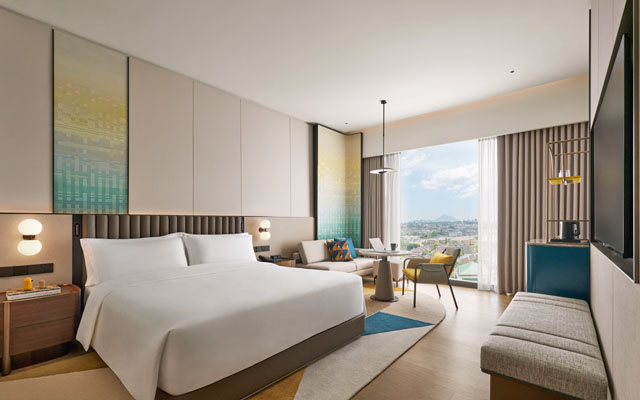
voco Kuching, Malaysia voco Kuching is a 321-room hotel located a short drive from Kuching International Airport, marking the debut of the voco brand in Malaysia. Accommodation ranges from standard and balcony rooms to suites and penthouse suites.
Facilities include a restaurant, café and bar, and over 2,400m² of event space, including the Rainforest Ballroom, which can accommodate up to 1,350 guests.
The hotel provides access to Kuching’s business districts, convention venues and cultural attractions, serving as a base for exploring Sarawak’s capital.
Radisson Red Cebu Mandaue
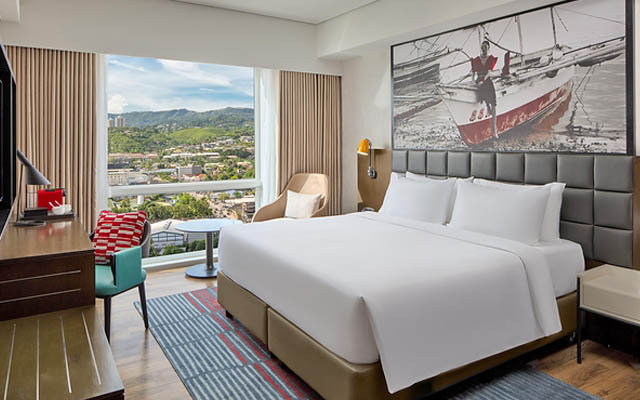
Radisson Red Cebu Mandaue, the Philippines Radisson Red Cebu Mandaue is a 144-room hotel nestled within Astra Centre, a mixed-use development in Mandaue City. The property offers a range of accommodation, including Superior and Deluxe Rooms, Family Rooms, Junior Suites and Executive Suites.
Facilities include an outdoor swimming pool, fitness centre, spa, meeting spaces, pool bar, all-day social bar and a 24-hour grab-and-go deli.
The hotel is located near Mactan-Cebu International Airport, Cebu IT Park, Cebu Business Park and Oakridge Business Park. Guests also have access to attractions such as Magellan’s Cross, Fort San Pedro, the Cebu Taoist Temple, Temple of Leah and Tops Lookout.
Timor-Leste has welcomed UNESCO’s designation of Nino Konis Santana National Park as the country’s first Biosphere Reserve, a move expected to strengthen its position as a destination for nature-based and sustainable tourism.
The designation was approved on June 5, 2026, during the 38th Session of UNESCO’s International Coordinating Council of the Man and the Biosphere Programme in Paraguay.
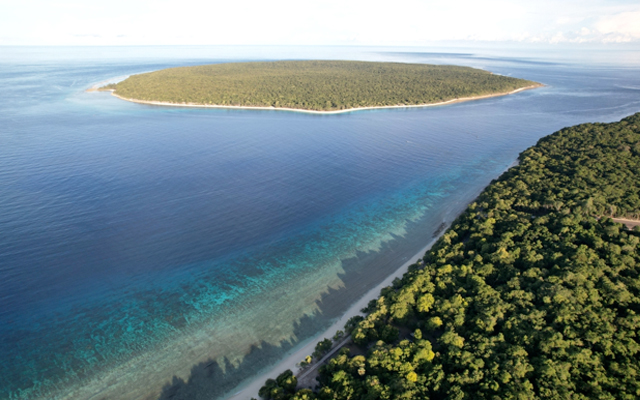
Jaco Island, an uninhabited 10km² island, forms part of the UNESCO-recognised Nino Konis Santana National Park in Timor-Leste
Located in Lautem Municipality at the eastern tip of Timor-Leste, Nino Konis Santana National Park encompasses forests, coastal habitats, coral reefs, beaches and sites of cultural significance.
The reserve includes the country’s largest remaining primary forest, freshwater ecosystems surrounding Lake Iralalaro and marine habitats within the Coral Triangle, one of the world’s most biodiverse marine regions.
According to the Ministry of Tourism, the recognition raises the international profile of the protected area and supports efforts to attract travellers interested in nature, conservation and community-based tourism.
Activities available within the reserve include birdwatching, hiking, snorkelling, diving and cultural experiences linked to local communities and heritage sites.
The ministry said the UNESCO designation broadens Timor-Leste’s tourism offering and strengthens its position within the growing sustainable tourism market.
Antonio da Silva, director-general of tourism, said: “UNESCO’s recognition of Nino Konis Santana National Park as Timor-Leste’s first Biosphere Reserve is a proud moment for our country and a significant step forward for our tourism sector.
“As global demand grows for destinations that value sustainability, this recognition provides a powerful platform to attract travellers who want to explore responsibly and contribute positively to the places they visit.”
Philippine travel agencies are optimistic that demand for domestic and international travel will recover as airline fuel surcharges continue to decline amid easing tensions in the Middle East.
The Philippines’ Civil Aeronautics Board (CAB) lowered the fuel surcharge on passenger flights to Level 12 from June 16 to 30, down from Level 13 during the first half of June.
From left: Jaison Yang and Princess Aila Macamay, both of whom expect lower fuel surcharges and improving geopolitical conditions to support a recovery in travel demand
Fuel surcharges are additional fees added to airfares to reflect changes in fuel prices.
The surcharge rate has been on a downward trend since May 1, reflecting softer jet fuel prices. However, surcharge levels remain significantly higher than before the Middle East conflict, when the CAB imposed a Level 4 surcharge.
Industry stakeholders hope the lower surcharge will make air travel more affordable and encourage bookings in the coming months.
“We are optimistic that the lower fuel surcharge rate and the easing of tensions in the Middle East will help boost travel demand,” Philippine Travel Agencies Association president Jaison Yang told TTG Asia on June 16.
Yang said the industry has experienced sluggish sales since May, a trend he expects to continue until mid-August. He added that travel demand could begin to recover in September.
According to Yang, higher airfares have discouraged many travellers, particularly affecting the MICE segment. Rather than cancelling trips altogether, many customers have opted to postpone their travel plans.
Princess Aila Macamay, a sales agent at Manila-based Discover Group, also observed a slowdown in bookings following the escalation of tensions in the Middle East.
She said enquiries that previously converted quickly into bookings became harder to close as travellers grew more cautious due to safety concerns. The company also recorded a decline in overall enquiries.
Macamay added that higher fuel costs squeezed travel agency margins, with Discover Group absorbing part of the increase in airfares after fuel prices rose unexpectedly.
The higher airfares also pushed up package prices. Macamay said a 15-day Europe tour package that previously cost around US$2,487 rose to about US$2,985 as airfare costs increased.
To minimise disruption, the company also sought alternative airline routings that avoided stopovers in Middle Eastern countries.
Despite the challenges, industry players remain optimistic.
“If we survived the pandemic, there’s no way we can’t survive this crisis,” Yang said. “During the pandemic, there was no movement, no tourism, virtually zero economic activity. But we survived.”
Macamay also expressed confidence that improving geopolitical conditions and lower fuel surcharges will support a gradual recovery in travel demand.
Ascott’s ongoing quest to be a more inclusive employer has been recognised by SG Enable – the focal agency for disability in Singapore – through the Enabling Mark (Gold) award, which is regarded as the highest tier of Singapore’s national disability-inclusive employment accreditation.
Linda Ong, director of human resources with Ascott, said the award “reflects the collective progress Ascott has made in embedding disability-inclusive practices across hiring, workplace support and employee development” in Singapore.
Ong: Ascott Singapore has implemented job redesign to enable associates with disabilities to perform effectively
Ascott’s inclusive hiring efforts include its 2024 MoU with SG Enable to establish disability inclusion and accessibility standards in hospitality. Over the course of the partnership, Ascott and SG Enable collaborated across five key pillars: Inclusive Spaces, Inclusive Programmes, Inclusive Digital Interfaces, Inclusive Hiring and Inclusive Training.
Initiatives undertaken across these five pillars include the creation of a secure platform that allows associates to voluntarily self-identify as persons with disabilities; upgrading the Discover ASR booking platform to show properties’ accessibility features, in accordance to globally recognised Web Content Accessibility Guidelines (WCAG) 2.1 AA standards; and ensuring that all frontline associates complete disability awareness training by 2027.
Additionally, the lodging specialist worked with disability inclusion specialist, Colorful Earth, to assess where change was most needed across its Singapore operations. This included a review of policies, systems, training materials, and ESG disclosures, alongside 31 in-depth interviews with teams at headquarters, regional offices, and properties.
Insights from these activities informed the eventual production of the Ascott Disability Inclusion Playbook, which was introduced in November last year. The playbook ensures realistic and usable applications in hospitality operations, and “serves as an internal guide to improve accessibility across our global portfolio”, shared Ong.
A public version of the playbook was also produced with inputs from external partners, including SG Enable, Workplace Safety and Health Act and The Valuable 500, incorporating case studies from across the industry.
Reflecting on the significance of the SG Enable award, Ong told TTG Asia: “It independently recognises that inclusion has become embedded within business operations rather than existing as an isolated CSR initiative.
“The accreditation also places Ascott Singapore among organisations formally recognised for embedding inclusive hiring and workplace practices, providing external validation for employees, leaders and partners who have contributed to the journey.”
She continued: “The recognition reinforces that disability inclusion and business performance can go hand in hand. This aligns with Singapore’s broader push towards greater disability inclusion under the Enabling Masterplan 2030, which encourages organisations to create more inclusive environments and employment opportunities for persons with disabilities.”
Ascott’s disability inclusion and accessibility transformation has had its own challenges, recalled Ong.
She detailed: “Attracting and retaining talent with disabilities remains an area that requires ongoing focus. The hospitality industry is not always perceived as an accessible or viable long-term career option, and misconceptions about job requirements may discourage qualified candidates with disabilities from pursuing opportunities in the sector. To address this, Ascott Singapore works closely with agencies, educational institutions, and community organisations to strengthen outreach efforts and build a sustainable pipeline of talent.
“Another key consideration is ensuring the successful integration of associates with disabilities into the workplace while fostering an inclusive culture where all employees feel valued, supported, and empowered to perform at their best.”
Ong shared: “Ascott Singapore adopts a collaborative approach across departments to provide ongoing mentorship, peer support, and regular check-ins that facilitate integration, engagement, and professional growth. Open communication channels are encouraged to enable employees to share feedback and raise accessibility concerns, while the organisation continues to balance operational requirements with reasonable accommodation, particularly in guest-facing, operational, and shift-based roles.”
Difficulties aside, the disability inclusion and accessibility transformation is crucial to Ascott’s hiring strategy, as it allows the company to “access a broader and more diverse talent pool” to overcome ongoing workforce challenges.
To facilitate successful integration, Ascott Singapore has implemented job redesign and reasonable accommodation frameworks that assess roles against individuals’ strengths, capabilities, and support needs during the recruitment process. Where appropriate, job scopes are refined to enable associates to perform effectively while maintaining operational requirements.
The inclusive commitment also strengthens employee engagement, innovation, and team performance by bringing diverse perspectives and experiences into the workplace, opined Ong.
“It reinforces Ascott Singapore’s commitment to creating an environment where all associates have equitable opportunities to contribute, grow, and succeed,” she stated.
The company has seen positive outcomes from its efforts. It welcomed more than 10 associates with disabilities across its 21 properties in Singapore, with no voluntary attrition recorded to date.
Beyond recruitment, Ascott continues to strengthen its inclusive employment pipeline through partnerships and outreach initiatives. One such example is its participation in the Talent Explorer Programme, which introduces students with disabilities to career opportunities in the hospitality sector.
Ong sees an opportunity to transfer key lessons from Singapore’s disability inclusion and accessibility journey to the company’s wider, global operations, with implementation tailored to the unique context and needs of each market.
The Tourism Authority of Thailand (TAT) and Alipay+ have unveiled a new campaign that uses AI-powered recommendations and travel planning tools to support visitors travelling to Thailand.
The initiative combines traveller behaviour data, AI-driven analytics and tourism information from TAT to generate recommendations across four categories: attractions, food, activities and accommodation. The campaign will initially target Chinese travellers through Alipay, an Alipay+ partner e-wallet.
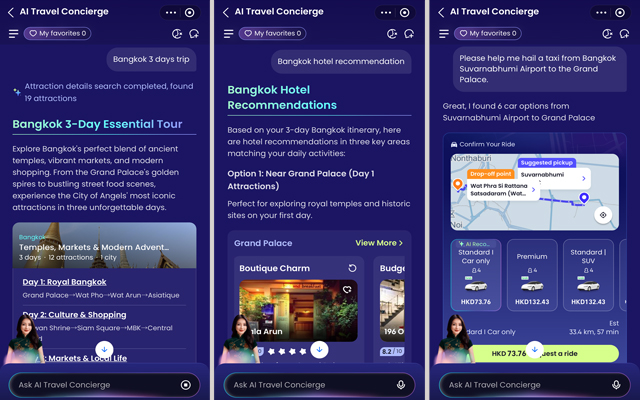
The initiative uses AI-generated travel recommendations and personalised trip planning to help visitors explore Thailand
The recommendations are delivered through Alipay+ Voyager, an in-app AI travel assistant that provides personalised suggestions and travel information based on individual preferences.
According to the partners, the platform is designed to support travellers throughout the travel journey, from destination discovery and itinerary planning to bookings and payments.
Users can access information on attractions, transport, accommodation and local experiences, while also making bookings for flights, hotels, attractions and ride-hailing services within the app ecosystem.
The collaboration also incorporates travel safety information and emergency contact details, including access to Thailand Tourist Police services and other emergency assistance channels.
TAT and Alipay+ said the initiative forms part of broader efforts to integrate AI into tourism services and improve the visitor experience through personalised recommendations and digital tools.
Future plans include expanded use of the AI travel assistant, the introduction of a Thailand destination benefits card offering travel and retail discounts, and the development of additional destination content for Chinese travellers.
The campaign also highlights local attractions and experiences across Thailand, ranging from cultural sites and food experiences to lifestyle activities and lesser-known destinations.
Yolrawee Sittichai, director of the Tourism Authority of Thailand Beijing Office, said the partnership represents a significant step in using digital technology to support Thailand’s tourism development and strengthen digital tourism services for Chinese travellers.
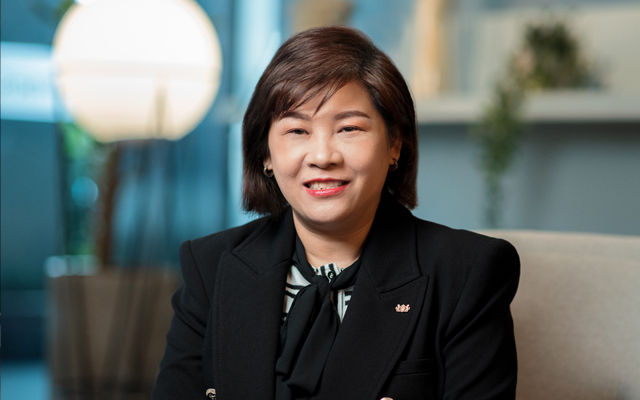
Scarlett Xing, general manager of Alipay+ Travel Solutions at Ant International, described the collaboration as the next phase of the companies’ partnership, using AI-powered tools to support traveller discovery, enhance the visitor experience and create opportunities for tourism businesses and merchants in Thailand.
Soneva is evolving its foundational philosophy from Barefoot Luxury to Bare Luxury, placing greater emphasis on discernment over excess.
Soneva Fushi pioneered the barefoot concept in 1995 as a response to industry trends that equated excess with excellence. With sustainability now widely adopted across the hospitality sector, the brand sees a need to further refine its market positioning.
Soneva is repositioning its brand around the concept of Bare Luxury, focusing on personalised experiences and well-being; photo by Soneva
“Much of the industry has caught up over the last 30 years, and we wanted to ensure Soneva remains at the forefront of what the future of luxury should look like. Rather than adding more, the brand is removing everything that does not serve, revealing what we call ‘Just What Matters’,” said Rhea Saran, global director of communications at Soneva.
This repositioning is driving operational changes across the Maldives portfolio. Management is shifting away from rigid protocols to give staff greater flexibility in responding to guest needs.
“While things were perhaps prescriptive in the past and heavily dependent on standard operating procedures, we are now training for emotional intelligence to truly empower our people,” she said.
She added that standard operating procedures do not always allow staff to respond appropriately to individual guest needs, and that employees are being given greater flexibility to tailor experiences.
The philosophy is also shaping product development. In October, Soneva Jani will introduce 37 well-being suites within its overwater villas.
“That space in the villas used to be an office. We asked ourselves what matters to our guests: an office space or well-being? So, we converted them into well-being studios with direct equipment access,” Saran explained.
According to Saran, the changes reflect evolving guest preferences, including longer stays, multi-generational travel and growing interest in well-being.
These operational shifts align with changing ultra-high-net-worth traveller behaviours.
“We’ve seen a rise in longer stays, multi-generational stays and people really inquiring about things like well-being – which has given us a sense of what is really important to our guests,” she shared.
The concept is perhaps most visible at Soneva Secret, the group’s 13-villa property in a remote Maldivian atoll, where guest experiences are designed around individual preferences rather than fixed schedules.
“Bare luxury is not minimalism, nor is it not giving people a sense of choice. We are not putting the burden of creativity on our guests. This is where the editing comes in: what are we not presenting that allows you to focus on what matters,” Saran said.
Novotel Living Singapore Orchard has launched the Kai Family Package, an extended-stay offer that includes exclusive merchandise and welcome amenities for children.
Available for stays until December 31, 2026, the package is priced from S$208++ (US$162++) per night, based on a minimum six-night stay.
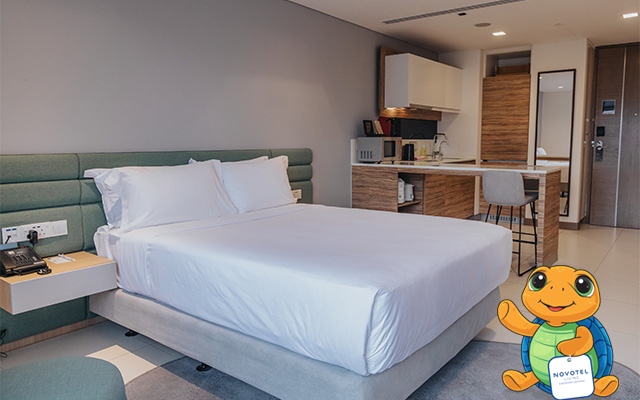
The Kai Family Package at Novotel Living Singapore Orchard includes a children’s welcome gift featuring the property’s new mascot, Kai the Turtle Explorer
Each child receives a welcome gift bag containing a Kai the Turtle Explorer plush toy and a travel activity book. Kai the Turtle Explorer is the property’s new children’s mascot, developed in partnership with Singapore-based children’s lifestyle brand TravelTod.
The package is available across the property’s 85 serviced apartments, which feature kitchenettes, washer-dryers, coffee machines and high-speed Wi-Fi, catering to families and long-stay guests.
Located near Orchard Road, the property also offers a clubhouse serving daily breakfast and all-day refreshments, alongside facilities designed for extended stays.
Novotel Living Singapore Orchard is Green Globe-certified and incorporates sustainability initiatives including in-room water filtration systems, refillable bathroom amenities, wooden key cards and energy-efficient systems.
Guests are also eligible to earn and redeem benefits through Accor’s ALL – Accor Live Limitless loyalty programme.
Direct charter flights linking the Chinese cities of Yiwu and Wuxi with Udon Thani have provided a blueprint for developing secondary tourism gateways in Thailand.
Launched under the government’s Thailand Summer Blast initiative, which supports charter flights from international markets, the route was used by the Tourism Authority of Thailand (TAT) to test a model for matching emerging provincial tourism products with overseas demand.
TAT outlined its strategy to strengthen Chinese visitor arrivals during a media briefing at TTM+ 2026 in Pattaya on June 12, 2026.; photo by Anne Somanas
“When we looked at the data for supply and demand, we found that in new destinations like the Red Lotus Sea in Udon Thani, the number one foreign tourist group is the Chinese, because they love the beauty of the Red Lotus Sea,” said Pattaraanong Na Chiang Mai, deputy governor for international marketing, Asia and South Pacific, at TAT.
To support the initiative, TAT worked with local tourism stakeholders to prepare the destination for international visitors.
“We tried having discussions. The TAT office in China brought three to four tour agents to the TAT Udon Thani office to meet and talk. This included inviting local business operators from Udon Thani to discuss the possibilities. We also took them to survey the hotels, to meet and discuss with local tour agents,” Pattaraanong said.
She added that discussions with Udon Thani International Airport were also an important part of the process.
“There have been efforts to do this since late last year. But because there were issues regarding the aircraft that would land – it had to be a specific size, and more details on the technical side – the collaboration didn’t actually materialise until Songkran of this year.”
To maximise the economic benefits of the service, TAT and local authorities worked with the Bank of Thailand and commercial financial institutions to improve payment infrastructure around the Red Lotus Sea. Merchants were encouraged to adopt digital payment systems compatible with Chinese platforms such as Alipay and UnionPay.
“There was also preparation on the private sector’s part on how to handle the influx. As a result, the launch of these flights created a new working model. We saw that we can open direct routes from a second-tier city in China to a second-tier city here,” Pattaraanong said.
While the route demonstrated strong initial demand, services were suspended on June 11, 2026, due to rising operating costs.
“The first flight had a pretty good load capacity, at almost 90 per cent. But after operating for a while, the impact of jet fuel costs, which actually doubled, made the operational costs quite high,” she said.
Despite the suspension, Pattaraanong said TAT considers the project a successful test case for future aviation partnerships: “The demand is definitely still there, so there will likely be discussions to consider operating these flights again.”
Singapore’s wellness economy reached US$23.2 billion in 2024, according to new research from the Global Wellness Institute (GWI), up from US$15 billion in 2021.
The findings, released as part of GWI’s Geography of Wellness platform, rank Singapore as the world’s 37th-largest wellness economy, an improvement from 42nd place in 2021. The report was produced through GWI’s partnership with the Singapore Tourism Board (STB).
Singapore’s wellness economy was valued at US$23.2 billion in 2024, driven by growth in wellness tourism, real estate and mental wellness
According to the report, Singapore’s wellness economy grew at an annual rate of 8.2 per cent between 2021 and 2024, slightly above the global average of 7.9 per cent. Wellness spending per capita reached US$3,845, more than eight times the Asian regional average.
The study found that inbound wellness tourism exceeded one million trips in 2024, with visitors spending an average of US$1,647 per trip.
Among the 11 wellness sectors tracked by GWI, wellness real estate recorded the strongest performance in Singapore. The sector grew at an annual rate of 28 per cent between 2019 and 2024, reaching a market value of US$3.84 billion and ranking 14th globally. Wellness tourism and mental wellness also recorded year-on-year growth of 27.7 per cent and 28.1 per cent respectively between 2023 and 2024.
The report highlighted Singapore’s integration of green spaces, active mobility infrastructure and preventive healthcare initiatives as key factors supporting its position as an urban wellness destination.
Recent developments include plans for a large-scale wellness attraction at Marina South Coast after STB awarded a development tender to Therme Group in 2025.
Susie Ellis, chair and CEO of GWI, said: “Singapore has become one of the world’s most compelling examples of how wellness can be woven into the fabric of urban life.”
Ashlynn Loo, director of land and concept development at STB, added: “GWI’s research and findings continue to demonstrate Singapore’s strengths as an urban wellness destination.”
Travellers across Asia-Pacific are increasingly opting for slower, more restorative holidays, according to Hilton’s 2026 Trends Report, which identifies a growing preference for what the hotel group calls “Hushpitality” – a preference for quieter, more intentional travel that prioritises stillness, wellness, and genuine downtime over sightseeing checklists.
Vincent Ong, vice president, full-service brands, Asia-Pacific, said the trend reflects a broader shift in traveller priorities.
Ong shared that travellers are focusing more on the quality of their travel experiences than the quantity
“We’re seeing a shift from travel as consumption to travel as emotional optimisation, where guests are increasingly focused on the quality of how a trip makes them feel, rather than the quantity of experiences they can fit in,” he said.
After years of highly scheduled travel, Ong said travellers are now seeking something more restorative.
“Guests are now seeking destinations that offer calm, privacy, wellness, and flexibility rather than overly packed itineraries,” he noted, adding that travellers are gravitating towards wellness rituals, nature walks, family activities and unstructured downtime.
Ong said resort expectations are evolving as travellers focus more on the overall experience and its impact on well-being.
“We’re seeing a shift from amenity-led hospitality to experience-led emotional outcomes, where guests are not just choosing facilities, but the feeling they want to return home with.”
In response, Hilton has expanded its Asia-Pacific resort portfolio with properties focused on nature, wellness and flexibility.
Recent additions include Hilton Burau Bay Langkawi Resort, which offers rainforest walks, eforea Spa and sustainability-focused activities; Hilton Shah Alam Glenmarie, with golf and recreational facilities; and Hilton Bangkok Suvarnabhumi Golf Resort & Spa.
In Vietnam, Hilton Quang Hanh Onsen Resort offers traditional onsen experiences based around the area’s natural hot mineral springs and mountain surroundings.
Hilton is also enhancing personalisation through its Hilton Honors app and the new Diamond Reserve tier, which offers benefits such as confirmable upgrades and guaranteed late checkout.
Looking ahead, Ong said restorative travel, wellness-led experiences and slower-paced resort stays are expected to continue gaining traction as they align with broader lifestyle shifts around mindfulness, balance and intentional living.