-
Series presents real action taken by tourism organisations to support long-term social, cultural, environmental and economic outcomes
-
Responsible tourism has evolved towards creating a net-positive impact on the environment, communities and culture
-
Successful social media use in tourism should be defined by positive tourist behavioural change, conservation contributions, ecological impact, and other non-traditional KPIs
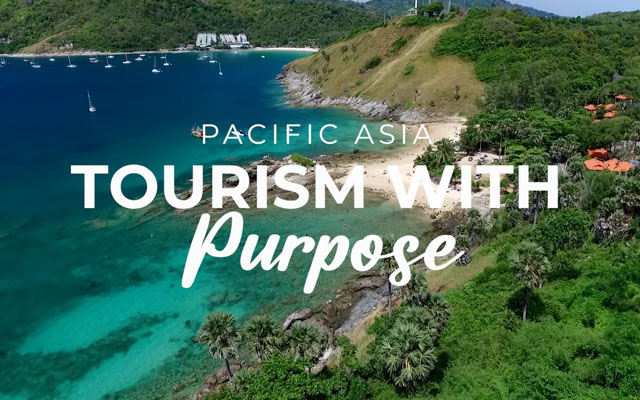
PATA has partnered with Content With Purpose to create a new digital series that looks beyond tourism recovery and visitor numbers alone, to explore what meaningful, long-term tourism growth across Asia-Pacific needs to look like.
Named Pacific Asia: Tourism with Purpose, the content initiative coincides with PATA’s 75th anniversary.
The films examine approaches to destination stewardship, climate action, community participation, responsible innovation, workforce development and regional cooperation.
Content partners include Hainan University-Arizona State University International Tourism College, Hawai‘i Tourism Authority, Hong Kong Metropolitan University Lee Shau Kee School of Business and Administration, Marianas Visitor Authority, Song Saa, The Luxury Signature, and Travelife.
The series also brings together perspectives from tourism leaders, policymakers, academics, entrepreneurs and practitioners, including PATA CEO Noor Ahmad Hamid; Korea Tourism Organization’s executive director for the Americas Insook Lee; TTG Asia Media’s group editor Karen Yue; PATA Nepal Chapter’s advisor Deepak Joshi; PATA ambassador for Greater China Soon-Hwa Wong; and Booking.com’s head of public affairs, Asia Pacific Yang Li.
The series reflects PATA’s commitment to advancing a meaningful Pacific Asia tourism economy – one in which tourism supports long-term social, cultural, environmental and economic outcomes.
PATA CEO Noor Ahmad Hamid said: “As PATA celebrates its 75th anniversary, Pacific Asia: Tourism with Purpose reflects our ongoing commitment to sharing knowledge and showcasing practical solutions that support the future of tourism across the region. Through inspiring stories from destinations, businesses and communities, this series highlights how collaboration, innovation and responsible leadership can create lasting benefits for both people and places. We are proud to partner with Content With Purpose on this initiative and hope it inspires others to help shape a stronger, more resilient visitor economy.”
All episodes of Pacific Asia: Tourism with Purpose are now available for viewing on a CWP microsite, and content will be shared across PATA’s digital spaces and social channels.
Additional films and supporting content will continue to be released following the main launch on September 8, allowing the series to build over the coming months.
Principles in practice: beneficial tourism
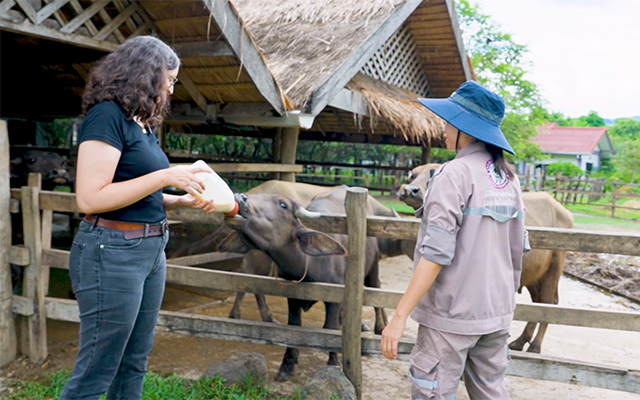
With Khiri Travel, the series presented an example of how tourism can create local economic opportunity while supporting conservation, culture and community. The episode traces Khiri Travel’s Laos Buffalo Dairy project in Luang Prabang, which rents some 200 female buffalo from local farmers. The farm feeds, vaccinates, and looks after both the buffalo and their calves as the buffalo are milked daily for about six months. Fresh dairy products from the farm draws visitors who come for fun and interactive tours as well as to enjoy an all-natural menu. The project results in healthier herds, new skills, rental income for families, and practical experience for teachers and students from the Northern Agricultural College in Luang Prabang.
Reflecting on Khiri Travel’s long-term contribution to responsible tourism development, Willem Niemeijer, founder of Khiri Travel and CEO of Yaana Ventures, which incubates, grows, and operates brands in sustainable tourism, impact hospitality, and travel technology, told TTG Asia: “From the beginning, we wanted to make our workforce and supply chain as local as possible. Tourism is all about people: it is people who make both the destination and the experience.”
Niemeijer shared that his team recognised the “importance of sidestepping the trajectory of extractive tourism” right from the early days of tourism in Cambodia, Laos and Vietnam. Thus, Khiri Travel focused on developing experiences that celebrate cultural traditions, contribute to the conservation of the natural environment, and improve local livelihoods.
“We have always operated with the optimistic belief that tourism, when practised properly, can be a force for good,” he said.
“Over the years, responsible tourism has not only become more mainstream; the ambition has evolved towards creating a net-positive impact on the environment, communities and culture. It is not a simple journey, but it is an inspiring one. Along the way, we have also built a fabulous, aligned and loyal global client base, proving that doing things the right way makes solid business sense,” he added.

Principles in practice: purposeful social media content
With Hainan University-Arizona State University International College, the series explores the impact social media has on visitor growth and how destinations can keep local culture and communities at the centre of tourism development.
Kelly Bricker, associate dean of Hainan University-Arizona State University International College, challenged the assumption that the purpose of social media is simply to generate more visitors.
Bricker said: “Good destination marketing should generate the right visitation, in the right places, at the right times, and with the right behaviours. Social media is extraordinarily powerful at creating demand, but we have seen how quickly a beautiful trail, beach, village, or cultural site can become overwhelmed once it goes viral. So, destination marketers need to think of social media as a visitor-management tool as much as a promotional tool.”
She urged marketers to use social media for dispersing visitors geographically and seasonally, by introducing lesser-known places with the capacity and community desire to receive visitors, promote shoulder seasons and different times of day, and connect social content with reservation systems, transportation information, capacity limits, and real-time visitor information.
“Ultimately, I would like destinations to stop judging social media success primarily by impressions, followers, or arrival numbers. I would much rather see KPIs around visitor dispersal, length of stay, local expenditure, resident sentiment, conservation contributions, behavioral change, and ecological impact,” she added.
When asked for best examples of destination marketing that was built around local culture and communities, Bricker pointed to the initiatives of Indigenous Tourism British Columbia and Palau.
Indigenous Tourism British Columbia positions indigenous people as storytellers. Content explicitly emphasises experiences through indigenous stories, indigenous-owned businesses, living cultures, and relationships with the land.
“That distinction is tremendously important. Authenticity isn’t something a marketing agency manufactures. Authenticity comes from giving communities agency over how their cultures, traditions, landscapes, and stories are represented,” stated Bricker.
Meanwhile, Palau’s Palau Pledge campaign is tied to environmental and cultural behaviour, and is integrated into the visitor experience rather than existing simply as an advertising slogan.
“What makes that campaign so powerful is that the destination story comes from Palau’s own values and particularly from its children and future generations. Visitors are essentially told they are welcome here, but visiting this place takes responsibility,” she stated.
The common thread linking these two powerful examples is that “the destination is not the hero of the story, the people and the place are”, Bricker told TTG Asia.
The way forward
Both Bricker and Niemeijer have practical advice for Asia-Pacific’s travel and tourism industry to truly uphold responsible tourism development.
Niemeijer warned that short-term thinking, the concentration of development around established hubs, fragmented standards, and the perception that sustainability is an additional cost rather than an essential part of building a resilient business are the biggest hurdles to responsible tourism develop in the region.
He said: “Travellers generally support responsible tourism in principle, but their willingness to pay significantly more for it remains limited. This is where organisations such as The Long Run can be tremendously helpful. Its members share valuable knowledge and experience, with the understanding that a rising tide lifts all boats. No business becomes perfectly sustainable overnight; what matters is making measurable progress, being transparent about shortcomings, and continuously improving.
He believes that enforcement and encouragement are distinct and relevant concepts in responsible tourism development.
He explained: “Governments must enforce clear, consistent minimum standards in areas such as environmental protection, waste management, labour practices and land use. Visitor dispersion is also critical to sustainable tourism growth. Governments and the industry should actively encourage international, as well as domestic, travellers to venture beyond the established tourism hubs.
“But regulation alone will not create genuinely responsible tourism. Industry associations, the wider supply chain and travellers must also reward businesses that go beyond the minimum. Credible, proportionate certification can help, particularly when it is accessible to smaller businesses and does not become an expensive box-ticking exercise available only to the larger players.”
Both Niemeijer and Bricker believe that the time has come for responsible tourism to be normalised as a concrete part of business.
Bricker said: “I would like to see recognised sustainability requirements increasingly incorporated into planning approvals, tourism concessions, government procurement, destination investment, financing, licensing, and public-private partnerships. We already have international frameworks such as the GSTC Criteria that establish baseline expectations for sustainable tourism. The next stage is moving much more consistently from commitment to measurement, verification, reporting, and accountability.”
She also urged the adoption of a nature-positive tourism model, with a focus on ensuring that tourism contributes to biodiversity conservation, ecosystem restoration, climate resilience, cultural preservation, and improved community livelihoods. In addition, the definition of tourism performance needs to move away from arrival numbers to considerations such as tourism’s positive impact on host community’s quality of life, conservation of values, assets and sense of place, and the ability tourism has to lift the natural environment.