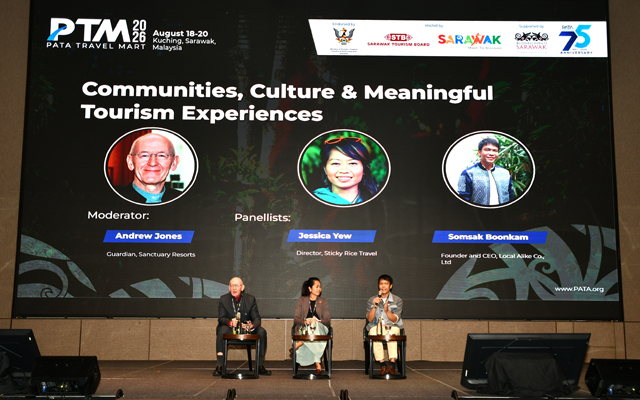
Working closely with local communities and giving them a genuine role in decision-making is key to creating authentic tourism experiences, according to tourism experts.
Jessica Yew, director of Sticky Rice Travel, said meaningful travel should leave a lasting benefit for communities after visitors have gone, with tourism income staying locally and residents gaining new skills and exposure.
“Meaningful travel is what stays behind after visitors leave. Rather than being the backdrop, the community is the main author of the story.”
She said communities should be fully involved in tourism activities and positioned as decision-makers rather than simply being consulted. Tourism operators should also recognise that there is no one-size-fits-all approach to community-based tourism.
Yew also highlighted the importance of creating opportunities for genuine participation rather than simply putting communities on display for visitors.
“It’s important to consider participation versus just performance because if there’s participation in something, that creates a lot more meaning than if it’s just a passive performance.”
Somsak Boonkam, founder and CEO of Local Alike, pointed out that a tourism experience should benefit both travellers and the communities they visit.
“Travellers have a deeper sense of understanding now not just to visit a place, but to talk to, learn from and build relations with communities,” he explained.
“On the local side, it’s about how to make sure we don’t only measure by economic value, but the opportunities to better their life and communities.”
However, Yew cautioned that developing successful community-based tourism products requires patience, long-term engagement and an understanding of local conditions.
“There’s a very fine line when working with communities because going into a community and attempting a collaboration takes a long time, it’s not an overnight game.”
She noted tourism operators also need to navigate language barriers, understand the dynamics of individual communities and determine which programmes are appropriate for each location.
Other considerations include building local capacity and providing training, as well as ensuring there is sufficient budget and resources to support the development of community-based tourism initiatives.