Indonesia’s luxury hotel sector has returned to pre-pandemic occupancy levels, outpacing all other hotel classes and signalling renewed strength in premium travel demand.
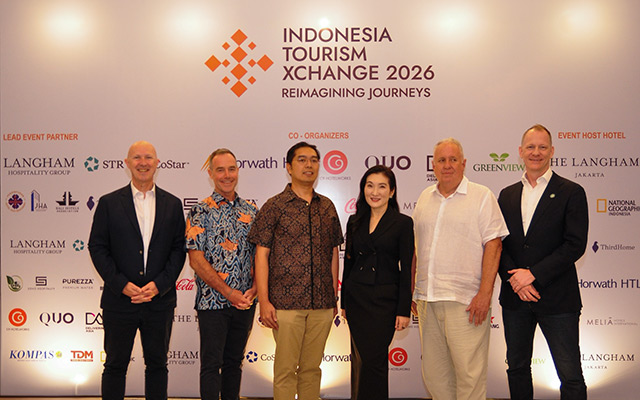
Speaking at the first Indonesia Tourism Xchange (ITX) in Jakarta, Jesper Palmqvist, regional VP Asia Pacific at STR, said luxury hotel occupancy for the 12 months to March 2026 had fully recovered, while other segments remained 5.5 percentage points below their 2019 benchmarks.
Despite lower occupancy in other tiers, Indonesia’s overall hotel average daily rate (ADR) rose 42 per cent compared with 2019. Palmqvist said the increase spans all classes but is driven largely by the luxury segment, noting that “you are seeing new luxury products, and you have a more mature market” supporting the growth.
This shift in rates was further explained by Erastus Radjimin, CEO of Artotel Group, who said a 50 per cent cut in government spending in 2025 led to a drop in occupancy. However, he noted that the subsequent spike in ADR occurred “because the government segment was representing the lowest ADR for hotels”. With that lower-paying segment temporarily reduced, higher-paying guests lifted average rates, even as revenue per available room (RevPAR) declined.
The premium market is now showing signs of broader recovery. Palmqvist said the luxury segment has historically been resilient to economic shocks.
He said: “It’s a global fact that luxury generally fares well against any external shocks. You can go back to the global financial crisis, the pandemic, the Asian financial crisis – luxury holds up better.”
Looking ahead, Erastus expressed optimism for the rest of 2026, noting that the resumption of government spending is already supporting the sector.
Hoteliers are also reporting improved performance. Sherona Shng, regional vice president of operations for Asia at Langham Hospitality Group, said The Langham, Jakarta is on an upward trend, projecting a 10 per cent increase in occupancy this year.
“April 2026 was the best month ever since the hotel opening, with occupancy almost reaching 80 per cent,” she said.
Palmqvist added that Indonesia’s luxury room rates, at just over US$200, remain “very affordable” compared with regional peers such as India or Thailand, where rates can reach US$300 or more.
Beyond pricing, the definition of premium travel is evolving. Shng noted a shift from scale to more curated experiences. While luxury was once defined by “optical opulence”, travellers now expect immersive, culturally driven offerings.
“In the past, personalisation in the hotel was seen as a bonus, but today, it is really expected,” Shng said.
This shift is also changing perceptions of cities such as Jakarta, positioning them as destinations in their own right rather than purely business hubs. Activities such as city walks allow travellers to experience contrasts between history and modernity.
Shng added that visitors exploring the old town can discover a range of local experiences, spanning dining and design. She noted that Jakarta has gained recognition for having some of Asia’s leading bars, and that travellers drawn by shopping opportunities may encounter the work of local designers while also seeking to understand the heritage behind batik.
Reflecting broader high-end travel trends, ITX 2026 also highlighted growth in branded residences, particularly in Bali. According to C9 Hotelworks, Asia’s branded residences pipeline has reached 707 trillion rupiah (around US$40 billion), with Indonesia accounting for US$1.4 billion across 1,145 launched units.