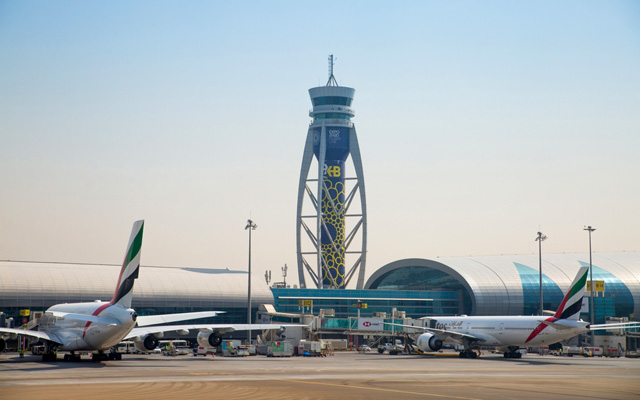
The UAE’s General Civil Aviation Authority (GCAA) lifted all flight restrictions over the weekend, allowing air traffic to resume as normal following the start of the US-Israel-Iran war.
In a post on X, the GCAA said the decision came after “a comprehensive assessment of operational and security conditions, in coordination with the relevant authorities”.
“We reaffirm our commitment to ongoing real-time monitoring to ensure the achievement of the highest levels of aviation safety for all,” the GCAA stated in its post.
The resumption of air traffic over the UAE allows key regional hubs, including Dubai International Airport and Abu Dhabi’s Zayed International Airport, which were affected by drone attacks in the early stages of the conflict, to return to full operations.
Dubai International Airport was ranked 15th among the world’s busiest airports in the OAG Megahubs 2025 study, serving 46,104 connections to 280 destinations worldwide.
Zayed International Airport has capacity for 45 million passengers and handled 32.5 million passengers in 2025.
OAG’s late-April 2026 analysis of the Middle East conflict’s impact on airline capacity found that capacity in May was down 34.7 per cent compared with the February baseline, with more than one-third of planned capacity no longer in service.
However, aviation analysts say it is too early to determine the impact of the reopening on Middle Eastern travel and transit performance.
Independent analyst Brendan Sobie said the immediate effect is the resumption of operations among Gulf airlines. Many “have already resumed a high portion of flights and are aggressively selling transit” before the GCAA’s May 2 announcement. He expects these carriers to “continue to add capacity and sell aggressively regardless of high oil prices”.
At the same time, some foreign airlines have also resumed flights to the UAE ahead of the lifting of restrictions.
Sobie noted that assessing the relationship between open UAE airspace and a full recovery in longhaul transit traffic will depend on consumer sentiment.
He stated that the trinity of available flight capacity, lack of airspace restrictions, and access to cheap fares would not automatically fill seats.
“In fact, so far a high portion of seats aren’t filled,” he said, adding that more time is needed to determine whether reopening UAE airspace will support longhaul demand via the Middle East.
OAG Aviation’s Asia-Pacific commercial and industry affairs lead, Mayur Patel, is similarly cautious.
He told TTG Asia that with the lifting of restrictions on May 2, “the path to full operations is now clear, though complete restoration will take weeks rather than days as carriers work through operational recalibration”.
Patel expects leisure and VFR traffic to rebound quickly, particularly as the northern summer peak season approaches.
He advised that attention should be on airlines’ load factor recovery rather than schedule restoration, “as seats are likely to return faster than bookings on secondary routes where traveller confidence takes longer to rebuild”.
He added: “Critically, the pace of that confidence rebuild will also depend on government travel advisories issued by key source markets including Australia, the UK, and the US being downgraded or lifted, as these directly influence both corporate travel policies and leisure booking behaviour.
“Notwithstanding any further deterioration in regional security conditions, which remain a live risk given the ceasefire has yet to produce a durable political resolution, the overall trajectory points toward a meaningful recovery in Middle East transit demand through the second half of 2026.”
Update, May 6: The GCAA has again imposed restrictions on certain routes and activated emergency security protocols on May 5 following fresh rounds of missile and drone attacks. These restrictions will last till at least May 11.