Hospitality operators across Asia are overhauling traditional human resources structures to address the mounting talent shortage. Rather than focusing solely on hiring new staff, organisations are shifting towards retaining their existing workforce by decentralising management and creating internal career pathways.
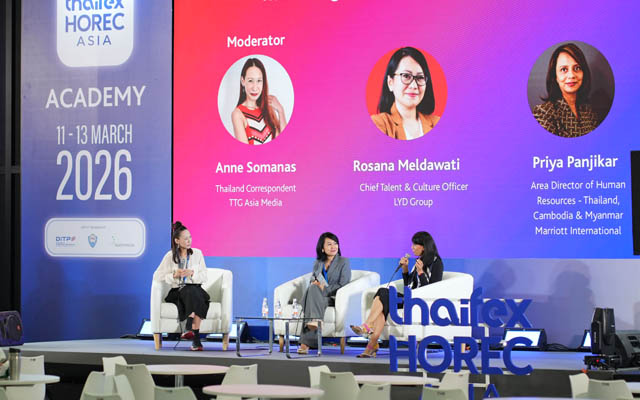
Speaking during a strategy panel titled Leading with Heart: Redefining Talent and Culture in Hospitality, senior executives outlined how removing rigid operational hierarchies is becoming essential for business sustainability.
Marriott International has responded to the ongoing talent shortage by rolling out an integrated job training programme across its properties to support internal mobility. The initiative cross-trains hotel employees to operate across multiple departments. This shift allows staff to build broader skill sets and qualify for supervisory roles beyond their original departments.
“We started working on making sure that (our employees) can multitask – that the same person who can deliver in-room dining can also work in a banquet, or at an Italian restaurant,” noted Priya Panjikar, senior area director of human resources for Thailand, Myanmar & Cambodia at Marriott International.
Panjikar indicated this operational flexibility improves career progression and reduces staff overtime. When employees see a clear path for advancement, they are more likely to remain with the company.
Bali-based LYD Group is taking a similar approach to retention by empowering frontline workers to make immediate operational decisions. The consulting company, which manages boutique hotels, has found that waiting for senior approvals can create operational bottlenecks. To support faster service and build staff confidence, the group allows employees to bypass central offices for minor financial decisions.
“We do have some structure of decision-making, like for instance, giving them small budget approvals,” said Rosana Meldawati, chief talent and culture officer at LYD Group.
Meldawati said that giving employees autonomy reduces delays in decision-making. This approach is paired with a focus on internal promotion and cross-training, with LYD Group prioritising internal transfers across its properties over external hiring.
Meldawati noted that current market conditions require a shift in how hospitality operators view their workforce.
“Retention is the new recruitment now. That’s why we have to build from the beginning,” Meldawati commented.