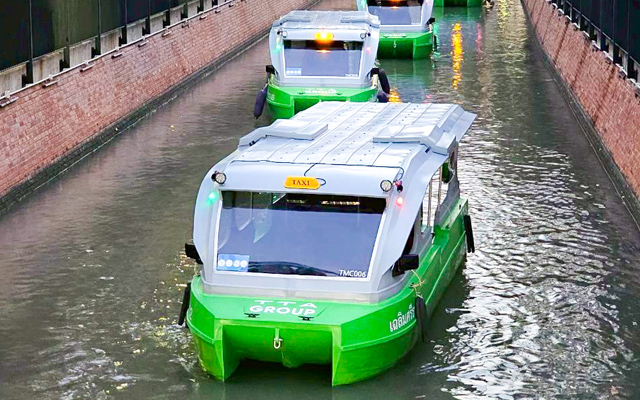
TTA Mariner Co. (TMC) and MuvMi have introduced a new electric boat taxi service for commuting within Bangkok’s old town waterways.
Operating daily from 09.00 to 17.00, the current fleet consists of eight electric boats. Each vessel accommodates up to six passengers and travels at an average speed of 12 kilometres per hour.
Following a free trial run that will conclude in mid-April, standard fares will start at 35 baht (US$1.07) per passenger. Prices increase in a tiered structure based on passenger volume and travel distance, with bookings made through the MuvMi application.
Luxakorn Varasap, spokesperson for TMC, stated: “The MuvMi app is available in English and designed with an easy-to-use UX/UI, allowing visitors to quickly select their pick-up and drop-off piers along the route.”
Users select a preferred pier on the application map and receive details of the assigned boarding point.
The route connects 14 piers along Khlong Phadung Krung Kasem and Khlong Bang Lamphu, with key stops including Hua Lamphong Railway Station Pier, Phra Sumen Fort in Bang Lamphu, Nang Loeng Market via Nakhon Sawan Pier, and Rajadamnern Muay Thai Stadium near Ratchadamnoen Nok Pier.
Visitors can charter an entire boat for a private group experience starting at 1,000 baht per hour, with bookings arranged in advance via the E-Boat Taxi Thailand by TMC Facebook page, the company’s Line Official Account, or its dedicated call centre.
TMC plans to gradually expand the fleet to reduce passenger waiting times and improve accessibility along the route.
Emphasising the environmental benefits, Varasap noted that the electric boats represent a move towards more sustainable urban mobility. They eliminate fuel spills and can reduce greenhouse gas emissions by up to 65 per cent compared to diesel boats.
She explained: “By using electric propulsion instead of conventional fuel engines, the boats help reduce carbon emissions, minimise noise pollution, and improve air quality along canal communities.”