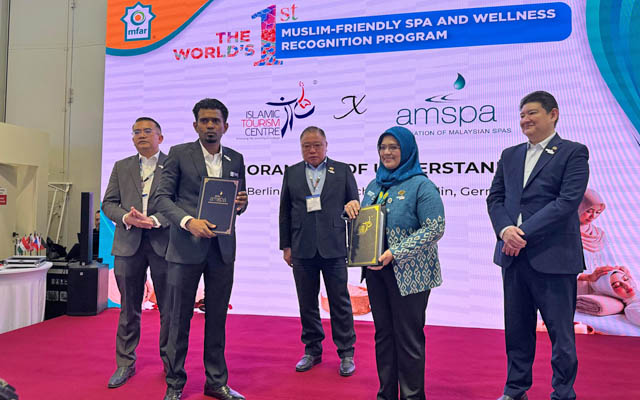
Malaysia has taken a strategic step to extend its leadership in the global halal ecosystem into the spa and wellness sector, with the recent signing of a memorandum of understanding (MoU) between the Islamic Tourism Centre (ITC) and the Association of Malaysian Spas (AMSPA) at ITB Berlin.
The collaboration will see ITC roll out a structured Muslim-Friendly Spa Guideline and Training Programme to 100 AMSPA members through dedicated training modules, capacity-building programmes and a formal recognition framework.
A press release jointly issued by ITC and AMSPA stated: “The programme is conceived to introduce authentic Malaysian spa and wellness offerings to attract more tourists to Malaysia in conjunction with the Visit Malaysia 2026 campaign.
“It also signals Malaysia’s intent to strengthen standards within the halal wellness segment while positioning the country as a reference point for destinations seeking to tap into the growing Muslim travel market.”
The MoU was signed by ITC director-general Mohammad Faisal Abu Suaib Khan and AMSPA president Selinastein Mohd Rashid. Minister of tourism, arts and culture Tiong King Sing witnessed the signing, signalling his support for the development of Muslim-friendly spa and wellness offerings.
ITC formulated the spa and wellness guidelines jointly with the Islamic Science University of Malaysia and AMSPA, benchmarking them against the SMIIC Halal Spa Standards adopted at the Organisation of Islamic Cooperation level. It forms one of ITC’s key offerings under the Muslim-Friendly Tourism and Hospitality Assurance and Recognition programme, which also includes guidelines for Muslim-friendly tourist accommodation premises and travel operating businesses.
By introducing structured guidelines and training tailored specifically for spa operators, ITC aims to provide clear direction to the industry on service delivery and operational considerations. It also addresses privacy standards and guest experience enhancements that cater to Muslim travellers while remaining inclusive and commercially viable for the wider market.
Mohammad Faisal commented: “This collaboration marks an important milestone in strengthening Malaysia’s halal ecosystem through tourism.
“Wellness and spa services are part of the whole travel experience. By developing practical guidelines and training programmes, we are not only enhancing service quality but also building industry confidence in serving the Muslim market in a structured and professional manner.”
He said tourism plays a unique role within the halal economy as an integrator of multiple sectors.
“When travellers visit a destination, they engage with accommodation, retail, food services, financial services and wellness offerings. Ensuring that these components work cohesively strengthens the overall tourism experience,” he added.