TTG Asia
Asia/Singapore Tuesday, 5th May 2026

UAE skies reopen, impact yet to be seen

0

The UAE’s General Civil Aviation Authority (GCAA) lifted all flight restrictions over the weekend, allowing air traffic to resume as normal following the start of the US-Israel-Iran war.

In a post on X, the GCAA said the decision came after “a comprehensive assessment of operational and security conditions, in coordination with the relevant authorities”.

The UAE has lifted all remaining flight restrictions over its airspace; Dubai International Airport, pictured

“We reaffirm our commitment to ongoing real-time monitoring to ensure the achievement of the highest levels of aviation safety for all,” the GCAA stated in its post.

The resumption of air traffic over the UAE allows key regional hubs, including Dubai International Airport and Abu Dhabi’s Zayed International Airport, which were affected by drone attacks in the early stages of the conflict, to return to full operations.

Dubai International Airport was ranked 15th among the world’s busiest airports in the OAG Megahubs 2025 study, serving 46,104 connections to 280 destinations worldwide.

Zayed International Airport has capacity for 45 million passengers and handled 32.5 million passengers in 2025.

OAG’s late-April 2026 analysis of the Middle East conflict’s impact on airline capacity found that capacity in May was down 34.7 per cent compared with the February baseline, with more than one-third of planned capacity no longer in service.

However, aviation analysts say it is too early to determine the impact of the reopening on Middle Eastern travel and transit performance.

Independent analyst Brendan Sobie said the immediate effect is the resumption of operations among Gulf airlines. Many “have already resumed a high portion of flights and are aggressively selling transit” before the GCAA’s May 2 announcement. He expects these carriers to “continue to add capacity and sell aggressively regardless of high oil prices”.

At the same time, some foreign airlines have also resumed flights to the UAE ahead of the lifting of restrictions.

Sobie noted that assessing the relationship between open UAE airspace and a full recovery in longhaul transit traffic will depend on consumer sentiment.

He stated that the trinity of available flight capacity, lack of airspace restrictions, and access to cheap fares would not automatically fill seats.

“In fact, so far a high portion of seats aren’t filled,” he said, adding that more time is needed to determine whether reopening UAE airspace will support longhaul demand via the Middle East.

OAG Aviation’s Asia-Pacific commercial and industry affairs lead, Mayur Patel, is similarly cautious.

He told TTG Asia that with the lifting of restrictions on May 2, “the path to full operations is now clear, though complete restoration will take weeks rather than days as carriers work through operational recalibration”.

Patel expects leisure and VFR traffic to rebound quickly, particularly as the northern summer peak season approaches.

He advised that attention should be on airlines’ load factor recovery rather than schedule restoration, “as seats are likely to return faster than bookings on secondary routes where traveller confidence takes longer to rebuild”.

He added: “Critically, the pace of that confidence rebuild will also depend on government travel advisories issued by key source markets including Australia, the UK, and the US being downgraded or lifted, as these directly influence both corporate travel policies and leisure booking behaviour.

“Notwithstanding any further deterioration in regional security conditions, which remain a live risk given the ceasefire has yet to produce a durable political resolution, the overall trajectory points toward a meaningful recovery in Middle East transit demand through the second half of 2026.”

Preferred Hotels & Resorts grows portfolio with 20 properties in 1Q2026

0

Preferred Hotels & Resorts has expanded its global portfolio with 20 properties between January 1 and March 31, 2026, extending its network across destinations including Indonesia, France, Austria and Brazil.

The additions range from an all-villa property in Bali to a restored 19th-century hotel in France and a wellness lodge in Zanzibar. The group said the new members reflect a mix of resort, urban and nature-based stays.

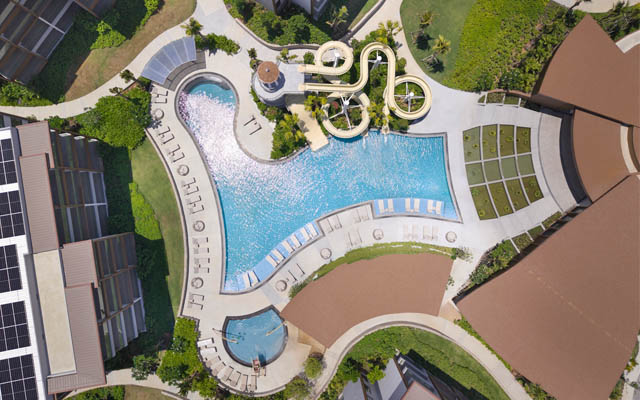
The new members span destinations from Bali to Brazil, including villas, lodges and heritage hotels; Ametis Villa Bali, pictured

In Bali, Ametis Villa Bali in Canggu offers 14 private villas with gardens and pools, alongside wellness treatments and dining options. In France, Boscolo Hotel Lyon and Spa is located in the Presqu’île district, with 132 rooms in a building dating to the 1890s. Facilities include a restaurant, bar and wellness area.

In Zanzibar, ENVI Paje is scheduled to open in June with 22 villas on Paje Beach, focused on wellness and environmental practices. In Austria, Loewen Hotel Montafon in Schruns has 102 rooms and offers year-round mountain activities, with a spa and indoor and outdoor pools.

In Brazil, NANNAI Muro Alto in Porto de Galinhas includes 137 apartments, villas and bungalows, with dining and leisure facilities. In the US, Tumbling River Ranch in Colorado is a 9.3-hectare property with 21 cabins and a range of outdoor activities.

Additional properties added during the period include Allegretto Vineyard Resort in Paso Robles, Gran Hotel Claridge Granada in Spain, Grand Hôtel Soleil d’Or in Megève, Hotel Peralada in Spain, Last Word Makanyane in South Africa, Lion in the Sun Boutique Hotel & Spa in Kenya, Lucero Residences Golf & Wellness Resort in Panama, Mongibello Ibiza in Spain, NANNAI Noronha in Brazil, Romègas Hotel in Malta, The Muse New York, The Tides Inn in Virginia, Villa La Valencia Beach Resort & Spa Los Cabos in Mexico, and Vinarosa Resort & Spa in California. Some are scheduled to open later in 2026.

Many of the new members take part in the I Prefer Hotel Rewards programme, which has more than six million members globally and allows points to be redeemed for stays and other benefits.

Sands China rolls out second phase of Rua das Estalagens revitalisation programme

0

Sands China has introduced the second phase of its Community Revitalization Programme for Rua das Estalagens, with a focus on supporting small and medium-sized enterprises (SMEs) and strengthening activity in one of Macao’s historic areas.

The programme includes two initiatives: an Entrepreneurship Recruitment Programme to attract new businesses to the street, and a Shop Rebranding Programme aimed at existing operators. Both are intended to improve business performance and contribute to the district’s ongoing development.

The initiatives aim to support SMEs and enhance visitor appeal in Macao’s historic district; photo by Chintung Lee

Rua das Estalagens forms part of Macao’s wider revitalisation plan launched in 2023. Sands China began its first recruitment programme in April 2024, selecting seven businesses from 128 applications across sectors including retail and food and beverage. The initiative has been in operation for two years.

The new recruitment phase invites local entrepreneurs to submit proposals aligned with the district’s development strategy. Applicants must commit a minimum initial investment of 300,000 patacas (US$37,500), with selected projects eligible for subsidies of up to one million patacas, based on assessment criteria including business concept and market potential.

The Shop Rebranding Programme targets businesses already operating on the street, with a minimum required investment of 50,000 patacas. Selected participants may receive support of up to 500,000 patacas. The programme covers areas such as brand image, product packaging and storefront improvements.

Sands China has also supported participating businesses through events and promotions, including food festivals and retail initiatives linked to larger events such as the Sands China Macao International 10K and the Sands Shopping Carnival.

Applications for the latest phase are open until June 30, with supporting activities including briefing sessions, training courses and site visits scheduled in May and June.

“Launched in 2024, the first edition of the Entrepreneurship Recruitment Programme 2.0 for Rua das Estalagens not only captured the attention of local young entrepreneurs, but also successfully helped put a series of creative business plans into action. This encouraging result has infused Rua das Estalagens with new commercial vision and vitality. These initiatives are highly aligned with the Macao SAR government’s vision of supporting the high-standard development of local SMEs and boosting community economic development,” said Yau Yun Wah, director of the Economic and Technological Development Bureau of the Macao SAR government.

Sands China executive vice chairman Wilfred Wong added: “This initiative seeks to recruit a new cohort of SMEs to start businesses on the historic street, providing a platform for Macao entrepreneurs to flourish while further re-energising the district’s cultural, tourism, and economic vitality. Additionally, through our inaugural Shop Rebranding Programme, we aim to help the street’s existing businesses optimise and upgrade their brands, ensuring the sustainable development of Macao’s revitalised districts.”

Marriott, Vinpearl ink agreement for two hotels in Can Gio coastal development

0

Marriott International and Vinpearl have partnered for two hotels in Can Gio, part of a wider tourism and urban development in southern Vietnam.

The Ritz-Carlton, Can Gio and Can Gio Marriott Hotel are expected to provide about 700 rooms alongside facilities for leisure, wellness and events. The projects are located in Can Gio, a coastal district of Ho Chi Minh City known for its mangrove biosphere reserve.

Can Gio Marriott Hotel, pictured, is one of two hotels planned to support tourism development in Ho Chi Minh City’s coastal district

The site is around 50km southeast of central Ho Chi Minh City and is expected to be connected by a new expressway by 2028-29. The hotels will form part of the Can Gio Coastal Urban Tourism Area, a 2,870-hectare development that includes hotels, residences, a theme park, golf facilities and convention and wellness centres.

Vinpearl, a member of Vingroup, is managing the project and coordinating development and operations with Marriott.

The Ritz-Carlton, Can Gio will be a nine-storey hotel on a riverfront site, with about 250 rooms, suites and villas ranging from 50m² to 500m². Facilities are set to include six dining venues, two swimming pools, a spa, fitness centre and meeting space.

The Can Gio Marriott Hotel is planned as a 25-storey property with about 450 rooms and suites ranging from 40m² to 160m². Facilities are expected to include dining outlets, a pool, spa, fitness centre and about 1,570m² of meeting and event space, including two ballrooms.

The development is supported by infrastructure projects including the Ben Thanh–Can Gio high-speed rail, Can Gio Bridge and other transport links.

Gautam Bhandari, chief development officer, Asia Pacific Excluding China, Marriott International, said: “Beyond transforming destinations, these developments can support local economies by creating meaningful employment opportunities, fostering skills development, and contributing to the long-term growth in Vietnam. We are excited to introduce The Ritz-Carlton and our flagship brand, Marriott Hotels to Can Gio, the coastal area of Ho Chi Minh City.”

Ngo Thi Huong, CEO, Vinpearl, added: “Enhancing the guest experience in Can Gio through the world class hospitality of The Ritz-Carlton and Marriott Hotels marks a strategic step in bringing global luxury service standards to Vinhomes Green Paradise Can Gio. Beyond developing global branded hotels, we aim to build a fully integrated service ecosystem where residents and visitors can enjoy world class hospitality standards right here in Vietnam.”

Amadeus plans acquisition of Idemia Public Security

0

Amadeus has set out intentions to acquire Idemia Public Security (IPS), a France-based provider of biometric and identity services, for 1.2 billion euros (US$1.30 billion), following a competitive bid process.

The proposed deal, subject to regulatory approvals and expected to close by mid-2027, would extend Amadeus’ capabilities in biometrics and digital identity. IPS operates globally across public and private sectors and brings an established customer base and technology platform.

The deal would expand biometric and identity capabilities across travel and border systems

The move follows Amadeus’ 2024 purchase of Vision-Box and is intended to strengthen its position in airport and border systems. The company links airlines, airports, hotels and border authorities, and the addition of IPS would increase the number of points at which it interacts with travellers.

Biometric identity is becoming more widely used across travel processes, including check-in, security and boarding. Integrating these systems with existing platforms may support automated processing and identity verification across different stages of a journey.

IPS employs about 3,300 people and serves more than 600 customers. Its work includes passenger processing as well as applications in access control and government identity systems. These areas are subject to regulation and rely on secure identity verification.

The combined capabilities are expected to support more connected travel processes, including faster verification and data exchange between stakeholders such as airlines, airports and border agencies.

The transaction remains subject to customary conditions, including regulatory approval.

Luis Maroto, president and CEO, Amadeus, said: “Alongside AI, biometrics is one of the most transformative technologies for delivering fast, convenient, and secure end-to-end traveller journeys. This will enable us to deliver our services across more traveller touch points, in turn reducing friction, and improving the traveller experience, while supporting our ambition to further expand biometric capabilities, extending traveller ID throughout the journey.”

“In a fast-evolving AI-world the bridging of physical and digital identity will be critical for seamless travel. By combining Amadeus and IPS capabilities, we will be able to create more joined-up travel journeys in the future, better connecting the travel ecosystem and linking the traveller to the different steps of the journey,” added Decius Valmorbida, president, travel, Amadeus.

Reconnect by the sea with Banyan Tree Samui

0

Banyan Tree Samui has launched Banyan Tree Connections, a private well-being programme for two, now available for stays.

The initiative focuses on shared experiences designed around Banyan Group’s eight pillars of well-being. It aims to support connection through structured activities combining movement, mindfulness and guided sessions.

Banyan Tree Connections brings tailored wellness, spa and shared experiences to a private beachfront setting in Koh Samui

The programme begins with a 30-minute consultation to tailor a schedule based on individual goals. Activities include private yoga, sound healing meditation, a herbal massage oil and reflexology workshop, and two 60-minute spa treatments. Guests can also take part in kayaking, an introduction to Thai boxing, a culinary workshop, and a private beach dinner.

The resort comprises 88 pool villas, each with a private infinity pool. Facilities include three restaurants, among them Saffron, listed in the 2025 Michelin Guide, as well as a fitness centre, kids’ club, library, and meetings and events space.

Banyan Tree Samui is located on a beachfront site overlooking the Gulf of Thailand, offering a setting for wellness-focused stays.

For more information, visit Banyan Tree Samui.

Moving up the funnel

0

What are the biggest misconceptions in the travel industry right now about agentic AI and AI commerce?
As AI reshapes hospitality innovation, travel platforms are racing to redefine how consumers plan and book their journeys. To cut through the theoretical hype, it requires looking at AI through the rigorous lens of software architecture and user experience testing.

There is an underlying assumption that everything will eventually begin in some sort of horizontal, chat-like layer. However, it is not clear that the world is heading in that direction. Generative AI fundamentally allows us to change user interfaces and collect more personalised data. Yet, travel remains a highly visual, infrequent, and high-expense undertaking for most consumers. In that environment, an out-of-the-box chat experience falls short because travellers want to research thoroughly, view rich sources, and establish a high degree of trust that they are getting the best rate and service. The user experience will undoubtedly evolve, but it is not clear that it becomes a pure, horizontal agent doing all the negotiation and booking immediately.

You mentioned that AI is giving OTAs the power to become the new search. How do you plan to compete in the trip-planning layer?
Travel commerce functions in three layers: the inspiration layer, the itinerary planning layer, and the search-and-book layer, which is where OTAs have traditionally operated. Generative AI has very clearly opened the door for OTAs to compete in that middle layer – trip planning – which historically took place on search engines like Google.

Changing customer habits functions as both a powerful defensive moat and a significant challenge. Today, anyone can ask a standard chatbot for a three-day Bangkok itinerary and receive a massive blob of text, but that is not the user experience travellers desire. They need interfaces that allow them to edit plans, save them for later, and seamlessly interact with booking engines. The ultimate winner in this space will be the platform that builds an easy-to-use experience connecting robust supply, competitive pricing, integrated booking, and comprehensive customer support. Because we already understand the search, booking, and fulfilment layers so well, we believe we are uniquely positioned to build that itinerary planning layer. To be clear, we are not looking to entirely replace search engines; our opportunity is moving higher up the funnel to increase our direct traffic share from roughly 60 per cent today to even more over time.

You mentioned in your talk at Vantage ’26 that AI is helping 1,000 engineers essentially gain the capacity of 10,000. With that in mind, what is the realistic timeline for mastering engineering efficiency with AI?
I believe we will see one engineer doing the work of 10 within a two-to-three-year range, depending on how new models develop. Engineering is far more than just coding; it involves integration, code reviews, defining product specifications, and identifying security vulnerabilities. To solve that complex pipeline, you need distinct AI agents handling each phase and communicating with one another. Initially, integrating these agents actually distracts developers, causing engineering efficiency to drop before it gradually climbs. Exponential multipliers only happen when all those automated components function perfectly together.

Agoda opened its new Bangkok office for 4,000 staff at One Bangkok on April 1, 2026, and you have spoken about building the ‘Silicon Valley of Asia’. With internal AI tools handling more coding and data tasks, is your hiring shifting towards AI managers rather than traditional developers?
We are still hiring developers, supply managers, and marketing professionals. The job titles haven’t changed, but what it means to be a good software developer today is completely different than it was two years ago. They must integrate coding with new AI tools that simply didn’t exist before. The fundamental goal remains the same; we want to achieve more, but AI changes our ability to execute at scale with the talent we have.

When will consumers begin to experience this fully realised, AI-driven search interface?
Consumers are already starting to experience elements of it, but we are constantly experimenting and A/B testing because the perfect interface is not yet a solved problem. You will see various bots interacting with you on our platform, but the AI behaves differently depending on whether you are at the top of the funnel or on the final payment page. We will not release a flashy demo just to show off if it destroys value at scale. We only deploy tools once we have perfected the user experience and are confident they solve actual customer issues.

Can you share a concrete example of how Agoda deploys AI to help neutralise traveller anxieties down the funnel?
AI must be utilised to solve real problems and remove friction. Customer support is an area where AI changes everything. Instead of relying on manual calls to verify details, we now deploy AI voice agents capable of having reasonable conversations with suppliers, rapidly understanding user intent, and resolving complex issues. A resolution that used to take an entire day can now happen in five minutes because we automated the stream. Additionally, for third-party inventory, we can utilise AI to pre-emptively call and verify that the hotel has the booking details before the traveller even arrives, securing a flawless experience for the consumer without massive scaling issues.

As Agoda moves higher in the funnel, how can DMCs and tourism boards partner with you?
By moving up the funnel, we are capturing travellers who are still undecided about their final destination, making it much easier to influence their decision-making. Travellers are incredibly price-sensitive so if we can highlight an affordable rate in a city they previously assumed was too expensive, we can actively shift traveller behaviour. We currently have teams embedding city and destination travel organisations into our funnel, and that collaborative product offering will continue to grow.

Finally, how can hoteliers successfully sell their unique vibe, F&B packages, or room upgrades in this evolving AI landscape?
The good news is that the core fundamentals do not change. I do not believe the booking journey will become entirely text-based. Rich content – videos, high-quality images, varied food types, localised language support, and exceptional service levels – will continue to matter dramatically.

Hoteliers shouldn’t worry excessively about how the broader industry is changing above them; instead, they should focus entirely on how their specific operational role can evolve. An F&B manager must evaluate how AI can help them serve more languages, cater to diverse palates, and increase their operational output by 30 per cent or 100 per cent. The genuine risk is not the technology itself, but being out-executed by industry peers who utilise AI better within their daily jobs. Properties that successfully deploy technology to broaden their service capabilities will emerge as the absolute winners.

Monaco launches international leisure campaign across key markets

0

Visit Monaco has introduced a new international leisure campaign, Monaco, Everything At Once., aimed at strengthening awareness and appeal across its main target markets.

The campaign focuses on the destination’s ability to offer a wide range of experiences within a compact area of two square kilometres. It highlights activities including sporting events, dining, cultural visits, wellness, nightlife and coastal leisure.

The new Monaco campaign promotes range of leisure, cultural and lifestyle offerings

The concept presents Monaco as a destination where visitors can move between different experiences within a single stay. This is reflected through a series of six visuals showing different aspects of the destination, supported by a film combining multiple scenes.

The campaign will be rolled out through Monaco’s international network, including its overseas promotion offices, supported by teams based in the Principality. Distribution will include digital platforms such as social media, official websites and partner channels, alongside targeted media placements.

“Monaco embodies a unique destination where every experience can be lived intensely and simultaneously. Through this campaign, we reaffirm our distinctiveness and our ability to offer, in a single place, an unparalleled richness of emotions and moments; a destination where every instant matters, and where everything truly happens at once,” said Guy Antognelli, director of Tourism and Conventions for Monaco.

Agoda and TPO formalise partnership to support city tourism planning

0

Agoda has entered into a partnership with the Tourism Promotion Organization for Global Cities (TPO) to work across its network of member cities. The agreement reflects a shared focus on tourism development and visitor experience.

The two organisations will combine TPO’s intercity network with Agoda’s travel data and platform capabilities. A memorandum of understanding (MoU) sets out plans to support cities in moving from short-term promotion to longer-term planning based on data. The approach frames tourism as part of urban resilience, cultural activity and economic participation.

Representatives from Agoda and TPO mark the MoU, focusing on data use, training and destination marketing across member cities

The cooperation centres on three areas: the use of data to guide decisions, training and leadership programmes for tourism professionals, and destination marketing through Agoda’s platform.

Kang Da-eun, secretary general of the TPO, remarked: “This partnership represents a pivotal moment in repositioning tourism from a promotional activity to a core urban policy. Building on Agoda’s global data and platform capabilities, TPO will support its member cities in developing more sophisticated and sustainable tourism strategies.”

Damien Pfirsch, chief commercial officer at Agoda, stated: “Through this collaboration, we aim to leverage our digital travel platform to bolster city-level tourism strategies across global urban destinations… (we) look forward to sharing best practices to help develop the tourism ecosystem across destinations.”

Korean Air expands Skypass redemptions with Weverse partnership

0

Korean Air has partnered with Weverse to expand Skypass mileage redemption options beyond air travel, as airlines broaden loyalty programme use cases.

The agreement allows members to redeem miles for digital services, reflecting a shift towards lifestyle-based rewards and increased member engagement.

Skypass members can redeem miles for digital services on Weverse under a new partnership

Under the partnership, Skypass members can use miles to obtain vouchers that convert into Weverse’s digital currency, Jelly. A nine-Jelly voucher is available for 270 miles, while a 15-Jelly voucher can be redeemed for 450 miles. The lower redemption thresholds are intended to make mileage use more accessible.

Vouchers are available through the “Life/Tour” section of the Korean Air Mileage Mall and can be registered on the Weverse app or website. Once converted, Jelly can be used for digital memberships, direct messaging subscriptions and other platform services.

Weverse, operated by Weverse Company, hosts artist communities, content and live broadcasts, with more than 180 artists and over 12 million monthly active users.

Korean Air shared that the partnership aligns with changing consumption patterns and supports efforts to increase the relevance of its loyalty programme.

The move reflects a wider industry shift to diversify loyalty offerings and drive engagement beyond flights. Korean Air said it aims to expand the everyday use of Skypass miles and improve programme accessibility through such partnerships.