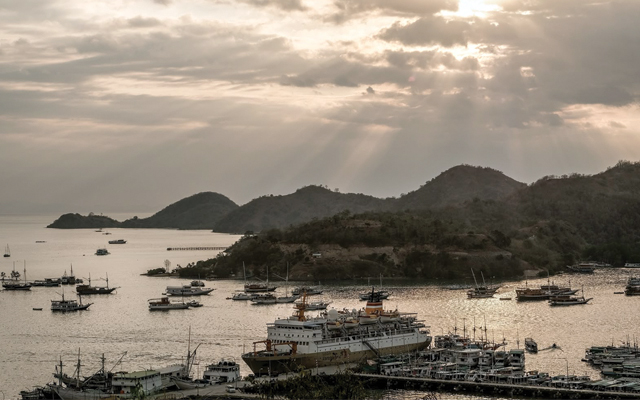
Tourism in Flores is gradually recovering following the August 15 earthquake, with Labuan Bajo and the main Komodo National Park circuit back in operation, although several inland destinations and transport links remain disrupted.
According to Indonesia’s Ministry of Tourism, activities at Padar Island, Loh Liang on Komodo Island, Loh Buaya on Rinca Island, and Gili Lawa have returned to normal, with daily visitor numbers exceeding 2,000 on August 17. Labuan Bajo Marina and Komodo National Park have reopened, while most major hotels in Labuan Bajo remain operational with restored utilities and no reported early checkouts.
However, recovery across the wider island remains uneven.
Ende Airport has cancelled all flights through August 20, while Wings Air services at Ruteng’s Frans Sales Lega Airport are suspended through August 22. Komodo Airport, Frans Seda Airport in Maumere, and Gewayantana Airport in Larantuka remain open with some schedule adjustments.
Several destinations remain temporarily closed for safety assessments, including Wae Rebo, Ruteng Pu’u, Kelimutu National Park, and Teluk Maumere Marine Nature Tourism Park. Nuca Molas has been permanently closed due to structural damage, while tourism areas in Ngada and Nagekeo continue to face power and communication outages.
Although main sections of the Trans-Flores route have reopened after landslide clearances, ongoing access disruptions continue to affect overland travel. Consequently, some travellers bound for Riung Marine Park cancelled or rerouted their trips, driving up accommodation demand in nearby Ruteng.
Leonardus Nyoman, director of Flores Exotic Tours, reported cancellations from group and online bookings, adding that marine excursions also faced temporary disruptions following a tsunami warning. Although the Indonesian Agency for Meteorology, Climatology, and Geophysics confirmed no tsunami threat, some boat operators remain hesitant to sail as aftershocks continue.
“Some captains don’t want to sail because they are still afraid,” Nyoman said, noting that operators are monitoring ongoing aftershocks. The Meteorology, Climatology, and Geophysical Agency recorded 2,768 aftershocks as of August 19, including 24 above magnitude five.
Oyan Kristian, chairman of the Association of the Indonesian Tours and Travel Agencies East Nusa Tenggara, noted that the impact on Labuan Bajo’s main circuit remains minimal.
“Until today there is no closure in the Komodo National Park area,” Kristian said.
While one of his existing guests cancelled their stay, Kristian noted that the wider impact was likely to be felt more on overland trips to other parts of Flores, where connectivity remains disrupted.
The reopening of remaining destinations will depend on ongoing safety assessments, with full road restoration key to island-wide recovery.