Artotel Group continues expanding its portfolio with the opening of Artotel Leguna Magelang, Central Java, last weekend.
With a modern minimalist design combined with artistic elements, this 111-room boutique hotel features an architectural design by Indonesian architect Andra Matin. The project reflects an effort to combine art, design and contemporary lifestyle in Magelang.
The official opening of Artotel Leguna Magelang in Central Java was marked by a ribbon-cutting ceremony last weekend
Located about two hours’ drive from Yogyakarta, Magelang is a cultural and geographical centre, with Borobudur Temple as a key site. The city is also home to the Indonesian Military Academy (Akmil).
Eduard Rudolf Pangkerego, COO of Artotel Group, stated: “We see Magelang as a destination with a great potential. The presence of this hotel is expected to enrich the tourism landscape while supporting the growth of the local creative economy. (With this hotel), we aim to set a new standard in art-based, design-driven lifestyle stays, as this hotel is designed to be a dynamic living space where design, art, and hospitality converge to create an authentic and memorable experience.”
Inspired by the terraced structure of Borobudur Temple, Andra, known for a clean and modern architectural approach, designed the hotel with a tiered concept in the lobby and gallery areas, creating a gradual spatial sequence. A key feature is an oval atrium that tapers upward from the mezzanine to the rooftop, allowing natural light and ventilation.
Speaking about target markets, Rico Setiawan, general manager of Artotel Leguna Magelang, said the hotel would focus on local communities and stakeholders, including the government sector and creative industries.
Major events – including the Vesak festival, Borobudur International Festival, Borobudur Marathon and Tour de Borobudur – along with regular programming at Akmil, such as graduations, alumni reunions and retreats, generate consistent demand for accommodation.
Geographically positioned between Yogyakarta and Semarang, the capital of Central Java, and amid the trend of “slow living” and experiential tourism that travellers seek, Rico said the hotel could support growth in Central Java’s tourism and lifestyle sectors.
In terms of investment, Henry Gunawan, president director of the owning company Karanganom Sinar Abadi, said the project was the result of a long-standing collaboration between various parties, including support from the local government.
“We want to present a living space, combining local art, character, and design to provide a memorable experience,” he said, adding that he was optimistic the hotel would have a wider impact on the tourism sector and regional economy.
Meanwhile, Chrisatrya Yonas Nusantrawan Bolla, assistant for economy and development at the Magelang City Secretariat, said the hotel has a broader role than accommodation.
“This is not just a hotel. This is part of the pulse of the city, a strategic partner in strengthening the face of Magelang as a humanistic, comfortable, and sustainable service city,” he said, adding that city development does not rely only on physical infrastructure but also on cross-sector collaboration. In that context, Artotel Leguna is expected to contribute to collaboration across services, art and experiences that shape the city’s identity.
Artotel Leguna Magelang offers 111 rooms across 10 categories, ranging from the Studio 25 (25m²) to the Studio 115 (115m²). Facilities include Artspace, a dedicated gallery area, Meetspace with one ballroom for up to 200 guests and three meeting rooms for up to 100 people, as well as an all-day dining restaurant, swimming pool, spa and gym.
Minor Hotels will introduce two resort properties in southern Thailand with Rasa Group, expanding its presence across Koh Samui and Koh Phangan.
The agreements include the introduction of the Colbert Collection brand in Asia and a new Avani resort.
Minor Hotels expands in Koh Samui and Koh Phangan with two resort signings in partnership with Rasa Group
On Koh Samui, a 32-room beachfront property on Chaweng Beach will join the Colbert Collection portfolio. Currently operating as Buri Rasa Village Samui, it will transition to Minor Hotels management on May 1, 2026, with rebranding scheduled for 1Q2027 following renovation works. The resort will include dining venues, a swimming pool, fitness centre and spa, and is located about 15 minutes from Samui International Airport.
On Koh Phangan, a 63-room beachfront resort on Thong Nai Pan Noi Beach will be rebranded as Avani Koh Phangan. The property, currently Buri Rasa Village Phangan, will also transition to Minor Hotels management on May 1, 2026, with rebranding planned for 1Q2027. Facilities will include dining outlets, a swimming pool, AvaniKids club and fitness centre.
Both properties are owned by Rasa Group, which has an existing partnership with Minor Hotels through Anantara Rasananda Koh Phangan Villas.
The Samui property will become the first Colbert Collection hotel in Asia, following the brand’s planned debut in London in late 2026. The brand focuses on independent properties with an emphasis on local context and design.
“These signings represent a step in expanding our presence in Southern Thailand across both premium lifestyle and soft brand segments. Introducing Colbert Collection to Asia in Koh Samui and strengthening our resort portfolio in Koh Phangan with Avani allows us to diversify our offering in destinations that continue to see strong international demand,” said Dillip Rajakarier, CEO of Minor Hotels.
“Koh Samui and Koh Phangan remain important markets for tourism development, and this collaboration supports our approach to building hospitality assets that align with evolving travel demand,” added Rapi Pinijchob, CEO of Rasa Group.
Regent Seven Seas Cruises has launched its 2028-29 Legendary Journeys Collection, featuring three extended voyages ranging from 61 to 101 nights. The itineraries span Europe, Asia, Australia and New Zealand, with sailings aboard Seven Seas Mariner, Seven Seas Explorer and Seven Seas Splendor.
The programme includes 14 overnight stays and ports across multiple regions, from Amsterdam and Lisbon to Bali and Sydney. Each voyage includes shore excursions at every port, alongside onboard dining and services under an all-inclusive model.
Guests sail extended itineraries across Europe, Asia and the Pacific, with overnight stays, shore excursions and time onboard with ocean views; photo by Regent Seven Seas Cruises
The 101-night Grand Pathways of Europe departs Barcelona on May 30, 2028, sailing to Amsterdam via destinations including Bordeaux, the British Isles, Iceland and Scandinavia. The 101-night Grand Hemispheres Journey departs Athens on October 21, 2028, travelling to Auckland via East Africa, the Arabian Sea, South-east Asia and Australia.
The 61-night Grand Silk Seas Passage departs Tokyo on November 4, 2028, sailing to Hong Kong with stops across Japan, Thailand, Malaysia, Vietnam, Indonesia and the Philippines. The itinerary includes overnight stays in Shanghai, Ho Chi Minh City, Bangkok and Bali.
Each voyage includes a one-night pre-cruise hotel stay, selected shoreside events and luggage service. Onboard inclusions cover dining, beverages, laundry and shore excursions.
Thailand’s travel trade is voicing opposition to a proposed 1,000 baht (US$31) exit tax for Thai nationals, warning that additional levies could strain the aviation sector.
Proposed by tourism and sports minister Surasak Phancharoenworakul under a 1983 act, the government could enact the fee to fund domestic tourism campaigns.
Concerns grow in Thailand’s travel sector over a proposed exit tax that could raise costs for outbound passengers; Suvarnabhumi Airport, pictured
Adith Chairattananon, honorary secretary-general of the Association of Thai Travel Agents (ATTA), representing trade entrepreneurs who recently met the minister, questioned the timing and rationale.
“With the recent Passenger Service Charge hike to over 1,200 baht, alongside a planned 300 baht tourism fee, this exit tax would push additional traveller costs to around 2,500 baht. This will inflict a severe psychological impact on our market base, particularly budget-conscious, shorthaul leisure travellers,” Adith warned.
Beyond individual costs, the trade said outbound travel is important for workforce development. They added that reducing outbound demand could affect the wider aviation sector.
“If we artificially shrink outbound demand, airlines – which are already burdened by operational costs – will be forced to further cut international routes. Consequently, this reduction in flight capacity will directly and negatively impact Thailand’s inbound tourism market as well,” Adith cautioned.
On implementation, rather than airline-integrated collection, the focus on Thai nationals may require a different approach.
“As the minister indicated this fee will exclusively target Thai tourists rather than foreigners, we anticipate a localised collection mechanism. This could resemble the legacy system where travellers purchased an airport tax coupon to submit at immigration,” Adith noted.
Thailand’s opposition party has also expressed disagreement with the measure, reflecting broader concerns over its potential impact.
The Middle East’s travel and tourism sector grew by 5.3 per cent in 2025, exceeding the global average of 4.1 per cent, according to the World Travel & Tourism Council (WTTC).
WTTC’s latest Economic Impact Research shows gains across international visitor spending, domestic travel and business travel. International visitor spending in the region increased by 5.2 per cent, compared with 3.2 per cent globally.
Major cities such as Dubai and Riyadh, pictured, continue to drive travel and tourism growth across the Middle East; photo by Aaisha Muhammad
The sector contributed US$385.8 billion to regional GDP in 2025 and supported 7.1 million jobs.
Saudi Arabia remained the largest market in the region, accounting for US$178 billion, or 46 per cent of total travel and tourism GDP. The country recorded growth of 7.4 per cent in 2025, compared with the regional average of 5.3 per cent and the global rate of 4.1 per cent. International visitor spending in Saudi Arabia rose by 8.2 per cent.
Business travel was a key driver of growth, with spending in Saudi Arabia increasing by more than 55 per cent. Across the Middle East, business travel spending rose by 23 per cent in 2025.
Other markets also recorded growth. The UAE reached US$68.5 billion in travel and tourism GDP, with international visitor spending of US$56.9 billion. Jordan and Oman each recorded growth of 5.5 per cent, with international visitor spending reaching US$8.5 billion and US$4.0 billion respectively.
WTTC noted that continued investment in infrastructure, connectivity and destination development will be important to sustain growth, alongside efforts to support business travel and higher-value tourism.
“The Middle East continued to deliver strong travel and tourism growth in 2025, with Saudi Arabia playing a central role in driving this success and emerging as a leader in the region, with growth nearly double the global average,” said Gloria Guevara, president and CEO of WTTC.
“The Middle East’s performance in 2025 highlighted the strength and long-term potential of travel and tourism, with the sector continuing to act as a key driver of economic growth, job creation, and international connectivity across the region.”
Bohol-Panglao International Airport has begun initial reconfiguration works led by Aboitiz InfraCapital, marking the start of phased upgrades aimed at improving passenger movement, accessibility and overall operations at the facility.
The initial works focus on key passenger areas and form part of a broader plan to support current demand and future growth while maintaining day-to-day operations.
Reconfiguration works start at BPIA to improve passenger flow and facilities
Bohol-Panglao is the Philippines’ 10th-busiest airport.
The programme follows approval from the Department of Transportation and the Civil Aviation Authority of the Philippines in March 2026. Approved plans include layout changes, security measures and additional equipment.
Bohol’s status as the country’s only UNESCO Global Geopark has contributed to the push for improvements, alongside continued growth in tourism and investment. Discussions between local government and airport management have also covered space allocation for local products within the terminal.
The upgrades will be introduced in phases, with further details to be released as work progresses. The project forms part of ongoing efforts to maintain service standards and support the airport’s role in regional connectivity.
“Enhancing Bohol-Panglao International Airport is part of a coordinated effort to strengthen the country’s aviation gateways. Through close collaboration with airport operators, these improvements in efficiency and facility design help ensure safer, smoother, and more responsive operations for passengers,” said Raul Del Rosario, director-general, Civil Aviation Authority of the Philippines.
PATA Travel Mart 2027 will take place in Macao from September 20 to 22, 2027, marking the event’s return to the destination after a decade. The event will be hosted by the Macao Government Tourism Office (MGTO).
The three-day programme will bring together buyers and exhibitors from across Asia-Pacific, with a focus on business meetings, networking and contracting opportunities. The event aims to support travel organisations in building partnerships and expanding access to regional markets.
Macao is set to host PATA’s flagship travel trade event from September 20-22, 2027
Alongside the trade exhibition, the programme will include a forum on tourism trends, the PATA Gold Awards 2027 and a series of social events.
Macao last hosted the travel mart in 2017, having previously held the event in 2010. The destination also hosted the PATA Annual Summit in 2024.
The city offers a mix of cultural heritage and modern tourism infrastructure. Its historic centre has been listed as a UNESCO World Heritage Site since 2005, while in 2017 it was designated a UNESCO Creative City of Gastronomy. The destination also has a range of recognised intangible cultural heritage practices and events.
As of February 2026, Macao had around 47,000 hotel rooms, supporting its position as a regional events and tourism destination.
Noor Ahmad Hamid, CEO of PATA, said: “We had the opportunity to experience the destination’s world-class hospitality in 2010 and 2017 during the first and second PATA Travel Marts held in Macao, and most recently in 2024 during the PATA Annual Summit. With this strong partnership and Macao’s exceptional capabilities as a host destination, we are confident that this Travel Mart will further showcase the city’s excellence and hospitality on the global stage.”
“We are looking forward to welcoming PATA Travel Mart delegates once again next year for a first-hand update on the dynamic developments of Macao as a world centre of tourism and leisure, with an emphasis on diversification. By hosting this PATA flagship event, we are also pleased to offer delegates the opportunity to fully leverage our city’s unique advantages in connecting the Chinese mainland with the world,” added Maria Helena de Senna Fernandes, director of MGTO.
Minor Hotels is planning the Anantara Miami Resort & Residences, marking the entry of its luxury brand into the US. The 50-storey development is set to rise above Biscayne Bay and is scheduled to open in 2030.
The project is being developed with One Thousand Group and will be located between Miami’s Edgewater, Design District and Wynwood neighbourhoods. The tower is expected to offer views across Biscayne Bay and forms part of the group’s wider expansion strategy.
Miami Resort & Residences is set to open in 2030 in Edgewater area; rendering by Gladstone Immersive
The development will include 100 private branded residences, 120 resort residences and 50 hotel suites. Owners will have the option to place their units into a rental pool for hotel guests. Facilities will focus on wellness, including a centre dedicated to movement, nutrition and recovery, alongside programmes influenced by Thai healing practices.
The project brings together an international design team, and follows previous developments by One Thousand Group, including One Thousand Museum and Villa Miami.
The building will also include features such as a rooftop helipad and access to nearby cultural institutions, including the Pérez Art Museum, the Phillip and Patricia Frost Museum of Science and the Adrienne Arsht Center for the Performing Arts.
“Miami is the perfect location for the debut of our luxury Anantara brand into the US, and we are excited to partner with One Thousand Group to bring this vision to reality,” said William E Heinecke, founder and chairman of Minor International.
“Our approach has always been to anticipate where the market is going and develop buildings that don’t yet exist in Miami. With Anantara, we saw an opportunity to bring a globally respected brand into a market that is ready for something more meaningful and experience-driven,” added Michael Konig, Co-Founder of One Thousand Group.
Malaysia Airlines has unveiled a new aircraft livery in collaboration with cricket franchise Mumbai Indians, applied to one of its A330-300 aircraft.
The design combines elements associated with both brands, incorporating blue and gold tones and motifs linked to the Mumbai Indians identity. The aircraft will operate on selected routes across India and Asia later in 2026.
Malaysia Airlines A330-300 features Mumbai Indians design ahead of route deployment
The livery is accompanied by a digital film highlighting Mumbai’s culture and the team’s fan base. The collaboration forms part of Malaysia Airlines’ efforts to strengthen its presence in the Indian market and expand brand visibility.
The collaboration with Mumbai Indians builds on an existing relationship, with the airline serving as the team’s Official Global Airline Partner.
Asia’s aviation business most exposed to fuel shock compared to Europe and the US
Extensive schedule adjustments across South-east Asia airlines will have “profound impact” on intra-Asia travel
Changes to aviation structure possible – weaker airlines may consolidate, direct longhaul service launches are accelerated
South-east Asian carriers, including AirAsia, pictured, have made changes to their flight schedules due to rising jet fuel prices and supply woes
More than 150,000 international flights have been cut worldwide between March and June 2026 compared to schedules before the US and Israel struck Iran on February 28, which led to the disruptive blockade of the Straits of Hormuz.
The closure of the Strait of Hormuz impacts the aviation industry, as it is the route taken by nearly 21 per cent of the world’s seaborne oil supply. Disruption of that flow has resulted in a price crisis and a physical supply constraint.
OAG Aviation’s Asia Pacific commercial and industry affairs lead, Mayur Patel, told TTG Asia that “the scale of the current disruption is significant and worsening”.
He detailed the impact: “Non-US airline capacity to and from US markets for the June quarter is expected to contract 2.3 per cent year-over-year, as higher fuel prices and possibly limited jet fuel availability led to significant capacity cuts.
“In Europe, the cuts are more dramatic: Lufthansa alone announced it would cut 20,000 flights from its schedule through the fall. SAS cancelled 1,000 flights in April, while KLM reduced capacity by 80 flights due to rising kerosene costs.
“In Asia, the impact is acute and, in some ways, structurally more exposed than Europe. The closure of the Strait of Hormuz has disrupted nearly 21 per cent of global seaborne jet fuel supply, forcing Asian carriers to carry extra fuel, add refuelling stops, and reduce flight schedules. Industry sources estimate at least 400,000 barrels per day of jet fuel normally produced in Asia-Pacific from Hormuz-transiting crude have been affected.”
Patel explained that “Asia’s exposure differs from Europe and the US because fuel hedging is weaker across the region, leaving more carriers directly exposed when crude and jet fuel surge”.
“Once jet fuel moved from US$85 to US$90 per barrel to approaching US$200, the impact on operating economics was immediate,” he stated.
A vicious combination of soaring jet fuel prices and supply woes has forced several Asian airlines to rethink their flight schedule.
In Vietnam, which is heavily reliant on imported energy, three airlines have adjusted their flight schedule to cope with potential supply constraints.
Nearly 20 per cent of international departures on 24 routes have been shaven off Vietjet Air’s schedule between March 29 and May 31 while 30 per cent in capacity reduction have been ordered by Bamboo Airways.
Vietjet Air said on March 25 that “proactive” schedule adjustments were necessary “to ensure stable operations across its network”.
Flag carrier Vietnam Airlines announced a two per cent capacity reduction between mid-May and June, with a suspension of seven domestic routes since April 1 and a removal of approximately 23 flights per week.
According to Vietnamese state media, Vietnam Airlines could cut up to 18 per cent of its international flights and as much as 26 per cent of its domestic operations should fuel conditions worsen.
In Malaysia, Batik Air has taken a 35 per cent hit on its domestic capacity, which Patel said was the “sharpest single-carrier domestic reduction in South-east Asia”. The airline cancelled flights to nine domestic cities from Kuala Lumpur International Airport. It also pulled out from Subang routes to Johor Bahru, Kota Kinabalu, Singapore and Jakarta.
Low-cost carrier (LCC) AirAsia ordered a 10 per cent cut network-wide and raised its ticket prices by as much as 40 per cent. At a media briefing on April 6, AirAsia founder, Tony Fernandes, said the costlier airfares were “unavoidable” and untenable routes where the high cost of fuel cannot be covered would be cut.
In Thailand, Thailand AirAsia cut back on 26 regional routes while Thai AirAsia X suspended services to Shanghai and Riyadh through June and reduced services to Tokyo, Osaka, Almaty, and Delhi.
Philippine carriers also adjusted operations following the president’s declaration of a national energy emergency on March 25.
A certain end to the war remains elusive at press time, and so the impact on Asian air network continues.
Thai Airways announced last week plans to reduce and cancel more than 46 flights on both domestic and international routes from May 2026 due to mounting fuel cost and a decline in travel demand.
Thai Airways CEO Chai Eamsiri told the press that the airline needed to improve resource efficiency and reduce flights with large numbers of empty seats and merge some services.
He stressed that the move was not permanent, and services would be restored should travel demand return during the high season.
Hong Kong’s Cathay Pacific and HK Express will begin to operate a reduced schedule from May through June.
Impact on intra-Asia travel
Asia-Pacific’s travel and tourism performance is reliant on its own market. Here, 68.3 per cent of inbound travel to the region in 2025 came from within itself, according to Euromonitor International. The world’s top 10 busiest fight routes also exist within the region, according to OAG’s Busiest Flight Routes of 2025 analysis.
As such, ongoing flight adjustments across Asia-Pacific will undoubtedly dent arrivals into destinations within the region.
Patel said: “Intra-Asia travel’s fundamental dependency on air connectivity means it has no effective substitute when capacity contracts. The reduction in flight services is expected to have a profound impact on tourism across the region.
“Countries that rely heavily on inbound travellers from Thailand and neighbouring markets may experience a slowdown in visitor numbers, with hotels, tour operators, and local businesses facing challenges as connectivity weakens.”
He also warned that the LCC sector, which underpins much of the intra-Asia travel economy, is under disproportionate pressure.
“Low-cost airlines in South-east Asia face some of the harshest choices because their model depends on cheap fares, quick turnarounds, and high aircraft utilisation. A fuel shock of this scale can erode that model fast, especially when fare increases of 15 to 20 per cent risk pushing price-sensitive travellers away,” Patel added.
With flight cuts “falling precisely during peak travel periods”, the impact on airline performance is “damaging”.
Singapore-based aviation analyst Brendan Sobie added that the current environment gave little hope for “any prediction of growth for intra-Asia travel”.
Impact on airline structure
With Asian airlines operating on a thin margin – about three per cent in 2025 and barely three per cent this year, according to industry watchers, the unfolding challenges could alter the aviation landscape.
In March, OAG highlighted a profitability challenge for Asia-Pacific’s aviation sector. It projected a consolidation among weaker carriers as a means to overcome the sustained fuel shock, and noted that such an outcome, while disruptive, would be consistent with the evolutionary maturation of emergent markets.
Sobie opined that potential consolidation might not be limited to smaller airlines, “as there are some big players that are financially very vulnerable right now”.
Sobie added that the fuel shock impact on airlines varied, depending on their network – if they were heavily dependent on the Middle East or longhaul routes, how much they are hedged against fuel price increments, and the level of price-sensitivity of their home market.
He warned that the longer the war continues, the more “collapses” are likely.
Patel: the reduction in flight services is expected to have a profound impact on tourism across the region
On a positive note, the fuel shock is accelerating several long-term transitions already underway, observed OAG in late-March. It has strengthened the case for direct longhaul services that bypass Gulf hubs, an argument now reinforced by operational necessity, not just commercial strategy.
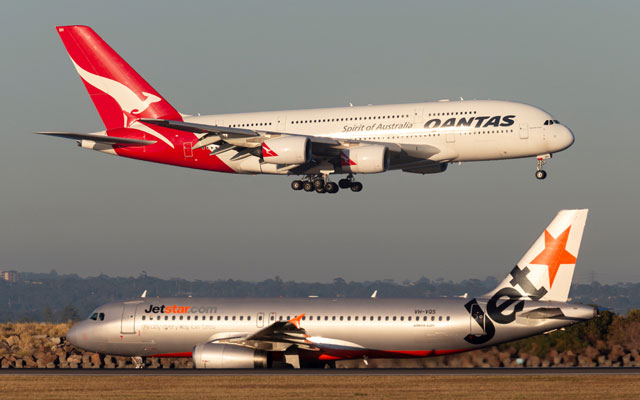
Airlines operating Airbus A321XLR and A350-1000 aircraft, as well as those with future Boeing 777X orders, including Cathay Pacific, Singapore Airlines and Qantas, have a structural advantage in a network landscape where Gulf transits can no longer be assumed.
Impact on Asian air hubs
In a March review of the Middle East conflict’s impact on aviation businesses, OAG stated that Cathay Pacific and Singapore Airlines are short-term beneficiaries, thanks to their direct Asia-Europe networks being in high demand as Gulf hubs go dark.
The OAG review added that Changi Airport has emerged as an alternative routing hub, with bookings on Singapore-London and Hong Kong-London rising sharply.
A month on, Patel told TTG Asia that OAG maintains its view of Singapore Airlines and Cathay Pacific granting their home base airports an important hub status.
He added: “As Gulf carrier capacity contracts, some displaced longhaul passengers naturally seek alternative South-east Asian hub routings and Changi is the prime beneficiary. Singapore Airlines has maintained its Bangkok services unaffected, offering a premium reliability alternative at a time when Thai carriers are under severe stress.”
However, Changi Airport’s hub advantage is “not immune to a deepening crisis”.
Patel said: “The deeper risk for Changi Airport is a multi-year structural consolidation of global airline capacity, reducing the total number of airlines willing to maintain Singapore as a spoke.
He added that “Changi Airport’s structural advantages – including geography, infrastructure, Singapore Airlines Group’s network and fuel security measures” leave it better positioned than most hubs to manage the crisis, but “no hub is fully insulated” if global flight supply contracts.
“The key watch point for Changi Airport will be whether Singapore’s relatively stronger fuel reserves and supply chain management can sustain airline operations while competitors are rationing. Right now, the evidence suggests Singapore is managing this better than most of the region.”
Sobie concluded that the situation is still fluid, but “this industry is used to navigating crises”.
He refrained from drawing a longer-term scenario for the region’s aviation industry, stating that “no one knows how long this will go on for” and that “everyone hopes for fuel prices to come back down soon and the geopolitical situation to improve”.