Booking Holdings plans to restructure its B2B operations to create a single organisation serving global demand partners. The structural change will merge the strategic partnership units across its corporate portfolio.
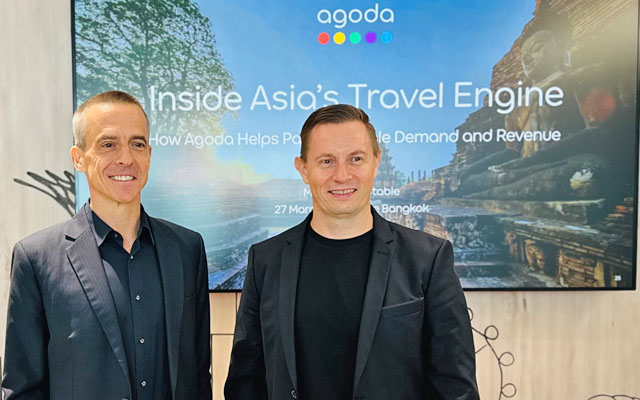
“Booking Holdings has made the decision to bring together the strategic partnership arms of Booking.com, Priceline and Agoda (a subsidiary of Booking Holdings),” said Damien Pfirsch, chief commercial officer at Agoda, addressing a media roundtable at Agoda’s new headquarters, which will officially open on April 1, 2026, in the One Bangkok development.
“Essentially, what is called Rocket Travel by Agoda today in the future won’t really exist – but there will be a single B2B organisation created by bringing together the three OTAs’ strategic partnership units under Booking Holdings,” he added.
He cited three main objectives for the transition.
“Firstly, we want to offer a more cohesive, streamlined experience to our partners – today, there are partners all around the world that work with Agoda and Booking.com, but they engage with different people, and some of the processes are different. We want to make it easier for partners to work with us,” he stated.
“The second is we want to make sure that we offer the best of Booking Holdings to our partners. That’s why we are bringing everything into one place – all the supply, all the technology and all the teams. The last point is innovation. As we are coming together, it increases our innovation capabilities to be able to engage more deeply with partners and develop additional solutions and services for them,” he elaborated.
While the new organisation has not yet been publicly named, Pfirsch described it as “a large transformation… that will take quite a bit of time, as it will bring people from the US, Europe and Asia together under a single new structure”.
Pfirsch noted that Agoda’s current B2B business is split evenly across three primary commercial structures: white-label solutions, API integrations for inventory exchange, and direct traffic routing to core B2C platforms such as Agoda and Booking.com.
For accommodation suppliers navigating Agoda’s B2B offerings, commercial flexibility is the core operational message.
“The top thing (we’d want our hotel partners to know is that) everything is possible. The fun part of partnership is not coming and saying you have a menu of three solutions and tick here and sign here and eventually I’ll send you a check at the end of the month. The fun part of partnership is building a business together,” said Pfirsch.
He urged trade partners to approach the platform with custom requirements rather than settling for standardised solutions.
Moving into 2026, Agoda will focus on integrating its disparate booking verticals into an automated consumer ecosystem.
The strategic roadmap centres on utilising AI to connect hotel, flight and activity inventory to function as a comprehensive digital concierge.
“If you look at the platform in six months, in one year, you will see more and more front-end usage of AI applications to help the customer plan their journey and book their journey through all those services,” Pfirsch concluded.