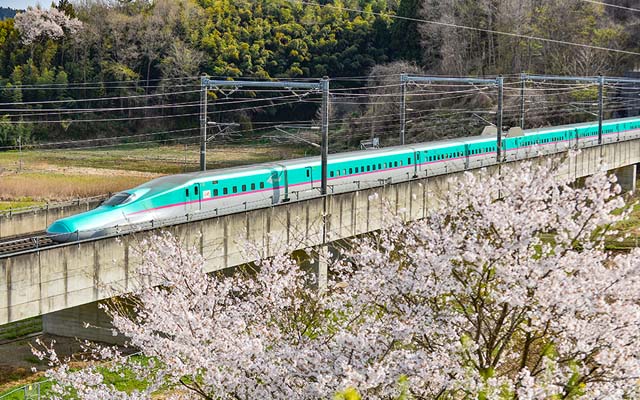
East Japan Railway Company (JR East) has introduced an expanded JR East Pass since March 14, 2026, as part of efforts to encourage travel beyond Japan’s main cities.
The new pass combines the previous Tohoku and Nagano-Niigata passes into a single product, offering unlimited travel on JR East lines, including Shinkansen, limited express and local services. It also covers selected partner railways such as the Tokyo Monorail.
The pass will be available in two options: five consecutive days priced at 35,000 yen (US$235) and 10 consecutive days at 50,000 yen. Child fares are set at half the adult price.
JR East said the move is intended to support travel to regions such as Tohoku, which currently accounts for about 1.5 per cent of overnight stays by inbound visitors. The company aims to increase this share to five per cent by 2034.
The pass provides access to destinations across eastern Japan, including Tokyo, Nagano, Niigata and the Tohoku region. Travellers can reach cities such as Aomori, Akita and Sendai without purchasing separate tickets, which can help reduce travel costs and simplify itineraries.
Seasonal travel is a key focus. In spring, visitors can travel north to view cherry blossoms in areas such as Fukushima and Aomori. Summer offers festivals including the Aomori Nebuta Festival and Sendai Tanabata Festival, while autumn and winter highlight foliage and ski destinations such as Zao Onsen.
JR East said the expanded coverage is part of a broader strategy to support regional tourism and distribute visitor demand more evenly across the country.
“As global interest in Japan continues to rise, we want to support more balanced tourism growth and sustainable regional revitalization,” said Ayumi Utagawa, project manager at East Japan Railway Company. “The JR East Pass removes barriers to deeper exploration, allowing travellers to experience the full richness of regional Japan.”