Young entrepreneurs in Indonesia are taking on the responsibility of sustaining local arts and culture.
Handep, a social enterprise, is working with 250 female artisans from five villages in Central Kalimantan to elevate the art of rattan weaving and support the local community.
Aini Abdul, co-founder and chief community officer of Handep, hopes to improve public perception of rattan.
Aini said: “Rattan has been used here for centuries for different purposes, from household tools to baskets. Large rattan is even used to make bridges. However, rattan products are perceived as low in value.”
Since rattan only grows in healthy primary or secondary forests, its cultivation also helps incentivise the preservation of woodlands, she added.
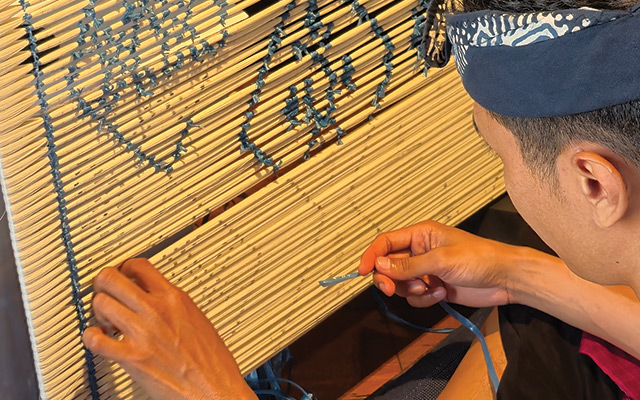
Handep is creating high-end, contemporary designs and maintaining traditional, machinery-free techniques.
In the last three years, Handep products, ranging from bags and footwear to baskets and mats, have found their way to hotel retail arcades and e-commerce platforms. They are also sold at Handep’s own gallery in Ubud. Handep hopes to expand product reach into international markets one day.
Handep reinvests 20 to 25 per cent of profits back into the local communities.
In Bali’s Bangli, another organisation is hard at work to preserve the local textile heritage.
Tenun Agung Bali, founded in 2015, is driven to inspire a new generation to love the art of traditional endek weaving.
Owner Agung Indra inherited the craft from her parents, who ran an endek weaving business in the 1980s and 1990s. She launched Tenun Agung Bali to meet contemporary demand by creating products that combine traditional techniques with modern style.
The business supports village ladies – 90 per cent of whom are homemakers.
“We provide the loom, threads and other equipment for them to be able to work from home,” shared Agung.
Tenun Agung Bali also recruits high school graduates, offering them extracurricular sessions in essential skills like design, traditional, natural colouring techniques, and weaving before bringing them onboard.
Creating a single endek cloth is an intricate, collaborative effort requiring 10 to 12 artisans of different skills. Depending on the design’s complexity, the process can take anywhere from two weeks to a couple of months, according to Agung.
Tenun Agung Bali has attracted international buyers from countries such as Indonesia, Japan, Portugal, and Panama.
Meanwhile, Ragam Foundation in Bali seeks visitor volunteers for its community kitchen, which produces over 500 nutritious meals five days a week. Nasi bungkus (wrapped rice) are distributed to various selected centres, like orphanages and childcare facilities, ensuring children and needy communities receive their first balanced meal of the day.
Nicholaas Kimman, who established the Ragam Foundation in 2021, believes that basic needs must first be met before individuals can thrive. Its work seeks to alleviate the burden of food cost for partner organisations and improve the physical and cognitive health of supported children.
Ragam Foundation also runs programmes to foster independence. These include a scholarship programme for 30 students; a vocational training programme for at-risk youth; and the Ball of Hope crochet programme to give local women a flexible income.
Further, the organisation distributes water filters to bring clean water to the local people, and operate a community centre with a baking kitchen and educational garden.